
TL;DR

Get backup power and energy gear delivered free with Prime
- Fast, free delivery on millions of items
- Prime Video, Amazon Music and more included
- Member-only deals all year
A new RMI study finds that in 24 states and Washington, D.C., spare winter grid capacity could accommodate more heat pumps without costly grid expansion. The researchers estimate that widespread adoption could lower residential electricity rates by an average of 13% relative to what they otherwise would be, but the figures are directional estimates, not forecasts, and lower rates do not guarantee lower household bills.
A new study from clean-energy think tank RMI finds that adding heat pumps in 24 states and Washington, D.C., could make better use of spare winter grid capacity and help reduce residential electricity rates. The researchers estimate that broad adoption could lower rates by an average of 13% compared with what they would otherwise be, but stress that the figures are directional estimates, not utility-specific forecasts or guarantees of lower household bills.
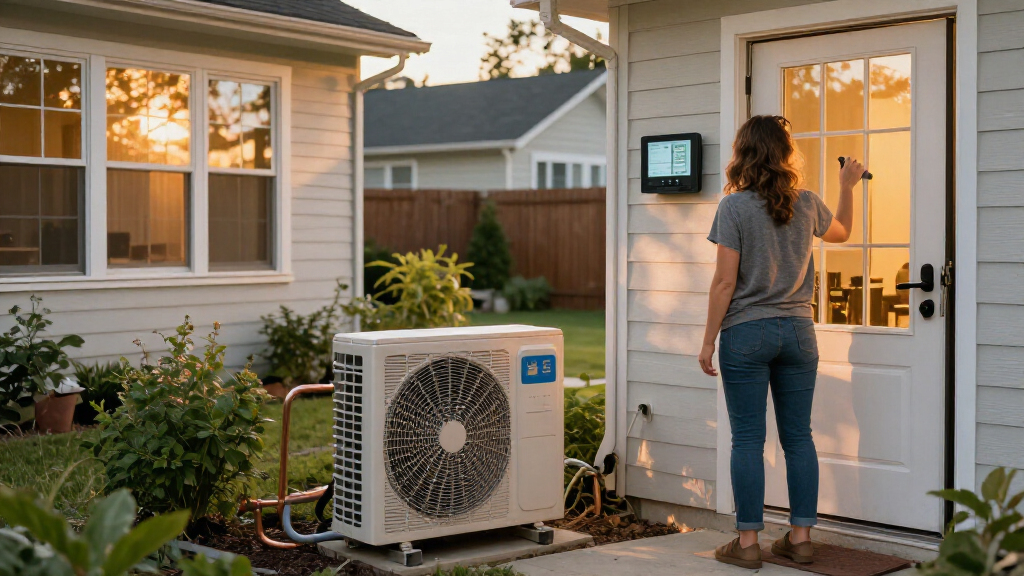
The study addresses a common concern about heat pump adoption: that electrifying home heating will strain the power grid and require costly new infrastructure. RMI found that electricity demand in much of the United States tends to peak on hot summer afternoons, when air conditioning use is high. In roughly half of states, the grid has spare capacity in winter that could serve additional heating demand.
Heat pumps also provide cooling and can replace less efficient air conditioners, so their adoption would not necessarily add to summer peaks in the way a new, separate electric load might. In the states with the most winter capacity, RMI says, more heat pump use could spread the grid’s fixed costs across additional electricity sales. Those costs include equipment such as poles, wires, power plants and transformers, as well as regulated utility returns.
RMI estimates that maximizing heat pump deployment over the coming years without building out the grid could reduce residential electricity rates by an average of 13% from the level they would otherwise reach due to inflation. The report compares that rate effect to about $200 in annual bill savings for a customer, but it does not calculate household bill changes for people switching to heat pumps. Michigan is one example in the analysis: RMI estimates that installing 3.6 million home heat pumps there could reduce overall residential rates by as much as 27%.
How Winter Capacity Could Affect Rates
The findings matter because grid investments are costly, and those expenses are generally recovered through electricity rates. If a system has room to serve more demand in winter, additional electricity use could spread some fixed costs across more kilowatt-hours rather than requiring immediate expansion. That offers policymakers a possible reason to support heat pump adoption beyond reducing building emissions: in some places, it could also help contain electricity rates.
The results do not mean every household that installs a heat pump will pay less. A lower price per kilowatt-hour is different from a lower total bill, which depends on how much electricity a home uses and what fuel it replaces. Households moving from relatively cheap fossil gas to electricity could face higher costs, especially in cold regions or poorly insulated homes. The study points to a possible system-wide rate benefit, not a universal household saving.
RMI also examined ways to fit more heat pumps into available capacity. In Illinois, its analysis found the grid could accommodate heat pumps as the sole heating appliance in about 30% of households under the modeled conditions. A larger share could adopt heat pumps while retaining a fossil-fueled furnace or boiler for the coldest periods. The report’s modeled mix—79% hybrid systems and 21% all-electric systems—could use existing grid headroom while enabling more homes to add heat pumps.
Products Worth Considering

Levoit Core 600S-P Smart Air Purifier for Large Rooms

LEVOIT Vital Pet Smart Air Purifier

Philips Hue Festavia 130-Foot Indoor/Outdoor Smart String Lights, 500 Mini Color-Changing LEDs
As an affiliate, we earn on qualifying purchases.
Why Hybrid Systems Enter the Analysis
Heat pumps move heat rather than generating it by burning fuel, and many models also provide air conditioning. Their electricity demand can vary with outdoor temperatures, the equipment’s efficiency and how a home is heated. In extreme cold, a heat pump may need backup heat; some installations use electric-resistance strips, which can draw substantially more power when activated.
RMI’s analysis treats a retained gas or other fossil-fuel furnace as one possible backup during the coldest hours. That arrangement can reduce the peak electric demand associated with heating while allowing a home to use a heat pump much of the time. Study co-author Ryan Shea described hybrid systems as a possible bridge under current grid conditions. The report says more heat pumps, even when supplemented by fossil-fueled backup, can cut emissions more than installing fewer heat pumps.
The study was analyzed across 24 states and Washington, D.C., selected for their available grid capacity. Its estimates concern potential rate effects under those conditions; they should not be read as a nationwide prediction that all utilities have winter capacity or that every region can add heat pumps without upgrades.
“The larger the reduction in electricity rates, the higher likelihood that someone’s energy bill will decrease with a heat pump.”
— Ryan Shea, RMI study co-author
What the Rate Estimates Leave Open
RMI did not have access to utility-specific data that could refine its estimates, and the study describes its results as directional, not forecasts. The report identifies where rates could fall most under its analysis, but actual results would depend on local grid conditions, utility costs and how many customers adopt heat pumps.
The study also does not estimate whether an individual household’s total energy bill would rise or fall after switching. That depends on the home’s insulation, the heat pump’s performance, the heating system being replaced, local electricity and fuel prices, and usage. Vaishnav cited a 2024 Michigan study he co-authored that found some households could see annual bills rise by more than $1,000 under the fuel prices used in that analysis. That result does not establish what households will pay under other prices or conditions.
It is also not clear from the supplied study summary how quickly the modeled adoption levels could be reached, what incentives would be needed, or how specific utilities would manage peak demand during the coldest hours. Those issues would shape whether the estimated rate effects materialize in practice.
Local Utility Data Will Matter
The next step is for policymakers and utilities to examine local demand, costs and heating patterns before treating the state-level estimates as a basis for rate or electrification plans. Utility-specific analysis could test how much winter capacity is actually available, whether local distribution equipment needs upgrades and how backup heating affects peak demand.
For households considering a heat pump, the study is not a personal cost estimate. Comparing likely electricity use with current heating costs, and checking equipment performance and home insulation, will be needed to judge bill impacts. RMI’s findings instead offer a system-level case for examining heat pumps as one way to use existing winter capacity; the scale of any rate reduction remains dependent on local conditions and adoption.
Key Questions
What did the RMI study find?
It found that 24 states and Washington, D.C. have enough spare winter grid capacity, under the study’s analysis, to accommodate more heat pumps. RMI estimates that broad adoption without grid expansion could lower residential electricity rates by an average of 13% relative to what they otherwise would be.
Does that mean a heat pump will lower my energy bill?
No. The study does not forecast household bills. A lower electricity rate may help, but total costs depend on how much electricity the home uses, the fuel and system being replaced, insulation, equipment efficiency and local energy prices.
Why might heat pumps fit the grid better in winter?
Electricity demand in many parts of the country reaches its peak during hot summer afternoons, often because of air conditioning. The study says roughly half of states have spare capacity in winter, when demand is typically lower.
What is a hybrid heat pump system?
A hybrid system uses a heat pump for much of the heating season while keeping a furnace or boiler as backup for very cold periods. RMI says this approach could let more homes adopt heat pumps within existing grid capacity, though the backup fuel can affect emissions and costs.
How certain are the study’s rate estimates?
RMI calls them directional estimates, not forecasts. The researchers lacked utility-specific data, so actual outcomes could differ based on local grid capacity, costs, adoption and household energy use.
Source: canarymedia.com