
TL;DR

Get backup power and energy gear delivered free with Prime
- Fast, free delivery on millions of items
- Prime Video, Amazon Music and more included
- Member-only deals all year
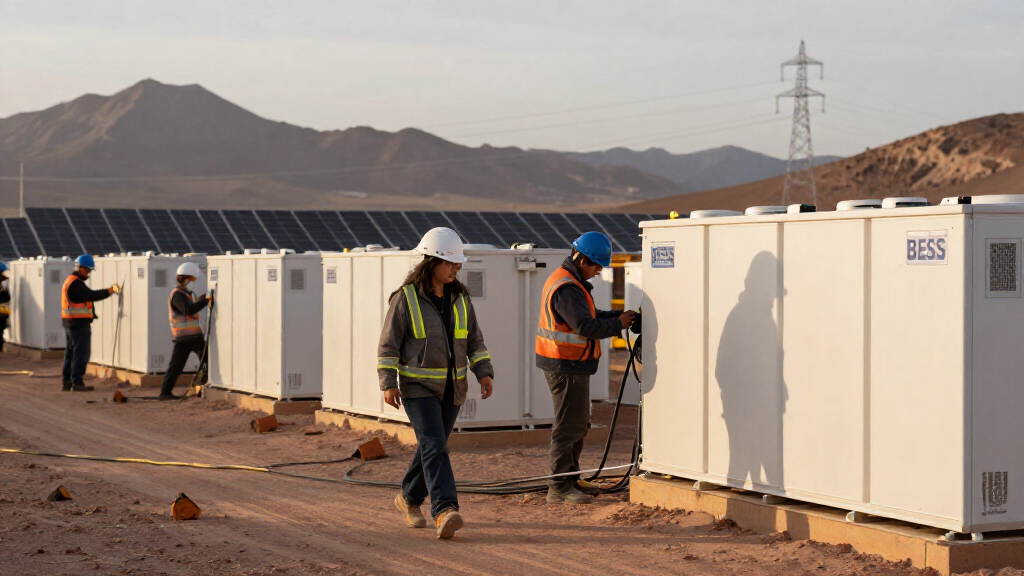
Chile recorded a year-over-year decline in solar and wind curtailment in August 2026 for the first time in four years, according to ACERA, which linked the change partly to battery energy storage. The trade association says 5.1GW/22GWh of battery projects are under construction, a pipeline that could nearly triple current installed capacity when combined with projects in testing.
Chile’s solar and wind curtailment fell year over year in August 2026 for the first time in four years, according to renewable-energy association ACERA, as battery energy storage systems (BESS) increasingly absorb electricity that could otherwise go unused. ACERA also reported 5.1GW/22GWh of storage under construction, which, together with projects in testing, could nearly triple the country’s current installed storage capacity.
ACERA’s figures, presented by association representative Rojas, show 5.1GW of battery power capacity and 22GWh of energy capacity in projects under construction. A further 19.9GW has received environmental approval, while 8.7GW is under environmental evaluation. The source report says combining projects in testing with those under construction could nearly triple existing installed capacity; it does not give a single resulting capacity figure.
Storage projects in the testing phase are also largely paired with solar photovoltaic generation. Only 728MW of the testing-stage portfolio is described as standalone. Of the nearly 20GW with environmental approval, about 9.8GW is expected to be co-located with solar, according to the report. These figures refer to different development stages and should not be read as capacity already operating on the grid.
ACERA said 70% of the 2,900GWh of solar and wind electricity generated between January and August 2026 was charged into batteries. Rojas said that energy might otherwise have been curtailed, though the source provides no counterfactual calculation showing how much would in fact have been wasted without storage. The association also said batteries supplied about 80% of peak energy demand, compared with none four years earlier, and discharged an average of nearly 1.7GW at 9 p.m.
Storage Absorbs Surplus Renewable Power
The reported decline in curtailment matters because it suggests storage is beginning to help Chile make greater use of electricity from solar and wind farms when generation exceeds immediate demand or the grid’s ability to deliver it. Batteries can charge during periods of abundant renewable output and discharge later, including during evening peaks. That flexibility can reduce wasted generation while helping meet demand after sunlight fades.
The figures indicate a change in the role of storage on the system: ACERA says batteries now contribute materially to peak supply, rather than serving only as a future option. But the August comparison alone does not establish that batteries caused the year-over-year decline. Curtailment can also be affected by generation levels, grid constraints, demand and other system changes. The association’s account supports a connection, not a complete causal breakdown.
The expanding pipeline also brings a planning challenge. Rojas warned that electricity supply is growing faster than demand, creating risks for new projects. ACERA’s suggested areas for additional demand include data centres, electric vehicles and desalination. Those uses could create new electricity needs, but the report does not quantify how much demand they may add or when it would materialize.
Products Worth Considering

Bose Lifestyle Ultra Wireless Home Speaker, White Smoke

Levoit Core 600S-P Smart Air Purifier for Large Rooms

Bose SoundLink Plus Portable Bluetooth Speaker, Black
As an affiliate, we earn on qualifying purchases.
Projects Cluster in Northern Chile
The storage pipeline is concentrated geographically. ACERA’s figures place 84% of the 11.3GW of BESS capacity operating, under construction or in development in the north, between the Arica and Atacama regions. The report lists 5.4GW in Antofagasta, 2GW in Atacama and 1.6GW in Tarapacá. Central and southern Chile together account for 1.5GW across 58 projects.
That concentration follows a portfolio strongly linked to solar generation, but Rojas described a much lighter presence in the centre and south. The distribution matters because storage’s ability to absorb surplus power and deliver it later depends on where batteries connect to the grid, as well as on transmission capacity and local demand. The source report does not provide a regional breakdown of curtailment or explain how planned grid upgrades may change the balance.
The curtailment decline follows a difficult period for renewable generators. Chile recorded a record 6TWh of curtailed solar and wind power in 2025, according to the source report. It said added battery capacity had already shown signs of slowing curtailment that year. The August 2026 year-over-year decrease is the first reported after four years of annual increases, but the material does not state the amount curtailed in August or the size of the decline.
“What comes next is a “quantum leap.””
— Rojas, speaking for ACERA
Causation and Project Delivery Remain Open
The available figures do not specify how much curtailment fell in August 2026, or whether the comparison covers the month alone or a broader period. ACERA attributed the shift partly to storage, but the source does not separate the effect of batteries from changes in renewable generation, demand, transmission constraints or other factors.
Project pipeline figures are not equivalent to operational capacity. The report does not give expected commissioning dates for the projects in testing or construction, nor does it say how many will reach operation, face delays or change scope. It also does not detail how the stated 11.3GW operating, construction and development portfolio relates to each permitting category, so the figures should not be combined without care.
It is also unclear how much new demand will come from the sectors Rojas identified, or whether it will be located near the planned storage sites. ACERA’s figures and comments are the source’s account; the material does not include independent system-operator data or a detailed analysis of the drivers behind the curtailment change.
Construction and Demand Will Shape Growth
The next concrete indicators will be whether projects under construction complete commissioning and begin delivering power, and whether projects in testing move into commercial operation. Tracking installed capacity against the 5.1GW/22GWh construction pipeline will show how much of the announced buildout reaches the grid.
Future curtailment reports will help establish whether August’s year-over-year decline continues beyond a single reported month. Data on curtailed energy, battery charging and discharge, renewable generation, demand and transmission constraints would clarify how much storage contributes to the change. ACERA’s warning about supply growth also puts demand development in focus: the association pointed to data centres, electric vehicles and desalination as potential sources of additional electricity use, but provided no timetable or forecasts.
Key Questions
What did ACERA report about Chilean curtailment?
ACERA said solar and wind curtailment fell year over year in August 2026 for the first time in four years. The source report does not give the amount of the decrease.
How much battery storage is under construction?
The report lists 5.1GW of power capacity and 22GWh of energy capacity in battery projects under construction. These are pipeline figures, not capacity already operating.
How much of the approved storage pipeline is paired with solar?
About 9.8GW of the nearly 20GW of battery projects with environmental approval is expected to be co-located with solar, according to the source report.
Did batteries cause the curtailment decrease?
ACERA linked the decline to growing battery use, but the report does not quantify the batteries’ individual effect or rule out other contributors, such as changes in generation, demand or grid constraints.
Where are Chile’s battery projects concentrated?
ACERA says 84% of the 11.3GW of storage capacity operating, under construction or in development is in northern Chile. Antofagasta accounts for 5.4GW, followed by Atacama with 2GW and Tarapacá with 1.6GW.
Source: energy-storage.news