TL;DR

Get backup power and energy gear delivered free with Prime
- Fast, free delivery on millions of items
- Prime Video, Amazon Music and more included
- Member-only deals all year
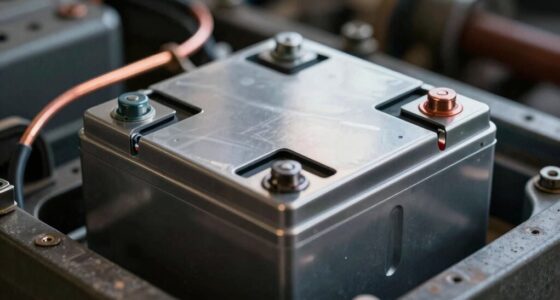
Hithium has launched a 4 MWh sodium-ion battery energy storage system alongside a 785Ah cell and says staged validation of the new generation is planned, with safety testing underway. The company says sodium-ion could compete on lifetime economics in some projects, but mature lithium iron phosphate supply chains generally retain an initial cost advantage for conventional two-hour systems.
Hithium has launched a 4 MWh sodium-ion battery energy storage system alongside a 785Ah cell, and says staged validation of the new-generation products is planned while safety testing is underway. In an interview published October 6 by ESS News, senior product manager Leb Lan said sodium-ion may suit projects where long operating life, frequent cycling and reduced exposure to lithium-price swings matter, but acknowledged that mature lithium iron phosphate (LFP) supply chains generally have an upfront cost advantage for conventional two-hour projects.
Lan described the launch as a move from technology validation toward larger-scale deployment, not proof that the new products are already validated for broad commercial use. Hithium plans to assess the new generation at cell, module and system levels, followed by evaluation in real-world operating environments. Lan said the schedule will track product development and demonstration projects; he did not provide a timetable or identify specific sites in the interview material.
On safety, Lan said Hithium is conducting further tests on the new cell and system. The work covers thermal propagation, gas release and pressure relief, fire-protection coordination, thermal management and transport safety. For the first-generation ∞Cell N162Ah cell, he said the company completed tests under China’s GB/T 44265 standard, including drop, crush, short-circuit, overcharge, over-discharge and thermal-runaway testing. Those statements concern the first-generation cell and should not be read as results for the newly launched products.
Lan did not provide a direct price comparison or capital-cost estimate for a hypothetical 100 MW / 200 MWh project. He said a project comparison would need to include equipment and project costs beyond batteries, such as power-conversion systems, grid connection, construction, fire protection and installation. Hithium’s case for sodium-ion is based on possible lifetime value, including cycling, degradation, replacement needs and raw-material price exposure, rather than a claim that it is already cheaper to buy.
Where Sodium-Ion Could Compete
The launch adds a new contender to a storage market where LFP is an established benchmark. Hithium’s own account draws a distinction between initial project cost and total cost over time: it says sodium-ion may become competitive when a project cycles frequently, runs for a long period or places a premium on predictable material costs. These are potential advantages presented by the company, not independently established outcomes for the new system.
Sodium is widely available, Lan said, and could reduce reliance on supply chains concentrated around lithium resources. That argument may matter to developers planning infrastructure expected to operate for decades. But buyers and lenders will need evidence that the cells perform consistently in field conditions and that any lifetime gains outweigh factors such as system efficiency, degradation and initial cost. Until that evidence is available, Hithium’s launch is a product and validation milestone rather than a demonstrated shift in project economics.
Products Worth Considering

Bose Lifestyle Ultra Wireless Home Speaker, White Smoke

Hisense 43-Inch E6 Cinema Series Hi-QLED 4K UHD Smart Fire TV (43E6QF)

Hisense 43-Inch E6SR Series Hi-QLED 4K UHD Smart Roku TV (2026 Model)
As an affiliate, we earn on qualifying purchases.
From First-Generation Tests to Deployment
Hithium’s announcement follows work on its earlier sodium-ion platform. Lan said that first-generation development covered materials, cells and system integration, and included manufacturing-process validation, safety testing and project application. He added that some project information and operating data are restricted by customer confidentiality agreements, limiting what can be independently assessed from the interview.
The company says its new validation program will extend across the product chain and into real-world operation. Lan also pointed to expected gains as materials, manufacturing and supply chains mature, but offered no new-generation test results, production scale figures or deployment data in the source material. His comments frame the next challenge as converting cell performance into systems that can be manufactured consistently and evaluated for bankability.
“At today’s industrial scale, mature LFP supply chains will generally retain an initial CAPEX advantage for a conventional two-hour project.”
— Leb Lan, speaking to ESS News
Costs and Field Results Still Pending
The interview does not establish the new system’s price, project-level cost or lifetime cost of energy. Lan declined to give a single CAPEX figure without a defined project boundary. The source also provides no results from the planned new-generation validation program, no confirmed demonstration-site schedule, and no operating data that would allow readers to compare sodium-ion performance with LFP over time.
Details of Hithium’s engagement with insurers are also not supplied in the source material. The company’s first-generation test claims are attributed to Lan, while safety testing of the new cell and system remains underway. It is not yet clear when the new product will complete validation or what independent evidence customers, lenders and insurers will receive.
Validation Before Wider Deployment
Hithium says the next step is a staged program covering the cell, module, system and real-world operating environment, with work proceeding alongside product development and demonstration-project schedules. Further safety testing is also underway. The company has not provided dates, named demonstration projects in the supplied interview material, or announced when it expects to publish results.
For prospective buyers, the key milestones will be disclosed test outcomes, field-performance records and project-specific cost comparisons against LFP. Those details will help establish whether the proposed benefits in cycle life and cost predictability can offset LFP’s stated initial cost advantage.
Key Questions
What did Hithium announce?
Hithium launched a 4 MWh sodium-ion battery energy storage system alongside a 785Ah cell. The company says validation of the new generation is planned and safety testing is underway.
Is Hithium’s new sodium-ion system fully validated?
The interview does not say that it is. Hithium plans staged validation at cell, module and system levels, followed by assessment in real-world operating conditions. The company did not provide results or a completion date for that work.
Is sodium-ion already cheaper than LFP?
Hithium did not provide a direct price comparison. Lan said mature LFP supply chains generally retain an initial capital-cost advantage for conventional two-hour projects. He argued sodium-ion could compete on lifetime economics in some higher-cycling or long-duration use cases, but the interview provides no project figures to confirm that.
What safety testing has Hithium reported?
Lan said Hithium completed a range of GB/T 44265 safety tests on its first-generation ∞Cell N162Ah cell. For the new cell and system, he said testing is ongoing and includes thermal propagation, gas release, pressure relief, fire-protection coordination, thermal management and transport safety.
Source: rss