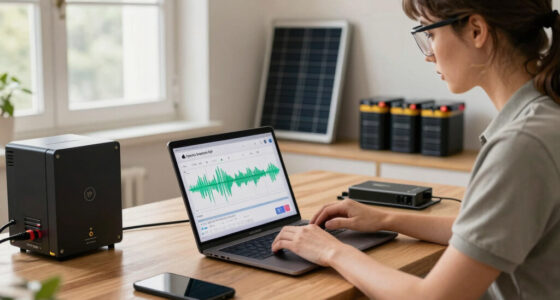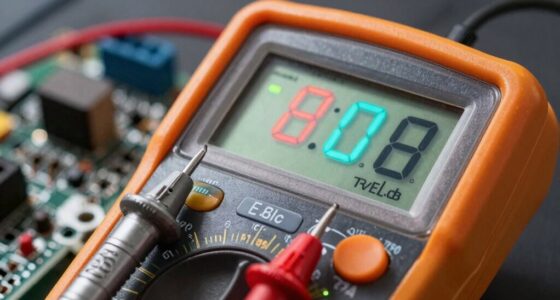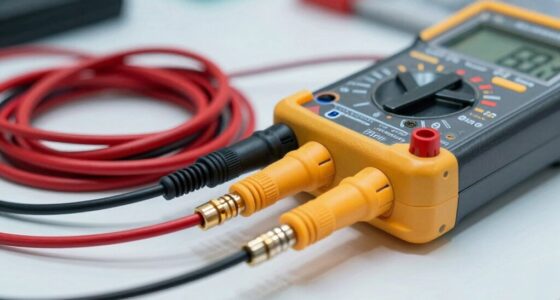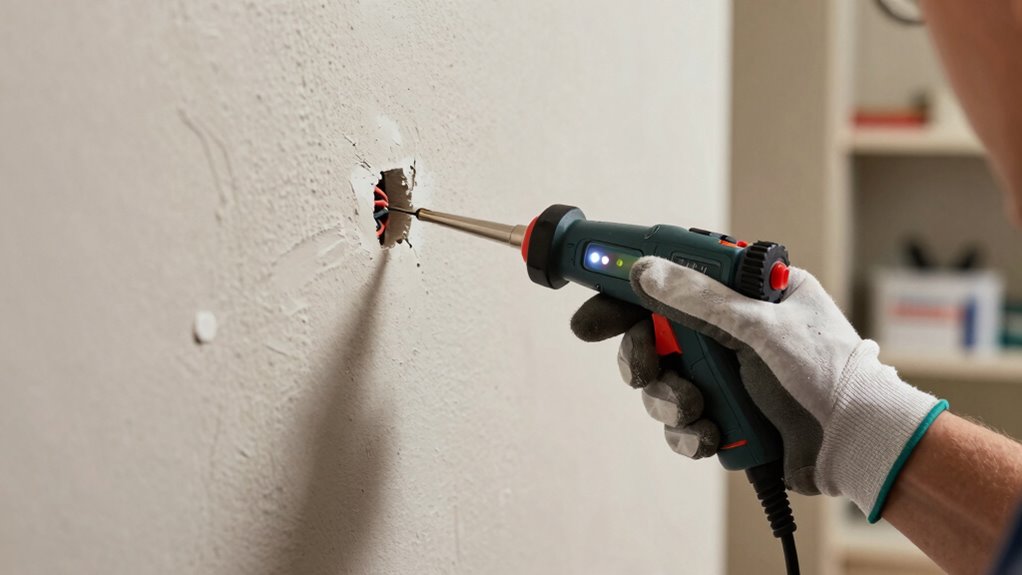

Circuit tracers save you time in real homes by quickly locating circuits behind walls or within complex systems without disconnecting wires or tearing into surfaces. They simplify connection, allowing you to follow signals easily while avoiding guesswork. This speeds up troubleshooting and reduces delays caused by searching or removing panels. With safety features and accurate signals, you can work faster and more confidently. Keep exploring to discover how these tools make electrical tasks more efficient.

Get backup power and energy gear delivered free — and shop member deals
- Fast, free delivery on millions of items
- Access to Prime Big Deal Days deals on October 6–7
- Prime Video, Amazon Music and more included
Key Takeaways
- Wireless technology allows quick, accurate circuit location without removing walls or panels.
- Simplifies connections, reducing setup time during troubleshooting.
- Enables detection behind obstructions like drywall or insulation efficiently.
- Reduces risk of errors and false leads, speeding up diagnosis.
- Enhances safety, minimizing the need for extensive disconnections and panel opening.
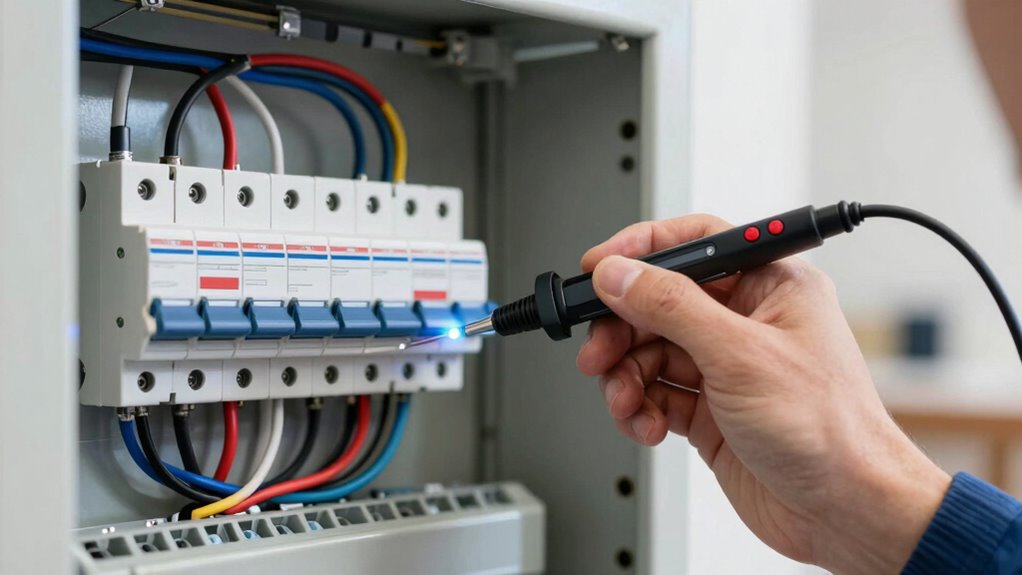
Circuit tracers are essential tools that help you quickly identify and follow electrical circuits, saving you valuable time on installation or troubleshooting. With advancements in wireless technology, these tools have become even more efficient and user-friendly. Instead of fumbling with cumbersome wires or relying solely on manual testing methods, you can now leverage wireless features that transmit signals clearly and accurately. This means you don’t need to disconnect or manipulate wires as much, reducing the risk of accidental shocks or damage to the system. Wireless technology also allows you to stay at a safe distance from live circuits while still pinpointing the exact path of the wiring, which enhances safety during repairs or inspections.
Using a wireless circuit tracer, you can swiftly locate circuits behind walls, in conduits, or within complex electrical systems. This capability reduces markedly the time it takes to trace circuits compared to traditional methods. Instead of removing panels or guesswork, you simply connect the transmitter to the circuit and use the receiver to follow the signal through walls and other obstructions. The clarity of wireless signals ensures you can distinguish the correct circuit quickly, avoiding the frustration of false leads or dead ends. This efficiency is especially valuable in real homes, where circuits are often hidden behind drywall, insulation, or other barriers, making manual tracing a tedious process. Additionally, the ability to interpret home wiring systems accurately can further streamline troubleshooting efforts.
Beyond time savings, modern circuit tracers contribute to safety improvements. The wireless features mean you’re less likely to accidentally touch energized parts or create shorts by moving wires around. Plus, many of these devices come with built-in safety features such as voltage detection alerts and insulated probes, giving you added confidence and protection as you work. They help prevent mistakes that could lead to electrical shocks or system damage, particularly when working in unfamiliar or complex wiring setups. The integration of wireless technology also simplifies the circuit identification, making it more accessible for both professionals and DIY enthusiasts. Understanding the wireless signal transmission capabilities can further enhance your troubleshooting efficiency. Recognizing the importance of proper testing techniques can also improve safety and accuracy when working with electrical systems. Furthermore, staying informed about sustainable practices in backyard design can inspire eco-friendly modifications to your home’s electrical system, encouraging energy efficiency and safety.
In practical terms, investing in a good wireless circuit tracer means you can troubleshoot electrical issues faster and with less hassle. You spend less time searching and more time fixing or installing circuits correctly the first time. The efficiency gained from wireless technology, coupled with safety enhancements, makes these tools indispensable for homeowners, electricians, or DIY enthusiasts. They streamline your work, reduce the risk of accidents, and ultimately save you hours on each project — making your electrical tasks safer, quicker, and more accurate.
As an affiliate, we earn on qualifying purchases.
Frequently Asked Questions
Are Circuit Tracers Safe for DIY Home Use?
Yes, circuit tracers are generally safe for DIY home use if you follow proper electrical safety precautions. They’re designed with user-friendly features that enhance tool usability, making it easier for you to locate circuits accurately. However, always guarantee the power is off before testing, wear protective gear, and read the manufacturer’s instructions carefully. Staying cautious minimizes risks and helps you safely identify live wires or circuits in your home.
Can Circuit Tracers Detect Hidden or Underground Wiring?
Yes, circuit tracers can help you uncover hidden wiring and underground detection with ease. They send signals along the wiring, allowing you to follow the path even if it’s concealed or underground. This makes locating hidden wiring safer and more efficient, reducing guesswork and potential damage. With a circuit tracer, you gain confidence in your DIY projects, ensuring you’re not disturbing unseen wiring or underground cables.
What Is the Average Cost of a Circuit Tracer?
The average cost of a circuit tracer ranges from $50 to $300, depending on features. If you want wireless connectivity and advanced features like digital signal processing, expect to pay toward the higher end. These enhanced models make tracing circuits easier and more precise, saving you time and effort. Investing in a quality circuit tracer with these features guarantees reliable performance, especially for complex or hidden wiring in your home.
How Accurate Are Circuit Tracers in Complex Wiring Systems?
Circuit tracers are quite accurate in complex wiring systems, especially for wire identification. They use signal accuracy to pinpoint specific wires even amidst intricate setups. However, their effectiveness can vary depending on the system’s complexity and the type of tracer you use. Generally, high-quality tracers provide reliable results, saving you time and reducing guesswork. Proper calibration and experience also enhance their accuracy in challenging wiring environments.
Do Circuit Tracers Work on All Types of Electrical Circuits?
Circuit tracers work on most electrical circuits, but their effectiveness varies with wireless compatibility and calibration methods. You’ll find that some models are designed for specific circuit types, so always check if your tracer supports wireless features and easy calibration. Proper calibration guarantees accurate tracing, especially in complex systems. While they’re versatile, understanding their limitations helps you choose the right tracer for your needs.
As an affiliate, we earn on qualifying purchases.
Conclusion
Using circuit tracers can cut your troubleshooting time by up to 50%, making home repairs quicker and less frustrating. Imagine spending half the time figuring out wiring issues instead of hours crawling behind walls or flipping switches. With these tools, you’re not just saving time—you’re preventing unnecessary damage and reducing safety risks. So next time you face electrical problems, remember: a circuit tracer isn’t just a gadget; it’s your quickest route to a safer, faster fix.
electrical wiring detection tool
As an affiliate, we earn on qualifying purchases.
As an affiliate, we earn on qualifying purchases.
home electrical troubleshooting device
As an affiliate, we earn on qualifying purchases.
As an affiliate, we earn on qualifying purchases.
Halloween Picks
halloween
As an affiliate, we earn on qualifying purchases.