
The best home energy storage systems pair useful capacity with output and installation needs that match your home. My best overall pick is the Anker SOLIX E10, a whole-home backup system that stands apart from portable power stations. For a large solar setup, the ECO-WORTHY 32kWh system brings batteries, panels, and a hybrid inverter together; for simpler portable backup, the Jackery HomePower 3600 Plus offers a more contained option. The main tradeoffs are whole-home capability versus portability, integrated kits versus components, and battery capacity versus the work needed to install and expand a system. Read on for the full breakdown and a guide to matching a system to your backup goals.

Get backup power and energy gear delivered free with Prime
- Fast, free delivery on millions of items
- Prime Video, Amazon Music and more included
- Member-only deals all year
Key Takeaways
- The Anker SOLIX E10 is the clearest whole-home pick in this lineup, while most portable stations are better suited to selected circuits and appliances.
- The ECO-WORTHY 32kWh kit bundles major system components, but its scale makes planning, space, and installation a bigger commitment than a portable unit.
- Capacity figures alone do not predict backup performance: inverter output, usable energy, and the appliances running at the same time also matter.
- Several ECO-WORTHY options sell batteries, inverters, or solar components in different combinations, so buyers should check exactly what a kit includes before planning around it.
- Portable systems such as the Jackery HomePower 3600 Plus and EF ECOFLOW DELTA Pro trade whole-home integration for mobility, making them better fits for flexible backup than permanent home circuits.
| Anker SOLIX E10 Whole-Home Backup Power System with Smart Inlet Box and Two B6000 Batteries |  | Best for Whole-Home Backup | Continuous output: 7.6 kW | Turbo output: 10 kW | Included battery capacity: 12 kWh | VIEW LATEST PRICE | See Our Full Breakdown |
| Jackery HomePower 3600 Plus Portable Power Station, 3584Wh, 3600W |  | Best Portable Home Backup | Battery capacity: 3,584Wh | Output: 3,600W | Parallel output: Up to 7,200W | VIEW LATEST PRICE | See Our Full Breakdown |
| ECO-WORTHY 32kWh Solar Home Backup System with 6 Solar Panels, 2 LiFePO4 Batteries, and 10kW Hybrid Inverter |  | Best Complete High-Capacity Solar Kit | Solar panels: 6 × 590W N-type panels | Usable energy: 30kWh+ | Battery configuration: 2 × 48V 314Ah LiFePO4 | VIEW LATEST PRICE | See Our Full Breakdown |
| ECO-WORTHY 48V Home Backup Power System with 10,240Wh LiFePO4 Batteries and 5,000W Inverter |  | Best Expandable 48V Backup Kit | Battery configuration: Two 51.2V 100Ah LiFePO4 batteries | Total capacity: 10,240Wh | Inverter output: 5,000W | VIEW LATEST PRICE | See Our Full Breakdown |
| ECO-WORTHY 10kW Off-Grid Solar Kit with 2,950W Panels and 16kWh Battery |  | Best Split-Phase Off-Grid Kit | Maximum inverter output: 10,000W continuous; 20,000W peak | Solar panel capacity: 2,950W total (5 × 590W panels) | Battery: 48V 314Ah LiFePO4 | VIEW LATEST PRICE | See Our Full Breakdown |
| ECO-WORTHY Cubix100 48V 600Ah LiFePO4 Server Rack Battery System, 6-Pack |  | Best for Large, Expandable Battery Capacity | Chemistry: LiFePO4 | System voltage: 51.2V (48V nominal) | Total capacity: 600Ah (6 × 100Ah) | VIEW LATEST PRICE | See Our Full Breakdown |
| Jackery HomePower 3000 Portable Power Station with Two 200W Solar Panels |  | Best Portable Backup with Included Solar Panels | Battery capacity: 3,072Wh | Battery chemistry: LiFePO4 | AC output: 3,600W | VIEW LATEST PRICE | See Our Full Breakdown |
| Dawnice 16 kWh LiFePO4 Wall-Mounted Solar Battery, 51.2V 314Ah |  | Best Wall-Mounted Battery for Expandable Solar Storage | Chemistry: LiFePO4 | Capacity: 16kWh | Voltage: 51.2V DC | VIEW LATEST PRICE | See Our Full Breakdown |
| AOUSK 48V 314Ah LiFePO4 Lithium Battery, 16.08kWh |  | Best for Monitoring and Higher-Current Battery Protection | Chemistry: LiFePO4 | Nominal voltage: 51.2V | Capacity: 314Ah | VIEW LATEST PRICE | See Our Full Breakdown |
| EF ECOFLOW DELTA Pro Portable Power Station, 3600Wh, 3600W AC Output | 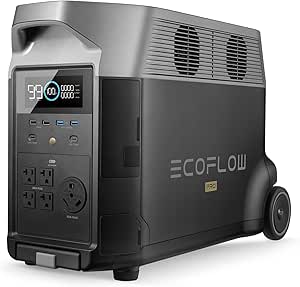 | Best Expandable Portable Power Station | Battery capacity: 3,600Wh | Running output: 3,600W | Starting output: 7,200W | VIEW LATEST PRICE | See Our Full Breakdown |
| ABOK Ark3600 Portable Power Station with 3 × 200W Solar Panels, 3840Wh, 3600W |  | Best Expandable Portable Backup Bundle | Battery capacity: 3,840Wh, expandable to 11,520Wh | Battery type: LiFePO4 | Output: 3,600W; 7,200W peak | VIEW LATEST PRICE | See Our Full Breakdown |
More Details on Our Top Picks
Anker SOLIX E10 Whole-Home Backup Power System with Smart Inlet Box and Two B6000 Batteries
The Anker SOLIX E10 is the strongest fit here for buyers prioritizing high-output household backup over portability. Its 7.6 kW continuous output and 10 kW turbo output give it more headroom for home loads than the Jackery HomePower 3600 Plus, which is a portable 3,600W unit. The included 12 kWh of LFP storage can be expanded to 30 kWh, while 9 kW solar input per unit leaves room to replenish the batteries from a substantial solar array. The Smart Inlet Box and outdoor-rated design also suit a fixed backup setup. The tradeoff is that this is not a plug-and-play station: professional installation may be needed, and reaching the advertised maximum capacity requires buying additional batteries.
Pros:- 7.6 kW continuous output with 10 kW turbo output for heavier household loads
- 12 kWh included storage, expandable up to 30 kWh
- Supports up to 9 kW of solar input per unit
- Indoor or outdoor installation options and a Smart Inlet Box are included
Cons:- Professional installation may be needed, adding complexity to setup
- The included 12 kWh is well below the 30 kWh expansion ceiling
- Its fixed backup design is less portable than the Jackery HomePower 3600 Plus
Best for: Homeowners seeking a fixed, expandable backup system with enough output for multiple household circuits and plans for professional installation.
Not ideal for: Renters or buyers who need a portable, ready-to-use power station; installation requirements and the 60.6-pound power module make it a less flexible fit.
- Continuous output:7.6 kW
- Turbo output:10 kW
- Included battery capacity:12 kWh
- Expandable capacity:Up to 30 kWh
- Solar input:Up to 9 kW per unit
- Battery type:LFP
- Operating temperature:-4°F to 131°F
- Warranty:5 years for E10; 10 years for Smart Inlet Box
Our verdict“Choose the E10 if you want an expandable, high-output home backup system and are prepared for a professionally installed setup.”
Jackery HomePower 3600 Plus Portable Power Station, 3584Wh, 3600W
The Jackery HomePower 3600 Plus makes more sense for flexible, room-to-room backup than the fixed-install Anker SOLIX E10. Its 77.2-pound body, wheels, and telescopic handle let one person move it between storage and a charging spot, though the weight still makes lifting difficult. The 3,584Wh battery and 3,600W output cover many essential loads, and parallel units can provide 120V/240V operation and 7,200W output. Four charging methods, including a stated two-hour hybrid AC-and-DC recharge, are useful when outages interrupt one source of power. Compared with the E10, it is far less suited to whole-home fixed backup, and solar panels are optional. Its 5-year warranty and 6,000-cycle LFP rating add useful context for buyers weighing repeated use.
Pros:- 3,600W output and 3,584Wh battery capacity for portable backup
- Wheels and telescopic handle ease movement across floors
- Parallel operation supports up to 7,200W and 120V/240V output
- Hybrid AC-and-DC charging has a stated two-hour recharge time
Cons:- At 77.2 pounds, it remains heavy to lift despite the wheels
- Solar panels must be purchased separately
- A single unit has much less storage and output than the Anker SOLIX E10
Best for: Households that want a movable backup station for essential appliances, with the option to connect multiple units for higher output.
Not ideal for: Buyers seeking a permanently wired whole-home system or solar-ready kit in one purchase; panels are optional, and its 3,584Wh capacity is smaller than the fixed systems here.
- Battery capacity:3,584Wh
- Output:3,600W
- Parallel output:Up to 7,200W
- Voltage:120V; 240V in parallel
- Expandable capacity:Up to 21kWh per unit or 43kWh with multiple units
- Battery type and cycle life:LFP; rated for 6,000 cycles
- Charging options:Hybrid AC+DC, AC, solar, or gas generator
- Weight:77.2 pounds
Our verdict“Pick the Jackery if you value movable backup and flexible charging more than fixed whole-home coverage.”
ECO-WORTHY 32kWh Solar Home Backup System with 6 Solar Panels, 2 LiFePO4 Batteries, and 10kW Hybrid Inverter
For buyers who want panels, batteries, and an inverter together, the ECO-WORTHY 32kWh system offers the most substantial included storage in this group. Its 30kWh-plus usable capacity and 10kW hybrid inverter suit extended backup or off-grid use better than the ECO-WORTHY 10kW Off-Grid Solar Kit, which includes about 16.1kWh of battery storage. Six 590W panels provide a defined solar array, while 120V and 240V output supports a wider range of household loads. Bluetooth and Wi-Fi monitoring, several battery communication protocols, and a stated cycle life of over 9,000 cycles at 80% depth of discharge add useful system-level detail. The scale is the drawback: it ships on a pallet, needs substantial installation planning, and the inverter’s exterior version is selected randomly.
Pros:- Includes six 590W panels, two batteries, a hybrid inverter, and cables
- Over 30kWh of usable energy for longer backup or off-grid operation
- 10kW inverter provides 120V and 240V output
- App monitoring and multiple battery communication protocols are supported
Cons:- Large, heavy components ship by truck on a pallet
- The inverter exterior version is selected randomly
- Its installation and system scale are more demanding than the ECO-WORTHY 48V 5,000W kit
Best for: Homeowners or off-grid users planning a large solar installation who want panels, inverter, and more than 30kWh of usable storage in one kit.
Not ideal for: Small homes, renters, or buyers who need a compact backup unit; this pallet-shipped system requires space and a more involved installation.
- Solar panels:6 × 590W N-type panels
- Usable energy:30kWh+
- Battery configuration:2 × 48V 314Ah LiFePO4
- Inverter:10kW hybrid
- Output voltage:120V and 240V
- Battery cycle life:9000+ cycles at 80% DoD
- Monitoring:Bluetooth and Wi-Fi app monitoring
- Battery communication:RS485, CAN, and RS232
Our verdict“Choose this kit for a large solar-backed installation where substantial storage matters more than compactness or simple setup.”
ECO-WORTHY 48V Home Backup Power System with 10,240Wh LiFePO4 Batteries and 5,000W Inverter
The ECO-WORTHY 48V Home Backup Power System is a practical middle ground for buyers who want a battery-and-inverter kit without the scale of the 32kWh ECO-WORTHY system. It pairs 10,240Wh of LiFePO4 storage with a 5,000W pure sine wave inverter and built-in 100A MPPT controller, giving the package a clear path from basic backup toward a larger system. Bluetooth and Wi-Fi monitoring help owners check battery status without relying only on the LED display. Its parallel support—up to six inverters and 32 batteries—offers more growth potential than the portable Jackery HomePower 3600 Plus. That flexibility comes with substantial hardware: the listed system weighs 236.9 pounds, and the batteries and inverter ship separately. It also does not include solar panels, unlike the ECO-WORTHY kits with panels.
Pros:- 10,240Wh of LiFePO4 storage paired with a 5,000W inverter
- Pure sine wave inverter includes a 100A MPPT controller
- Bluetooth and Wi-Fi battery monitoring are supported
- Parallel expansion supports up to six inverters and 32 batteries
Cons:- The listed system weight is 236.9 pounds
- Batteries and inverter ship separately
- Solar panels are not included, unlike the ECO-WORTHY 32kWh system
Best for: Homeowners building a 48V backup system who want meaningful battery storage now and the option to add batteries or inverters later.
Not ideal for: Buyers who need a lightweight, ready-to-run unit or a complete panel-and-battery solar package; this kit is heavy and panels are not listed as included.
- Battery configuration:Two 51.2V 100Ah LiFePO4 batteries
- Total capacity:10,240Wh
- Inverter output:5,000W
- Peak output:10,000W
- Inverter type:Pure sine wave
- MPPT controller:100A
- PV input voltage range:120–500V DC
- Maximum parallel configuration:6 inverters and 32 batteries
Our verdict“Choose this kit if you want expandable 48V storage and inverter capacity without buying one of the larger all-in-one solar packages.”
ECO-WORTHY 10kW Off-Grid Solar Kit with 2,950W Panels and 16kWh Battery
The ECO-WORTHY 10kW Off-Grid Solar Kit suits buyers who need split-phase household output but do not need the 30kWh-plus storage of the larger ECO-WORTHY system. Its 10kW continuous inverter, 120V/240V output, and roughly 16.1kWh battery capacity can support a broad range of off-grid loads. The five 590W panels, dual MPPT controllers, and multiple operating modes make this a more complete starting point than the 48V ECO-WORTHY 5,000W kit, which supplies batteries and an inverter but no listed panels. The imbalance to understand is that the included array totals 2,950W—well below the inverter’s 10kW output rating—so solar production will not match the inverter’s full power capability. Large palletized components and recommended professional installation also make setup a serious project.
Pros:- 10kW continuous inverter output with 120V/240V split-phase support
- Includes five 590W panels, a 16.076kWh battery, inverter, and cables
- Dual MPPT controllers support solar charging
- Battery monitoring includes display, Bluetooth, Wi-Fi, and PC connectivity
Cons:- Professional installation is recommended, and novice installation can pose safety risks
- The 2,950W solar array is substantially smaller than the inverter’s 10kW output rating
- Large, heavy components ship on a pallet
Best for: Off-grid homeowners who need 120V/240V split-phase output, a substantial battery, and included panels for a professionally installed system.
Not ideal for: First-time DIY buyers or households expecting the included panels to sustain the inverter’s full 10kW output; installation is demanding and panel capacity is 2,950W.
- Maximum inverter output:10,000W continuous; 20,000W peak
- Solar panel capacity:2,950W total (5 × 590W panels)
- Battery:48V 314Ah LiFePO4
- Battery energy capacity:16.076kWh
- Output voltage:120V or 120V/240V split phase
- Solar charge controllers:Dual MPPT
- Maximum system voltage:500V
- Battery monitoring:7-inch display, Bluetooth, Wi-Fi, and PC connectivity
Our verdict“Choose this kit for an installed off-grid system needing split-phase output and moderate-to-high storage, rather than a solar array sized to deliver 10kW.”
ECO-WORTHY Cubix100 48V 600Ah LiFePO4 Server Rack Battery System, 6-Pack
I’d put the Cubix100 on the shortlist for buyers building a substantial 48V home backup or off-grid battery bank. Its 30.72kWh of LiFePO4 storage is far beyond the capacity of portable options such as the EF ECOFLOW DELTA Pro, and it can expand to 32 batteries for a much larger system. UL9540, UL1973, and CEC listings, plus CAN and RS485 communication, make it a more installation-oriented choice than a plug-in power station. Bluetooth and Wi-Fi add convenient monitoring, but the batteries still need a compatible inverter and a rack, which is not included. I’d choose it for a planned fixed installation, not for buyers seeking a complete, ready-to-use backup package; the six-battery setup also brings more installation and delivery logistics.
Pros:- 30.72kWh of storage from six LiFePO4 batteries.
- Expandable to as many as 32 batteries, with stated capacity up to 163.8kWh.
- UL9540, UL1973, and CEC listings, plus CAN and RS485 communication.
- Bluetooth and Wi-Fi monitoring support app-based system checks.
Cons:- Rack is not included, adding a separate equipment and installation requirement.
- Requires a compatible inverter and system integration rather than offering plug-and-play backup.
- A six-battery system may involve complex handling and multiple deliveries.
Best for: Homeowners or off-grid users planning a fixed 48V system who need substantial storage now and room to expand.
Not ideal for: Buyers who want a portable, ready-to-run power station or a complete system with rack and inverter included.
- Chemistry:LiFePO4
- System voltage:51.2V (48V nominal)
- Total capacity:600Ah (6 × 100Ah)
- Energy capacity:30.72kWh
- Maximum expansion:32 batteries; up to 163.8kWh
- Communications:CAN, RS485, Bluetooth, and Wi-Fi
- Listings:UL9540, UL1973, and CEC
- Warranty:10 years
- Rack:Not included
Our verdict“Choose the Cubix100 if you want a large, expandable fixed battery bank and already have a plan for its rack, inverter, and installation.”
Jackery HomePower 3000 Portable Power Station with Two 200W Solar Panels
This Jackery makes more sense for portable, appliance-level backup than for building a whole-home battery bank. It combines 3,072Wh of storage with 3,600W AC output and a UPS that switches in 20ms or less, giving connected essentials a quick handoff during an outage. The included pair of 200W panels gives buyers a solar charging path out of the box, unlike the EF ECOFLOW DELTA Pro, whose solar panels are separate equipment. In return, Jackery offers much less storage and expansion potential than the fixed-install ECO-WORTHY Cubix100. Its multiple charging inputs and 4,000-cycle LiFePO4 rating support regular use, but the 59.5-pound unit is not effortless to move, and its two packages may arrive separately. I’d treat it as a portable backup for selected circuits and devices, not a substitute for a large installed battery system.
Pros:- 3,600W AC output with 7,200W surge capacity for a range of essential appliances.
- UPS transfer time of 20ms or less supports fast backup for connected devices.
- Includes two 200W solar panels and supports AC, car, and generator charging.
- LiFePO4 battery rated for 4,000 cycles while retaining 70% capacity.
Cons:- 3,072Wh capacity is far smaller than the ECO-WORTHY Cubix100’s 30.72kWh fixed battery bank.
- At 59.5 pounds, moving it regularly may be awkward.
- The power station and solar panels may arrive in separate packages.
Best for: Households seeking portable outage backup for essential appliances, with included solar panels for recharging.
Not ideal for: Buyers who need multi-day whole-home storage, a large expandable battery bank, or a lightweight unit they can carry easily.
- Battery capacity:3,072Wh
- Battery chemistry:LiFePO4
- AC output:3,600W
- Surge output:7,200W
- UPS transfer time:20ms or less
- Included solar panels:Two 200W panels
- Weight:59.5 lb
Our verdict“Pick the HomePower 3000 if you want a portable, solar-ready backup for essential devices rather than a high-capacity fixed home system.”
Dawnice 16 kWh LiFePO4 Wall-Mounted Solar Battery, 51.2V 314Ah
The Dawnice is a single-unit, 16kWh battery for buyers who already have, or are planning, a compatible inverter-based solar system. Its stated 6,000-plus-cycle life and 10-year limited warranty make it a longer-horizon storage choice than the AOUSK 48V 314Ah battery, which has a shorter five-year warranty. Dawnice also supports up to 15 units in parallel, so buyers can add storage as their needs grow. The tradeoff is that this is not a complete backup system: the inverter is not stated to be included, and the published 16,000W maximum power and 5,000W AC output claims may leave buyers unsure what the full system can deliver. Its built-in 100A BMS is also less substantial on paper than AOUSK’s 200A BMS. I’d confirm inverter compatibility and power limits before choosing it.
Pros:- 16kWh of LiFePO4 storage in a single battery unit.
- Manufacturer states a cycle life of more than 6,000 cycles and includes a 10-year limited warranty.
- Supports up to 15 units in parallel for increased storage capacity.
- Bluetooth monitoring and a built-in BMS support system monitoring and battery protection.
Cons:- A compatible inverter is required and is not stated to be included.
- The stated 16,000W maximum power and 5,000W AC output claims may be difficult to reconcile.
- Its 100A BMS rating is lower than the AOUSK battery’s 200A BMS rating.
Best for: Solar-system owners who need a wall-mounted 51.2V battery and want the option to add parallel units over time.
Not ideal for: Buyers seeking a complete inverter-and-battery package or clear, confirmed output specifications without additional compatibility checks.
- Chemistry:LiFePO4
- Capacity:16kWh
- Voltage:51.2V DC
- Maximum power:16,000W
- Charge-discharge current:150A standard and maximum discharge
- Built-in BMS:100A
- Cycle life:6,000+ cycles
- Parallel expansion:Up to 15 units
- Warranty:10-year limited warranty
Our verdict“Choose Dawnice for expandable wall-mounted storage if your inverter is compatible and you can verify the output specifications before buying.”
AOUSK 48V 314Ah LiFePO4 Lithium Battery, 16.08kWh
AOUSK’s 16.07kWh battery stands out for buyers who want multiple ways to monitor and connect a fixed battery. Its display, app, RS232, RS485, and CAN interfaces give installers more communication options than the Dawnice 16kWh battery, which lists Bluetooth monitoring. A 200A BMS and dual breakers are also useful on a system where protection and inverter communication matter. It can expand to 15 units in parallel, though as with Dawnice, that does not make it a complete backup package: compatible system equipment and setup are still required. The big practical drawback is handling. At 291 pounds, built-in wheels and handles help with movement but do not make installation a one-person job. Its five-year warranty is also shorter than Dawnice’s 10-year limited warranty, so I’d favor AOUSK for its monitoring and protection features, not warranty length.
Pros:- 200A BMS, dual breakers, and six-layer protection features.
- Display, app, RS232, RS485, CAN, Bluetooth, and Wi-Fi support varied monitoring and communications.
- Supports connection of up to 15 units in parallel.
- Built-in wheels and handles assist with moving the heavy battery.
Cons:- Weighs 291 pounds, making delivery, positioning, and installation challenging.
- Requires compatible equipment and setup for solar or backup use.
- Its five-year warranty is shorter than the Dawnice battery’s 10-year limited warranty.
Best for: Solar and backup system owners who want several monitoring and inverter-communication options in a 16kWh battery.
Not ideal for: Buyers who need a ready-to-install complete system, a lighter battery, or a longer stated warranty.
- Chemistry:LiFePO4
- Nominal voltage:51.2V
- Capacity:314Ah
- Energy storage:16.07kWh
- BMS:200A
- Cycle life:Up to 6,000 cycles at 80% state of health
- Communications:RS485, CAN, RS232, Bluetooth, and Wi-Fi
- Parallel expansion:Up to 15 units
- Weight:291 lb
Our verdict“Choose AOUSK if communication flexibility and a 200A BMS matter more to you than a lighter battery or a longer warranty.”
EF ECOFLOW DELTA Pro Portable Power Station, 3600Wh, 3600W AC Output
The DELTA Pro is the more flexible choice for buyers who want a portable power station that can grow into a larger backup setup. It starts with 3,600Wh and 3,600W AC output, then can expand to 25kWh with compatible extra batteries or Smart Generators. That makes it more expandable than the Jackery HomePower 3000 as described here, while keeping the convenience of a standalone unit. Five charging methods, app control, and 15 output connections suit homes that also need power away from the house. Its capacity still begins well below the ECO-WORTHY Cubix100’s 30.72kWh, and reaching the DELTA Pro’s expansion ceiling requires additional equipment. At 99 pounds, it is portable in principle, but not something most buyers will want to carry often; the fastest stated AC charging also depends on access to high-wattage power.
Pros:- 3,600Wh capacity and 3,600W running output, with 7,200W starting output.
- Expandable to 25kWh with compatible extra batteries or Smart Generators.
- Offers AC, solar, car, EV station, and Smart Generator charging methods.
- Wi-Fi and Bluetooth app connectivity support monitoring and settings control.
Cons:- Weighs 99 pounds, limiting how easily it can be moved.
- Reaching the stated 25kWh capacity requires compatible additional equipment.
- Fast recharge times depend on access to high-wattage AC power or multiple solar panels.
Best for: Households that want a portable starting system with multiple charging options and a path to greater capacity using compatible expansion equipment.
Not ideal for: Buyers who need a lightweight unit, a complete fixed whole-home installation, or large storage capacity without adding equipment.
- Battery capacity:3,600Wh
- Running output:3,600W
- Starting output:7,200W
- Maximum output with X-Boost:4,500W
- Expandable capacity:Up to 25kWh
- Charging methods:EV station, solar, wall outlet, Smart Generator, and car outlet
- Total output connections:15
- Weight:99 lb
- App connectivity:Wi-Fi and Bluetooth
Our verdict“Pick the DELTA Pro if you want a high-output portable power station with a substantial expansion path and can manage its weight and add-on requirements.”
ABOK Ark3600 Portable Power Station with 3 × 200W Solar Panels, 3840Wh, 3600W
The ABOK Ark3600 pairs a 3,840Wh LiFePO4 battery with three included 200W solar panels, making it a practical choice for buyers who want portable backup and a ready-made solar charging option. Its capacity can expand to 11,520Wh, giving it more room to grow than a fixed-capacity portable unit such as the Jackery HomePower 3000. The 3,600W output and 15 ports suit several household essentials and smaller devices, though this is not a hardwired whole-home system like the Anker SOLIX E10. App monitoring and scheduled charging add useful control, while the stated 4,000-cycle LiFePO4 life supports repeated use. The tradeoffs are substantial: at 92 pounds, it is awkward to move, and its fastest recharge claims depend on optimal conditions.
Pros:- Expandable capacity up to 11,520Wh can support longer backup periods as needs grow.
- Includes three 200W solar panels for a bundled solar-charging setup.
- Fifteen output ports accommodate multiple device types at once.
- LiFePO4 battery is rated for 4,000 cycles, with app monitoring and scheduling.
Cons:- At 92 pounds, it is difficult to move often or carry up stairs.
- The fastest stated recharge times require optimal conditions and may not reflect typical use.
- Portable power-station design does not provide the hardwired whole-home setup offered by systems such as the Anker SOLIX E10.
Best for: Households seeking a portable outage and RV backup unit with included solar panels, expandable capacity, and enough ports for several devices.
Not ideal for: Buyers who need hardwired whole-home integration, a lightweight station for frequent carrying, or solar charging that does not depend on suitable conditions.
- Battery capacity:3,840Wh, expandable to 11,520Wh
- Battery type:LiFePO4
- Output:3,600W; 7,200W peak
- Starting wattage:4,500W
- Output ports:15
- Charging input:Up to 3,500W combined AC and solar
- Solar panels:3 × 200W
- Weight and dimensions:92 lb; 21.6 × 12.6 × 18.5 in
- Battery life and warranty:Rated for 4,000 cycles; stated 10-year lifespan; 5-year warranty
Our verdict“Choose the ABOK Ark3600 if you want expandable portable backup with solar panels included, but skip it if easy portability or hardwired whole-home coverage matters most.”
How We Picked
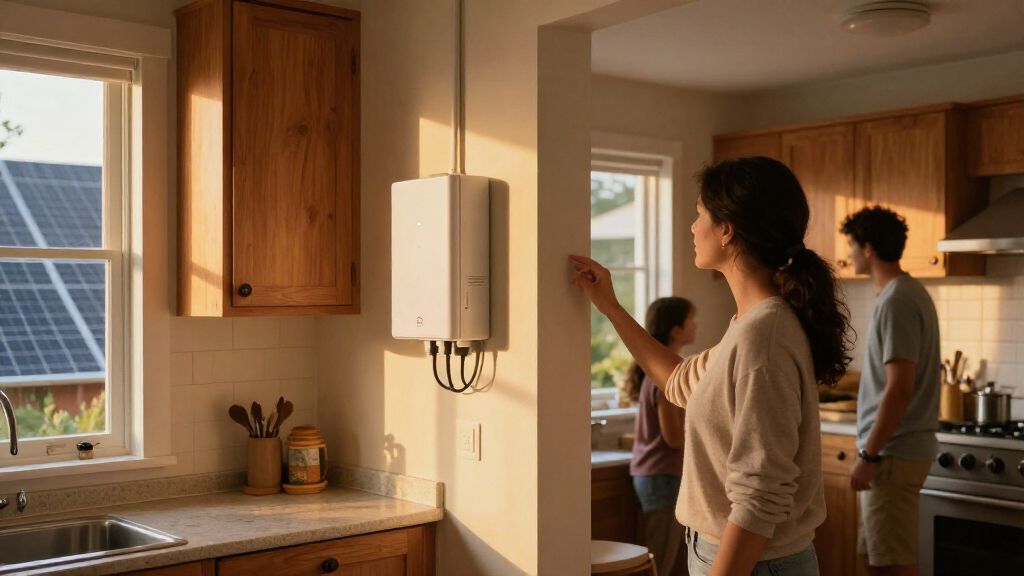
I ranked these systems by how well their stated configuration fits real home backup needs: stored energy, inverter output, included solar and conversion equipment, and whether the setup is designed for portable use, selected loads, or broader home backup. I also weighed how much planning and installation the buyer must take on, plus the flexibility to add components or use the system for more than one purpose. A large battery rating matters, but it cannot make up for an inverter that cannot handle the intended loads or a package that omits necessary equipment.
The order gives priority to complete, clearly defined backup solutions, then to systems whose component mix or portability best serves a narrower use. The Anker SOLIX E10 leads for its whole-home orientation; the bundled ECO-WORTHY solar system follows for buyers who want a larger integrated setup. Portable stations and standalone batteries rank lower for whole-home use, not because they lack value, but because their installation paths and capabilities differ. Buyers should confirm compatibility, included components, and local electrical requirements before purchase.
Factors to Consider When Choosing Best Home Energy Storage Systems
Choosing a home battery starts with the job you expect it to do, not the biggest capacity number on a product page. These decisions can change whether a portable station, a battery-and-inverter package, or a whole-home system makes sense.
Decide Which Loads Need Backup
Write down the circuits or appliances you want to keep running during an outage before comparing battery sizes. A refrigerator, lights, and internet equipment create a different demand from electric heating, a well pump, or central air conditioning. Check both the devices’ running draw and their startup surge, since motors can briefly demand far more power than their normal operation suggests. A system may have enough stored energy for hours of use yet lack the inverter output to start a major appliance. Whole-home backup usually calls for a planned electrical connection, while portable units may be most practical for a few selected loads. Avoid assuming that a high watt-hour figure means the system can power every circuit in the house.
Match Capacity to Outage Length
Battery capacity affects how long loads can run, while output determines which loads can run at once; buyers need to check both. Estimate daily energy use for the essential devices and allow for conversion losses and changes in demand. A large battery can still fall short during a long outage if there is no dependable way to recharge it. Solar panels can extend runtime in suitable conditions, but their output changes with weather, season, roof orientation, and shading. Decide whether you need a short bridge through brief interruptions or a system that can support repeated days of essential use. Building around a realistic load list is usually more useful than buying the largest capacity available.
Check What the Package Actually Includes
Home storage packages vary: some combine a battery, inverter, and solar panels, while others provide only a battery or a portable power station. Confirm the exact number and type of batteries, inverter, panels, cables, and transfer or inlet equipment before comparing configurations. A battery may need a compatible inverter and controls to deliver usable power, and those parts can affect both cost and installation plans. Ask whether the stated capacity is total or usable and whether the system supports expansion with the components you intend to add. A bundle can simplify component matching, but it may include equipment that does not suit your roof or backup priorities. Compare complete working configurations rather than headline capacity alone.
Plan Installation and Electrical Compatibility
A portable station can often serve appliances directly, but connecting backup power to home circuits involves electrical equipment and code requirements. Check whether the system uses a transfer switch, smart panel, or inlet box and whether it is compatible with your existing electrical service. Permanent battery installations may require a qualified electrician, permits, suitable mounting space, and a clear path for wiring. Confirm the battery chemistry, voltage, inverter compatibility, and expansion rules before combining components from different suppliers. A low-complexity setup can be easier to deploy, while a more integrated system may provide a cleaner path to home-wide backup. Get installation requirements in writing before choosing a unit based on specifications alone.
Weigh Portability Against Permanent Backup
Portable power stations can move between rooms or travel beyond the home, which makes them useful when backup needs change. Their limits may include fewer direct connections to household circuits and less flexibility for large, permanent battery banks. Wall-mounted and rack batteries favor a fixed installation and can suit buyers building a larger system, but they require attention to space, wiring, controls, and ventilation requirements. Consider where the system will sit, how it will be moved or serviced, and whether it must remain available for non-outage uses. Paying more for a home-integrated system makes sense when whole-home connections are a priority. If you only need a few devices powered, portability may matter more than elaborate integration.
Plan for Recharging and Future Changes
Stored energy is only one part of backup planning; the recharge method determines how ready the system is for the next outage. Check solar input limits, panel compatibility, charging options, and the conditions needed to replenish the battery. If you plan to expand later, confirm supported battery counts, voltage limits, inverter capacity, and whether the manufacturer allows components to be mixed across product generations. Do not assume a battery described as expandable will connect to every inverter or panel arrangement. A system sized around today’s needs can become restrictive if you later add an electric vehicle, heat pump, or other high-load appliance. Choosing a realistic expansion path can be more valuable than paying for unused capacity now.
Frequently Asked Questions
Can a portable power station run my whole house during an outage?
Usually, a portable power station is better suited to a selected group of devices than to every circuit in a home. Its inverter output, available outlets, and connection method set practical limits even when its stored capacity is substantial. Running large appliances together can exceed its output, and connecting it to household wiring requires compatible transfer equipment and a safe installation. Make a list of essential loads and check their running and startup demands against the specific unit. If you need broad circuit coverage, compare systems designed for whole-home integration rather than choosing by battery capacity alone.
How much battery capacity do I need for an overnight outage?
There is no single capacity that fits every home, because runtime depends on what you power and how often those devices operate. Add up the estimated energy use of essential appliances over the hours you want backup, then account for system losses and changes in use. A refrigerator cycling intermittently is different from a heater or pump running for long periods. Check the system’s usable capacity, not only its headline battery figure, and verify that its inverter can handle the largest simultaneous load. A short load audit can prevent paying for capacity you will not use or buying too little for your essential circuits.
Should I choose a complete solar backup kit or buy the battery and inverter separately?
A bundled kit can make component matching simpler when its included battery, inverter, and panels suit your site and backup plan. Buying components separately can offer more flexibility, but it puts the burden on you to verify voltage, inverter compatibility, solar input limits, and controls. Neither route removes the need to check installation requirements or confirm what equipment is absent from the package. Compare the full installed configuration, including electrical work and any required transfer equipment, rather than only the battery specifications. A kit is most helpful when its parts match your intended use without forcing compromises on the solar layout or loads.
Can I add more batteries later, even if I start with one?
Expansion depends on the system’s battery architecture, inverter limits, approved battery combinations, and the manufacturer’s connection rules. A product description that mentions expansion does not guarantee that every battery with the same voltage will work safely or communicate correctly. Before buying, check supported battery counts, capacity limits, compatible models, and whether older and newer units can be combined. Also consider whether your inverter can supply enough power after adding storage; more energy does not automatically raise output. If future growth matters, choose a system with a documented expansion path rather than relying on assumptions.
Do I need an electrician to install a home energy storage system?
Many portable units can power devices through their own outlets, but wiring a system into household circuits is a different job. A transfer switch, inlet box, fixed battery, or hybrid inverter can involve electrical code, permits, and compatibility with your service panel. Requirements vary by location and system design, so confirm them with the manufacturer and a qualified local electrician before purchase. Professional planning can also clarify which circuits can be backed up and whether the system can support their starting loads. Do not connect a power station to home wiring through an improvised method.
Conclusion
For most buyers seeking a dedicated home backup setup, I’d start with the Anker SOLIX E10 as the best overall choice because its whole-home orientation sets it apart from portable stations. The ECO-WORTHY 32kWh solar system is my best value-style pick for buyers who want a substantial battery-and-solar package in one configuration, provided its installation demands suit their property. For a premium, larger-scale off-grid direction, consider the ECO-WORTHY 10kW kit, after confirming its components and site requirements. Beginners who want a more contained portable option should look at the Jackery HomePower 3600 Plus; buyers prioritizing mobility can also compare the EF ECOFLOW DELTA Pro and ABOK Ark3600. For a battery-focused build, the Dawnice wall-mounted unit, AOUSK battery, or ECO-WORTHY rack batteries may suit a compatible system, but they are not equivalent to a complete backup package. Choose by the loads you need to keep running, the way you will recharge, and the installation you are prepared to take on.