
The best mini split heat pumps balance room coverage, heating performance, installation needs, and controls—not just a high efficiency number. I rank the Daikin Oterra R32 12,000 BTU as the best overall pick in this lineup for its stated 21 SEER2 efficiency, while the DELLA Vita 18,000 BTU stands out for larger spaces and the Senville LETO offers a recognizable alternative among 12,000 BTU systems. The main tradeoffs are capacity versus room size, 115V convenience versus electrical requirements, and feature claims versus the support and installation details you can verify. A mini split that is too large or poorly installed can be a worse fit than a lower-capacity system chosen for the actual space. Read on for the full comparison and guidance on matching a system to your home.

Get backup power and energy gear delivered free with Prime
- Fast, free delivery on millions of items
- Prime Video, Amazon Music and more included
- Member-only deals all year
Key Takeaways
- Daikin’s Oterra models occupy two distinct positions: the R32 version lists 21 SEER2, while the standard Oterra is a 12,000 BTU, 115V wall-mounted option; compare the exact model rather than relying on the shared name.
- The DELLA Vita is the only 18,000 BTU system in this group: its 230V requirement and larger capacity make it a candidate for bigger zones, not an automatic upgrade for a small room.
- Several 12,000 BTU options list 115V power: this may simplify electrical planning, but voltage alone does not confirm circuit suitability or installation compatibility.
- Efficiency figures separate some close-looking systems: the 20 SEER2 COSTWAY, DELLA Vita, and Rellytech listings claim higher efficiency than several 18- or 19-SEER2 alternatives, but real-world results also depend on sizing and installation.
- The roundup spans more than one buying priority: Daikin models offer brand-backed alternatives, while Garvee, Mountman, COSTWAY, Albott, MEPTY, and Rellytech provide varied capacity, voltage, efficiency, and feature combinations to check against your specific needs.
| Garvee 9,000 BTU Mini Split Air Conditioner and Heat Pump with Wi-Fi |  | Best for Small Rooms and Smart Controls | Cooling capacity: 9,000 BTU | Efficiency: 18.5 SEER2 | Voltage: 208/230V | VIEW LATEST PRICE | See Our Full Breakdown |
| Temprium 12,000 BTU 115V Mini Split Air Conditioner and Heat Pump | 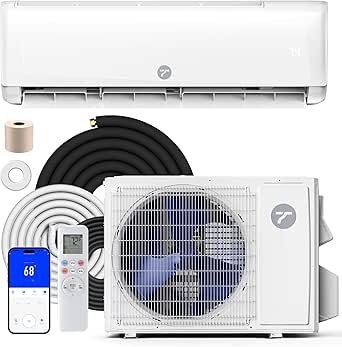 | Best Value Feature Set for 115V | Cooling capacity: 12,000 BTU | Heating capacity: 12,300 BTU | Voltage: 115V | VIEW LATEST PRICE | See Our Full Breakdown |
| 12000 BTU Ductless Mini Split Air Conditioner and Heat Pump, 115V, 19 SEER2, for 750 Sq. Ft. |  | Best for Timer-Based Scheduling | Cooling capacity: 12,000 BTU | Heating capacity: 12,500 BTU | Voltage: 115V | VIEW LATEST PRICE | See Our Full Breakdown |
| Daikin Oterra 12,000 BTU Ductless Mini-Split Heat Pump, 115V, Wall-Mounted |  | Best Quiet Premium Pick | Cooling capacity: 12,000 BTU | Heating capacity: 12,000 BTU | Voltage: 115V | VIEW LATEST PRICE | See Our Full Breakdown |
| Daikin ENTRA 12,000 BTU 18 SEER2 R-32 Single-Zone Heat Pump Mini-Split System |  | Best Complete 230V Installation Package | Cooling capacity: 12,000 BTU; range 4,400–13,300 BTU | Heating capacity: 11,300 BTU; range 4,400–16,400 BTU | Efficiency: 18 SEER2, 9 HSPF2, 8.5 EER2, 3.30 COP | VIEW LATEST PRICE | See Our Full Breakdown |
| COSTWAY 12,000 BTU Mini Split Air Conditioner and Heater |  | Best for Quiet, Straightforward Comfort | Cooling capacity: 12,000 BTU | Heating capacity: 12,300 BTU | Coverage: Up to 750 sq. ft. | VIEW LATEST PRICE | See Our Full Breakdown |
| Mountman 9,000 BTU Ductless Mini Split Air Conditioner and Heat Pump, 19 SEER2 |  | Best for Smaller Rooms | Cooling capacity: 9,000 BTU | Coverage: Up to 450 sq. ft. | Voltage: 110/120V | VIEW LATEST PRICE | See Our Full Breakdown |
| Albott 12,000 BTU Mini-Split Air Conditioner and Heater, 115V, SEER2 18 |  | Best for App and Wi-Fi Control | Cooling capacity: 12,000 BTU | Recommended floor area: 750 sq. ft. | Voltage: 115V | VIEW LATEST PRICE | See Our Full Breakdown |
| Senville LETO 12,000 BTU Mini-Split Air Conditioner and Heat Pump |  | Best for Quiet Operation and Smart-Home Integration | Cooling capacity: 12,000 BTU | Coverage area: 700 sq. ft. | Efficiency: SEER 20.8 | VIEW LATEST PRICE | See Our Full Breakdown |
| DELLA Serena 12,000 BTU Mini-Split Air Conditioner and Heat Pump |  | Best for High Listed Efficiency | Cooling capacity: 12,000 BTU/h | Coverage area: Up to 550 sq. ft. | Efficiency: 22 SEER2 | VIEW LATEST PRICE | See Our Full Breakdown |
| Daikin Oterra R32 12,000 BTU 21 SEER2 Mini-Split Heat Pump Air Conditioner |  | Best for Efficiency and Included Installation Components | Cooling capacity: 12,000 BTU | Heating capacity: 13,500 BTU | Efficiency: 21 SEER2; 10.2 HSPF2 | VIEW LATEST PRICE | See Our Full Breakdown |
| COSTWAY 12,000 BTU Mini-Split Air Conditioner and Heater, 20 SEER2, 115V | 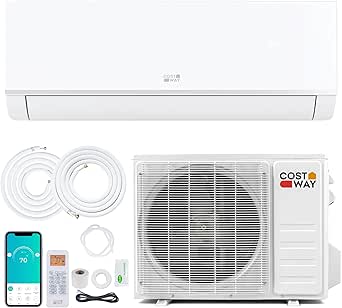 | Best for Smart Controls and Cold-Weather Heating | Cooling capacity: 12,000 BTU | Heating capacity: 12,000 BTU | Efficiency: 20 SEER2 | VIEW LATEST PRICE | See Our Full Breakdown |
| DELLA Vita 18,000 BTU Ductless Mini-Split Heat Pump, 20 SEER2, 230V |  | Best for Larger Rooms | Cooling capacity: 18,000 BTU | Coverage: Up to 1,000 sq. ft. | Efficiency: 20 SEER2 | VIEW LATEST PRICE | See Our Full Breakdown |
| MEPTY 12,000 BTU 115V Mini-Split Air Conditioner and Heat Pump |  | Best for Quiet Operation | Cooling capacity: 12,000 BTU | Voltage: 115V | Efficiency: 19 SEER2 | VIEW LATEST PRICE | See Our Full Breakdown |
| Rellytech 12,000 BTU Mini Split Air Conditioner and Heat Pump, 20 SEER2, 115V |  | Best for Refrigerant and Certification Details | Cooling capacity: 12,000 BTU | Heating capacity: 12,500 BTU | Efficiency: 20 SEER2 | VIEW LATEST PRICE | See Our Full Breakdown |
| mini split heat pump | Cooling capacity | Voltage | Efficiency | Refrigerant |
|---|---|---|---|---|
| Garvee 9,000 BTU Mini Split Ai | 9,000 BTU | 208/230V | 18.5 SEER2 | R32 |
| Temprium 12,000 BTU 115V Mini | 12,000 BTU | 115V | 22 SEER2 | R-32 |
| 12000 BTU Ductless Mini Split | 12,000 BTU | 115V | 19 SEER2 | R-32 |
| Daikin Oterra 12,000 BTU Ductl | 12,000 BTU | 115V | 20 SEER | R-32 |
| Daikin ENTRA 12,000 BTU 18 SEE | 12,000 BTU; range 4,400–13,300 BTU | 230V | 18 SEER2, 9 HSPF2, 8.5 EER2, 3.30 COP | R-32 |
| COSTWAY 12,000 BTU Mini Split | 12,000 BTU | 115V | — | R-32 |
| Mountman 9,000 BTU Ductless Mi | 9,000 BTU | 110/120V | 19 SEER2 | R32 |
| Albott 12,000 BTU Mini-Split A | 12,000 BTU | 115V | SEER2 18 | — |
| Senville LETO 12,000 BTU Mini- | 12,000 BTU | 110/120V | SEER 20.8 | — |
| DELLA Serena 12,000 BTU Mini-S | 12,000 BTU/h | 208–230V | 22 SEER2 | R32 |
| Daikin Oterra R32 12,000 BTU 2 | 12,000 BTU | 230V | 21 SEER2; 10.2 HSPF2 | R-32 |
| COSTWAY 12,000 BTU Mini-Split | 12,000 BTU | 115V | 20 SEER2 | R-32 |
| DELLA Vita 18,000 BTU Ductless | 18,000 BTU | 230V | 20 SEER2 | R-32 |
| MEPTY 12,000 BTU 115V Mini-Spl | 12,000 BTU | 115V | 19 SEER2 | R32 |
| Rellytech 12,000 BTU Mini Spli | 12,000 BTU | 115V | 20 SEER2 | R454B |
More Details on Our Top Picks
Garvee 9,000 BTU Mini Split Air Conditioner and Heat Pump with Wi-Fi
The Garvee is the smallest-capacity choice in this group, making it a better fit for a modest bedroom or home office than the 12,000 BTU Temprium or the 12,000 BTU Daikin ENTRA. Its app, voice, and remote controls offer more ways to adjust the system than the Daikin ENTRA, whose listed control is a remote. Auto-cleaning, a reusable filter, and four-way airflow add useful day-to-day convenience, while the stated 28 dBA sleep mode suits rooms where operating noise matters.
The main reservation is sizing: the listing gives coverage as both 450 and 750 square feet, so I would not choose it for a larger space without clarifying the rating. It also needs a new outdoor unit and 208/230V power, so this is not a simple replacement for a window unit. Choose it for its control features and smaller capacity, not for a clearly established coverage range.
Pros:- Provides both heating and cooling with inverter operation.
- Offers app, remote, and voice control, including Alexa and Google Home compatibility.
- Includes auto-cleaning and a removable, reusable filter.
- Lists a 28 dBA sleep mode and four-way airflow.
Cons:- Coverage is inconsistent, listed as both 450 and 750 square feet.
- Requires 208/230V power and installation of a new outdoor unit.
- Its 9,000 BTU capacity is lower than the 12,000 BTU options for larger rooms.
Best for: Homeowners outfitting a smaller bedroom or office who want app and voice control alongside a reusable filter.
Not ideal for: Buyers sizing a system for a 750-square-foot room or seeking a straightforward installation, because the stated coverage conflicts and the system requires an outdoor unit.
- Cooling capacity:9,000 BTU
- Efficiency:18.5 SEER2
- Voltage:208/230V
- Refrigerant:R32
- Listed coverage:450 sq. ft. and up to 750 sq. ft. (conflicting)
- Sleep-mode noise:28 dBA
- Controls:App, remote, and voice; Alexa and Google Home compatibility
- Features:Inverter, auto-clean, reusable filter, sleep mode, four-way airflow
Our verdict“Pick the Garvee for a smaller room where smart controls and filter convenience matter more than a clearly specified coverage rating.”
Temprium 12,000 BTU 115V Mini Split Air Conditioner and Heat Pump
The Temprium pairs 12,000 BTU cooling with 12,300 BTU heating and runs on 115V, a useful distinction from the 230V Daikin ENTRA. That electrical requirement may suit buyers whose existing setup favors 115V, though a qualified installer should confirm the circuit can support the system. Its 22 SEER2 rating, inverter operation, and listed 780 W consumption give efficiency-minded buyers more to compare than the simpler controls and lower 19 SEER2 rating listed for the other 115V 12,000 BTU model in this batch.
Wi-Fi, app, and voice controls add convenience, and the 23 dB noise claim is especially low on paper. The tradeoffs are a one-year warranty, coverage capped at 750 square feet, and the work of installing a split system with a new outdoor unit. I would favor it over the Daikin ENTRA when 115V operation and connected controls lead the decision; the ENTRA is a more clearly packaged 230V option.
Pros:- Provides 12,000 BTU cooling and 12,300 BTU heating.
- Uses 115V power and inverter technology.
- Lists 22 SEER2 efficiency and 780 W power consumption.
- Includes Wi-Fi, app, voice, and remote control, plus a washable filter.
Cons:- Requires split-system installation and a new outdoor unit.
- Coverage is specified only up to 750 square feet.
- The listed warranty is one year.
Best for: Owners of a small-to-medium room who want a 115V mini split with app and voice controls and a stated 22 SEER2 rating.
Not ideal for: Buyers needing coverage beyond 750 square feet, a long listed warranty, or a system that avoids outdoor-unit installation.
- Cooling capacity:12,000 BTU
- Heating capacity:12,300 BTU
- Voltage:115V
- Efficiency:22 SEER2
- Coverage:Up to 750 sq. ft.
- Noise level:23 dB
- Refrigerant:R-32
- Power consumption:780 W
- Warranty:1 year
Our verdict“Choose the Temprium if you want a connected 115V system with a strong stated efficiency figure and can accept professional split-system installation.”
12000 BTU Ductless Mini Split Air Conditioner and Heat Pump, 115V, 19 SEER2, for 750 Sq. Ft.
This 115V system stands out for buyers who want a conventional remote-based setup with a 24-hour timer rather than the app and voice controls offered by the Temprium. Its 12,000 BTU cooling and 12,500 BTU heating capacities are intended for spaces up to 750 square feet, while inverter operation and a 19 SEER2 rating provide a stated efficiency basis for comparison. The remote, timer, four fan speeds, and six operating modes give owners practical control without depending on a smart-home connection.
Compared with the Temprium, this model has a lower listed efficiency rating and does not list Wi-Fi control, but it does specify HSPF2 of 8.5. Noise information needs caution: sleep mode is described as below 35 dB, while another listing gives 45 dB. It also requires a new outdoor unit. I would choose it for straightforward scheduling, not if quiet operation is the deciding factor.
Pros:- Provides 12,000 BTU cooling and 12,500 BTU heating.
- Runs on 115V and lists inverter operation.
- Includes a 24-hour timer, remote, four fan speeds, and six modes.
- Lists 19 SEER2 efficiency and 8.5 HSPF2.
Cons:- Noise specifications conflict, with sleep mode below 35 dB and another listed figure of 45 dB.
- Requires installation as a split system with a new outdoor unit.
- Does not list Wi-Fi or app control, unlike the Temprium.
Best for: Buyers with a room up to 750 square feet who prefer a remote and timer over app-connected controls.
Not ideal for: Smart-home users or noise-sensitive buyers who need clear, consistent sound specifications.
- Cooling capacity:12,000 BTU
- Heating capacity:12,500 BTU
- Voltage:115V
- Efficiency:19 SEER2
- Heating efficiency:8.5 HSPF2
- Coverage:750 sq. ft.
- Refrigerant:R-32
- Noise specification:Below 35 dB in sleep mode; 45 dB also listed
- Controls and airflow:Remote, 24-hour timer, four fan speeds, 90° vertical swing
Our verdict“Choose this model if you want 115V operation and timer-based control, but look elsewhere if connected features or dependable noise data are priorities.”
Daikin Oterra 12,000 BTU Ductless Mini-Split Heat Pump, 115V, Wall-Mounted
The Daikin Oterra is the most compelling choice here for buyers who put low stated noise and established-brand positioning ahead of maximum coverage. Its 12,000 BTU capacity is specified for up to 550 square feet, a more conservative target than the 750-square-foot Temprium and the other 115V system in this batch. That narrower stated range can help buyers avoid treating nominal capacity as a promise for every room size. The listed minimum of 21 dB(A) is quieter on paper than the Daikin ENTRA’s 29 dB figure.
Both Daikin options use R-32 refrigerant and provide heating and cooling, but the Oterra runs on 115V, unlike the 230V ENTRA. It also lists app and remote control, though built-in Wi-Fi is not confirmed; smart thermostat compatibility is not the same as confirmed direct app connectivity. At 120 pounds, it is a substantial system, and installation still requires an outdoor unit. Its registered 10-year manufacturer warranty is a notable listed advantage.
Pros:- Lists heating and cooling capacity of 12,000 BTU.
- Operates on 115V and uses inverter technology.
- Lists noise as low as 21 dB(A), below the Daikin ENTRA’s 29 dB figure.
- Includes a SIGNA Flareless Adaptor and lists a 10-year manufacturer warranty if registered.
Cons:- Coverage is specified for up to 550 square feet, less than the 750-square-foot Temprium.
- Built-in Wi-Fi is not confirmed despite app and smart thermostat references.
- Weighs 120 pounds and requires installation of a new outdoor unit.
Best for: Buyers heating and cooling a room up to 550 square feet who prioritize quiet operation, 115V power, and a registered-warranty option.
Not ideal for: Those needing coverage beyond 550 square feet, a lighter system, or confirmed built-in Wi-Fi control.
- Cooling capacity:12,000 BTU
- Heating capacity:12,000 BTU
- Voltage:115V
- Coverage:Up to 550 sq. ft.
- Noise level:As low as 21 dB(A)
- Efficiency:20 SEER
- Refrigerant:R-32
- Weight:120 pounds
- Warranty:10-year manufacturer warranty if registered
Our verdict“The Oterra is the better fit for a quiet, 115V system in a room up to 550 square feet, provided its control details match your setup.”
Daikin ENTRA 12,000 BTU 18 SEER2 R-32 Single-Zone Heat Pump Mini-Split System
The Daikin ENTRA is the clearest pick for buyers who want a 230V single-zone kit with key installation accessories included. Alongside the indoor unit, outdoor condenser, and remote, the package lists a 15-foot refrigerant line with interconnecting cables, an installation kit, and a wall bracket. That makes its package more defined than the Garvee, which specifically requires a new outdoor unit but does not list the same collection of installation parts. The ENTRA’s 12,000 BTU cooling capacity and coverage up to 550 square feet suit a single room rather than a whole-home solution.
Its 18 SEER2 rating is below the Temprium’s listed 22 SEER2, and the 230V requirement may mean electrical work for buyers without a suitable supply. The 29 dB noise figure is also higher than the Daikin Oterra’s listed 21 dB(A). In return, this model specifies heating performance down to 5°F, an air-purifying filter, ECO+, and a broad stated heating capacity range.
Pros:- Includes an indoor unit, outdoor condenser, remote, 15-foot refrigerant line, installation kit, and wall bracket.
- Provides 12,000 BTU cooling and 11,300 BTU heating, with inverter operation.
- Lists heating operation down to 5°F.
- Includes ECO+, multiple modes, and an air-purifying filter.
Cons:- Requires 230V power, unlike the 115V Daikin Oterra and Temprium.
- Coverage is limited to a single zone up to 550 square feet.
- Its listed 18 SEER2 is lower than the Temprium’s 22 SEER2, and its 29 dB noise figure is above the Oterra’s 21 dB(A).
Best for: Homeowners with 230V service who want a single-zone Daikin system supplied with a refrigerant line, installation kit, and mounting bracket.
Not ideal for: Buyers without a suitable 230V supply, those needing multiple zones, or shoppers seeking a quieter or higher-SEER2 option.
- Cooling capacity:12,000 BTU; range 4,400–13,300 BTU
- Heating capacity:11,300 BTU; range 4,400–16,400 BTU
- Efficiency:18 SEER2, 9 HSPF2, 8.5 EER2, 3.30 COP
- Coverage:Up to 550 sq. ft.
- Voltage:230V
- Operating temperatures:Cooling: 50°F–115°F; heating: 5°F–65°F
- Refrigerant:R-32
- Noise level:29 dB
- Included components:Indoor fan coil, outdoor condenser, remote, 15 ft refrigerant line with cables, installation kit, wall bracket
Our verdict“Choose the ENTRA if you have 230V service and want a Daikin single-zone package with installation accessories and a specified low-temperature heating range.”
COSTWAY 12,000 BTU Mini Split Air Conditioner and Heater
The COSTWAY is a practical choice for a room that needs both heating and cooling, with 12,000 BTU capacity listed for spaces up to 750 square feet. Its listed 23 dB noise level and inverter operation suit bedrooms or living areas where steady, low-noise comfort matters more than app control. Compared with the Albott, it gives up Wi-Fi and a stated operating-temperature range, but it includes a longer listed compressor warranty and a washable filter. The tradeoff is a more basic control package, and installation is not a DIY job: a licensed HVAC installer is required, and the system needs a new outdoor unit. I’d shortlist it for buyers who want a quiet, conventional setup with useful modes rather than connected-home features.
Pros:- Heating and cooling capacity are both listed, making it a year-round option for a single zone.
- Listed 23 dB operation suits rooms where indoor noise is a priority.
- Inverter operation, ECO mode, and a timer offer ways to manage comfort and energy use.
- Washable filter and self-cleaning function reduce routine upkeep.
Cons:- Licensed HVAC installation is required, and a new outdoor unit is needed.
- No Wi-Fi or app control is listed, unlike the Albott and Senville LETO.
- Coverage is listed up to 750 square feet, but no low-temperature heating limit is provided.
Best for: Homeowners seeking a quiet 12,000 BTU system for a bedroom or living area who prefer remote-based controls and can arrange licensed installation.
Not ideal for: Buyers who want Wi-Fi or app control, or anyone seeking a DIY-ready system without a separate outdoor-unit installation.
- Cooling capacity:12,000 BTU
- Heating capacity:12,300 BTU
- Coverage:Up to 750 sq. ft.
- Voltage:115V
- Noise level:23 dB
- Refrigerant:R-32
- Warranty:5 years parts; 8 years compressor
- Installation:Licensed HVAC installer required
Our verdict“Choose the COSTWAY for quiet, remote-controlled heating and cooling in a single zone, but pick the Albott or Senville LETO if app control matters more.”
Mountman 9,000 BTU Ductless Mini Split Air Conditioner and Heat Pump, 19 SEER2
Mountman’s 9,000 BTU capacity and stated coverage of up to 450 square feet make it the right-sized pick here for a smaller bedroom, office, or enclosed living space. It offers the usual heating, cooling, dry, and fan modes, plus ECO and Sleep settings, so the smaller capacity does not mean a bare-bones feature set. Compared with the 12,000 BTU COSTWAY, Mountman is aimed at a tighter footprint rather than a larger open room; choosing the lower capacity makes more sense when the room size supports it. The listed noise level is 26 dB, a little above COSTWAY’s 23 dB. It still requires split-system installation and a new outdoor unit, and its 450-square-foot coverage makes it a poor fit for larger spaces.
Pros:- 9,000 BTU capacity is suited to smaller rooms rather than oversizing them with a 12,000 BTU option.
- Includes Cool, Heat, Dry, and Fan modes, along with Sleep and ECO settings.
- Self-cleaning, automatic defrost, and a washable filter support routine maintenance.
- Listed 26 dB noise level is appropriate for many bedrooms and offices.
Cons:- Coverage is limited to up to 450 square feet, below the larger-room reach listed for the COSTWAY and Albott.
- Split-system installation requires a new outdoor unit.
- No warranty duration or Wi-Fi control is provided in the supplied product data.
Best for: Owners of a well-defined room up to 450 square feet who want a smaller-capacity heat pump with basic timer and energy-saving controls.
Not ideal for: People heating or cooling open-plan areas near 750 square feet, or buyers who want app control or a stated warranty.
- Cooling capacity:9,000 BTU
- Coverage:Up to 450 sq. ft.
- Voltage:110/120V
- Efficiency:19 SEER2
- Noise level:26 dB
- Refrigerant:R32
- Compressor:Rotary-scroll inverter
- Installation:Split system
Our verdict“Choose Mountman for a smaller room that fits its 450-square-foot coverage, and step up to a 12,000 BTU option for a larger zone.”
Albott 12,000 BTU Mini-Split Air Conditioner and Heater, 115V, SEER2 18
Albott stands out among these 12,000 BTU systems for its Wi-Fi and app control, paired with a remote, child lock, and 24-hour timer. That combination is useful for households that want to adjust a room before arriving or manage settings without keeping the remote nearby. Its listed 750-square-foot coverage matches the COSTWAY, while the stated operating range of 5°F to 122°F gives buyers more temperature context than the COSTWAY listing provides. In exchange, Albott is rated at 29 dB, louder on paper than the COSTWAY and much louder than the Senville LETO’s listed 17.5 dB. Its stated weight of 151 pounds also makes handling and installation logistics worth planning. Professional HVAC installation is required.
Pros:- Wi-Fi, app, and remote controls give buyers several ways to operate the system.
- Listed coverage reaches up to 750 square feet, matching the larger-zone COSTWAY.
- Operating range is specified from 5°F to 122°F, providing useful climate guidance.
- Includes heating, cooling, dehumidifying, fan, self-cleaning, and a child lock.
Cons:- Listed 29 dB noise level is higher than the COSTWAY’s 23 dB and Senville LETO’s 17.5 dB.
- At 151 pounds, the unit is comparatively heavy to handle during installation.
- Professional HVAC installation is required.
Best for: Connected-home users who want app-based control and a 12,000 BTU system for a space listed up to 750 square feet.
Not ideal for: Buyers prioritizing the lowest listed indoor noise or an easy-to-handle unit; the Senville LETO is quieter on paper and Albott weighs 151 pounds.
- Cooling capacity:12,000 BTU
- Recommended floor area:750 sq. ft.
- Voltage:115V
- Efficiency:SEER2 18
- Noise level:29 dB
- Operating temperature range:5°F–122°F
- Controls:Wi-Fi, app, and remote
- Warranty:5 years compressor; 7 years parts
Our verdict“Pick Albott if app control and a stated cold-weather operating range outweigh its higher listed noise level and heavy handling.”
Senville LETO 12,000 BTU Mini-Split Air Conditioner and Heat Pump
The Senville LETO is the strongest fit here for buyers combining quiet operation with smart-home control: its listed noise level is 17.5 dB, and it supports Alexa and app operation. It also states heat-pump operation down to 5°F and includes indoor and outdoor units, a remote, and an installation kit with a 16-foot line set. That makes the included package details clearer than for the COSTWAY, though professional installation is still required. Against the Albott, Senville is quieter on paper and includes Alexa support, while Albott lists a larger coverage area of 750 square feet compared with Senville’s 700. Warranty details for parts vary in the listing, and labor is not covered, so buyers should confirm coverage before purchase.
Pros:- Listed 17.5 dB noise level is lower than the other products in this batch.
- Alexa and app control support smart-home operation.
- Heat-pump function is specified down to 5°F.
- Package includes indoor and outdoor units, remote, and a 16-foot line set installation kit.
Cons:- Professional installation is required despite the included installation kit.
- Parts warranty information varies in the listing, and labor is not included.
- Coverage is listed at 700 square feet, below the 750-square-foot claims for the COSTWAY and Albott.
Best for: Smart-home users who want a quiet 12,000 BTU system for a zone up to 700 square feet and value a specified low-temperature heating limit.
Not ideal for: Buyers who need coverage beyond 700 square feet, want labor included in warranty coverage, or need fully clear parts-warranty terms.
- Cooling capacity:12,000 BTU
- Coverage area:700 sq. ft.
- Efficiency:SEER 20.8
- Voltage:110/120V
- Noise level:17.5 dB
- Heating capability:Down to 5°F (-15°C)
- Smart features:Alexa and app control
- Line set length:16 ft.
Our verdict“Choose the Senville LETO for quiet operation, smart controls, and stated heating down to 5°F, provided its coverage and warranty terms fit your project.”
DELLA Serena 12,000 BTU Mini-Split Air Conditioner and Heat Pump
DELLA Serena is the efficiency-oriented choice in this group, with a listed 22 SEER2 rating and inverter operation. It pairs that rating with Wi-Fi, Alexa, and Google Home control, making it a better match for connected homes than the remote-only COSTWAY. The unit is rated for spaces up to 550 square feet, though, so it is not the same larger-zone option as the Albott or COSTWAY, both listed for up to 750 square feet. Its 208–230V requirement also means buyers should check electrical readiness before planning installation. DELLA lists 22 dB in mute mode and heating down to 5°F; that low-temperature specification is useful, but it does not make this a fit for every large or especially cold-weather space. Professional installation and line-set vacuuming are required.
Pros:- Listed 22 SEER2 rating is the highest stated efficiency figure among these five products.
- Wi-Fi, Alexa, and Google Home offer broad connected-home control.
- Mute-mode noise is listed at 22 dB.
- Heating operation is specified down to 5°F, with a 16.4-foot installation kit included.
Cons:- Coverage is listed up to 550 square feet, below the COSTWAY and Albott’s 750-square-foot claims.
- Requires 208–230V power, unlike the 115V COSTWAY and Albott.
- Professional installation and line-set vacuuming are required.
Best for: Owners of a 550-square-foot-or-smaller zone who want a higher listed efficiency rating and voice or app control, with compatible 208–230V power.
Not ideal for: Buyers with only 115V service, a space near 750 square feet, or a preference for an installation that avoids professional line-set work.
- Cooling capacity:12,000 BTU/h
- Coverage area:Up to 550 sq. ft.
- Efficiency:22 SEER2
- Voltage:208–230V
- Power:1,000 watts
- Noise level:22 dB in mute mode
- Refrigerant:R32
- Connectivity:Wi-Fi, Alexa, and Google Home
Our verdict“Choose DELLA Serena for its 22 SEER2 rating and connected controls in a zone up to 550 square feet, if your electrical service supports 208–230V.”
Daikin Oterra R32 12,000 BTU 21 SEER2 Mini-Split Heat Pump Air Conditioner
The Daikin Oterra is the strongest fit here for buyers who prioritize stated efficiency and want several installation components included. Its 21 SEER2 rating is higher than the 20 SEER2 figures listed for the COSTWAY and DELLA Vita, while its 13,500 BTU heating capacity exceeds its cooling capacity. That added heating output may suit a room with a meaningful winter load, but it is not a substitute for checking a contractor’s room-by-room sizing recommendation. The included line set, disconnect, whip, and wall bracket can help simplify sourcing parts; they do not make this a DIY-ready installation. Compared with the 115V COSTWAY, the Oterra needs 230V power. It also has a 12-year manufacturer warranty, but extended cooling below 50°F calls for optional settings and a wind baffle.
Pros:- 21 SEER2 rating is the highest stated efficiency in this five-product group.
- 13,500 BTU heating capacity is greater than its 12,000 BTU cooling capacity.
- Package includes a 15-foot refrigerant line, disconnect, whip, and wall bracket.
- Washable filter and stated 12-year manufacturer warranty.
Cons:- Requires 230V power, unlike the 115V COSTWAY, MEPTY, and Rellytech options.
- Extended cooling below 50°F requires optional settings and a wind baffle.
- Professional split-system installation and a new outdoor unit are still needed.
Best for: Buyers with 230V service who want a 12,000 BTU system, higher stated efficiency, and several installation components in the package.
Not ideal for: Households without 230V service, or anyone needing extended cooling below 50°F without adding the specified settings and wind baffle.
- Cooling capacity:12,000 BTU
- Heating capacity:13,500 BTU
- Efficiency:21 SEER2; 10.2 HSPF2
- Coverage:Up to 550 sq. ft.
- Voltage:230V
- Refrigerant:R-32
- Cooling/heating capacity ranges:4,400–14,600 BTU cooling; 4,400–18,000 BTU heating
- Included line set:15 ft. refrigerant line with interconnecting cables
- Warranty:12-year manufacturer warranty
Our verdict“Choose the Oterra if you have 230V service and value its 21 SEER2 rating and bundled components more than simpler 115V installation requirements.”
COSTWAY 12,000 BTU Mini-Split Air Conditioner and Heater, 20 SEER2, 115V
The COSTWAY is a good match for buyers who want app and voice control alongside a listed low-temperature heating range. It is rated for heating down to -4°F and cooling up to 127°F, while the Daikin Oterra’s supplied description flags extra steps for extended cooling below 50°F. That difference makes the COSTWAY more compelling for owners who expect broad seasonal use, though the figures alone do not establish how much heat it will deliver at the coldest temperatures. Its 115V supply may also fit homes where adding a 230V circuit for the Oterra or DELLA Vita is unwelcome. The tradeoff is that the listed heating capacity is 12,000 BTU, below the Oterra’s 13,500 BTU, and its coverage claim is not a room-sizing guarantee. Wi-Fi, voice controls, eight fan speeds, and self-cleaning add convenience, but professional installation is recommended.
Pros:- 115V power requirement may be easier to accommodate than the 230V Daikin Oterra or DELLA Vita.
- Wi-Fi, app, Alexa, and Google Assistant controls are listed.
- Specified heating operation reaches down to -4°F.
- Eight fan speeds, self-clean function, and washable filters offer useful operating choices.
Cons:- Listed heating capacity is 12,000 BTU, lower than the Daikin Oterra’s 13,500 BTU.
- Professional installation is recommended and a new outdoor unit is required.
- Coverage up to 750 sq. ft. does not account for insulation, layout, or climate.
Best for: Homeowners seeking a 115V mini split with app and voice controls for a space within the stated coverage range and heating needs suited to its capacity.
Not ideal for: Buyers who need higher stated heating capacity, want to avoid professional split-system installation, or need confirmed output at very low outdoor temperatures.
- Cooling capacity:12,000 BTU
- Heating capacity:12,000 BTU
- Efficiency:20 SEER2
- Coverage:Up to 750 sq. ft.
- Voltage:115V
- Refrigerant:R-32
- Operating temperature range:Heating to -4°F; cooling to 127°F
- Noise level:As low as 28 dB
- Controls:Wi-Fi, app, voice control, and remote
Our verdict“Pick the COSTWAY if 115V power, connected controls, and its stated cold-weather heating range suit your room better than the Oterra’s higher listed heating capacity.”
DELLA Vita 18,000 BTU Ductless Mini-Split Heat Pump, 20 SEER2, 230V
For a larger zone, the DELLA Vita’s 18,000 BTU capacity gives it a clear role apart from the 12,000 BTU COSTWAY, MEPTY, and Rellytech. The listing rates it for spaces up to 1,000 sq. ft., compared with up to 750 sq. ft. for those models; actual suitability still depends on room design, insulation, and local conditions. Its 20 SEER2 inverter system, app and voice controls, and dehumidifier mode cover the main year-round functions without relying on a separate smaller unit. The cost of that extra capacity is a 230V requirement, so it is less convenient where only 115V service is available. It also needs professional installation. Compared with the Daikin Oterra, the Vita is aimed at a bigger area rather than a higher stated efficiency rating, and its supplied information does not specify heating capacity or a warranty.
Pros:- 18,000 BTU capacity and a stated coverage area up to 1,000 sq. ft.
- 20 SEER2 inverter operation is specified for heating and cooling.
- App, remote, and voice controls support several ways to manage the system.
- Dehumidifier mode and 4D airflow add functions beyond basic temperature control.
Cons:- Requires 230V power, unlike the 115V COSTWAY, MEPTY, and Rellytech.
- Professional installation is required.
- The supplied product data does not state heating capacity or warranty details.
Best for: Owners of a larger open room or zone whose HVAC sizing assessment supports an 18,000 BTU system and who have 230V service.
Not ideal for: Buyers heating or cooling a small, well-insulated room, or households without 230V power or access to professional installation.
- Cooling capacity:18,000 BTU
- Coverage:Up to 1,000 sq. ft.
- Efficiency:20 SEER2
- Voltage:230V
- Noise level:As low as 32 dB
- Refrigerant:R-32
- Line set:16 ft. copper
- Controls:App, remote, and voice
- Features:Heating and cooling, dehumidifier, Wi-Fi, sleep mode, and 4D airflow
Our verdict“Choose the DELLA Vita over the 12,000 BTU options when a professional sizing assessment supports its larger capacity and your home has 230V service.”
MEPTY 12,000 BTU 115V Mini-Split Air Conditioner and Heat Pump
The MEPTY stands out for a particularly low listed indoor noise figure: 26 dB, compared with 28 dB for the COSTWAY and Rellytech. That makes it the most appealing pick in this group for a bedroom or other space where fan noise matters, though the listing does not provide the same connected-control options as the COSTWAY or Rellytech. It runs on 115V and is rated at 12,000 BTU for spaces up to 750 sq. ft., giving it a similar stated capacity and coverage to those models. Its 19 SEER2 figure is below their 20 SEER2 ratings, and its listed controls are limited to a remote rather than Wi-Fi or voice operation. A timer, self-clean function, and four modes cover everyday use, but a split system still needs an outdoor unit and proper installation.
Pros:- Listed noise level of 26 dB is lower than the 28 dB figures for COSTWAY and Rellytech.
- 115V power and 12,000 BTU capacity suit buyers looking at a standard-capacity system.
- Cooling, heating, fan, and dehumidifying modes cover common uses.
- Remote, 24-hour timer, and self-clean function are included.
Cons:- 19 SEER2 is below the COSTWAY and Rellytech’s listed 20 SEER2.
- Controls are limited to a remote; Wi-Fi and voice control are not listed.
- Requires split-system installation with an outdoor unit.
Best for: Light sleepers or households placing a 12,000 BTU mini split in a bedroom or quiet living space, with 115V service and no need for app control.
Not ideal for: Buyers who want Wi-Fi or voice controls, or who prefer the higher stated efficiency ratings of the COSTWAY and Rellytech.
- Cooling capacity:12,000 BTU
- Voltage:115V
- Efficiency:19 SEER2
- Coverage:Up to 750 sq. ft.
- Refrigerant:R32
- Noise level:26 dB
- Power:1,100 W
- Modes:Cooling, heating, fan, and dehumidifying
- Dimensions:11.93 × 32.28 × 8.23 in.
Our verdict“Choose the MEPTY for its lower listed noise level if quiet operation matters more to you than Wi-Fi controls or a 20 SEER2 rating.”
Rellytech 12,000 BTU Mini Split Air Conditioner and Heat Pump, 20 SEER2, 115V
The Rellytech is a 12,000 BTU, 115V alternative for buyers who want connected controls and clearly listed product credentials. Its ETL and AHRI certifications and R454B refrigerant distinguish it from the R-32 COSTWAY and MEPTY; shoppers can use those details when checking equipment and installation requirements with an HVAC professional. The listed 12,500 BTU heating capacity is also higher than its 12,000 BTU cooling capacity, unlike the COSTWAY’s equal heating and cooling figures. At 20 SEER2, it matches the COSTWAY and exceeds the MEPTY’s 19 SEER2, though it does not reach the Daikin Oterra’s 21 SEER2. Wi-Fi app control and a remote are included, but installation by a licensed technician is required. The power cord is not included, and the indoor and outdoor units may arrive separately.
Pros:- ETL and AHRI certifications are stated in the product data.
- 12,500 BTU heating capacity is higher than the 12,000 BTU cooling capacity.
- 20 SEER2 matches the COSTWAY and exceeds the MEPTY’s listed 19 SEER2.
- Wi-Fi app control, remote, and multiple operating modes are included.
Cons:- Licensed HVAC installation is required.
- Power cord is not included.
- Indoor and outdoor units may arrive in separate shipments.
Best for: Buyers seeking a 115V, 12,000 BTU system with app control, a modestly higher listed heating capacity, and stated ETL and AHRI certifications.
Not ideal for: Anyone seeking an all-in-one plug-and-play appliance, since a licensed HVAC technician is required and the power cord is not included.
- Cooling capacity:12,000 BTU
- Heating capacity:12,500 BTU
- Efficiency:20 SEER2
- Coverage:Up to 750 sq. ft.
- Voltage:115V
- Refrigerant:R454B
- Noise level:28 dB
- Power consumption:1,050 W
- Certifications:ETL and AHRI
Our verdict“Choose the Rellytech if you want a 115V system with app control and stated certifications, and can arrange licensed installation and a separate power cord.”

How We Picked
I compared the 15 listed systems using the details available in their product names: stated capacity, voltage, SEER2 figure where supplied, configuration, and named features such as Wi-Fi. I gave more weight to information that helps a buyer judge room fit and installation planning than to broad claims, since a mini split’s capacity and electrical requirements affect whether it can work in a particular home. I also treated missing specifications as unknown rather than assuming that an unlisted feature is included.
The ranking reflects how clearly each option serves a distinct buyer need and how much decision-useful information its listing provides. The Daikin Oterra R32 leads on its stated efficiency figure, while the DELLA Vita earns a place for its higher listed capacity and the 20-SEER2 115V systems offer a different combination of electrical format and efficiency claims. I did not treat SEER2 alone as proof of heating performance, low-temperature operation, quietness, warranty quality, or ease of service; buyers should confirm those details for the exact model before purchase.
Factors to Consider When Choosing Best Mini Split Heat Pumps
Product specifications narrow the choices, but a successful mini split purchase depends on the room, the home’s electrical setup, and the quality of the installation. I would use the factors below to screen out mismatches before comparing brand names or feature lists.
Match Capacity to the Room, Not a Square-Foot Claim
BTU capacity is a starting point, not a complete sizing method. Room area, ceiling height, insulation, window exposure, air leakage, climate, and whether the space is open to adjoining rooms all affect heating and cooling demand. A product title that names a square-foot coverage figure cannot account for every home, so treat it as a rough guide rather than a guarantee. Oversizing may lead to less comfortable cycling and uneven temperature control, while undersizing can leave the system running hard without meeting demand. Ask an HVAC professional for a load calculation when the room has unusual windows, poor insulation, or open-plan connections. That step matters more than choosing a larger BTU number as a precaution.
Check Voltage and Circuit Requirements Before Choosing
A 115V label may fit more existing electrical setups than a 230V system, but it does not mean the unit can use any nearby outlet. The required breaker size, dedicated circuit, wire gauge, and disconnect depend on the exact equipment and local code. Confirm the manufacturer’s installation manual and have an electrician check the panel before ordering, especially if the home has limited spare capacity. The DELLA Vita’s listed 230V supply is a planning factor, not a drawback for every home; it may be appropriate where the needed circuit is already available. Conversely, choosing a 115V model to avoid electrical work can be a poor trade if its capacity does not suit the room. Compare electrical requirements alongside capacity, not after selecting a unit.
Read Efficiency Ratings Alongside Heating Conditions
SEER2 is a seasonal cooling-efficiency measure, so it cannot by itself tell you how well a heat pump will heat during cold weather. Compare heating capacity and efficiency at relevant outdoor temperatures, along with the manufacturer’s stated operating range. A higher listed SEER2, such as the 21-SEER2 Daikin Oterra R32 or the 20-SEER2 models in this group, can help distinguish cooling efficiency claims, but it does not settle winter performance. If the system will be a primary heat source, ask whether it can meet the home’s load at local design temperatures and whether backup heat is needed. Also check whether the rating applies to the exact indoor and outdoor unit combination being sold. This avoids treating one headline number as a full measure of year-round suitability.
Budget for Professional Installation and Ongoing Service
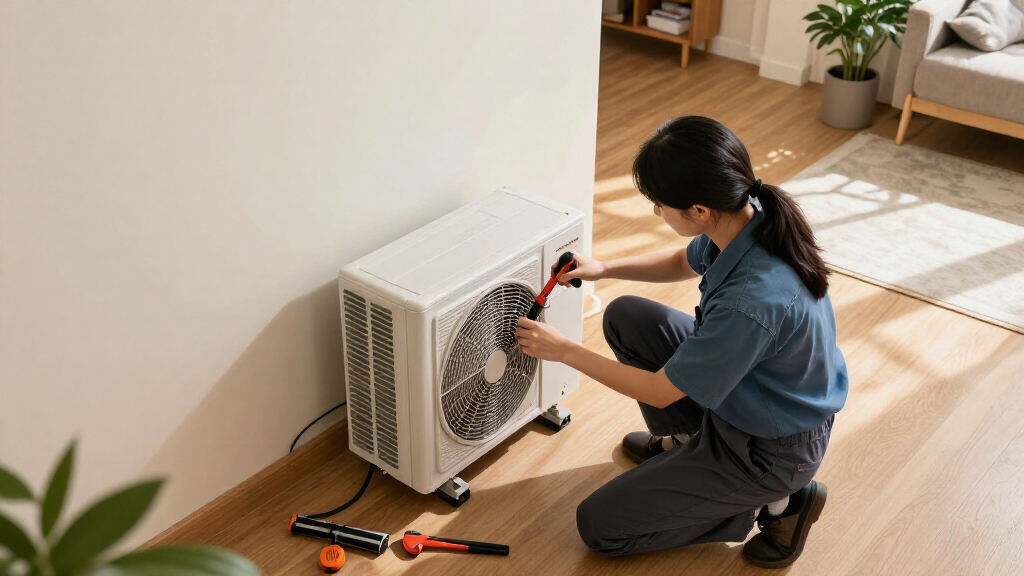
Mini splits are not simply appliances to place on a wall: line sets, refrigerant handling, evacuation, drainage, mounting, and electrical work all affect performance and reliability. Some systems may be marketed as DIY-friendly, but confirm what work is permitted, what tools are required, and whether self-installation affects warranty coverage. A low equipment cost can lose its appeal if parts, technical support, or qualified service are difficult to obtain later. Before buying, locate the exact warranty terms and ask who handles claims and replacement parts in your area. Plan for filter cleaning and clear access to the indoor unit, outdoor coil, and condensate drain. The easiest system to own is usually the one whose installation and service path is clear before delivery.
Compare Controls and Comfort Features to Daily Use
Wi-Fi control is useful when you want to change schedules remotely, but it is not a substitute for dependable basic operation. Check whether the unit includes a remote, whether its app supports the features you need, and whether the system can run normally if the home internet is down. Sleep modes, timers, fan settings, and temperature sensing can matter more in everyday use than a small difference in a published efficiency figure. In rooms with changing occupancy, scheduling can reduce unnecessary operation; in a frequently used bedroom, quiet settings may carry more weight. Verify noise ratings for both indoor and outdoor units rather than assuming similar capacities will sound alike. Choose controls that suit your routine instead of paying attention only to the feature with the most prominent label.
Verify the Complete System and Local Support
Listings can make a system sound complete while leaving important details unclear, so confirm that the indoor and outdoor units, line set, mounting hardware, and other required parts are included. Check line-set length limits and whether any extension requires extra refrigerant or separate components. Ask about warranty registration deadlines, labor coverage, and who can perform authorized service. A familiar brand name can make support easier to investigate, but the exact model and seller still matter. For less familiar listings, look for a full installation manual, accessible parts information, and a clear support contact before committing. These checks reduce the chance of discovering that a seemingly suitable unit needs unplanned equipment or cannot be serviced locally.
Frequently Asked Questions
Is a 12,000 BTU mini split the right size for my room?
It may be, but the BTU figure alone cannot establish a good fit. Room dimensions, insulation, window area, ceiling height, climate, and connections to nearby spaces all change the required capacity. Use the product’s coverage claim only as an initial screen, then ask for a load calculation if the space is hard to heat or cool. A system that is too large can cycle more than needed, while one that is too small may struggle during extreme weather. Compare the result with the unit’s documented capacity at the outdoor temperatures you expect.
Should I choose a 115V model or a 230V model?
Start with the unit’s installation manual and the electrical service available at the intended location. A 115V model may fit some homes’ electrical plans, while a 230V system may require a new circuit or other electrical work; neither voltage guarantees a simple installation. Check breaker and wire requirements, and have an electrician confirm the panel can support the equipment. Do not use voltage as a shortcut for choosing capacity, since a convenient electrical match is not useful if the system is undersized. The DELLA Vita in this roundup is listed at 230V, unlike several 115V alternatives.
Does a higher SEER2 rating mean a mini split will heat better in winter?
No. SEER2 describes seasonal cooling efficiency and does not, by itself, establish cold-weather heating capacity. For winter use, check the heating output and efficiency at low outdoor temperatures, the manufacturer’s operating range, and whether the system can meet your home’s heating load. The Daikin Oterra R32’s listed 21 SEER2 is a useful point of comparison for cooling efficiency, but it does not answer those heating questions. If the heat pump will be your main heat source, confirm those figures for the exact model before choosing it.
Can I install one of these mini splits myself?
That depends on the model, the work involved, local rules, and the warranty terms. Mounting and electrical tasks may be manageable for some homeowners, but refrigerant-line work and commissioning can require specialized equipment and qualified service. A system marketed for DIY installation may still have conditions that affect warranty coverage or code compliance. Read the installation instructions and warranty before purchase, then confirm what a licensed installer in your area must do. Include installation and service access in the decision rather than comparing equipment alone.
How should I choose between the Daikin Oterra R32 and the standard Daikin Oterra?
Compare the exact model numbers and manuals, since the two listings are not interchangeable based on the shared Oterra name. The R32 version in this roundup lists 21 SEER2, while the standard Oterra listing specifies 12,000 BTU, 115V, and wall mounting. Confirm the refrigerant, voltage, heating performance, included components, and approved indoor-outdoor pairing for the version you are considering. Then match those details to your electrical setup, room load, and local service options. If a specification is absent from a listing, verify it with the seller or manufacturer instead of inferring it from the other Oterra model.
Conclusion
For the strongest stated efficiency figure among these options, I would start with the Daikin Oterra R32 12,000 BTU as my best overall pick, after verifying its heating performance and exact system configuration. The 20-SEER2 COSTWAY 12,000 BTU and Rellytech 12,000 BTU are candidates for buyers prioritizing a 115V format and a higher listed efficiency figure, but I would confirm installation requirements and support before choosing either as the best-value option. For a larger zone, the DELLA Vita 18,000 BTU is the specific-capacity pick, provided its 230V requirement suits the home. Beginners comparing established brand options can start with the Daikin Oterra and Daikin ENTRA, then verify manuals, warranty coverage, and installer availability. If Wi-Fi control is a priority, the Garvee 9,000 BTU explicitly lists it; for a smaller room, compare that model with the 9,000 BTU Mountman rather than defaulting to a 12,000 BTU system. My final choice would depend on a room-load calculation, confirmed electrical fit, and the service support available locally.