
When choosing fixtures, you must distinguish between wet and damp location ratings. Wet-rated fixtures are designed for direct water exposure, making them ideal for outdoor areas like pools and decks. Damp-rated fixtures handle high humidity but aren’t suitable for direct water contact, perfect for covered porches or bathrooms. Getting the right choice guarantees safety and durability. To master these differences and find the perfect fit for your space, keep exploring the details ahead.
Key Takeaways
- Wet location fixtures are designed for areas with direct water exposure, such as rain or splashes, requiring sealed enclosures.
- Damp location fixtures are suitable for high-humidity areas without direct water contact, like covered porches or bathrooms.
- Using the correct fixture rating ensures safety, prevents corrosion, and avoids electrical shorts in moisture-prone environments.
- Wet-rated fixtures are more durable and suitable for outdoor or water-exposed spaces; damp-rated are for protected indoor or covered outdoor areas.
- Proper installation and fixture selection based on environment ratings extend fixture lifespan and ensure compliance with safety standards.
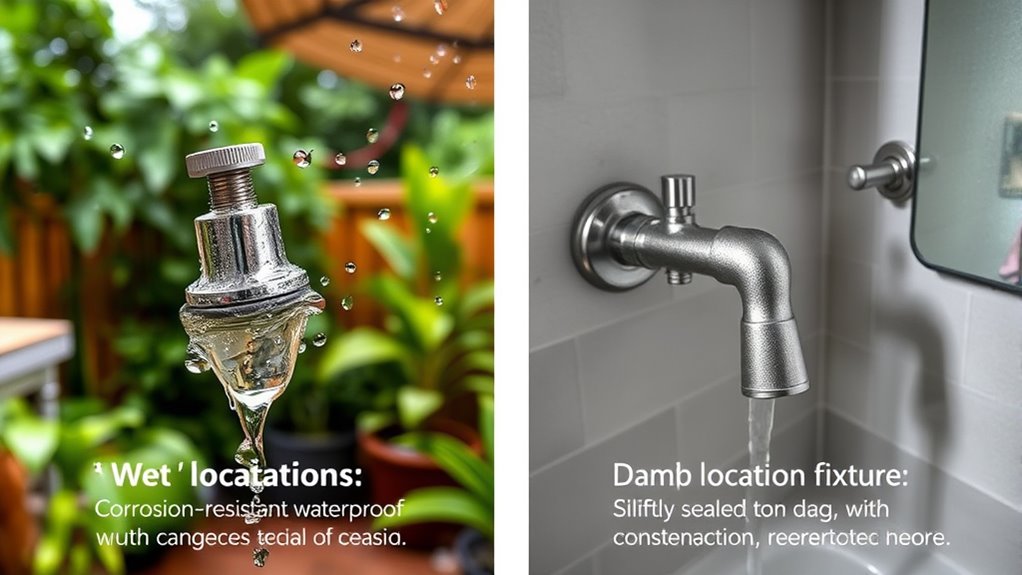
Wet location fixtures are designed for areas where they will be directly exposed to water, such as rain or heavy splashes. If you’re installing outdoor lighting, especially in open spaces like garden paths, decks, or pool areas, you should opt for fixtures rated for wet locations. These fixtures have sealed enclosures that prevent water from entering and damaging the electrical components. For bathroom fixtures, selecting those rated for wet locations guarantees they can handle splashes from sinks, showers, or bathtubs without risking electrical shorts or corrosion. These fixtures are built with robust seals and corrosion-resistant materials, making them suitable for outdoor lighting and damp indoor environments. Proper installation and maintenance also help ensure these fixtures perform safely over time.
Wet location fixtures are sealed to withstand direct water exposure, ideal for outdoor and damp indoor environments.
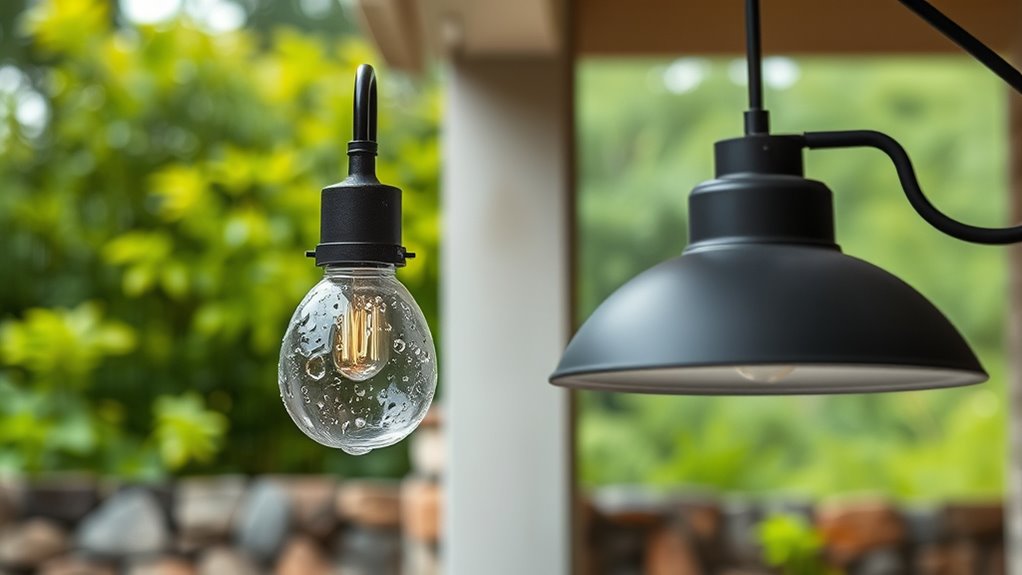
Damp location fixtures are intended for areas where moisture is present but not directly contacting the fixture. Think about covered porches, garages, or bathrooms with exhaust fans. These environments have high humidity but don’t typically involve direct water contact. When choosing bathroom fixtures, you want to make sure they’re rated for damp locations, so they can handle the moisture without rusting or failing prematurely. For outdoor lighting under awnings or overhangs, damp-rated fixtures usually suffice because they are protected from direct rain and splashes, yet still need to resist humidity and condensation. Knowing the environmental conditions helps in selecting the appropriate fixture rating and ensures safety and durability.
Understanding these distinctions is essential because installing a fixture rated only for dry locations in a wet or damp environment can pose safety risks, including electrical shorts or corrosion. Conversely, using a wet-rated fixture where only a damp rating is necessary might be more costly and unnecessarily robust. Always check the fixture’s ratings on the label or in the product specifications before installation. This ensures compliance with safety standards and prolongs the life of your lighting, whether for outdoor lighting projects or bathroom fixtures.

LEONLITE LED Emergency Lighting, Wet Location Emergency Light with Battery Backup, Commercial Exit Lights for Business, 2 Adjustable Heads, UL &FCC Listed, 120/277V, IP65 Waterproof, Black, Pack of 2
Guaranteed Safety: This UL-listed emergency light has a safe operation and complies with United States fire inspection and…
As an affiliate, we earn on qualifying purchases.
As an affiliate, we earn on qualifying purchases.
Frequently Asked Questions
Can a Fixture Rated for Wet Locations Be Used Indoors?
Yes, you can use a fixture rated for wet locations indoors, but you need to take into account fixture placement and safety regulations. Wet-rated fixtures are designed to handle moisture, making them suitable for bathrooms or kitchens. However, confirm the fixture is installed correctly and in compliance with local codes. Always verify the rating and follow safety guidelines to prevent electrical hazards and ensure proper operation in moisture-prone areas.
Are There Specific Bulbs Recommended for Wet or Damp Rated Fixtures?
Like choosing the right shoes for a walk, selecting the proper bulbs for wet or damp-rated fixtures is essential. You should opt for bulbs specifically designed for these environments to guarantee bulb compatibility and safety considerations. Use waterproof or sealed-beam bulbs for wet locations, and damp-rated bulbs for areas with humidity but no direct water exposure. This prevents hazards and assures your fixture performs safely and efficiently.
How Do I Identify if a Fixture Is Rated for Wet or Damp Locations?
You can identify if a fixture is rated for wet or damp locations by checking its markings and installation labels. Look for labels on the fixture or packaging that specify “wet location” or “damp location.” These markings indicate the fixture has been tested and approved for those environments. Always follow the manufacturer’s instructions and verify the fixture’s rating matches your installation site to guarantee safety and compliance.
Is Additional Sealing Necessary for Outdoor Fixtures?
Did you know that outdoor fixtures face more weather-related damage than indoor ones? You should definitely add a waterproof seal for outdoor fixtures to prevent water from seeping in. This guarantees reliable fixture maintenance and prolongs lifespan. Without a waterproof seal, moisture can cause corrosion or electrical issues. So, always check if your outdoor lighting has proper sealing, and consider applying additional waterproofing if needed to keep everything functioning safely.
Can I Upgrade a Fixture From Damp to Wet Location Rating?
Yes, you can upgrade a fixture from damp to wet location rating. First, verify the new fixture meets wet location standards and is suitable for your lighting design. During installation, prioritize safety by following manufacturer instructions and sealing all connections properly to prevent water intrusion. This upgrade enhances installation safety and extends the fixture’s durability, making it ideal for outdoor environments exposed to direct water contact.

LUXRITE 24 Inch LED Vanity Lights Brushed Nickel Bathroom Light Fixtures 3CCT Selectable 3000K 4000K 5000K Modern Vanity Light Bar Over Mirror 25W 1750 Lumens Dimmable Damp Rated ETL Listed
3 Color Tunable – Experience adaptable lighting with our brushed nickel bathroom vanity light. This fixture features a…
As an affiliate, we earn on qualifying purchases.
As an affiliate, we earn on qualifying purchases.
Conclusion
Understanding wet and damp location fixture rules is like steering a maze—you need to know the right turns to avoid pitfalls. By choosing the correct fixtures, you’re building a resilient fortress against the elements, ensuring safety and longevity. Think of it as planting seeds in the right soil; with proper knowledge, your outdoor spaces will flourish without worry. So, stay informed and make smart choices—your lighting setup will shine brightly through any weather.

Asnxcju Modern Outdoor Ceiling Light Fixtures, 2-Light Black Flush Mount Light Fixtures with Clear Glass Shade, Farmhouse Square Ceiling Lighting for Porch Bathroom Kitchen (Bulbs Not Included)
【Modern Look Widely Application】With unique “+” shaped metal cage surrounds create a delicate industrial collection that will be…
As an affiliate, we earn on qualifying purchases.
As an affiliate, we earn on qualifying purchases.
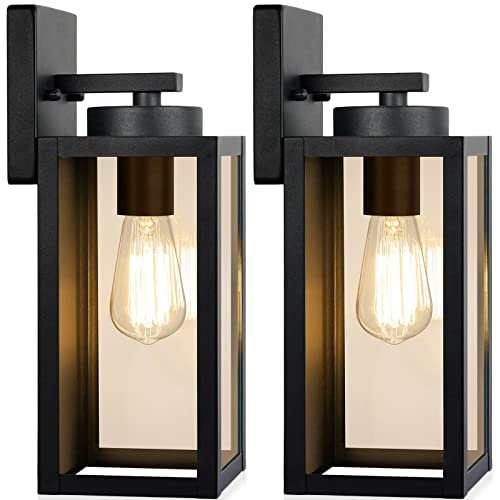
Outdoor Wall Light Fixtures, Exterior Waterproof Wall Lanterns, Porch Sconces Lighting with E26 Sockets & Glass Shades, Modern Matte Black Outside Lights for Patio Front Door Entryway Garage, 2-Pack
Weather-Resistant Outdoor Wall Lanterns: Constructed with a sturdy metal frame and thickened glass panel, this outdoor wall sconce…
As an affiliate, we earn on qualifying purchases.
As an affiliate, we earn on qualifying purchases.