Understanding energy rate plans helps you save money and manage your consumption better. Time-of-use plans charge lower rates during off-peak hours and more during peak times, so shifting usage can cut costs. Tiered pricing varies your rates based on how much energy you use, encouraging conservation. Demand-based plans charge for high usage spikes, often during extreme weather. If you explore these options further, you’ll discover smart strategies to optimize your energy bills and stay in control.
Key Takeaways
- Time-of-Use plans charge different rates depending on the time of day, encouraging shifting energy use to off-peak hours.
- Tiered pricing applies varying rates based on consumption levels, promoting conservation as higher usage incurs higher costs.
- Demand-based pricing charges based on peak short-term energy usage, incentivizing users to avoid high-demand periods.
- Smart meters enable detailed tracking of usage across these plans, helping consumers optimize costs.
- Understanding these plans allows consumers to choose the most cost-effective and environmentally friendly energy management strategies.
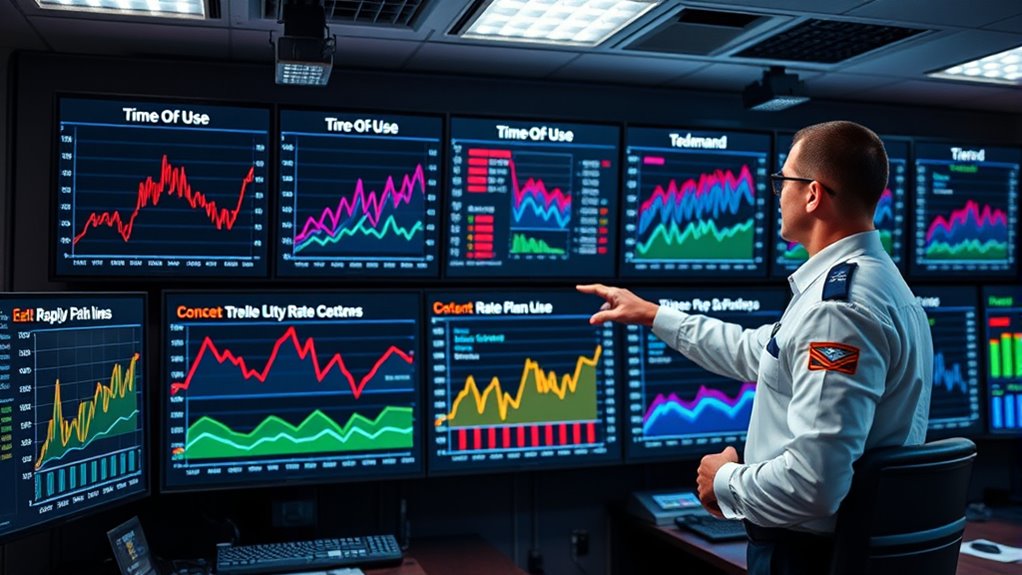
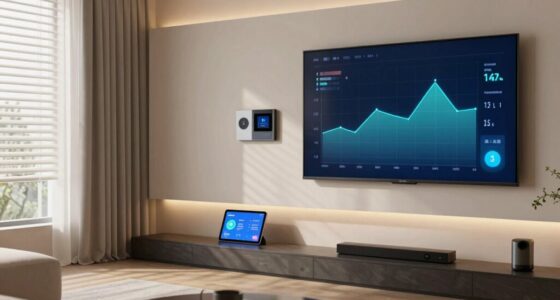
Are you overwhelmed by the variety of cell phone or internet plans available? The same can be true when you’re trying to understand energy tariffs and the different ways utilities charge for power. One key technology that’s changing how you pay for energy is the smart meter. These devices track your energy usage in real-time, giving you detailed data that helps you see exactly when and how much electricity you’re using. With smart meters, energy providers can offer more flexible and tailored energy tariffs, which directly impact your bill. These tariffs aren’t one-size-fits-all; they’re designed to match your lifestyle and help you save money. Understanding these options can seem complicated at first, but once you grasp the basics, you’ll be better equipped to choose a plan that suits your needs.
Smart meters provide real-time data to help you choose energy plans that fit your lifestyle and save money.
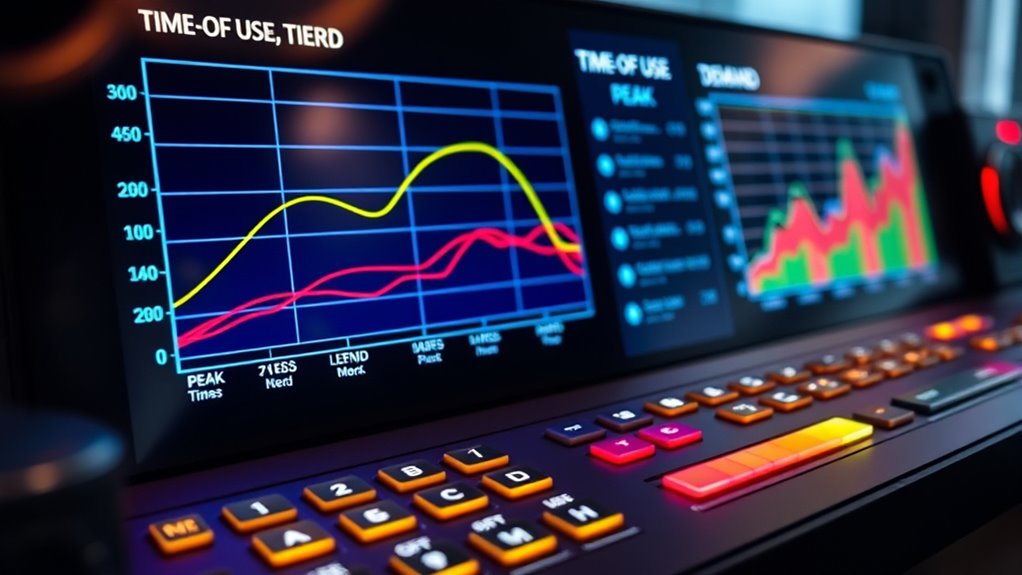
Time-of-use tariffs are a popular type of energy plan that smart meters make possible. With this plan, your electricity rate varies depending on the time of day. Typically, electricity costs less during off-peak hours when demand is low and more during peak times when everyone’s using power. If you’re willing to adjust your habits—like running your dishwasher or charging your devices overnight—you can take advantage of lower rates and considerably reduce your energy bills. This plan benefits both you and the environment by shifting energy consumption to less busy times, easing strain on the grid.
Another common structure is tiered pricing, which charges different rates based on how much energy you consume. Think of it as a tiered cake—once you reach a certain level of usage, the rate increases. For example, you might pay a lower rate for the first 500 kilowatt-hours (kWh) and a higher rate for anything above that. This setup encourages you to conserve energy, especially if you’re nearing the higher tiers. It’s a straightforward way to incentivize efficiency, and smart meters provide the precise data needed to track your consumption within each tier. Additionally, understanding energy measurement tools helps you better monitor your usage and optimize your consumption patterns.
Demand-based pricing takes it a step further by charging you based on your peak energy usage during a specific period, often a short time frame like 15 minutes. If you tend to have sudden spikes—say, turning on multiple appliances at once—this plan can help you be more mindful of those moments. It’s especially relevant during hot summer days or cold winter nights when HVAC systems cause your demand to shoot up. Knowing your demand patterns through smart meters allows you to adjust your behavior, potentially lowering your bill by avoiding high-demand periods.
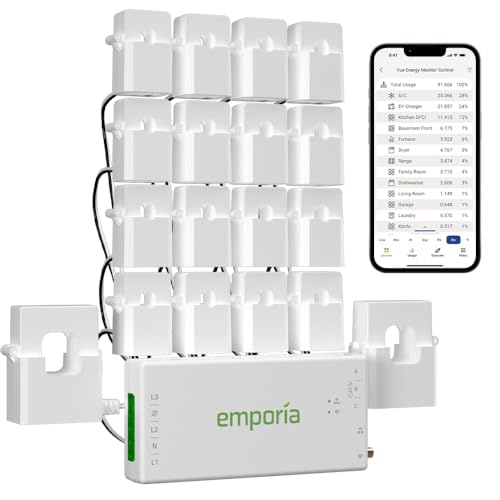
Emporia Vue 3 Home Energy Monitor – Smart Home Automation Module and Real Time Electricity Usage Monitor, Power Consumption Meter, Solar and Net Metering for UL Certified Safe Energy Monitoring
- UL Certified for Safety: Meet rigorous safety standards in the US and Canada
- Easy Installation in Circuit Panel: Supports various home electrical systems with clamp-on sensors
- Continuous Energy Monitoring: Manage and control energy use anytime, anywhere
As an affiliate, we earn on qualifying purchases.
As an affiliate, we earn on qualifying purchases.
Frequently Asked Questions
How Do I Switch Between Different Rate Plans?
To switch between different rate plans, start with a rate plan comparison to see which fits your needs best. Check your customer eligibility, as some plans require specific criteria. Contact your utility provider’s customer service or log into your account online. They’ll guide you through the process, confirm your eligibility, and help you choose the best plan. Switching is usually quick and straightforward, ensuring you get the most cost-effective option.
Are There Any Penalties for Changing Plans Frequently?
You generally won’t face significant plan change penalties or switching fees when changing your rate plan, but it can vary by provider. Some companies may charge a small fee for frequent switches or impose a penalty if you switch too often within a certain period. To avoid surprises, check your provider’s policies on plan change penalties before switching, and consider if the benefits outweigh any potential fees.
How Do Rate Plans Impact My Overall Electricity Bill?
Your electricity bill can skyrocket or plummet based on your rate plan choices. During peak hours, rates are higher, so using power then can substantially increase your costs. If you’re on a tiered plan, consuming more than your tier’s limit raises your bill. Your billing cycle‘s timing also matters; smartly managing usage during off-peak hours can save you a fortune. Choose your plan wisely to maximize savings!
Can I Combine Features of Multiple Rate Plans?
Yes, you can often combine features of multiple rate plans through plan feature integration, but it depends on your utility’s rate plan compatibility. Some providers allow you to select a hybrid plan or customize your options to maximize savings. Check with your utility to see which plan options are compatible and if they offer plan feature integration, so you can tailor your electricity plan to best suit your needs.
What Are the Best Rate Plans for Large Energy Consumers?
Your energy needs are enormous, so choosing the right rate plan can save you a fortune. For large consumers, demand-based plans with smart metering are ideal, offering real-time insights and control. Combining tiered rates with renewable options also helps optimize costs and sustainability. These plans adapt to your usage patterns, ensuring you’re not overpaying while supporting greener energy. It’s the smartest way to power your operations efficiently and responsibly.
Emporia Vue 3 Home Energy Monitor – Smart Home Automation Module and Real Time Electricity Usage Monitor, Power Consumption Meter, Solar and Net Metering for UL Certified Safe Energy Monitoring
- UL Certified for Safety: Meet rigorous safety standards in the US and Canada
- Easy Installation in Circuit Panel: Supports various home electrical systems with clamp-on sensors
- Continuous Energy Monitoring: Manage and control energy use anytime, anywhere
As an affiliate, we earn on qualifying purchases.
As an affiliate, we earn on qualifying purchases.
Conclusion
Now that you’ve got the scoop on time-of-use, tiered, and demand rate plans, you’re better equipped to choose what works best for you. Think of it like picking a jukebox tune—each plan has its own rhythm and vibe. Remember, the right plan can save you money and energy. So, don’t be a square—embrace these options and power up your savings, just like a savvy shopper from the days of yesteryear.

Smart Home Energy Monitor with 16 50A Circuit Level Sensors, Real-Time Power Usage & Electricity Cost Tracking, Ideal for Rental Homes & Shared Apartments, App History, Compatible with Home Assistant
- Easy Installation: Clamp-on sensors for most home panels
- Real-Time Power Monitoring: Track energy use anytime, anywhere
- Versatile Electrical Monitoring: Supports multiple appliances with 16 sensors
As an affiliate, we earn on qualifying purchases.
As an affiliate, we earn on qualifying purchases.

The Smart Grid: Enabling Energy Efficiency and Demand Response
As an affiliate, we earn on qualifying purchases.
As an affiliate, we earn on qualifying purchases.