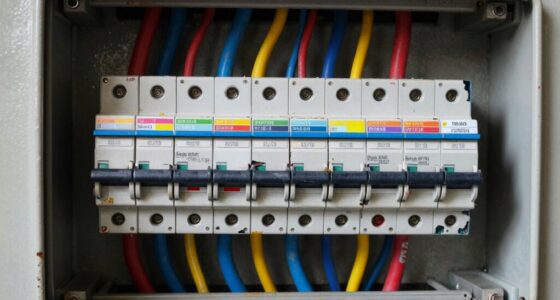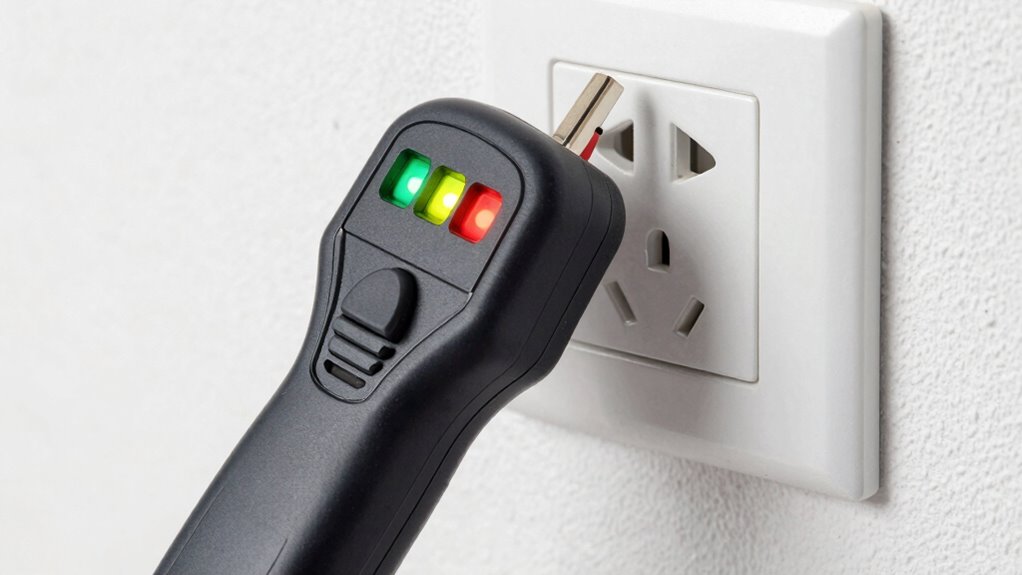
Outlet testers are helpful tools that give you quick insights into whether outlets are wired correctly and highlight common issues like missing ground or reversed polarity. They’re easy to use and can catch obvious problems, offering peace of mind for basic safety checks. However, they don’t detect hidden wiring issues, overloaded circuits, or faults in circuit breakers. To guarantee full safety, it’s important to understand their limits—keep exploring to learn more about protecting your home.
Key Takeaways
- Outlet testers quickly identify basic wiring issues but do not detect all electrical problems or hidden faults.
- They indicate correct wiring via lights but cannot confirm overall electrical safety or circuit integrity.
- Relying solely on testers can lead to false security; professional inspections are essential for comprehensive safety.
- Testers do not test circuit breakers, overloads, or wiring beyond basic connections.
- Regular inspections and proper safety practices are necessary because testers have limited diagnostic capabilities.
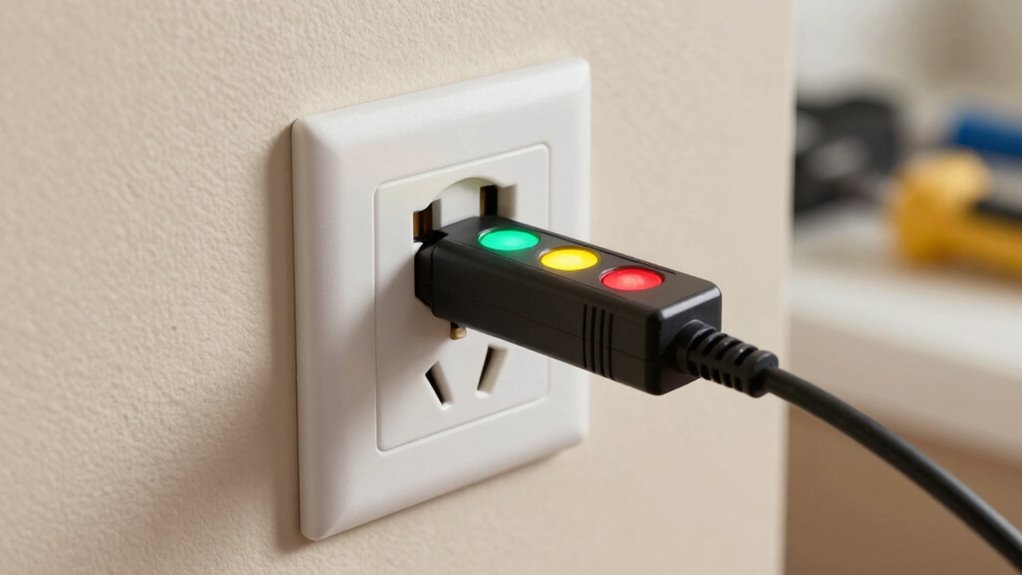
Have you ever wondered if your outlets are safe to use? It’s a common concern, especially when you notice outlets looking a little worn or if you’re just trying to be cautious. That’s where outlet testers come in—they’re handy tools that can give you quick insights into whether your outlets are functioning properly. But while they’re useful, it’s important to understand that outlet testers aren’t magic devices that can catch every electrical issue. They’re designed to help you perform basic safety checks, but they don’t replace a professional inspection or thorough troubleshooting.
Using an outlet tester is simple, and it’s a good step toward practicing safety precautions in your home. These tools typically have indicator lights that tell you if the outlet is wired correctly or if there’s a potential problem like a missing ground or open neutral. They’re especially helpful for identifying obvious issues, such as a reversed polarity, which could be dangerous if ignored. However, many people hold onto common misconceptions about what outlet testers can actually do. Some believe that if their tester shows a normal reading, their entire electrical system is safe, which isn’t always true. These devices don’t detect all problems, such as hidden wiring issues, overloaded circuits, or faulty circuit breakers.
It’s tempting to rely solely on an outlet tester and assume your outlets are safe, but that’s a mistake. Electrical issues can be complex and sometimes invisible until they cause a problem or spark. That’s why it’s essential to incorporate other safety precautions—like regularly inspecting your outlets for signs of damage, avoiding overloading circuits, and never forcing plugs into outlets. If you’re unsure about the condition of your electrical system, it’s always best to call a licensed electrician for a thorough assessment. Relying on outlet testers alone can give you a false sense of security, which might lead to overlooked hazards. Additionally, understanding electrical safety concepts can help you better recognize potential risks before they become serious problems. Being aware of home wiring standards and practices can also enhance your ability to spot issues early.
Furthermore, familiarizing yourself with common electrical problems can empower you to take proactive steps in maintaining a safe environment. Remember that Vetted safety tips and guidelines are essential for keeping your home secure from electrical hazards.

Klein Tools RT250 GFCI Outlet Tester with LCD Display, Electric Voltage Tester for Standard 3-Wire 120V Electrical Receptacles
- LCD Display: Large backlit LCD for easy reading
- Trip Time Indicator: Displays GFCI trip time for troubleshooting
- Wiring Fault Detection: Identifies common wiring issues
As an affiliate, we earn on qualifying purchases.
As an affiliate, we earn on qualifying purchases.
Frequently Asked Questions
Can Outlet Testers Detect All Wiring Issues?
Outlet testers can’t detect all wiring issues. They mainly identify problems like incorrect polarity or missing ground wiring, but they may miss more complex faults like loose connections or internal wiring damage. You should still have a professional inspect your outlets if you suspect wiring problems, as outlet testers have limitations. Always prioritize safety and don’t rely solely on these tools for thorough electrical diagnostics.
Are Outlet Testers Safe for DIY Use?
While outlet testers are generally safe for DIY use, you should exercise caution to uphold electrical safety. They’re designed to be user-friendly, but their tool accuracy isn’t foolproof, so you shouldn’t rely solely on them for complex wiring issues. Always unplug devices before testing, and if you’re unsure about the results, consult a professional. Proper safety practices ensure your DIY projects stay safe and effective.
How Often Should I Test My Outlets?
You should test your outlets at least once every year to guarantee safety and proper functioning. Regular testing helps identify issues before they become dangerous, especially considering outlet lifespan and wear over time. If you notice frequent tripping or other electrical problems, increase testing frequency. Using a reliable outlet tester, you can quickly verify connections and detect potential issues, keeping your home safe and your electrical system in good shape.
Do Outlet Testers Work on GFCI Outlets?
Think of outlet testers as a quick check-up, like a stethoscope for your outlets. They do work on GFCI outlets, but keep in mind that GFCI sensitivity can sometimes affect accuracy. Not all testers are compatible with every GFCI model, so make certain your tester is designed for GFCI outlets. While they’re handy for basic checks, they don’t replace professional testing for safety.
Can Outlet Testers Identify Faulty Circuit Breakers?
Outlet testers can’t identify faulty circuit breakers because they’re designed mainly for circuit diagnosis at the outlet, not breaker issues. Their limitations mean you can’t rely solely on them for circuit breaker diagnosis. If you’re experiencing electrical problems, you should turn off power and use a multimeter or consult a professional for a thorough inspection. Outlet testers are helpful for socket functionality, but they don’t replace proper electrical testing tools.

Klein Tools ET310KIT AC Circuit Breaker Finder Kit, Electric Tester, GFCI Tester, Leads, Adapters and Case
- Accurate Breaker Identification: Quickly locate the correct breaker
- Visual and Audible Cues: Clear signals when breaker is found
- Built-in GFCI Tester: Test GFCI outlets and wiring
As an affiliate, we earn on qualifying purchases.
As an affiliate, we earn on qualifying purchases.
Conclusion
Outlet testers are like trusty compass needles—reliable tools that guide you safely through electrical troubleshooting. They help you spot issues quickly, preventing potential hazards before they become disasters. But remember, they aren’t magic wands that fix problems; they’re simply your first step in understanding what’s happening behind the outlets. Use them wisely, and you’ll navigate your electrical system with confidence—like a seasoned sailor reading the stars, not relying on a single compass point.

Klein Tools RT110 Outlet Tester, AC Electrical Receptacle Tester for North American Outlets
- Clear Light Sequence: Indicates wiring status with light patterns
- Standards Compliant: UL and CSA certified for safety
- Wide Temperature Range: Operates from 32°F to 140°F
As an affiliate, we earn on qualifying purchases.
As an affiliate, we earn on qualifying purchases.

Tool Box Talks: 100 Pre-Shift Safety Talks for Electrical Crews (Electrical Safety)
As an affiliate, we earn on qualifying purchases.
As an affiliate, we earn on qualifying purchases.