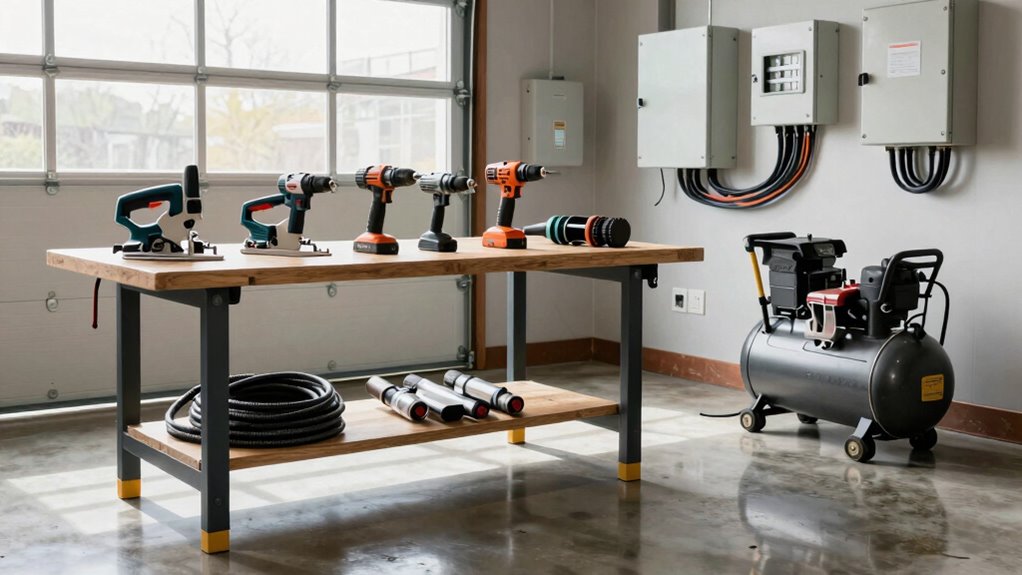

240V tools provide more power and performance, making them ideal for tough DIY projects and professional work. However, they demand proper electrical systems, safety precautions, and grounding to prevent overloads and hazards. Upgrading your wiring might be necessary to handle the higher current safely. While they offer better efficiency, you must follow safety standards carefully. Want to know how to use these tools safely and effectively? Keep exploring to get all the essential details.
Key Takeaways
- 240V tools offer higher power, enabling tougher tasks and faster work, ideal for serious DIY or professional projects.
- Upgrading your electrical system may be necessary to safely support 240V tools.
- Higher voltage increases risks of electrical shock and fire; proper grounding and safety measures are essential.
- Adequate workspace safety, including dry environment and insulated tools, is vital when using high-power 240V tools.
- Compliance with electrical safety standards ensures safe operation and prevents overloads or electrical hazards.

If you’re contemplating using 240V tools in your home garage or shop, it’s crucial to understand the facts behind these powerful devices. One of the key aspects to regard is their power consumption. 240V tools typically draw more electricity than standard 120V models, which means they’re capable of delivering higher performance and handling tougher jobs. This increased power allows for faster cuts, more precise drilling, and heavier-duty tasks—making them indispensable for serious DIY projects or professional work. However, with this power comes the need to guarantee your electrical system can support their demands. You should check whether your existing wiring and circuits are rated for the higher current these tools require. If not, upgrading your electrical system might be necessary to prevent overloads or damage.
Safety precautions are equally crucial when working with 240V tools. Because they operate at a higher voltage, the risk of electrical shock or fire is greater if you don’t handle them properly. Always make sure your tools are grounded correctly and that all cords and plugs are in good condition with no frayed wiring. When setting up or maintaining your equipment, turn off the power and disconnect the device from the circuit. Never bypass safety features or attempt to modify the wiring—these actions can lead to dangerous situations. Proper grounding and using circuit breakers designed for higher amperages add extra layers of protection, minimizing the chances of electrical accidents. Additionally, keep your workspace dry and free of clutter to avoid accidental contact with live parts. Wearing insulated gloves and using tools with insulated handles further reduces the risk of shocks. Remember, even though these tools are designed for heavy-duty use, they still require careful handling and respect for electrical safety protocols. Understanding the importance of electrical safety standards, load capacity, and proper grounding practices can help prevent accidents and ensure your workspace remains secure. Familiarizing yourself with electrical code compliance can also help ensure your setup adheres to safety regulations and standards.

TOPRINCE Large Power Tool Organizer Wall Mount with Charging Station, 3-Tier Heavy Duty Metal Tool Rack with 8 Drill Holders and 6FT Power Strip, Garage Workshop Storage.Black
Large & Heavy Duty Wall Mount Design – This large capacity power tool organizer wall mount is built…
As an affiliate, we earn on qualifying purchases.
As an affiliate, we earn on qualifying purchases.
Frequently Asked Questions
Are 240V Tools Compatible With Standard Household Outlets?
240V tools generally aren’t compatible with standard household outlets, which are typically 120V. Tool compatibility depends on the outlet type; most home outlets are designed for lower voltages, so using a 240V tool requires a dedicated circuit and proper outlet. If you try plugging a 240V tool into a standard outlet, it won’t work and could be dangerous. Always check your outlet type and voltage requirements before use.
What Safety Precautions Are Needed for 240V Tool Installation?
When installing 240V tools, you need to prioritize grounding safety and guarantee your circuit capacity can handle the load. Always turn off the power before working on wiring, use a ground-fault circuit interrupter (GFCI), and verify that your circuit breaker matches the tool’s amperage requirements. Avoid overloading circuits, and double-check connections to prevent electrical shocks or fires. Proper safety measures protect you and your equipment during installation.
Can I Upgrade My Garage Electrical System Easily?
Think of upgrading your garage electrical system as building your own Batcave—exciting but requiring careful planning. You can upgrade it relatively easily if you have basic electrical knowledge, but it’s best to consult a professional. Focus on installing proper garage lighting and insulation upgrades first, then move on to 240V circuits. This guarantees safety, efficiency, and a more functional space for your tools and projects.
Do 240V Tools Require Special Circuit Breakers?
Yes, 240V tools typically require special circuit breakers to guarantee circuit compatibility and safety. These breakers are designed to handle higher power loads and protect against power surges that could damage your tools or wiring. When upgrading or installing 240V outlets, always consult a professional electrician to ensure you use the correct breaker type and prevent electrical issues, keeping your workspace safe and efficient.
How Much Does a 240V Outlet Installation Typically Cost?
A 240V outlet installation typically costs between $150 and $500, depending on your home’s wiring and electrical setup. You might need voltage conversion or upgrades to guarantee circuit compatibility, especially if existing wiring isn’t designed for high-voltage tools. Hiring a licensed electrician ensures safe installation, proper circuit protection, and compliance with local codes. Always get a quote beforehand, as costs vary based on complexity and location.

Makita HR2631FT/2 240V 800W Rotary Hammer with AVT, 3 Mode Operation, Led Light, Anti-Vibration Technology, 26mm SDS-Plus
Improved bit guide for increased bit stability during drilling applications
As an affiliate, we earn on qualifying purchases.
As an affiliate, we earn on qualifying purchases.
Conclusion
In conclusion, while 240V tools are powerful and efficient, they aren’t for everyone. Did you know that only about 30% of home garages are equipped with the necessary outlets? If you’re considering upgrading, weigh the benefits of increased performance against installation costs and safety. With proper setup, you can access the full potential of these tools, making your projects faster and more precise. Just remember, safety always comes first.

Siemens Q240 40-Amp Double Pole Type QP Circuit Breaker, Black
Double pole, 40 Amp, 240V type QP Circuit Breaker
As an affiliate, we earn on qualifying purchases.
As an affiliate, we earn on qualifying purchases.

Klein Tools ET450 Advanced Underground Circuit Breaker Finder and Wire Tracer Kit for Energized and Non-Energized Breakers, Fuses, and Wires
RELIABLE CIRCUIT TRACING: The Advanced Circuit Tracer Kit ensures dependable tracing of energized or non-energized breakers, fuses, and…
As an affiliate, we earn on qualifying purchases.
As an affiliate, we earn on qualifying purchases.


![The GNU Emacs Architecture: Unlocking The Core [Pdf]](https://highervoltage.net/wp-content/uploads/2026/07/the-gnu-emacs-architecture-unlocking-the-core-pdf-featured-260x140.jpg)