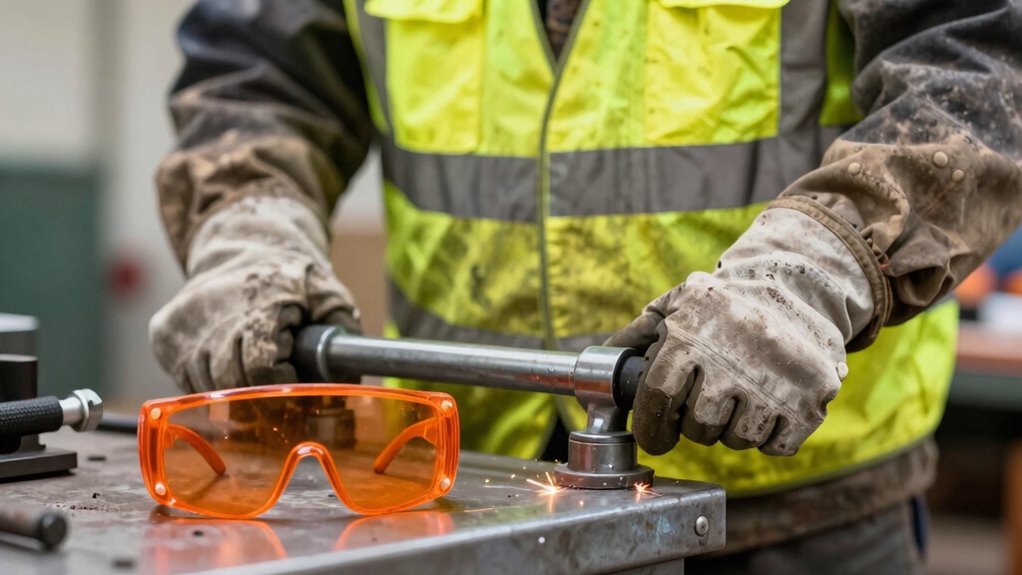
Generator safety gear may look simple, but it’s essential for protecting you from real hazards like sparks, fuel leaks, and loud noise. It actively shields you from burns, eye injuries, and hearing loss that can happen during operation. Wearing proper gear guarantees you respond quickly and stay safe in risky situations. Keep in mind, understanding the full importance of this gear can prevent serious accidents—press on, and you’ll learn more about staying safe.
Key Takeaways
- Safety gear actively prevents injuries from sparks, fuel leaks, and hot components during generator operation.
- It protects eyes, face, and hands from debris, splashes, and potential fire hazards.
- Hearing protection reduces long-term damage from loud generator noise, ensuring alertness and safety.
- Proper gear minimizes risks in hazardous environments, supporting safe handling of challenging conditions.
- Combining safety gear with training and maintenance creates a comprehensive safety system beyond appearances.
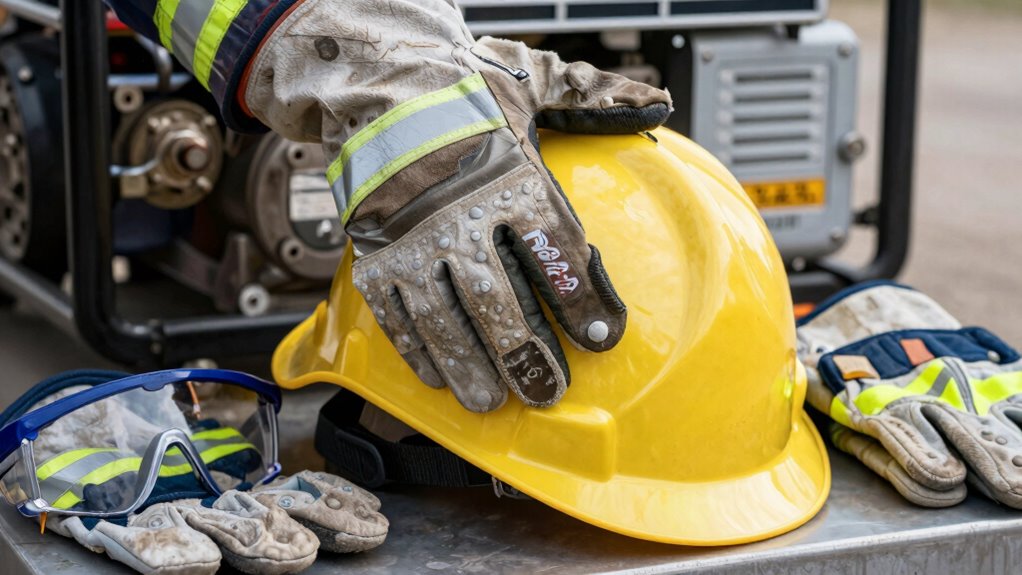
Have you ever considered how vital proper safety gear is when operating a generator? It’s easy to overlook safety equipment when your main focus is getting the job done, but the truth is that the right gear can prevent serious accidents and injuries. Generator safety gear isn’t just about looking professional; it’s about actively protecting you from hazards that could otherwise cause harm. One of the most significant dangers is the fire hazard posed by generators. Without proper protective gear—like fire-resistant gloves and clothing—you risk burns or worse if a spark or fuel leak ignites. Additionally, safety goggles or face shields safeguard your eyes from sparks, debris, and accidental splashes of fuel or oil, reducing the risk of injury and potential fires. These precautions are vital because even a small mistake or oversight can turn into a dangerous situation quickly. Moreover, understanding how to properly utilize natural filtration systems and environmentally conscious practices can further enhance safety and sustainability during generator use. Proper ventilation and filtration can help reduce harmful fumes and improve overall safety in enclosed spaces. Using safety signs and clear instructions can also help prevent accidental misuse and enhance awareness of potential risks.
Proper safety gear prevents injuries and fires when operating a generator. Stay protected and prioritize safety always.
Another reason generator safety gear is more important than it looks involves noise reduction. Generators can produce loud noise levels that not only cause discomfort but can also lead to hearing loss over time. Wearing proper ear protection, such as earplugs or earmuffs, is essential to shield your ears from the constant roar of the engine. It might seem like a minor inconvenience, but long-term exposure to high decibel levels can have serious consequences. Noise reduction gear helps you stay alert and focused, which is especially important if you’re operating the generator for extended periods or in busy environments. It’s not just about comfort; it’s about preserving your hearing health. Additionally, noise pollution control measures can contribute to a safer and more comfortable work environment. Proper maintenance and regular inspections also support noise reduction and safe operation, preventing unexpected breakdowns or hazards.
Beyond fire hazards and noise reduction, safety gear plays a broader role in creating a safer work environment. Gloves, for example, protect your hands from cuts, abrasions, and contact with hot or sharp components. Steel-toed boots prevent foot injuries if the generator is accidentally dropped or if heavy objects are moved around it. Respirators or masks might also be necessary if you’re working in areas with poor ventilation or where fuel fumes and exhaust gases accumulate. All these pieces of gear work together to minimize risks and guarantee that you can operate your generator safely, even in challenging conditions. Proper training and adherence to safety guidelines complement the use of safety gear, ensuring comprehensive protection.
generator safety gloves
As an affiliate, we earn on qualifying purchases.
As an affiliate, we earn on qualifying purchases.
Frequently Asked Questions
How Often Should Generator Safety Gear Be Inspected?
You should inspect your generator safety gear at least once a month to guarantee its durability and effectiveness. Regular inspection frequency helps catch any signs of wear, tear, or damage early, preventing accidents. Check for cracks, frayed straps, or compromised materials. Proper maintenance keeps your safety gear reliable, so you can operate your generator safely and confidently, knowing it’s in top condition when needed.
Can DIY Safety Gear Replacements Compromise Protection?
Skipping professional help for safety gear repairs is like building Icarus’s wings—shortcuts can lead to disaster. DIY shortcuts might seem convenient, but they often compromise protection, exposing you to safety risks. Your gear is designed to withstand specific hazards, and improper repairs weaken that barrier. Trust experts to guarantee your safety gear functions properly, so you stay protected instead of risking a fall that could be catastrophic.
Are There Specific Safety Gear Standards for Generators?
Yes, there are specific generator safety standards you should follow. Generator safety standards, established by organizations like OSHA and ANSI, guarantee protective gear compliance and safety. You need to use gear that meets these standards to protect yourself from electrical shocks, burns, and other hazards. Always verify that your protective gear complies with these regulations before operating a generator, as proper safety gear is essential for your safety.
What Is the Lifespan of Typical Generator Safety Gear?
The lifespan of typical generator safety gear usually ranges from one to five years, depending on material durability and storage conditions. You should regularly inspect gear for signs of wear or damage, especially if stored improperly or exposed to harsh environments. Proper storage in a cool, dry place extends its life, ensuring the gear remains effective. Replacing safety gear as recommended keeps you protected during generator use.
How Does Weather Affect Generator Safety Gear Effectiveness?
Think of your safety gear as a sturdy ship steering stormy seas. Weather resilience directly impacts its effectiveness; rain, snow, or extreme heat test the gear material’s strength. Moisture can cause deterioration, reducing protection, while cold can make materials brittle. To guarantee your safety, select gear built for weather resilience, and regularly inspect it for signs of wear. Properly maintained, your gear stays reliable, regardless of the weather’s unpredictable voyage.
ear protection for generator operation
As an affiliate, we earn on qualifying purchases.
As an affiliate, we earn on qualifying purchases.
Conclusion
Remember, wearing proper generator safety gear isn’t just about looking the part—it’s vital for your safety. Did you know that according to the Consumer Product Safety Commission, there are over 30,000 generator-related injuries each year? That’s a staggering number, highlighting how indispensable protective gear truly is. Don’t take chances. Always gear up before operating a generator to protect yourself from potential hazards and make sure you’re prepared for any emergency. Safety should always come first.
generator face shield
As an affiliate, we earn on qualifying purchases.
As an affiliate, we earn on qualifying purchases.
fire-resistant work gear
As an affiliate, we earn on qualifying purchases.
As an affiliate, we earn on qualifying purchases.