Insulation testers help you quickly identify electrical faults caused by damaged or deteriorated insulation. By measuring insulation resistance, you can pinpoint areas where current may leak or short circuits may exist, preventing potential hazards. Regular testing guarantees your system stays safe, reliable, and maintains its integrity over time. If you want to know more about how these testers enhance troubleshooting and safety, there’s more to explore below.
Open a free Amazon Business account
Business pricing, bulk buying and tax-exempt orders.
As an affiliate, we earn on qualifying purchases.
Key Takeaways
- Insulation testers identify hidden faults by measuring insulation resistance between conductors and ground.
- They help locate deteriorated or damaged insulation before failure causes safety hazards.
- Resistance readings guide maintenance actions, ensuring system safety and preventing short circuits.
- Regular testing detects early insulation degradation, extending equipment lifespan and reducing unexpected outages.
- Proper use of insulation testers enhances troubleshooting efficiency and confirms adherence to safety standards.
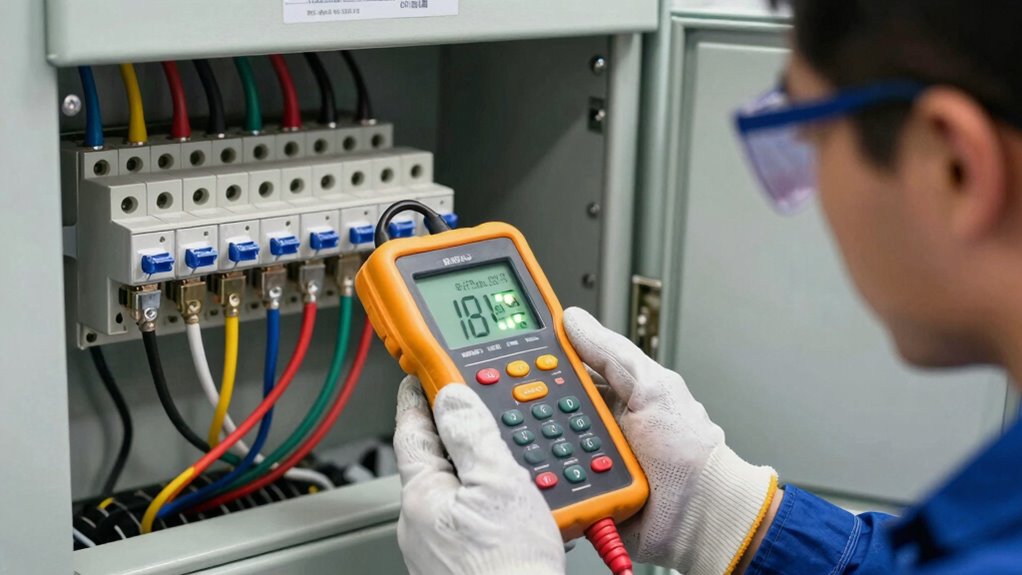
Have you ever wondered how technicians quickly identify electrical faults in complex systems? The answer often lies in the strategic use of insulation testers. These tools are crucial for diagnosing issues that aren’t immediately visible, helping you guarantee electrical safety and adhere to proper maintenance procedures. When working on electrical equipment, you need to be confident that the insulation around wires, cables, and equipment components is intact. An insulation tester provides a reliable way to measure insulation resistance, allowing you to detect deterioration or damage before it results in a fault or safety hazard.
Using insulation testers during troubleshooting isn’t just about finding problems—it’s about preventing them. By regularly checking insulation resistance, you can catch issues early and plan maintenance more effectively. This proactive approach helps extend the lifespan of electrical systems and reduces the risk of unexpected failures. When you perform these tests, you’re verifying that the insulation still provides the necessary barrier to prevent current leakage, which is critical for electrical safety. Faulty insulation can lead to short circuits, electrocution risks, or fires, so accurate testing becomes a crucial part of your maintenance procedures. Additionally, understanding insulation resistance and how it impacts overall system safety enhances your troubleshooting efficiency.
In practical terms, insulation testers are simple to operate but require careful handling. You connect the device between conductors or between a conductor and ground, then generate a test voltage—typically much higher than normal operating voltages—and measure the resistance. If the resistance falls below a specified threshold, it indicates compromised insulation. This process helps you pinpoint problematic areas quickly, saving time and reducing downtime. Remember, always follow established safety protocols when performing insulation tests; high voltages are involved, and improper handling can pose serious risks. Incorporating proper testing techniques ensures both safety and accuracy in your diagnostics. Moreover, understanding system insulation helps in evaluating how well protective barriers perform under different conditions.
The real strength of insulation testers lies in their ability to provide definitive resistance readings, giving you confidence in the condition of electrical insulation. These results inform your maintenance procedures—whether you’re planning repairs, replacing worn-out cables, or confirming that systems meet safety standards. Additionally, understanding how insulation testing works enhances your troubleshooting skills and ensures you use the tools effectively. By integrating insulation testing into your routine troubleshooting, you guarantee that electrical safety stays at the forefront and that your systems operate reliably. Ultimately, insulation testers are invaluable tools that empower you to diagnose faults accurately, maintain safety, and keep electrical systems functioning smoothly.
As an affiliate, we earn on qualifying purchases.
Frequently Asked Questions
How Often Should Insulation Testers Be Calibrated?
You should calibrate insulation testers regularly, typically every 12 months or according to the manufacturer’s recommended calibration intervals. Frequent calibration helps detect insulation degradation early, guaranteeing accurate readings and safe operation. Environmental factors and usage intensity may require more frequent checks. Keep a record of calibration dates and results to maintain reliability. Proper calibration ensures your insulation tester provides precise measurements, vital for troubleshooting and preventing electrical failures.
Can Insulation Testers Detect All Types of Electrical Faults?
Insulation testers can’t detect all electrical faults; they primarily reveal insulation breakdown or deterioration. You might think they catch everything, but testing limitations exist. Some faults, like partial short circuits or issues outside insulation, slip past their scope. Stay cautious—relying solely on insulation testers could leave certain problems hidden. To guarantee safety and reliability, combine testing methods and interpret results carefully, understanding what insulation testers can and cannot uncover.
What Safety Precautions Are Necessary When Using Insulation Testers?
When using insulation testers, you need to prioritize safety by wearing personal protective equipment like gloves and eye protection. Make certain the equipment is properly grounded to prevent electrical shocks. Always disconnect power sources before testing, and double-check that the tester is functioning correctly. Keep your hands dry and avoid testing in wet conditions. Following these precautions helps protect you from potential hazards during insulation testing.
Are There Specific Insulation Testers for Different Industries?
Did you know that over 60% of industries use specialized testing equipment for insulation? Yes, there are industry-specific insulation testers tailored to meet particular standards, guaranteeing safety and compliance. These testers are designed to handle unique voltage levels and electrical configurations. By choosing the right equipment, you guarantee accurate results and adhere to industry-specific standards, making troubleshooting more efficient and safe across different sectors like manufacturing, energy, and telecommunications.
How Do Temperature Variations Affect Insulation Resistance Readings?
Temperature variations cause resistance fluctuation in insulation materials due to thermal expansion or contraction. When it gets hotter, insulation resistance typically decreases, making it seem like there’s a problem, while cooling can increase resistance. You should account for these temperature effects during testing, as they can lead to inaccurate readings. Monitoring temperature and understanding its impact helps you interpret insulation resistance measurements more accurately and avoid false alarms.
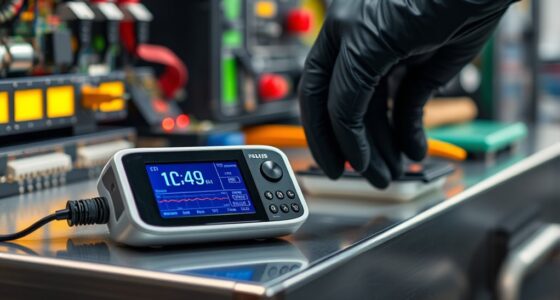
digital insulation tester for electrical troubleshooting
As an affiliate, we earn on qualifying purchases.
As an affiliate, we earn on qualifying purchases.
Conclusion
As you wield your insulation tester, imagine it as a lighthouse guiding you through the foggy waters of electrical troubleshooting. Its precise readings illuminate hidden faults, helping you steer clear of danger and keep systems safe. With each test, you’re painting a clearer picture of your wiring’s health, transforming uncertainty into confidence. Remember, this tool isn’t just a device—it’s your steady beacon in the dark, ensuring every connection is secure and reliable.
As an affiliate, we earn on qualifying purchases.
electrical insulation resistance meter
As an affiliate, we earn on qualifying purchases.
As an affiliate, we earn on qualifying purchases.
Fall Picks
fall essentials
As an affiliate, we earn on qualifying purchases.