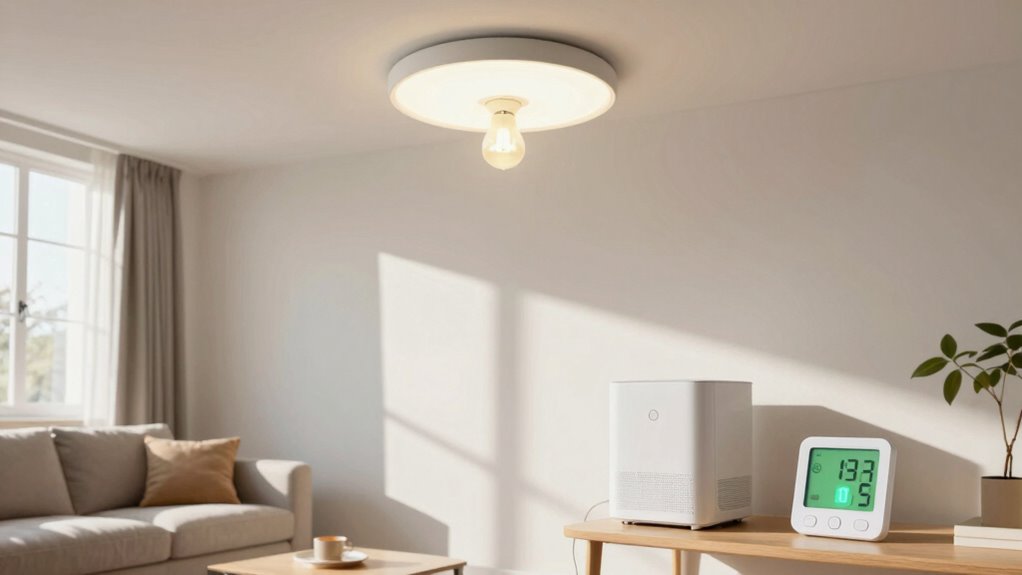

To find hidden energy waste in your house, start by inspecting appliances for efficiency and regular maintenance, like cleaning filters and coils. Check insulation in walls, attics, and floors for gaps or damage, and seal leaks around windows and doors to prevent drafts. Be mindful of habits like leaving lights or electronics on when not in use. Smart devices and timers can help identify small wastes. Keep exploring these tips to uncover more ways to cut energy costs.

Get backup power and energy gear delivered free — and shop member deals
- Fast, free delivery on millions of items
- Access to Prime Big Deal Days deals on October 6–7
- Prime Video, Amazon Music and more included
Key Takeaways
- Conduct a home energy audit to identify areas of heat loss and inefficient appliances.
- Inspect windows, doors, and attic for drafts, leaks, and insulation gaps.
- Use a thermal camera or infrared thermometer to detect hidden cold spots and thermal leaks.
- Monitor energy bills for unexpected increases indicating hidden waste.
- Check appliances and electronics for energy draw when not in use, and replace inefficient devices.

Many homeowners overlook subtle signs of energy waste that can quietly inflate their utility bills. You might not realize it, but small inefficiencies tucked away in your home can add up over time. One of the easiest places to start is by examining your appliances. Outdated or inefficient appliances consume more energy than necessary, and replacing them with energy efficient appliances can make a noticeable difference. Look for ENERGY STAR-rated appliances, which use less energy while still providing the same performance. These upgrades can seem costly initially, but the savings on your energy bill will quickly offset the expense. Additionally, pay attention to how often you run appliances like your refrigerator, dishwasher, or laundry machines. Keeping them well-maintained, such as cleaning filters and coils, ensures they operate at peak efficiency and don’t waste energy unnecessarily.
Beyond appliances, insulation improvements play a pivotal role in reducing hidden energy waste. Many homes aren’t properly insulated, leading to significant heat loss in winter and heat gain in summer. This causes your heating and cooling systems to work overtime, consuming more energy than they should. Check your attic, walls, floors, and around windows and doors for gaps or areas where insulation may be lacking or damaged. Upgrading or adding insulation in these areas can dramatically improve your home’s thermal efficiency. When your home retains heat better, your furnace or heat pump doesn’t have to run as often, saving you money and reducing your carbon footprint. Proper insulation also prevents drafts, which can make certain rooms uncomfortable and increase your reliance on heating or cooling systems. Insulation quality can significantly impact your overall energy consumption, so investing in it can be highly beneficial. Regularly inspecting and updating the home’s insulation can prevent unnecessary energy usage caused by thermal leaks. Improving the installation process can also ensure that your insulation performs optimally. Moreover, understanding the technical aspects of insulation can help you make more informed decisions about upgrades and repairs.
In addition to appliances and insulation, you should also consider other less obvious signs of energy waste. For instance, leaving lights on in unoccupied rooms, using old incandescent bulbs instead of LED lighting, or having electronics plugged in but not in use can all contribute to higher energy bills. Smart home devices and timers can help you control these small, often overlooked sources of waste. Regularly inspecting windows and doors for leaks and sealing them properly can prevent air from escaping, making your heating and cooling efforts much more effective. Another often overlooked aspect is the quality of your home’s insulation, which can significantly impact your energy consumption. Combining these strategies—upgrading to energy efficient appliances, improving insulation, and practicing energy-conscious habits—can help you identify and eliminate the hidden sources of energy waste lurking in your house.
As an affiliate, we earn on qualifying purchases.
Frequently Asked Questions
How Often Should I Conduct an Energy Audit?
You should conduct an energy audit at least once every few years, especially if you’ve upgraded to energy-efficient appliances or made insulation improvements. Regular audits help identify new areas of waste and guarantee your home stays efficient. If you’ve added new appliances or notice higher energy bills, consider doing an audit sooner. Staying proactive keeps your home comfortable and reduces energy costs over time.
Are Smart Meters Effective for Detecting Hidden Waste?
Smart meters can be your house’s detective, revealing energy waste, but they’re not perfect. They’ve got limitations—like missing small, sneaky leaks or understanding certain appliances’ true usage. Don’t fall for energy waste myths that all meters are foolproof. Use them as a tool, not the whole story. Combine their insights with your own observations to truly uncover hidden waste lurking in your home’s shadows.
Can DIY Methods Accurately Identify All Energy Leaks?
DIY methods can help you detect many energy leaks, but they might not be 100% accurate. Using DIY tools like thermal cameras or energy detectors improves detection accuracy, yet some hidden leaks may still go unnoticed. While these methods are useful for a general assessment, for precise identification and thorough results, consider consulting a professional. Combining DIY tools with expert inspections ensures you find and fix all energy waste effectively.
What Signs Indicate Hidden Energy Waste in Appliances?
You can spot hidden energy waste in appliances by observing signs like unusual heat, strange noises, or persistent vibrations, which point to appliance inefficiencies. Keep an eye out for appliances that seem to run longer than necessary or have constant power usage, indicating hidden power drains. Using a smart meter or energy monitor helps identify these issues, ensuring you catch all hidden energy waste and save on your utility bills.
How Much Can I Expect to Save After Fixing Waste?
Think of your energy bills as a treasure chest, hidden behind a wall of inefficiency. After fixing waste with energy-efficient appliances and insulation improvements, you could save 10-30% on your energy costs. This treasure grows as you eliminate leaks and optimize your home’s systems. While savings vary, these upgrades open a more secure and sustainable future, turning hidden waste into tangible benefits you can see and feel daily.
thermal camera for home inspection
As an affiliate, we earn on qualifying purchases.
As an affiliate, we earn on qualifying purchases.
Conclusion
Now that you’ve uncovered some hidden energy drains, imagine what you’ll find next—those sneaky leaks or mysterious drafts lurking in the shadows. Every small fix you make could reveal even greater savings, transforming your home into a fortress of efficiency. Keep your eyes open and stay curious; the true energy treasures might be just around the corner, waiting to be discovered. Are you ready to reveal the secrets hiding right beneath your roof?
As an affiliate, we earn on qualifying purchases.
As an affiliate, we earn on qualifying purchases.
Fall Picks
fall essentials
As an affiliate, we earn on qualifying purchases.