
TL;DR
Switzerland has deployed 25 Gbit internet nationwide, while the US lags behind. This difference is driven by regulatory policies, infrastructure investment, and market competition. The story reveals why free-market claims don’t fully explain the gap.
Switzerland has rolled out nationwide 25 Gbit internet, a feat not yet matched by the United States. This development underscores significant differences in infrastructure investment, regulatory policies, and market dynamics between the two countries, challenging the narrative that free markets alone determine internet speeds.
According to Swiss telecom providers, Switzerland’s extensive fiber optic network now supports 25 Gbit per second speeds across urban and many rural areas. This deployment has been driven by a combination of government incentives, strategic infrastructure investments, and proactive regulation, rather than solely market forces.
In contrast, the United States, despite its larger economy and more competitive market, has yet to achieve similar nationwide high-speed coverage. US broadband speeds vary widely, with many rural areas still lacking access to gigabit or multi-gigabit connections. Critics argue that regulatory hurdles, lack of coordinated investment, and market fragmentation have slowed US progress.
Experts note that Switzerland’s smaller size and centralized planning have facilitated rapid infrastructure deployment, whereas the US’s vast geography and decentralized system pose challenges. The disparity raises questions about the role of government policy versus free-market approaches in advancing digital infrastructure.
Impact of Policy and Infrastructure on Internet Speeds
This story highlights that the narrative of free markets alone driving technological advancement is incomplete. Switzerland’s example demonstrates how targeted government policies, strategic investments, and coordinated planning can lead to superior infrastructure. For US policymakers and consumers, this raises questions about the effectiveness of current approaches and the potential benefits of more active government involvement in broadband deployment, especially in underserved areas. The disparity also influences economic competitiveness, innovation, and digital equity.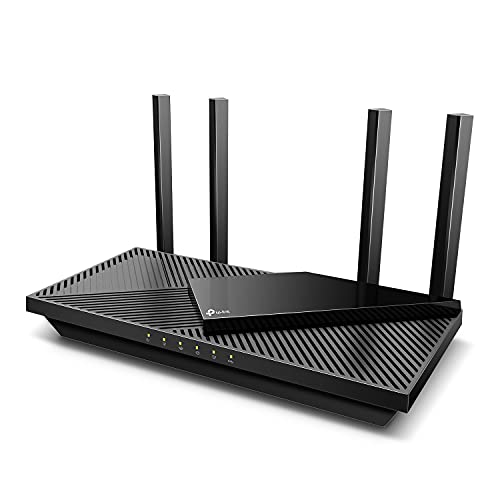
TP-Link Dual-Band AX3000 Wi-Fi 6 Router Archer AX55 | Wireless Gigabit Internet Router for Home | EasyMesh Compatible | VPN Clients & Server | HomeShield, OFDMA, MU-MIMO | USB 3.0 | Secure by Design
- Wi-Fi 6 Speeds: Up to 2402 Mbps on 5 GHz, 574 Mbps on 2.4 GHz
- Enhanced Responsiveness: Supports gaming, streaming, live feeds
- OFDMA Technology: Reduces latency and jitter for multiple devices
As an affiliate, we earn on qualifying purchases.
As an affiliate, we earn on qualifying purchases.
Comparison of Swiss and US Broadband Strategies
Switzerland’s high-speed internet rollout has been supported by government initiatives, including funding and regulation aimed at expanding fiber optic infrastructure. The country’s smaller size and centralized governance have facilitated rapid deployment of multi-gigabit networks.
In contrast, the US broadband landscape is characterized by a patchwork of providers, regulatory complexity, and less coordinated investment. Federal and state policies often differ, with some areas receiving significant funding and others remaining underserved. The Federal Communications Commission (FCC) has set ambitious goals for gigabit coverage, but progress remains uneven.
Industry experts point out that the US’s market-driven approach has led to innovation and competition in some regions but has failed to deliver universal high-speed access, especially in rural or economically disadvantaged areas.
“Market competition and private investment should be enough to deliver high-speed internet everywhere, but reality shows that’s not happening yet.”
— John Miller, US broadband advocate

Hitron CODA56 Cable Internet Modem ONLY – DOCSIS 3.1 | 2.5 Gbps | NO WiFi – Requires Router | Xfinity/Spectrum/Cox Compatible | NOT for Fiber/DSL
- Compatibility: Cable internet only (Xfinity, Spectrum, Cox)
- WiFi Requirement: Requires separate WiFi router
- Connection Type: DOCSIS 3.1, 2.5 Gbps
As an affiliate, we earn on qualifying purchases.
As an affiliate, we earn on qualifying purchases.
Unclear Factors Behind US Slower Deployment
While infrastructure and policy differences are evident, it is not yet clear how much regulatory hurdles, market fragmentation, or other factors specifically limit US high-speed deployment. The exact role of private versus public investment remains a subject of debate, and ongoing policy changes could alter the landscape.

TP-Link AC1200 WiFi Extender – 1.2Gbps Home Signal Booster, Dual Band 5GHz/2.4GHz, Up to 1600 Sq.ft and 32 Devices, EasyMesh Compatible, One Ethernet Port (RE315)
- Enhanced Wi-Fi Coverage: Extends Wi-Fi to up to 1500 sq.ft.
- Fast Dual-Band Speeds: Supports 867 Mbps (5GHz) and 300 Mbps (2.4GHz)
- Strong Signal Strength: Powerful coverage with external antennas
As an affiliate, we earn on qualifying purchases.
As an affiliate, we earn on qualifying purchases.
Future US Broadband Policy and Swiss Expansion Plans
In the US, federal and state governments are considering new policies to accelerate high-speed broadband deployment, including increased funding and regulatory reforms. Meanwhile, Switzerland plans to further expand its fiber network and explore new technologies like 10 Gbit services. The coming years will reveal whether the US can narrow the gap or if Switzerland’s model becomes a global benchmark.

Visual Fault Locator 30KM – VFL Fiber Optic Tester Kit Include Single Mode 9/125um FC Male to LC Female Adapter, Fiber Optic Lights for Network Cable (Battery not Included)
- Quick Fault Detection: Locate fiber issues in seconds with laser
- Portable Field Tool: Compact design with long battery life
- Universal Adapter Compatibility: Works with ST, SC, FC connectors
As an affiliate, we earn on qualifying purchases.
As an affiliate, we earn on qualifying purchases.
Key Questions
Why does Switzerland have faster internet than the US?
Switzerland’s smaller size, centralized planning, targeted government investments, and proactive regulation have facilitated the rapid deployment of high-speed fiber networks, unlike the more fragmented US system.
Is the free market responsible for US broadband speeds?
While market competition has driven innovation, critics argue that lack of coordinated investment, regulatory hurdles, and market fragmentation have limited US progress in achieving nationwide gigabit speeds.
Will the US catch up to Switzerland?
Future policy reforms and increased investments could accelerate US broadband deployment, but structural challenges remain. It is uncertain whether the US will match Switzerland’s level of high-speed coverage in the near future.
What does this mean for consumers?
Switzerland’s example suggests that government support and strategic planning can significantly improve internet infrastructure, potentially leading to better services and digital equity for consumers.
Source: hn