
For flexible whole-home solar power, the ECO-WORTHY 10kW Off-Grid Solar Kit with 10,620W Panels and 32.2kWh Battery Storage is my best overall pick because its large battery capacity suits longer backup needs. The SUNGOLDPOWER 10,000W Split-Phase Inverter stands out for buyers who want an inverter-focused setup with dual MPPT inputs, while the Growatt 10000W Hybrid Inverter offers a different path for shoppers comparing split-phase and three-phase configurations. The main tradeoffs are whether you need a complete kit or just an inverter, how much storage your household uses, and whether the system matches your electrical service and installation plans. A bigger battery or broader inverter capability can add flexibility, but it does not automatically make a system a better fit for every home. Read on for the full comparison and a guide to choosing around your actual loads.

Get backup power and energy gear delivered free with Prime
- Fast, free delivery on millions of items
- Prime Video, Amazon Music and more included
- Member-only deals all year
Key Takeaways
- The largest listed battery belongs to the ECO-WORTHY 10kW kit with 32.2kWh storage, making it the standout for households that prioritize extended energy reserves over a smaller system footprint.
- Several options pair 10kW-class inverters with different battery capacities; the ECO-WORTHY kits with 16.1kWh and 20.48kWh storage illustrate how storage choice can change without changing the basic off-grid system concept.
- Inverter-only choices and complete kits serve different buyers. SUNGOLDPOWER, EcoSolLi, and Growatt focus on inverter selection, while the ECO-WORTHY and Dawnice kits bundle panels, batteries, or both.
- Split-phase capability appears across multiple inverter picks, but buyers still need to confirm compatibility with their home’s service, transfer equipment, and intended backed-up circuits.
- The Dawnice options vary substantially in scope: one bundles panels, a 12kW hybrid inverter, and 16kWh storage, while another centers on a 48V split-phase inverter, so the product name alone does not tell the whole system story.
| ECO-WORTHY 10kW Off-Grid Solar Kit with 10,620W Panels and 32.2kWh Battery Storage |  | Best Complete Off-Grid Kit | Solar panels: 18 panels, 590W each | Total PV capacity: 10,620W | Maximum stated daily generation: 39.36kWh under optimal conditions | VIEW ON AMAZON | See Our Full Breakdown |
| PROSOLI 6500W Solar Hybrid Inverter with WiFi |  | Best for Expandable Builds | Continuous output: 6,500W | Peak output: 12,000VA | Battery system: 48V DC; 40–60V operating range | VIEW ON AMAZON | See Our Full Breakdown |
| Dawnice 10 kW Solar Power System with 10 585 W Panels, 12 kW Hybrid Inverter, and 16 kWh LiFePO4 Battery |  | Best for Grid-and-Off-Grid Flexibility | Solar panels: 10 bifacial panels, 585W each | Inverter output: 12kW, 110/240V AC split phase | Maximum solar input: 14kW | VIEW ON AMAZON | See Our Full Breakdown |
| SUNGOLDPOWER 10,000W 48V Split-Phase Solar Inverter with Dual MPPT | 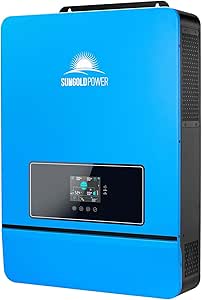 | Best All-in-One Inverter | Continuous inverter output: 10,000W | Peak power: 20,000W | Battery voltage: 48V DC | VIEW ON AMAZON | See Our Full Breakdown |
| Dawnice 10 kW 48V Hybrid Solar Inverter, Split Phase 120/240V, Pure Sine Wave |  | Best for Multi-String Solar Flexibility | Listed inverter capacity: 10,000VA | Power specifications: 10,000W peak; product details also list 5,000W rated wattage | Battery voltage: 48V | VIEW ON AMAZON | See Our Full Breakdown |
| ECO-WORTHY 10kW Off-Grid Solar Panel Kit with 16.1kWh Battery |  | Best Complete Kit for Moderate Solar Needs | Inverter continuous output: 10,000W | Inverter peak output: 20,000W | AC output: 120V/240V split-phase | VIEW ON AMAZON | See Our Full Breakdown |
| Dawnice 5.5KW Hybrid Solar System Complete Kit with 10KW Inverter, 16KWh LiFePO4 Battery, and 10PCS 550W Bifacial Panels |  | Best for Higher Daily Solar Harvest | System power: 5.5kW | Inverter power: 10kW | Battery: 48V, 314Ah LiFePO₄; 16kWh | VIEW ON AMAZON | See Our Full Breakdown |
| EcoSolLi 10000W Hybrid Solar Inverter, 48V DC to 110V/240V Split-Phase AC |  | Best for Buyers Building Around Existing Batteries | Peak output: 12,000W | Input voltage: 48V DC listed; confirm battery compatibility | AC output: 110V AC; 110V/240V settable per product title | VIEW ON AMAZON | See Our Full Breakdown |
| Growatt 10000W Hybrid Solar Inverter 48V Split-Phase/Three-Phase |  | Best for Scalable Whole-Home Systems | Model: SPH 10000TL-HU-US (B) | AC output power: 10kW | Maximum solar input: 15,000W | VIEW ON AMAZON | See Our Full Breakdown |
| ECO-WORTHY 10kW Off-Grid Solar System Kit with 20.48kWh Battery Storage |  | Best for Maximum Included Storage | Inverter output: 10,000W continuous; up to 20,000W peak | AC output: 120V/240V split-phase | Solar array: 9 × 590W panels; 5,310W total | VIEW ON AMAZON | See Our Full Breakdown |
| whole house solar inverters for flexible home power | AC output |
|---|---|
| ECO-WORTHY 10kW Off-Grid Solar | — |
| PROSOLI 6500W Solar Hybrid Inv | — |
| Dawnice 10 kW Solar Power Syst | — |
| SUNGOLDPOWER 10,000W 48V Split | 120V/240V split phase or 120V single phase |
| Dawnice 10 kW 48V Hybrid Solar | — |
| ECO-WORTHY 10kW Off-Grid Solar | 120V/240V split-phase |
| Dawnice 5.5KW Hybrid Solar Sys | 120/240Vac |
| EcoSolLi 10000W Hybrid Solar I | 110V AC; 110V/240V settable per product title |
| Growatt 10000W Hybrid Solar In | — |
| ECO-WORTHY 10kW Off-Grid Solar | 120V/240V split-phase |
More Details on Our Top Picks
ECO-WORTHY 10kW Off-Grid Solar Kit with 10,620W Panels and 32.2kWh Battery Storage
For buyers who want a matched array, inverter, and substantial storage in one package, this ECO-WORTHY kit is the most self-contained choice here. Its 10,620W of panels and 32.2kWh of LiFePO₄ storage give it more overnight reserve than the Dawnice 10 kW system with a 16 kWh battery, making it better suited to homes that need to carry loads beyond daylight hours. The split-phase inverter can serve common 120V and 240V household circuits, while dual MPPT controllers and battery connectivity add flexibility for system monitoring. The tradeoff is scale: the equipment needs professional installation, and palletized truck delivery calls for room and handling plans. Choose it for a substantial off-grid build, not a compact or quick-install setup.
Pros:- Includes 10,620W of solar panels and 32.2kWh of LiFePO₄ storage
- 10kW split-phase inverter supports common 120V and 240V loads
- Dual MPPT controllers and Wi-Fi connectivity support system monitoring
- Battery BMS and multiple communication options support managed operation
Cons:- Professional installation is recommended, adding planning and labor requirements
- Large components ship by truck on a pallet and require space for delivery and handling
- Off-grid configuration is less suited to buyers seeking a simple inverter-only replacement
Best for: Homeowners building an off-grid system who need a large solar array, split-phase household output, and extended battery reserve.
Not ideal for: Small homes or DIY buyers without suitable installation and pallet-delivery support; the kit’s capacity and component size may exceed their needs.
- Solar panels:18 panels, 590W each
- Total PV capacity:10,620W
- Maximum stated daily generation:39.36kWh under optimal conditions
- Inverter output:10,000W continuous; 20,000W peak
- Output voltage:120V or 120V/240V split phase
- Battery storage:32.2kWh total; two 48V 314Ah LiFePO₄ batteries
- Battery management:PACE 200A BMS; RS485, CAN, Bluetooth, Wi-Fi, and PC connectivity
- Installation:Professional installation recommended
Our verdict“Choose this kit for a substantial off-grid home system where generous battery reserve matters more than easy delivery or a small footprint.”
PROSOLI 6500W Solar Hybrid Inverter with WiFi
The PROSOLI is the flexible, build-as-you-go choice in this group: one 6,500W unit delivers pure sine wave power, while parallel support allows up to six units and a stated combined output of 30kW. That makes it a different proposition from the fixed 10kW SUNGOLDPOWER inverter; buyers can start smaller and add capacity later. Two MPPT controllers and compatibility with several battery chemistries also give system designers room to adapt charging to their setup. There is a key wiring limitation, though: 120V/240V split-phase output requires at least two units, so one inverter alone does not serve that whole-home requirement. The listing names Wi-Fi but gives little detail about its capabilities. I’d pick this for modular growth, not for a one-unit split-phase installation.
Pros:- Supports parallel operation with up to six units
- Two MPPT controllers support separate solar charging inputs
- Works with AGM, sealed, gel, flooded, lithium, and user-configured batteries
- Multiple charging and output modes accommodate different system setups
Cons:- Split-phase 120V/240V output requires at least two inverters
- Wi-Fi functionality is named but not explained in the supplied product details
- Single-unit continuous output is 6,500W, below the 10kW options in this roundup
Best for: Homeowners and system designers who want to expand a 48V solar setup in stages and can begin with 120V output or budget for multiple units.
Not ideal for: Buyers who need 120V/240V split phase from a single inverter or want clearly documented Wi-Fi monitoring features.
- Continuous output:6,500W
- Peak output:12,000VA
- Battery system:48V DC; 40–60V operating range
- Output:120V AC; 120V/240V split phase with at least two units
- Solar charge controllers:Two MPPT controllers, up to 99% efficiency
- PV input limits:22A × 2 maximum input current; 300V DC maximum open-circuit voltage
- Battery compatibility:AGM/sealed, gel, flooded, lithium, and user mode
- Parallel capacity:Up to six units; stated combined output up to 30kW
Our verdict“Pick the PROSOLI if you value staged expansion and broad battery choice more than single-unit split-phase output or a documented monitoring feature set.”
Dawnice 10 kW Solar Power System with 10 585 W Panels, 12 kW Hybrid Inverter, and 16 kWh LiFePO4 Battery
This Dawnice kit suits buyers who want one package that can serve a grid-connected home or operate off-grid, rather than an off-grid-only build like the ECO-WORTHY 10kW kit. It pairs ten bifacial panels with a 12kW split-phase inverter and a 16kWh LiFePO₄ battery, offering inverter headroom above the stated 10kW system name. Its solar input limit reaches 14kW, and the battery is rated for more than 6,000 cycles, details that may appeal to owners planning regular cycling. Storage is the compromise: at half the capacity of ECO-WORTHY’s 32.2kWh package, it provides less reserve when solar production is low or nighttime loads are high. Long stated shipping estimates and a panel-dimension listing that merits confirmation also call for extra logistics checks before purchase.
Pros:- System package combines panels, hybrid inverter, and LiFePO₄ battery
- Supports both grid-tied and off-grid operation
- 12kW split-phase inverter and 14kW maximum solar input provide system headroom
- Battery is rated for more than 6,000 cycles
Cons:- 16kWh storage is substantially less than the ECO-WORTHY 10kW kit’s 32.2kWh
- Stated shipping estimate is 35–50 days
- Listed panel dimensions of 50 × 50 × 100 inches may need confirmation
Best for: Homeowners who want a packaged hybrid system for grid-tied and off-grid use, with split-phase output and a battery sized for moderate backup needs.
Not ideal for: Households seeking long-duration battery reserve or buyers who need confirmed shipping timing and panel dimensions before planning installation.
- Solar panels:10 bifacial panels, 585W each
- Inverter output:12kW, 110/240V AC split phase
- Maximum solar input:14kW
- Battery:16kWh LiFePO₄, 51.2V
- Battery BMS:150A
- Panel connectors:MC4 with IP68 protection
- Panel dimensions listed:50 × 50 × 100 in
Our verdict“Choose this Dawnice package if grid-and-off-grid flexibility matters more than maximizing battery reserve or avoiding shipping and sizing checks.”
SUNGOLDPOWER 10,000W 48V Split-Phase Solar Inverter with Dual MPPT
Unlike the complete ECO-WORTHY and Dawnice kits, the SUNGOLDPOWER focuses on the inverter side of a whole-home system: it combines a 10,000W pure sine wave inverter, dual MPPT solar controllers, and battery charging in one unit. That suits buyers who already have—or plan to select separately—the panels and battery, while reducing the number of separate power-conversion components. Its 120V/240V split-phase output can serve household circuits, and time-slot charging and discharging give owners more control over when the system charges or supplies power. The tradeoff is that this is not a bundled solar-and-battery package, and battery use requires a 48V system. The stated 6HP motor-capacity limit may also constrain some large motor loads, so it is less universally suited to demanding equipment than its headline wattage might suggest.
Pros:- Combines a 10kW inverter, two MPPT controllers, and battery charging
- Provides 120V/240V split-phase or single-phase 120V output
- Time-slot charging and discharging allow schedule-based power management
- Supports several 48V battery types and battery-free operation
Cons:- Does not include the panels or battery supplied with the Dawnice and ECO-WORTHY kits
- Battery-based operation requires a 48V battery system
- Listed motor capacity is limited to 6HP
Best for: Homeowners assembling a custom 48V solar-and-battery system who want an integrated split-phase inverter, solar charging, and schedule controls.
Not ideal for: Buyers seeking a complete panels-and-battery kit, or homes whose planned motor loads may exceed the listed 6HP capacity.
- Continuous inverter output:10,000W
- Peak power:20,000W
- Battery voltage:48V DC
- AC output:120V/240V split phase or 120V single phase
- Solar controllers:Two built-in MPPT controllers
- Maximum PV open-circuit voltage:500V DC
- Maximum battery charging current:200A
- Supported batteries and communication:AGM/sealed, gel, flooded, lithium, and user-configured; CAN, USB, and RS485
Our verdict“Choose the SUNGOLDPOWER when you want a capable, schedule-aware inverter for a separately sourced 48V system and do not need a bundled kit.”
Dawnice 10 kW 48V Hybrid Solar Inverter, Split Phase 120/240V, Pure Sine Wave
The Dawnice inverter’s standout is its four built-in MPPT controllers, more than the dual-MPPT layouts in the PROSOLI and SUNGOLDPOWER models. Multiple tracking inputs can give installers more flexibility when solar strings face different directions or produce unevenly, while 120V/240V split-phase output and batteryless operation leave room to build around existing equipment. It also supports up to three parallel units, though that is a smaller expansion ceiling than PROSOLI’s six-unit support. The product details contain a significant output discrepancy: they list 5,000W rated wattage alongside a 10,000W title and peak specification. I would confirm continuous output before planning whole-house loads. Sea transport may also take 30–65 days, so this is a fit for patient buyers who can verify specifications first.
Pros:- Four built-in MPPT controllers provide more solar-input tracking points than the dual-MPPT alternatives here
- Supports 120V or 240V split-phase output
- Batteryless operation can suit systems that do not yet include storage
- Accepts lead-acid, lithium-ion, and LiFePO₄ batteries and supports up to three units in parallel
Cons:- Product details conflict, listing 5,000W rated wattage alongside a 10,000W title and peak specification
- Sea transport may take 30–65 days
- Parallel expansion is limited to three units, fewer than the PROSOLI’s six
Best for: Solar installers or homeowners with multiple panel-string orientations who want four MPPT inputs, split-phase output, and the option to operate without a battery.
Not ideal for: Buyers who need confirmed continuous output before sizing a whole-house system, or who require equipment on a short schedule.
- Listed inverter capacity:10,000VA
- Power specifications:10,000W peak; product details also list 5,000W rated wattage
- Battery voltage:48V
- Output:120V or 240V split phase
- Waveform:Pure sine wave
- MPPT controllers:Four built-in; claimed efficiency up to 99.9%
- Battery compatibility:Lead-acid, lithium-ion, and LiFePO₄
- Batteryless and parallel operation:Batteryless mode supported; up to three units in parallel
- Warranty and support:10-year limited warranty; lifetime technical support
Our verdict“Consider this Dawnice inverter for its four MPPT inputs only after confirming its continuous output and allowing for a long delivery window.”
ECO-WORTHY 10kW Off-Grid Solar Panel Kit with 16.1kWh Battery
I’d shortlist this kit for buyers who want an off-grid system assembled around a 10kW split-phase inverter and a substantial battery, without taking on the larger panel array in ECO-WORTHY’s 20.48kWh kit. Its five 590W panels total 2,950W, so the main tradeoff is clear: storage and inverter capacity outpace solar input. That can suit homes with modest daytime charging needs or plans to add panels, but it is less compelling for buyers aiming to refill the battery quickly from the included array. The 120V/240V output supports common household circuits, while dual MPPTs and monitoring add system-management flexibility. Compared with the larger ECO-WORTHY kit, this one takes less panel space but includes less storage and solar capacity. Pallet delivery and recommended professional installation make it a substantial project, not a plug-and-play backup.
Pros:- Complete kit includes panels, inverter, battery, and cables
- 16.076kWh LiFePO₄ battery supports meaningful stored energy
- 120V/240V split-phase output suits common household loads
- Supports up to 15 parallel batteries and six parallel inverters
Cons:- The included 2,950W array is modest relative to the battery and inverter capacity
- Professional installation is recommended
- Palletized delivery requires suitable truck access and space
Best for: Off-grid homeowners who want split-phase output, a large battery, and room to expand but have moderate solar-array space or plan to add panels later.
Not ideal for: Households that need the included panels to recharge a large battery quickly or want a compact, DIY-friendly backup system.
- Inverter continuous output:10,000W
- Inverter peak output:20,000W
- AC output:120V/240V split-phase
- Battery:48V, 314Ah LiFePO₄; 16.076kWh
- Solar array:5 × 590W monocrystalline panels; 2,950W total
- MPPT controllers:Dual
- Parallel expansion:Up to 15 batteries and six inverters
Our verdict“Choose this kit if you value a sizable battery and expandable 10kW system more than a large included solar array.”
Dawnice 5.5KW Hybrid Solar System Complete Kit with 10KW Inverter, 16KWh LiFePO4 Battery, and 10PCS 550W Bifacial Panels
The Dawnice kit is the stronger fit when panel capacity is the priority: ten 550W bifacial panels provide 5.5kW of solar, substantially more than the 2.95kW array in the ECO-WORTHY 16.1kWh kit. That larger array gives the battery more charging potential and the system a better chance of serving daytime loads, though the stated daily generation of up to 22kWh depends on favorable conditions. A 10kW inverter and 16kWh LiFePO₄ bank make the package suitable for homes or farms with significant loads, while the 120/240V output supports a range of household equipment. The tradeoff is physical: ten panels need considerable mounting area, and the full system may call for professional planning despite the included cables. Compared with the ECO-WORTHY 20.48kWh kit, Dawnice offers less listed storage but more solar capacity than the smaller ECO-WORTHY package.
Pros:- Ten 550W bifacial panels provide 5.5kW of solar capacity
- 10kW inverter with 120/240V AC output
- 16kWh LiFePO₄ battery rated for 6000+ cycles
- Kit includes cables and system components
Cons:- Ten panels require a large roof or ground-mount footprint
- System complexity may call for professional assessment and installation
- Up to 22kWh daily generation is conditional on favorable solar conditions
Best for: Homeowners, cabin owners, or farm operators who have roof or ground-mount space for ten panels and want stronger solar charging potential.
Not ideal for: Buyers with limited panel space, a preference for a compact installation, or a need for the largest listed battery capacity.
- System power:5.5kW
- Inverter power:10kW
- Battery:48V, 314Ah LiFePO₄; 16kWh
- Solar array:10 × 550W bifacial panels
- AC output:120/240Vac
- Stated daily generation:Up to 22kWh
- Panel protection:IP68
Our verdict“Pick the Dawnice kit if you can accommodate ten panels and want more included solar capacity than the smaller ECO-WORTHY kit provides.”
EcoSolLi 10000W Hybrid Solar Inverter, 48V DC to 110V/240V Split-Phase AC
Unlike the complete ECO-WORTHY and Dawnice kits, the EcoSolLi is an inverter-only option, making it a better match for buyers who already have compatible batteries and solar equipment. Its 10,000W pure sine wave output, dual MPPT controllers, and support for lead-acid or lithium batteries give a system designer flexibility to build around existing components. Multiple charging and output modes can help adapt operation to available solar and grid power. That flexibility comes with more setup responsibility: the listing is unclear about battery-voltage compatibility, and the optional Wi-Fi/GPRS module is sold separately. Compared with Growatt’s 10kW hybrid inverter, EcoSolLi lists several battery chemistries and charging modes, while Growatt provides clearer expansion details, connectivity options, and a 10-year US warranty. I’d verify voltage and system compatibility before buying; its listed warranty is one year.
Pros:- 10,000W pure sine wave inverter output
- Dual MPPT charge controllers
- Supports lead-acid and lithium battery types
- Multiple charging and output modes support varied system setups
Cons:- Wi-Fi/GPRS monitoring requires a separately purchased module
- Product information is unclear about battery-voltage compatibility
- One-year warranty is shorter than Growatt’s listed 10-year US warranty
Best for: Solar-system owners who already have compatible 48V batteries and want a hybrid inverter with multiple charging modes.
Not ideal for: First-time buyers seeking a complete, matched solar kit, or anyone who needs remote monitoring included and clearly documented battery compatibility.
- Peak output:12,000W
- Input voltage:48V DC listed; confirm battery compatibility
- AC output:110V AC; 110V/240V settable per product title
- Waveform:Pure sine wave
- MPPT controllers:2
- Battery compatibility:Lead-acid and lithium
- Remote monitoring:Optional Wi-Fi/GPRS module sold separately
- Warranty:One year
Our verdict“Choose EcoSolLi when you have a compatible battery system and want charging flexibility, but verify voltage requirements before purchase.”
Growatt 10000W Hybrid Solar Inverter 48V Split-Phase/Three-Phase
Growatt earns the scalability spot for buyers who want an inverter that can grow beyond a single unit. It accepts up to 15kW of solar input across three MPPT trackers and supports up to six parallel inverters, with a stated system ceiling of 60kW. That makes it a more adaptable foundation than the EcoSolLi inverter, which lists dual MPPTs but no comparable parallel-system ceiling. Growatt also offers 120/240V split-phase or 120/208V three-phase output, broad battery chemistry compatibility, and a transfer time under 10ms for backup use. The tradeoffs are that the warranty and support are limited to US use and the listing recommends integration with specific Growatt batteries for best performance. This is an inverter rather than a complete solar kit, so buyers still need to source panels, batteries, and installation.
Pros:- Supports up to six parallel units and 60kW total system power
- Three MPPT trackers and up to 15kW solar input
- Offers 120/240V split-phase or 120/208V three-phase output
- Under-10ms transfer time and multiple connectivity options
Cons:- Panels, batteries, and other system components must be sourced separately
- Warranty and support are limited to use within the United States
- Best integration is recommended with specific Growatt batteries
Best for: Homeowners or small commercial operators planning a large, expandable system who need split-phase or three-phase output and broad battery compatibility.
Not ideal for: Buyers seeking an all-in-one kit, users outside the United States, or homeowners who do not need high solar input and multi-inverter expansion.
- Model:SPH 10000TL-HU-US (B)
- AC output power:10kW
- Maximum solar input:15,000W
- MPPT trackers:3
- Output options:120/240V split-phase or 120/208V three-phase
- Battery compatibility:48V lithium, AGM, gel, or flooded lead-acid
- Parallel capacity:Up to six units; 60kW maximum system power
- Transfer time:Less than 10ms
- Warranty:10-year US warranty
Our verdict“Choose Growatt if you need a well-specified inverter platform that can scale, rather than a bundled system for a single home setup.”
ECO-WORTHY 10kW Off-Grid Solar System Kit with 20.48kWh Battery Storage
This ECO-WORTHY package is the strongest choice in this batch for buyers who want more battery storage and more included panels than the 16.1kWh ECO-WORTHY kit. Four 48V 100Ah LiFePO₄ batteries provide 20.48kWh of storage, while nine 590W bifacial panels total 5,310W—nearly twice the smaller kit’s panel capacity. The 10kW split-phase inverter also provides the same 20kW peak figure listed for its sibling, making this a fuller off-grid package for households with larger energy needs. Its N-type, dual-glass panels may benefit from reflected light, but the stated bifacial gain depends on installation and site conditions. The practical costs are space and logistics: each panel is large, delivery is palletized, and professional installation is recommended. Compared with Dawnice’s 5.5kW kit, this option has more listed battery storage but slightly less solar array capacity.
Pros:- 20.48kWh of LiFePO₄ storage across four batteries
- 5,310W array from nine 590W bifacial panels
- 10kW continuous inverter output with 120V/240V split-phase
- Panels list TÜV and CSA certification, with system certifications also specified
Cons:- Nine large panels require substantial mounting area
- Palletized truck delivery needs an accessible drop-off location
- Professional installation is recommended
Best for: Off-grid households that need more than 20kWh of battery storage, have room for nine large panels, and want a bundled split-phase system.
Not ideal for: Homes with limited roof or ground-mount space, buyers who need a compact delivery, or those who prefer a smaller installation project.
- Inverter output:10,000W continuous; up to 20,000W peak
- AC output:120V/240V split-phase
- Solar array:9 × 590W panels; 5,310W total
- Panel type:N-type monocrystalline, bifacial dual-glass
- Battery storage:20.48kWh
- Battery configuration:4 × 48V 100Ah LiFePO₄ batteries
- Battery BMS:100A
- Solar panel dimensions:89.7 × 44.6 × 1.4 in
- Certifications:UL 1973, UL 9540A, and CEC; panels TÜV and CSA certified
Our verdict“Pick this kit over the 16.1kWh ECO-WORTHY package when your priority is greater included storage and a larger solar array.”

How We Picked
I compared these products around the needs behind whole-house flexibility: inverter output and stated electrical configuration, battery capacity where listed, panel inclusion, and how much of a system arrives as a coordinated package. I also weighed buyer usability, including whether a shopper can select an inverter independently or gets a bundled system that may simplify component planning. Since the listings describe different product scopes, I treat an inverter-only unit differently from a complete kit rather than ranking them as direct equivalents.
The order favors useful capability across more home scenarios, not a single headline wattage. The ECO-WORTHY 32.2kWh kit leads for its substantial stated storage and bundled panels; other complete kits follow according to their balance of included equipment and capacity. Inverter-focused picks earn their place for configuration flexibility, but they rank below fuller packages for buyers seeking a ready-to-plan system. Before purchase, readers should verify exact electrical specs, included components, certifications, utility rules, and installation requirements with the manufacturer and a qualified installer.
Factors to Consider When Choosing 10 Best Whole House Solar Inverters For Flexible Home Power
Choosing a whole-house solar setup starts with the home’s electrical demands, not the largest number in a product title. These picks range from inverter-only equipment to panel-and-battery kits, so I would first define what needs backup and then compare systems on a like-for-like basis.
Size Backup Around Loads, Not the Whole Home Label
“Whole house” can mean keeping a few priority circuits running or powering nearly every household load during an outage. List the appliances you expect to use together, including pumps, heating or cooling equipment, and kitchen loads, then ask an electrician to account for startup surges as well as running demand. An inverter’s continuous output does not by itself show whether it can handle every motor or simultaneous load. A common mistake is matching the system to the home’s service-panel rating instead of its real backup plan. If you intend to back up selected circuits, a smaller system may deliver more useful runtime per unit of equipment. If you want broad backup, confirm the inverter, transfer equipment, wiring, and battery can all support that plan.
Separate Inverter Capacity From Battery Runtime
The inverter determines how much power can be delivered at once; battery capacity influences how long stored energy can support loads. Those are related but distinct limits, and a high-output inverter paired with modest storage may run demanding equipment briefly rather than sustain it overnight. Estimate daily energy use for the circuits you want to protect, then account for solar recharge, weather, and reserve capacity. Do not assume a listed battery capacity is fully usable: check the battery’s usable energy and the system’s operating limits. Larger storage, like the 32.2kWh option in this roundup, can better suit longer backup goals, but it may be unnecessary if you only need short outages covered. Choose capacity based on the hours and loads you need, not just the largest available figure.
Confirm Split-Phase and Service Compatibility
In the United States, many homes use 120/240V split-phase service, but the presence of those words in a listing is only a starting point. Confirm the inverter’s output arrangement, neutral handling, frequency, grid interaction, and compatibility with the transfer switch or backup panel your installer plans to use. Some product listings also mention three-phase capability, which does not mean every configuration works with a standard residential service. Ask the manufacturer or installer to verify the exact model and wiring diagram for your home. A mismatch can affect which circuits can be backed up and how the system connects to the panel. Make this check before comparing bundled kits, since included equipment may not match your intended installation.
Compare Complete Kits With Inverter-Only Purchases Fairly
A complete kit can reduce the work of sourcing panels, batteries, and an inverter separately, but the bundle is only convenient if its components fit your roof, electrical plan, and expansion goals. Inverter-only products can make more sense when you already own compatible panels or batteries, or when an installer is designing a custom system. Compare the full bill of materials rather than treating a kit’s stated system size as a measure of everything included. Check whether mounting hardware, wiring, disconnects, monitoring devices, and required protection equipment are part of the package. Also confirm that the battery and inverter communicate properly and that warranties cover the components as a working system. Bundled equipment can simplify planning, while separate purchases can offer more control and create more compatibility work.
Plan for Expansion, Maintenance, and Support
Future flexibility depends on more than whether an inverter has a large output rating. Ask whether the system supports additional batteries or solar input, what limits apply to parallel units, and whether expansion changes warranty coverage. Monitoring and fault alerts can help spot problems, but remote connectivity is useful only if the system has reliable support and clear troubleshooting guidance. Check warranty length and terms for each component, along with who handles service if a bundled system contains parts from different suppliers. Also ask about replacement battery availability and whether firmware updates require a specific network connection. Paying more for a system that can grow may be worthwhile for a household adding loads later, but a fixed setup can be the cleaner choice when needs are stable.
Frequently Asked Questions
Can a 10kW inverter run my entire home during an outage?
Not on its rating alone. A 10kW figure describes a power limit, but your actual result depends on which appliances run at once, startup surges, battery output, and how the system is wired to the house. Heating, cooling, pumps, and cooking equipment can push demand up quickly. Ask an installer to calculate your simultaneous loads and identify circuits that may need load management. If you do not need every circuit backed up at once, a prioritized backup panel can make a smaller system more practical.
Should I choose a complete solar kit or buy an inverter by itself?
A complete kit can simplify component sourcing when its panels, battery, and inverter suit your home and installation plan. An inverter-only product can be a better fit if you already have compatible equipment or want an installer to build a custom configuration. Compare included components carefully: listings may omit mounting hardware, protection devices, or wiring required for installation. Verify that batteries communicate with the inverter and that the warranty terms support the combined system. The right route depends on how much equipment you already own and how much design work you want to manage.
How much battery storage do I need for overnight backup?
Start with the energy used by the circuits you plan to keep on overnight, rather than your home’s full daily consumption. Add likely loads such as refrigeration, lighting, communications, and any equipment that must run continuously, then account for battery usable capacity and inverter losses. The required storage can rise sharply if you include heating, cooling, or a well pump. Solar production the next day may recharge the battery, but cloudy conditions make that less certain. An installer can model seasonal use and help choose a reserve that fits your outage expectations.
Will a split-phase inverter work with my existing electrical panel?
It may, but the label alone does not confirm compatibility. The inverter’s voltage, output configuration, neutral arrangement, transfer method, and panel connection all need to match the home and local electrical requirements. A system may also need a separate backup panel or approved transfer equipment. Have a licensed installer check the exact inverter model and its wiring documentation before purchase. This is especially important when a listing offers multiple configurations or uses broad claims about residential and three-phase operation.
What should I verify before ordering a bundled system online?
Request a complete component list with exact model numbers, quantities, and electrical ratings, then compare it with the planned installation. Confirm whether batteries, panel mounting parts, disconnects, cabling, and required safety equipment are included or must be sourced separately. Check that the system is approved for your intended grid connection or off-grid use and that local permitting requirements can be met. Ask who provides technical support and how warranty claims work across different components. A qualified installer should review the package before shipment so mismatches do not emerge during installation.
Conclusion
For the broadest bundled storage in this group, I would start with the ECO-WORTHY 10kW kit with 32.2kWh storage as the best overall choice, provided its off-grid design and components suit the installation. The best value depends on which equipment you already own: the ECO-WORTHY 16.1kWh kit is a more restrained bundled option, while inverter-only buyers can compare SUNGOLDPOWER, EcoSolLi, and Growatt against their own panel and battery plans. For a premium-style package with panels, a 12kW hybrid inverter, and 16kWh battery, the Dawnice 10kW system is the fuller-featured pick among these listings. Beginners may find a complete kit easier to plan than assembling separate components, but should still have an installer confirm compatibility and included parts. For buyers with a specific inverter configuration in mind, compare the SUNGOLDPOWER dual-MPPT split-phase unit and the Growatt split-phase/three-phase option against the home’s service before choosing. The best fit is the system whose output, storage, and included equipment match your backup plan—not simply the one with the largest headline capacity.