
The best smart home climate control systems for smarter comfort balance easy scheduling, reliable HVAC compatibility, and control that fits your household. I’d put the ecobee Smart Thermostat Enhanced first for its room-sensor support and broad comfort features, while the Google Nest Thermostat is a simpler fit for buyers who want a more streamlined setup. For a richer display and wider smart-home integrations, the Honeywell Home ElitePRO S1200 stands out. The main tradeoffs are how much you want to spend for sensors and advanced controls, whether your wiring and HVAC system are compatible, and how much setup you’re willing to handle. Read on for my full comparison and help choosing the right thermostat for your home.

Get backup power and energy gear delivered free with Prime
- Fast, free delivery on millions of items
- Prime Video, Amazon Music and more included
- Member-only deals all year
Key Takeaways
- ecobee Smart Thermostat Enhanced leads the roundup because room-sensor support can address uneven temperatures, not just automate the main thermostat location.
- ecobee Smart Thermostat Premium is the premium choice for buyers who want a built-in voice assistant and included Smart Sensor, but many households may not need those extras.
- Amazon Smart Thermostat and Sensi Lite focus on simpler Alexa-friendly control; buyers should weigh that simplicity against the more advanced comfort features of higher-ranked options.
- Honeywell Home ElitePRO S1200 stands apart with a large touchscreen, indoor air quality monitoring, and support for several major smart-home platforms.
- Compatibility and wiring shape the shortlist: some models require a C-wire, while others may offer different installation paths, so checking the HVAC system comes before comparing app features.
| ecobee Smart Thermostat Enhanced, Programmable Wi-Fi Thermostat |  | Best Overall for Zoned Comfort | Connectivity: Wi-Fi | Voice and smart home support: Amazon Alexa, Apple HomeKit, Google Assistant, Siri | Supported uses: Air conditioner, boiler, furnace, heat pump, humidifier | VIEW ON AMAZON | See Our Full Breakdown |
| Honeywell Home X2S Smart Wi-Fi Thermostat, White |  | Best for Matter-Compatible Homes | Connectivity: Wi-Fi at 2.4 GHz and 5 GHz; Matter certified | Smart home support: Amazon Alexa, Google Assistant, Apple HomeKit | System compatibility: Up to 2 heat/2 cool conventional or 2 heat/1 cool heat pump | VIEW ON AMAZON | See Our Full Breakdown |
| Google Nest Thermostat – Smart Programmable Wi-Fi Thermostat – Charcoal | 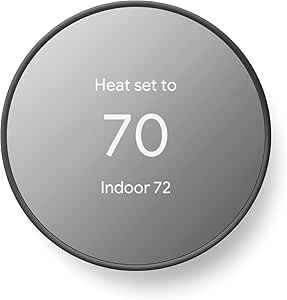 | Best for Simple, Adaptive Scheduling | Connectivity: Wi-Fi and Bluetooth | Smart home support: Google Assistant, Amazon Alexa, Nest | Temperature control: Heating and cooling | VIEW ON AMAZON | See Our Full Breakdown |
| Honeywell Home RTH9600WF Smart Color Thermostat, ENERGY STAR, Wi-Fi, Programmable Touchscreen, Alexa Ready, C-Wire Required |  | Best for At-a-Glance Control | Connectivity: Wi-Fi | Smart home support: Amazon Alexa, Google Assistant, IFTTT | Temperature control: Heating and cooling | VIEW ON AMAZON | See Our Full Breakdown |
| ecobee Smart Thermostat Essential – WiFi Thermostat, Energy Star Certified |  | Best for C-Wire-Free Installation | Connectivity: Wi-Fi | Smart home support: Amazon Alexa, Apple HomeKit, Google Assistant | Supported uses: Air conditioner, electric baseboard heater, furnace | VIEW ON AMAZON | See Our Full Breakdown |
| Sensi Smart Thermostat, Wi-Fi, DIY, Alexa, Energy Star Certified, ST55 |  | Best for DIY Installation | Connectivity: Wi-Fi | Compatible systems: Air conditioner, boiler, furnace, and heat pump | Voltage: 24V AC | VIEW ON AMAZON | See Our Full Breakdown |
| Amazon Smart Thermostat, Compatible with Alexa and Ring, C-wire Required |  | Best for Alexa-First Homes | Model number: S6ED3R | Compatible systems: Most 24V HVAC systems; not 110–240V systems | Power requirement: C-wire or separately sold power adapter | VIEW ON AMAZON | See Our Full Breakdown |
| Aqara Smart Thermostat W200 with Apple Adaptive Temperature |  | Best for Advanced Smart-Home Automation | Display: 4-inch full-color touchscreen | HVAC compatibility: Most HVAC systems; listed coverage is 85% | Power support: C-wire with adapter | VIEW ON AMAZON | See Our Full Breakdown |
| Honeywell Home T5 Smart Wi-Fi Thermostat |  | Best for Flexible Scheduling and Geofencing | System use: Air conditioner, furnace, and heat pump | Voltage: 24V | Connectivity: Wi-Fi | VIEW ON AMAZON | See Our Full Breakdown |
| Honeywell Home ElitePRO S1200 Smart WiFi Thermostat, 5″ Touchscreen Display, Compatible with Alexa, Apple Home & Google Home, Indoor Air Quality Monitoring, Black |  | Best Premium Control Panel | Display: 5-inch touchscreen | Power: Hardwired; C-wire required | Connectivity: Bluetooth, RedLINK 3.0, and 2.4/5 GHz Wi-Fi | VIEW ON AMAZON | See Our Full Breakdown |
| Sensi Lite Smart Thermostat, WiFi, Alexa, DIY, Energy Star Certified, ST25 | 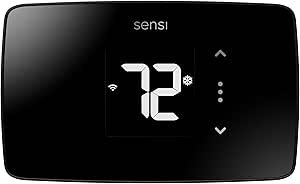 | Best for Straightforward DIY Upgrades | Connectivity: Wi-Fi | Supported control: App, touch, and voice | Voice and smart home compatibility: Amazon Alexa, Google Assistant, and SmartThings | VIEW ON AMAZON | See Our Full Breakdown |
| ecobee Smart Thermostat Premium – WiFi, Siri & Alexa Built-In, Smart Sensor |  | Best Premium Comfort and Air Quality Pick | Connectivity: Wi-Fi | Voice assistants: Siri and Alexa built in | Room sensing: SmartSensor support | VIEW ON AMAZON | See Our Full Breakdown |
| smart home climate control systems for smarter comfort | Connectivity | Display | Power |
|---|---|---|---|
| ecobee Smart Thermostat Enhanc | Wi-Fi | 4-inch LCD screen | — |
| Honeywell Home X2S Smart Wi-Fi | Wi-Fi at 2.4 GHz and 5 GHz; Matter certified | LCD | — |
| Google Nest Thermostat | Wi-Fi and Bluetooth | 2-inch LCD | Battery powered; two A batteries included |
| Honeywell Home RTH9600WF Smart | Wi-Fi | — | — |
| ecobee Smart Thermostat Essent | Wi-Fi | 3.74-inch LCD touchscreen | Battery powered |
| Sensi Smart Thermostat | Wi-Fi | 5-inch LED | Corded electric; two included AA batteries |
| Amazon Smart Thermostat | — | — | — |
| Aqara Smart Thermostat W200 wi | 2.4/5 GHz Wi-Fi, Zigbee, Thread, and Matter 1.4 | 4-inch full-color touchscreen | — |
| Honeywell Home T5 Smart Wi-Fi | Wi-Fi | 4.95-inch LCD | Corded electric; one AAA battery required |
| Honeywell Home ElitePRO S1200 | Bluetooth, RedLINK 3.0, and 2.4/5 GHz Wi-Fi | 5-inch touchscreen | Hardwired; C-wire required |
| Sensi Lite Smart Thermostat | Wi-Fi | LCD | Battery or C-wire; 2 AAA batteries included |
| ecobee Smart Thermostat Premiu | Wi-Fi | — | — |
More Details on Our Top Picks
ecobee Smart Thermostat Enhanced, Programmable Wi-Fi Thermostat
The ecobee Smart Thermostat Enhanced is my strongest all-around pick for households that want more than a basic schedule: it combines occupancy-based adjustments, humidity control, app access, and broad voice-assistant support. Its stated energy savings of up to 26% make it a compelling fit for homes with changing routines, though actual savings depend on the home and how it is used. Compared with the ecobee Smart Thermostat Essential, the Enhanced model is the better match for buyers who want a wider set of comfort features and are open to adding SmartSensors for room-by-room awareness. Those sensors are sold separately, so the out-of-box setup does not provide that expanded coverage. It also requires Wi-Fi for remote features and is limited to 24-volt systems, making HVAC compatibility the first check before buying.
Pros:- Occupancy-based adjustments can reduce heating and cooling when rooms are unused.
- Supports Alexa, Siri, Google Assistant, and Apple HomeKit.
- Includes humidity control alongside temperature management.
- DIY installation accessories are included.
Cons:- SmartSensors for expanded room coverage are sold separately.
- Remote and connected features depend on Wi-Fi.
- Limited to compatible 24V HVAC systems.
Best for: Households with compatible 24V HVAC systems that want occupancy-aware temperature control, humidity features, and app or voice access.
Not ideal for: People who need room-by-room sensing included, lack reliable Wi-Fi, or have electric baseboard heating or another system outside 24V compatibility.
- Connectivity:Wi-Fi
- Voice and smart home support:Amazon Alexa, Apple HomeKit, Google Assistant, Siri
- Supported uses:Air conditioner, boiler, furnace, heat pump, humidifier
- Power and voltage:Corded electric; 24 volts
- Display:4-inch LCD screen
- Control method:App control
- Mounting:Wall mount
Our verdict“Choose the ecobee Smart Thermostat Enhanced if you want a feature-rich, occupancy-aware controller for a compatible 24V home and can add sensors separately if needed.”
Honeywell Home X2S Smart Wi-Fi Thermostat, White
The Honeywell Home X2S suits buyers who want a programmable thermostat that can join a mixed smart-home setup without tying control to a single assistant. Its Matter certification supports integration with Alexa, Google Assistant, and Apple HomeKit, while auto-away, flexible scheduling, humidity monitoring, and filter reminders cover everyday comfort and upkeep. Compared with the Google Nest Thermostat, the X2S puts more emphasis on broad ecosystem compatibility and maintenance prompts rather than learning your routine. The tradeoff is a more demanding installation requirement: it needs a C-wire and does not support electric baseboard heating. Its 2.4 GHz and 5 GHz Wi-Fi support offers flexibility, but a weak signal can still disrupt connected features. Interchangeable accent pieces are a small styling advantage, not a substitute for checking HVAC compatibility.
Pros:- Matter certification supports major smart-home ecosystems.
- Auto-away and flexible schedules help adapt heating and cooling to routines.
- Humidity monitoring and filter reminders add practical maintenance support.
- Interchangeable accent pieces offer a way to coordinate its appearance with décor.
Cons:- Requires a C-wire and 24 VAC power.
- Not compatible with electric baseboard heating.
- Connected features may be unreliable where Wi-Fi coverage is weak.
Best for: Homeowners with a C-wire and compatible forced-air or heat-pump systems who want Matter links across Alexa, Google, and Apple platforms.
Not ideal for: Renters or homeowners without a C-wire, and anyone using electric baseboard heat.
- Connectivity:Wi-Fi at 2.4 GHz and 5 GHz; Matter certified
- Smart home support:Amazon Alexa, Google Assistant, Apple HomeKit
- System compatibility:Up to 2 heat/2 cool conventional or 2 heat/1 cool heat pump
- Power requirement:24 VAC; C-wire required
- Display:LCD
- Scheduling features:Programmable, auto-scheduling, auto changeover
- Mounting and color:Wall mount; white
- Warranty:2 years
Our verdict“Pick the X2S if your HVAC system has a C-wire and you want one thermostat to fit a Matter-enabled home with practical scheduling and upkeep reminders.”
Google Nest Thermostat – Smart Programmable Wi-Fi Thermostat – Charcoal
The Google Nest Thermostat makes the most sense for buyers who want a relatively straightforward way to make schedules less hands-on. It can learn a routine, turn itself down when the home is empty, and surface HVAC monitoring alerts; control comes through the Google Home app or voice commands with Google Assistant and Alexa. Compared with the Honeywell Home X2S, Nest leans more on learning and auto-away than on Matter certification, filter reminders, or broad maintenance features. Its compact 2-inch LCD keeps the wall unit visually restrained, but the smaller screen offers less room for at-a-glance interaction than the Honeywell Home RTH9600WF color touchscreen. Installation is described as a DIY task of about 30 minutes, though some systems need a C-wire or power accessory. Wi-Fi is needed for connected control.
Pros:- Learns schedules and offers auto-away temperature adjustments.
- Google Home app and voice control support remote changes.
- HVAC monitoring alerts can flag system issues.
- Compact display keeps the wall control unobtrusive.
Cons:- Some HVAC installations require a C-wire or separate power accessory.
- Battery-powered operation means the included batteries may need replacement.
- Connected control relies on dependable Wi-Fi.
Best for: People who use Google Home or Alexa and want a compact thermostat that can learn routines and reduce heating or cooling while they are away.
Not ideal for: Buyers who want a large touchscreen, Matter support, or a guaranteed simple installation on a system that may need a C-wire accessory.
- Connectivity:Wi-Fi and Bluetooth
- Smart home support:Google Assistant, Amazon Alexa, Nest
- Temperature control:Heating and cooling
- Display:2-inch LCD
- Power:Battery powered; two A batteries included
- Voltage:24 volts
- Control:Remote and voice control
- Mounting and color:Wall mount; charcoal
Our verdict“Choose Nest if you prefer adaptive scheduling and a small, simple interface over the broader maintenance and ecosystem features of the Honeywell X2S.”
Honeywell Home RTH9600WF Smart Color Thermostat, ENERGY STAR, Wi-Fi, Programmable Touchscreen, Alexa Ready, C-Wire Required
The Honeywell Home RTH9600WF is aimed at households that prefer a prominent touchscreen and clear on-device interaction over a compact, learning-focused controller. Its selectable color display, touch controls, remote app access, energy-saving tips, and smart alerts make everyday adjustments visible at the wall as well as on a phone. Compared with the Google Nest Thermostat, it gives more space to touch-based control and customization, while Nest is the smaller choice for buyers who want adaptive scheduling. The RTH9600WF also supports Alexa, Google Assistant, and IFTTT, but it requires a C-wire and setup may be less approachable for people unfamiliar with thermostat wiring. It is not compatible with electric baseboard systems. Buyers should confirm their HVAC setup before choosing it, since its screen and connected features cannot overcome a wiring mismatch.
Pros:- Selectable color touchscreen makes local settings easier to view and change.
- App and voice-assistant access enable remote adjustments.
- Smart Response features and alerts support comfort management and maintenance.
- Energy-saving tips provide guidance through the thermostat interface.
Cons:- C-wire is required for installation.
- Not compatible with electric baseboard heating.
- Setup can be challenging for buyers unfamiliar with thermostat wiring.
Best for: Homeowners with compatible 24V HVAC and a C-wire who want a customizable touchscreen for frequent adjustments at the wall.
Not ideal for: People with electric baseboard heat, no C-wire, or a preference for minimal setup and a compact display.
- Connectivity:Wi-Fi
- Smart home support:Amazon Alexa, Google Assistant, IFTTT
- Temperature control:Heating and cooling
- Power and voltage:24 volts; C-wire required
- Display and control:LCD color touchscreen; touchpad control
- Mounting:Wall mount
- Dimensions:1 inch deep x 4.75 inches wide x 3.5 inches high
- Weight:11.2 ounces
Our verdict“The RTH9600WF is a good fit if you want a customizable wall touchscreen and have the required C-wire on a compatible HVAC system.”
ecobee Smart Thermostat Essential – WiFi Thermostat, Energy Star Certified
The ecobee Smart Thermostat Essential is a practical choice for buyers who want scheduling and connected control without a C-wire requirement in the product description. Its color touchscreen, auto-away mode, fan control, and support for Alexa, Google Assistant, and Apple HomeKit cover the core tasks of a smart climate setup. The stated energy savings of up to 23% are tied to how the thermostat is scheduled and used, rather than a guaranteed result. Compared with the ecobee Smart Thermostat Enhanced, the Essential is the simpler fit for households prioritizing installation flexibility; the Enhanced model offers occupancy sensing and humidity control, while the Essential listing highlights schedule and fan features. SmartSensors are sold separately, and system compatibility still needs checking—particularly because the stated supported uses include electric baseboard heat, which should be verified against the specific installation.
Pros:- Product description offers installation options for homes without a C-wire.
- Auto-away and auto-scheduling support routine-based temperature control.
- Works with Alexa, Google Assistant, and Apple HomeKit.
- Touchscreen and fan control provide useful local adjustments.
Cons:- SmartSensor pack is sold separately for expanded home monitoring.
- Compatibility should be checked for the specific HVAC system before purchase.
- Available in white only.
Best for: DIY-minded homeowners seeking a connected thermostat with scheduling and smart-assistant support, especially when a C-wire is unavailable.
Not ideal for: Buyers who want room-by-room sensing included, need a wide range of advanced occupancy features, or have not verified HVAC compatibility.
- Connectivity:Wi-Fi
- Smart home support:Amazon Alexa, Apple HomeKit, Google Assistant
- Supported uses:Air conditioner, electric baseboard heater, furnace
- Display:3.74-inch LCD touchscreen
- Power:Battery powered
- Controls:Touchpad, fan control
- Scheduling features:Auto-away, auto-scheduling, programmable
- Mounting and finish:Wall mount; matte white
Our verdict“Choose the Essential if you want ecobee scheduling and smart-home links with a stated C-wire-free installation option, and do not need sensors included.”
Sensi Smart Thermostat, Wi-Fi, DIY, Alexa, Energy Star Certified, ST55
The Sensi ST55 is a practical choice for homeowners who want app-based climate control without making a smart-home hub the center of the project. Its step-by-step installation guidance, programmable schedules, usage reports, and maintenance alerts make routine HVAC management more approachable than a feature-heavy model such as the Aqara Smart Thermostat W200. It also works with Alexa, Apple HomeKit, Google Assistant, SmartThings, and Vera, giving it broader listed assistant support than the Alexa-focused Amazon Smart Thermostat.
The tradeoff is that Sensi’s smart features depend on Wi-Fi, and the ST55 is limited to 24V HVAC systems. Its app setup may also take patience for some buyers. I’d choose it for straightforward scheduling and maintenance reminders, not for a built-in smart-home hub or advanced presence automation.
Pros:- Step-by-step app guidance supports DIY installation.
- Works with Alexa, Apple HomeKit, Google Assistant, SmartThings, and Vera.
- Usage reports and filter alerts help with ongoing HVAC upkeep.
- Programmable schedules and ENERGY STAR certification support energy-conscious control.
Cons:- Full smart functionality depends on a Wi-Fi connection.
- Limited to compatible 24V HVAC systems.
- App setup and navigation may be challenging for some users.
Best for: DIY-minded homeowners with a compatible 24V system who want broad voice-assistant support, schedules, and HVAC maintenance reminders.
Not ideal for: People without reliable Wi-Fi, owners of line-voltage systems, or buyers seeking a thermostat with built-in hub and presence-sensing features.
- Connectivity:Wi-Fi
- Compatible systems:Air conditioner, boiler, furnace, and heat pump
- Voltage:24V AC
- Voice and smart home support:Amazon Alexa, Apple HomeKit, Google Assistant, SmartThings, and Vera
- Control methods:App, touch, and voice
- Display:5-inch LED
- Power:Corded electric; two included AA batteries
- Mounting:Wall mount
Our verdict“Choose the Sensi ST55 if you want a DIY-friendly 24V thermostat with broad platform support and useful maintenance reminders.”
Amazon Smart Thermostat, Compatible with Alexa and Ring, C-wire Required
The Amazon Smart Thermostat makes the most sense when Alexa already runs a household’s routines. Guided setup in the Alexa app, programmable schedules, and presence-based adjustments can reduce hands-on temperature changes, while Ring and Alexa integrations connect climate control to an existing Amazon smart-home setup. Compared with the Sensi ST55, it is more tightly centered on Alexa rather than offering the same range of listed assistants; that focus can simplify control for Alexa households but narrows its appeal elsewhere.
Installation has a firm power requirement: a C-wire or separately sold power adapter is needed. The thermostat also uses 2.4 GHz Wi-Fi only, and voice control requires a separate Alexa-enabled device because there is no built-in microphone. I’d favor it for a compatible system and an Alexa-led home, rather than for platform flexibility.
Pros:- Alexa app provides guided DIY setup and remote control.
- Programmable schedules and presence-based adjustments support automated comfort.
- Integrates with Alexa and Ring routines.
- ENERGY STAR and ECOLOGO Gold certifications.
Cons:- Requires a C-wire or a power adapter sold separately.
- Connects to 2.4 GHz Wi-Fi only, not 5 GHz.
- Voice control requires a separate Alexa-enabled device.
Best for: Alexa households with a compatible 24V HVAC system and a C-wire or willingness to add the separate power adapter.
Not ideal for: Buyers who need 5 GHz Wi-Fi, broad non-Amazon smart-home control, or voice commands without an Alexa-enabled device.
- Model number:S6ED3R
- Compatible systems:Most 24V HVAC systems; not 110–240V systems
- Power requirement:C-wire or separately sold power adapter
- Wi-Fi:2.4 GHz, 802.11 b/g/n
- Dimensions:3.56 × 3.56 × 0.84 inches
- Weight:3.86 ounces
- Certifications:ENERGY STAR and ECOLOGO Gold
- Smart home compatibility:Alexa and Ring
Our verdict“Pick the Amazon Smart Thermostat for an Alexa-centered home if your wiring and 2.4 GHz network meet its requirements.”
Aqara Smart Thermostat W200 with Apple Adaptive Temperature
The Aqara W200 is the most automation-oriented pick in this group. Its mmWave radar can detect presence for more responsive routines, while built-in Zigbee, Matter, and Thread functions let the thermostat serve as a broader smart-home connection point. That makes it a different proposition from the Honeywell Home T5, which focuses on familiar scheduling and geofencing rather than combining climate control with hub functions. The W200’s four-inch touchscreen also gives more room for at-a-glance control.
Those capabilities bring extra dependencies: Apple adaptive-temperature features require an Apple TV or HomePod, and accessories such as a C-wire adapter or sensors may be separate purchases. Some Clean Energy Guidance features are U.S.-only. I’d choose this for a connected home ready to use its platform features, not for someone who wants a basic thermostat with minimal setup.
Pros:- mmWave radar enables presence-based automation.
- Built-in Zigbee, Matter controller, and Thread border router add smart-home hub functions.
- Matter support broadens integration beyond Apple HomeKit.
- Four-inch color touchscreen provides a large, clear control surface.
Cons:- Apple adaptive-temperature features require an Apple TV or HomePod.
- C-wire adapter and sensors may need to be purchased separately.
- Some Clean Energy Guidance features are limited to the U.S.
Best for: Apple-oriented smart-home owners who want presence-triggered climate routines and a thermostat that can also support Matter, Thread, and Zigbee devices.
Not ideal for: Buyers seeking a simple standalone thermostat, those without an Apple TV or HomePod for adaptive-temperature functions, or households unwilling to add required accessories.
- Display:4-inch full-color touchscreen
- HVAC compatibility:Most HVAC systems; listed coverage is 85%
- Power support:C-wire with adapter
- Connectivity:2.4/5 GHz Wi-Fi, Zigbee, Thread, and Matter 1.4
- Apple support:Apple HomeKit and adaptive temperature
- Presence sensing:mmWave radar
- Hub functions:Built-in Zigbee, Matter controller, and Thread border router
- Additional functions:Clean Energy Guidance and smart display for doorbell and lock
Our verdict“Choose the Aqara W200 if you want climate control to take an active role in an advanced Matter- and presence-aware smart home.”
Honeywell Home T5 Smart Wi-Fi Thermostat
The Honeywell Home T5 suits households that want a clear choice between scheduled comfort and location-based automation. Its seven-day programming supports different routines across the week, while geofencing and auto-away can adjust heating or cooling when occupants leave. Compared with the Amazon Smart Thermostat, the T5 lists compatibility with Alexa, Google Assistant, and Apple HomeKit, so it fits a more varied smart-home setup. Vacation mode and auto changeover add useful control for households with shifting plans.
The main hurdle is installation: a C-wire power adapter is required in many homes, and wiring may be a challenge for first-time installers. It is also not a good fit for heating-only oil furnaces without the required power arrangement. Unlike the Aqara W200, it does not add hub functions or radar presence sensing; its strength is familiar scheduling and geofencing.
Pros:- Seven-day scheduling supports different routines throughout the week.
- Geofencing and auto-away can adjust settings based on household location.
- Supports Alexa, Google Assistant, and Apple HomeKit.
- Includes vacation mode, fan control, and auto changeover.
Cons:- A C-wire power adapter is needed for many installations.
- Wiring can make installation challenging for inexperienced users.
- Not compatible with heating-only oil furnaces without the required power arrangement.
Best for: Households with changing weekday and weekend routines that want seven-day schedules, geofencing, and support for major voice assistants.
Not ideal for: Owners of heating-only oil furnaces without a compatible power setup, or DIY beginners who are uncomfortable working with HVAC wiring.
- System use:Air conditioner, furnace, and heat pump
- Voltage:24V
- Connectivity:Wi-Fi
- Smart home compatibility:Amazon Alexa, Google Assistant, and Apple HomeKit
- Display:4.95-inch LCD
- Controls:Touchpad
- Features:Seven-day scheduling, geofencing, auto-away, vacation mode, and auto changeover
- Power:Corded electric; one AAA battery required
Our verdict“Choose the Honeywell Home T5 if flexible weekly schedules and geofencing matter more than advanced hub or presence-sensor features.”
Honeywell Home ElitePRO S1200 Smart WiFi Thermostat, 5″ Touchscreen Display, Compatible with Alexa, Apple Home & Google Home, Indoor Air Quality Monitoring, Black
The Honeywell Home ElitePRO S1200 goes beyond temperature scheduling by putting indoor-air readings and connected-device controls on the wall. Its five-inch touchscreen monitors humidity, VOCs, and estimated CO₂, while compatible Ring or First Alert doorbell feeds can bring visitor viewing and communication into the same control point. It also lists Alexa, Apple Home, Google Home, and Matter support, making it a more information-rich option than the Honeywell Home T5, whose strengths are scheduling and geofencing.
This is the pick for buyers who will use that expanded interface, not just those seeking remote temperature changes. It requires a hardwired C-wire, which limits installation flexibility, and its richer controls may be unnecessary for a home that does not need air-quality monitoring or doorbell integration. Compared with the hub-focused Aqara W200, the ElitePRO emphasizes a large display and indoor-air information.
Pros:- Five-inch touchscreen provides a large interface for climate controls.
- Monitors humidity, VOCs, and estimated CO₂.
- Supports Alexa, Apple Home, Google Home, and Matter.
- Compatible Ring or First Alert doorbell feeds can be shown at the thermostat.
Cons:- Requires a hardwired C-wire.
- Air-quality and doorbell functions may be unnecessary for buyers seeking simple climate scheduling.
- Listed controller type highlights Alexa, so buyers should confirm how desired integrations work before installation.
Best for: Homeowners who want a prominent wall control for temperature, indoor-air readings, and compatible video doorbell devices.
Not ideal for: People without a C-wire, buyers looking for a basic thermostat, or households that will not use its air-quality and doorbell features.
- Display:5-inch touchscreen
- Power:Hardwired; C-wire required
- Connectivity:Bluetooth, RedLINK 3.0, and 2.4/5 GHz Wi-Fi
- Smart home compatibility:Alexa, Apple Home, Google Home, and Matter
- Indoor air monitoring:Humidity, VOCs, and estimated CO₂
- Doorbell compatibility:Compatible Ring or First Alert video doorbells
- Control methods:App, touch, and voice
- Dimensions:0.96 inches deep × 5.24 inches wide × 3.54 inches high
Our verdict“Pick the ElitePRO S1200 if you have a C-wire and want a feature-rich wall panel that combines climate control with air-quality information.”
Sensi Lite Smart Thermostat, WiFi, Alexa, DIY, Energy Star Certified, ST25
The Sensi Lite suits buyers who want app and voice control without paying for a thermostat’s extra display or air-quality features. Its built-in level and guided setup help simplify wall mounting, while scheduling and remote access make it easier to adjust heating or cooling when plans change. It supports Alexa and Google Assistant, giving it broader voice-assistant flexibility than the ecobee Smart Thermostat Premium, which instead adds built-in assistants and room sensors. The tradeoff is a more basic LCD and no room-specific temperature balancing, so it is less suited to homes with hot and cold spots. Check HVAC compatibility before buying: this is a 24-volt thermostat, and some systems require a C-wire. It is a practical choice when simple controls matter more than advanced comfort tools.
Pros:- Built-in level and step-by-step guidance support DIY installation
- Remote app control allows adjustments away from home
- Works with Alexa and Google Assistant for voice control
- ENERGY STAR certification and programmable settings support energy-conscious scheduling
Cons:- Some HVAC setups require a C-wire
- Limited to compatible 24-volt systems
- Basic LCD lacks the richer interface and room-sensing features of premium models
Best for: Homeowners with a compatible 24-volt HVAC system who want guided DIY installation, app access, and basic scheduling.
Not ideal for: Households with uneven room temperatures, non-24-volt equipment, or buyers who want a feature-rich display and integrated air-quality monitoring.
- Connectivity:Wi-Fi
- Supported control:App, touch, and voice
- Voice and smart home compatibility:Amazon Alexa, Google Assistant, and SmartThings
- Compatible systems:Air conditioner, boiler, furnace, and heat pump
- Power:Battery or C-wire; 2 AAA batteries included
- Voltage:24 volts
- Display:LCD
- Warranty:3 years
Our verdict“Choose the Sensi Lite for accessible DIY control of a compatible HVAC system, but pick the ecobee Smart Thermostat Premium if room sensors and air-quality monitoring matter more.”
ecobee Smart Thermostat Premium – WiFi, Siri & Alexa Built-In, Smart Sensor
The ecobee Smart Thermostat Premium goes beyond central temperature control: compatible SmartSensors can help address room-to-room differences, and its built-in air-quality monitor adds a useful layer of home awareness. Built-in Alexa and Siri support can also reduce reliance on a separate voice speaker, although Siri requires an Apple home hub. Compared with the simpler Sensi Lite, ecobee offers a broader comfort and monitoring package, but that extra capability brings more setup and ecosystem considerations. Its listed compatibility covers 95% of HVAC systems, and installation includes a Power Extender Kit and trim kit. Buyers should also separate the thermostat’s core functions from optional security features: some integrations require a subscription, and the Smart Doorbell Camera is sold separately. This is the premium pick for people who will use its sensors and connected features, not just its scheduling.
Pros:- SmartSensors support more room-aware temperature control
- Built-in air-quality monitoring adds information beyond temperature
- Alexa and Siri are built into the thermostat
- Includes a Power Extender Kit and trim kit for installation
Cons:- Siri functionality requires an Apple home hub
- Some security features require a subscription
- Smart Doorbell Camera is sold separately
Best for: Homeowners seeking room-specific comfort, built-in voice control, and air-quality monitoring in one thermostat, especially those already using Apple or Alexa devices.
Not ideal for: Buyers who want a simple, low-feature thermostat, lack an Apple home hub but specifically want Siri, or do not want subscription-based security features.
- Connectivity:Wi-Fi
- Voice assistants:Siri and Alexa built in
- Room sensing:SmartSensor support
- Air-quality monitoring:Built in
- HVAC compatibility:Works with 95% of HVAC systems
- Installation:DIY with included Power Extender Kit and trim kit
- Energy certification:ENERGY STAR
- Warranty:3 years
Our verdict“Choose ecobee Premium if you will use room sensors, voice assistants, and air-quality monitoring; the Sensi Lite is a simpler fit when basic app control is enough.”
How We Picked
I ranked these thermostats by how well they can improve everyday comfort, not by how many features appear on the box. My main criteria were HVAC compatibility and wiring needs, scheduling and remote-control usability, sensor and room-comfort options, smart-home integration, display clarity, and the amount of setup or ongoing attention a typical household may need. I also looked at whether a feature addresses a real choice—such as managing hot and cold rooms—or adds complexity without clear value for every buyer.
The order reflects the balance between comfort capability and ease of choosing. The ecobee Enhanced takes the lead for its useful sensor-based approach, while the Premium earns a separate place for buyers who want a more feature-rich hub. Simpler models rank well for straightforward control and setup, but sit lower when they offer fewer ways to address room-by-room comfort. The Honeywell ElitePRO S1200 earns distinction for its display and platform breadth, though its extensive feature set may be more than a basic thermostat replacement requires.
| smart home climate control systems for smarter comfort | Power |
|---|---|
| ecobee Smart Thermostat Enhanc | — |
| Honeywell Home X2S Smart Wi-Fi | — |
| Google Nest Thermostat | Battery powered; two A batteries included |
| Honeywell Home RTH9600WF Smart | — |
| ecobee Smart Thermostat Essent | Battery powered |
| Sensi Smart Thermostat | Corded electric; two included AA batteries |
| Amazon Smart Thermostat | — |
| Aqara Smart Thermostat W200 wi | — |
| Honeywell Home T5 Smart Wi-Fi | Corded electric; one AAA battery required |
| Honeywell Home ElitePRO S1200 | Hardwired; C-wire required |
| Sensi Lite Smart Thermostat | Battery or C-wire; 2 AAA batteries included |
| ecobee Smart Thermostat Premiu | — |
Factors to Consider When Choosing 12 Best Smart Home Climate Control Systems For Smarter Comfort
Before choosing a model, I’d start with the limits of your heating and cooling system, then decide which comfort problems you actually want the thermostat to solve. These broader checks can prevent a mismatch that no app feature can fix.
Check HVAC compatibility before choosing features
Smart thermostats do not all support the same equipment, even when their product pages sound similar. Write down whether your home has a heat pump, conventional furnace, central air, multi-stage equipment, or separate heating and cooling systems before narrowing the list. A thermostat that works with a basic furnace may not control every stage or accessory in a more complex setup. Check the manufacturer’s compatibility tool and wiring diagram rather than relying on the appearance of your old thermostat. If your system has unusual wiring or multiple zones, ask a qualified installer to confirm the match. This step matters more than choosing between voice assistants because an incompatible thermostat cannot deliver its advertised controls.
Treat wiring as part of the total installation plan
A C-wire can provide steady power for a connected thermostat, but not every home has one available at the wall. Some listed models explicitly require a C-wire, while other installation arrangements depend on the HVAC system and included accessories. Do not assume unused wires behind the old thermostat are connected at the furnace; check both ends or have an installer verify them. A power adapter or new wiring can add time and work, so account for that before settling on a model. If you rent, check whether you can alter wiring and whether the original thermostat can be reinstalled later. A slightly simpler model that fits existing wiring may be a better practical choice than a feature-rich option requiring electrical changes.
Decide whether room sensors solve a real problem
A thermostat measures conditions near its own location, which can differ from bedrooms, upper floors, or rooms with strong sun exposure. Remote sensors can help a system respond to those spaces, but they do not make every room independently heated or cooled. Think about when comfort matters most: at night, during work hours, or when the whole family is home. Sensor placement and scheduling can affect results, so adding sensors is most useful when you have a specific room imbalance to address. Avoid paying for this capability solely because it sounds advanced if the thermostat’s location already reflects the rooms you use. Also check whether sensors are included or sold separately, since that changes what you receive at setup.
Choose smart-home support around your existing routines
Compatibility with Alexa, Google Home, Apple Home, or Ring is useful only if it fits the devices and routines you already rely on. A thermostat that works with your preferred platform can make voice adjustments and shared automations more convenient, while a mismatch may leave you switching between apps. Check the exact integrations listed for the model; support for one assistant does not guarantee support for every platform or feature. Decide whether you want basic voice commands, automation with other devices, or a built-in assistant on the thermostat itself. Those are different levels of integration, and the most elaborate option is not automatically the easiest to live with. Keep the household’s comfort controls accessible to everyone who needs them, including people who do not use voice assistants.
Match screen and app complexity to the household
A large touchscreen can make schedules and settings easier to see at the wall, while a streamlined interface may be less distracting for someone who rarely adjusts the thermostat manually. Think about who will change settings and whether they prefer a physical control, a phone app, or voice commands. A household with guests or multiple family members may benefit from a clear on-device interface rather than relying on one person’s phone. More menus can expose useful controls, but they can also make a quick temperature change slower. Review how schedules, temporary holds, and away settings are managed before buying, since those daily interactions matter more than occasional setup screens. Pick the interface that suits the people using it, not simply the one with the longest feature list.
Pay for measurable comfort, not feature accumulation
When deciding whether to move up to a more advanced model, connect each extra feature to a household need. Sensors may help with uneven room temperatures, a built-in voice assistant may reduce reliance on a separate speaker, and indoor air quality monitoring may be useful if you want that information near your climate controls. If none of those solve a current problem, a simpler thermostat can still provide schedules and remote adjustment. Consider setup and maintenance as well: more connected devices can mean more configuration and another app or account to manage. Do not confuse energy-related labels or automation features with a guarantee of lower utility bills, since results depend on the home, schedule, and HVAC equipment. The best upgrade is the one whose added capability you expect to use regularly.
Frequently Asked Questions
How can I tell whether one of these thermostats will work with my HVAC system?
Start by identifying your equipment type, such as a furnace with central air, a heat pump, or a multi-stage system, and compare it with the thermostat’s compatibility details. Check the wiring at both the wall and HVAC control board because wire colors alone do not confirm how a system is configured. Pay attention to any listed limits for auxiliary heat, stages, or accessories. If the manufacturer’s compatibility checker gives an unclear result, ask an HVAC professional before buying. A confirmed match is more useful than choosing a model for an integration you may rarely use.
Should I choose a thermostat that requires a C-wire?
Choose based on the wiring already available and the installation work you are willing to take on. A C-wire supplies continuous power, but homes without one may need a supported adapter or a wiring change, depending on the thermostat and HVAC setup. Confirm the exact installation instructions for the model rather than assuming a missing wire rules it out. If you rent or want a quick DIY replacement, a thermostat compatible with your existing wiring may be less disruptive. When wiring is uncertain, an installer can verify it before you commit to a device.
Do room sensors make a noticeable difference in comfort?
They can help when the thermostat’s location does not represent the rooms people use most, such as a bedroom that stays warmer than the hallway. Sensors give the system another room reading to use with schedules or comfort settings, but they do not create separate heating zones by themselves. Results depend on placement, the HVAC system, and how the thermostat is configured to use those readings. If you have no persistent room imbalance, a sensor-ready model may add little day-to-day value. Identify the room and time of day that cause discomfort before deciding whether sensors belong in your setup.
Can I control these thermostats without using voice commands?
Voice control is only one way to interact with a smart thermostat. Depending on the model, you can use its on-device controls, a companion app, schedules, or compatible smart-home routines. Before buying, check that the app and manual controls cover the tasks you expect, such as changing a setpoint or adjusting a schedule. This matters in households where some people prefer not to use voice assistants or share a connected account. A built-in assistant is an added convenience, not a requirement for smart scheduling or remote control.
Is a premium thermostat worthwhile if I mainly want to set schedules?
If scheduling and remote temperature changes are your main goals, a simpler model may cover what you need without adding features you will rarely use. A premium option makes more sense when its extras match a specific routine, such as sensor-based comfort, a built-in assistant, a more capable display, or additional home information. Compare what is included with what may require separate accessories, especially when room sensors are part of your plan. Also think about who will use the thermostat and whether extra controls make daily adjustments easier or more complicated. Choose the higher-feature model for a clear benefit, not just the expectation that more functions must improve comfort.
Conclusion
For most households seeking a stronger mix of comfort control and practical features, I recommend the ecobee Smart Thermostat Enhanced as the best overall pick. Buyers looking for a more straightforward, Alexa-friendly option can consider the Amazon Smart Thermostat for value, while the Google Nest Thermostat is a good match for beginners who want a simpler experience. For a premium setup with a built-in voice assistant and Smart Sensor, choose the ecobee Smart Thermostat Premium; for a large display, indoor air quality monitoring, and broad platform support, look at the Honeywell Home ElitePRO S1200. If uneven room temperatures are your main concern, prioritize sensor support, and if your first concern is installation, confirm HVAC and wiring compatibility before choosing any model.