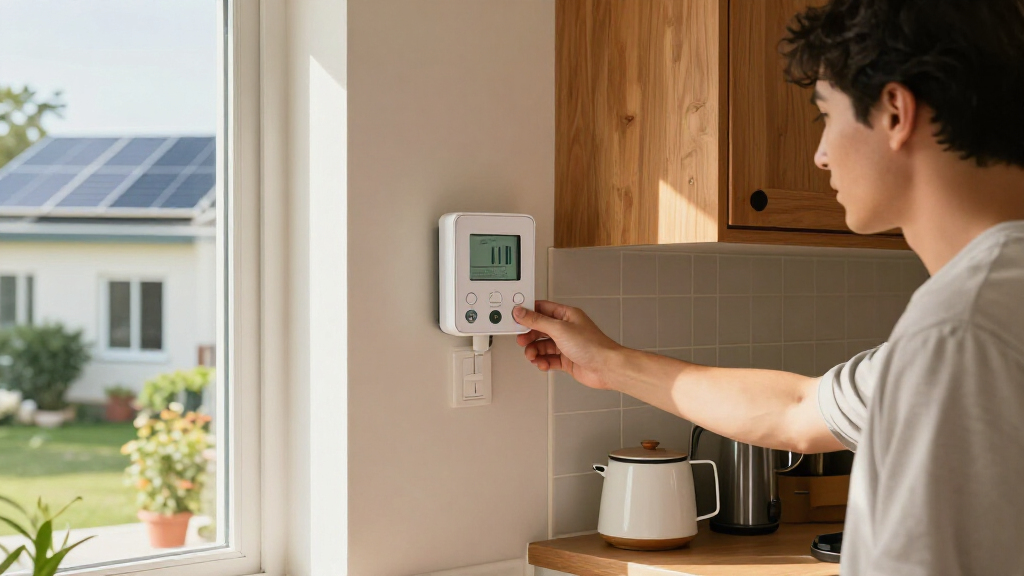

The Emporia Vue 3 is my best overall pick among the best home electricity monitors because its 16 circuit sensors give households a practical view of whole-home and individual-circuit use. The Refoss EM16P stands out for buyers who want Home Assistant and an open API, while the Eyedro 200A offers Wi-Fi and Ethernet for a different connection setup. The main choice is between detailed circuit monitoring, simpler plug-in readings, and smart-home control; each comes with different installation needs and coverage. Panel monitors can reveal where household electricity goes, while plug-in meters focus on one appliance at a time. Read on for the full breakdown and a guide to choosing the right monitor for your home.

Get backup power and energy gear delivered free with Prime
- Fast, free delivery on millions of items
- Prime Video, Amazon Music and more included
- Member-only deals all year
Key Takeaways
Sixteen circuit sensors are a recurring strength across several panel monitors, but sensor count alone does not determine whether a unit fits your electrical panel or monitoring goals.
The Emporia Vue 3 leads this lineup for broad circuit-level coverage, while the Emporia package with four smart plugs suits buyers who also want appliance-level readings without relying only on panel sensors.
Home Assistant and local-control needs separate the Refoss models: the EM16P is the clearest fit for open-API users, while other monitors may suit buyers who prefer a simpler connected setup.
Plug-in meters trade whole-home visibility for simplicity. The MECHEER two-pack and other outlet meters can help compare individual appliances, but they cannot show circuit or household totals.
Connection and installation shape the shortlist. Eyedro offers Wi-Fi and Ethernet, while CT-based panel monitors require attention to panel compatibility, sensor placement, and safe installation.
| Siemens Inhab Smart Home Energy Monitor with Circuit and Main Sensors |  | Best for Energy Management | Model: INHEM1216 | Main sensors: 2 x 200A CTs | Circuit sensors: 16 x 50A CTs | VIEW LATEST PRICE | See Our Full Breakdown |
| Meross Smart Home Energy Monitor with Circuit-Level Tracking |  | Best for Local Data and Home Assistant | Model: EM16 | Main circuit capacity: 2 circuits, 200A | Branch circuit capacity: 16 circuits, 60A | VIEW LATEST PRICE | See Our Full Breakdown |
| Emporia Vue 3 Home Energy Monitor with 16 Circuit Sensors |  | Best for Solar and Whole-Home Tracking | Model: EMV3A-2P-16 | Included sensors: Sixteen 50A branch sensors | Supported systems: Single phase, single-split phase, and 2-wire; some 3-wire and 3-phase systems require an additional sensor | VIEW LATEST PRICE | See Our Full Breakdown |
| Plug-In Power Meter and Home Energy Monitor |  | Best for Simple Appliance Checks | Power source: Corded electric | Minimum operating voltage: 120 volts | Compatible devices: Appliances with standard US sockets | VIEW LATEST PRICE | See Our Full Breakdown |
| MECHEER Plug-In Watt Meter, 2-Pack |  | Best Two-Location Appliance Monitor | Model: JK-PM07-2P-US | Pack size: 2 | Display modes: 8 | VIEW LATEST PRICE | See Our Full Breakdown |
| WiFi Home Energy Monitor with Two 120A CTs |  | Best for Solar Export Tracking | Model: SDM02T-TW-120A/IEC-ZM | Connectivity: 2.4 GHz Wi-Fi | Current transformers: 2 split-core CTs, 120 A each | VIEW LATEST PRICE | See Our Full Breakdown |
| Plug-In Watt Meter and Electricity Usage Monitor |  | Best for Detailed Appliance Readings | Display: 2.36 × 1.85-inch backlit LCD | Display modes: 7 | Measurements: Power, energy, voltage, current, frequency, power factor, cost, minimum and maximum power | VIEW LATEST PRICE | See Our Full Breakdown |
| HBN Plug-In Watt Meter with Backlit LCD |  | Best Simple Plug-In Monitor | Model: U167J | Operating voltage: 125 V | Maximum wattage: 1,875 W | VIEW LATEST PRICE | See Our Full Breakdown |
| Refoss Smart Home Energy Monitor with 16 Circuit Sensors and Local Control |  | Best for Local Automation and Circuit Detail | Model: EM16P | Main current transformers: 2, up to 200 A | Branch current transformers: 16, up to 60 A | VIEW LATEST PRICE | See Our Full Breakdown |
| Eyedro Smart Home Energy Monitor, 200A, WiFi and Ethernet |  | Best for Whole-Home or Solar Monitoring | Model: EYEDRO-HOME | Current sensor capacity: 200 A | Included sensors: 2 directional current sensors | VIEW LATEST PRICE | See Our Full Breakdown |
| Emporia Whole-Home Energy Monitor with 16 Sensors and 4 Smart Plugs |  | Best Bundle for Circuit and Outlet Tracking | Circuit sensors: 16 | Included smart plugs: 4 | App: Emporia app for iOS and Android | VIEW LATEST PRICE | See Our Full Breakdown |
| Smart Home Energy Monitor with 16 Circuit-Level Sensors |  | Best for Home Assistant and Flexible Electrical Systems | Model: SEM-Meter | Sensors: 16 clamp-on sensors, 50A each | Voltage compatibility: Single-phase up to 240VAC line-neutral; split-phase 120/240VAC; three-phase up to 415Y/240VAC; no Delta | VIEW LATEST PRICE | See Our Full Breakdown |
| Refoss EM16P Smart Home Energy Monitor with Home Assistant and Open API |  | Best for Local Data and Advanced Automation | Model: EM16P | Main circuit sensors: 2 × 200A | Branch circuit sensors: 16 × 60A | VIEW LATEST PRICE | See Our Full Breakdown |
| Meross Smart Home Energy Monitor, 18-Circuit, with Home Assistant Support | | Best for Long-Term Local Monitoring | Model: EM16 | Circuit monitoring: 2 main circuits (200A) and 16 branch circuits (60A) | Measurement accuracy: ±2% | VIEW LATEST PRICE | See Our Full Breakdown |
| home electricity monitor | Model | Dimensions |
|---|---|---|
| Siemens Inhab Smart Home Energ | INHEM1216 | 1.1 x 5.71 x 2.76 inches |
| Meross Smart Home Energy Monit | EM16 | — |
| Emporia Vue 3 Home Energy Moni | EMV3A-2P-16 | 10 x 5 x 5 inches |
| Plug-In Power Meter and Home E | — | 5.5 x 3.5 x 2.5 inches |
| MECHEER Plug-In Watt Meter | JK-PM07-2P-US | 5.2 x 2.7 x 2.4 inches |
| WiFi Home Energy Monitor with | SDM02T-TW-120A/IEC-ZM | — |
| Plug-In Watt Meter and Electri | — | — |
| HBN Plug-In Watt Meter with Ba | U167J | 2.68 × 1.47 × 4.72 inches |
| Refoss Smart Home Energy Monit | EM16P | 4.5 × 3.5 × 1.1 inches |
| Eyedro Smart Home Energy Monit | EYEDRO-HOME | 8 × 8 × 3 inches |
| Emporia Whole-Home Energy Moni | — | — |
| Smart Home Energy Monitor with | SEM-Meter | 3.1 × 1.2 × 4.18 inches |
| Refoss EM16P Smart Home Energy | EM16P | — |
| Meross Smart Home Energy Monit | EM16 | — |
More Details on Our Top Picks
Siemens Inhab Smart Home Energy Monitor with Circuit and Main Sensors
The Siemens Inhab is a strong fit for households that want more than a usage readout: it tracks consumption and production at the main panel and up to 16 circuits, while its app adds alerts and tools for time-of-use, peak-demand, solar, net-metering, and compatible-device load management. Compared with the Emporia Vue 3, its standout distinction is the emphasis on managing household loads, not just monitoring them. The included two 200A main sensors and sixteen 50A circuit sensors provide broad panel coverage, but installation means working at the electrical panel, so many buyers will need an electrician. It is also limited to the USA and Canada. I’d choose it for a compatible home with solar or flexible loads; buyers who mainly want detailed data exports may prefer the Meross EM16.
Pros:- Tracks both household consumption and energy production at the main panel and individual circuits
- Includes sensors for two main lines and up to 16 branch circuits
- App supports alerts, historical data, and several energy-management functions
- UL Listed
Cons:- Panel installation may require a qualified electrician
- Regional compatibility is limited to the USA and Canada
- Energy-management features depend on compatible devices
Best for: Homeowners in the USA or Canada who want circuit-level tracking plus tools for solar, peak-demand, and compatible-load management.
Not ideal for: Renters, buyers who cannot access their electrical panel, and households outside the USA and Canada.
- Model:INHEM1216
- Main sensors:2 x 200A CTs
- Circuit sensors:16 x 50A CTs
- Connectivity:Wi-Fi
- Compatibility:USA and Canada
- Certification:CE marked and UL Listed
- Dimensions:1.1 x 5.71 x 2.76 inches
- Weight:4.8 pounds
Our verdict“Choose the Siemens Inhab if you want panel-wide monitoring paired with energy-management tools and have a compatible electrical system.”
Meross Smart Home Energy Monitor with Circuit-Level Tracking
The Meross EM16 suits technically minded homeowners who want circuit-level visibility without sending their monitoring history to a subscription service. It measures two main circuits and up to 16 branch circuits, stores as much as five years of data locally, and supports exportable reports, custom alerts, Home Assistant, and an Open API. That makes it a stronger data-and-integration pick than the Emporia Vue 3, whose supplied details emphasize app access and require internet connectivity. Meross also states ±1% measurement accuracy, though electrical-system compatibility needs careful checking: it supports specified single-phase, split-phase, and Wye systems, but not Delta. Like the Siemens Inhab, it requires panel access for installation. I’d favor Meross for control and data ownership, not for buyers seeking the simplest setup.
Pros:- Tracks two main circuits and up to 16 branch circuits
- Stores up to five years of data locally and supports report exports without a subscription
- Offers Home Assistant integration, Open API, web control, and custom alerts
- Includes a two-year warranty
Cons:- Does not support Delta electrical systems
- Panel installation requires access to the home electrical panel
- System compatibility must be verified before purchase
Best for: Homeowners comfortable checking electrical-system specifications who want local data, exportable reports, and Home Assistant integration.
Not ideal for: People with Delta systems, renters, or buyers who want a plug-in monitor that needs no panel installation.
- Model:EM16
- Main circuit capacity:2 circuits, 200A
- Branch circuit capacity:16 circuits, 60A
- Measurement accuracy:±1%
- Data storage:Up to 5 years
- Connectivity and integration:Home Assistant, Open API, Wi-Fi, web control
- Supported systems:Single-phase 2-wire, split-phase 3-wire, and 3-phase 4-wire Wye with earthed neutral; no Delta
- Warranty:2 years
Our verdict“Pick the Meross EM16 if local long-term data and smart-home integration matter more to you than plug-in simplicity.”
Emporia Vue 3 Home Energy Monitor with 16 Circuit Sensors
The Emporia Vue 3 brings whole-home and circuit-level tracking together with support for solar and net metering, making it a practical choice for households that want to compare production with consumption in the app. Its sixteen included 50A branch sensors offer the same broad circuit count as the Siemens Inhab and Meross EM16, while its stated ±2% accuracy is less precise than Meross’s stated ±1%. Emporia’s tradeoff is its reliance on 2.4 GHz Wi-Fi and an internet connection, plus a one-year warranty. Live one-second data is available only while the app is open and is retained for three hours, so it is not the best fit for persistent high-resolution monitoring. I’d choose it when solar visibility and app-based tracking lead the brief; Meross is better suited to local data and integrations.
Pros:- Monitors whole-home use and up to 16 individual circuits
- Supports solar and net-metering monitoring
- Provides app access to real-time energy data and notifications
- UL and CE Listed
Cons:- Requires 2.4 GHz Wi-Fi and an internet connection
- Some supported electrical systems need an additional sensor sold separately
- One-second live data is available only while the app is open and is retained for three hours
Best for: Solar-owning households that want app-based whole-home and circuit monitoring with net-metering support.
Not ideal for: Buyers who need local operation, lasting one-second data, or monitoring on a system that requires a separately purchased sensor.
- Model:EMV3A-2P-16
- Included sensors:Sixteen 50A branch sensors
- Supported systems:Single phase, single-split phase, and 2-wire; some 3-wire and 3-phase systems require an additional sensor
- Connectivity:2.4 GHz Wi-Fi with internet connection
- Accuracy:±2%
- Certifications:UL and CE Listed
- Warranty:1 year
- Dimensions:10 x 5 x 5 inches
Our verdict“Choose the Emporia Vue 3 if you want solar-aware circuit monitoring through an app and can accept its internet and data-retention limits.”
Plug-In Power Meter and Home Energy Monitor
This plug-in meter is the simplest way in this group to investigate one appliance at a time: insert it into a standard US socket, connect the device, and read power, energy, voltage, current, frequency, power factor, or cumulative cost on its backlit LCD. Unlike the panel-based Siemens Inhab, Meross EM16, and Emporia Vue 3, it requires no circuit sensors or electrical-panel access. That convenience comes with a narrower view: it cannot show whole-home use or compare activity across branch circuits. Its 1800W overload warning is a useful guardrail for compatible socket loads, though it is not a substitute for checking an appliance’s requirements. The display offers eight modes and saves settings and cumulative data through unplugging or power loss; the backlight switches off after ten minutes without button presses.
Pros:- Measures several electrical readings alongside cumulative energy and estimated cost
- Works at a standard US socket without panel installation
- Backlit LCD offers eight display modes
- Retains settings and cumulative data when unplugged or during power loss
Cons:- Monitors only an appliance connected through a standard US socket
- Cannot provide whole-home or circuit-level tracking
- Backlight turns off after ten minutes without button presses
Best for: Renters and homeowners who want to measure the energy use and estimated running cost of individual appliances at standard US outlets.
Not ideal for: Anyone seeking whole-home trends, circuit-level monitoring, smart-home integration, or monitoring for hardwired equipment.
- Power source:Corded electric
- Minimum operating voltage:120 volts
- Compatible devices:Appliances with standard US sockets
- Measurement:Power, energy, voltage, frequency, current, power factor, and cumulative cost
- Display modes:8
- Overload threshold:1800 W
- Certification:CE
- Dimensions:5.5 x 3.5 x 2.5 inches
Our verdict“Choose this meter for straightforward, one-appliance energy checks rather than whole-home monitoring.”
MECHEER Plug-In Watt Meter, 2-Pack
The MECHEER two-pack makes more sense than a single plug-in meter when you want to check two appliances or move one monitor between rooms while keeping another in place. Each unit reports power, energy use, voltage, current, frequency, power factor, and estimated electricity cost, with adjustable overload and cumulative-energy alarms. Compared with the single Plug-In Power Meter and Home Energy Monitor, MECHEER adds a second meter and more flexibility over backlight duration, including an always-on setting while connected to AC power. It still shares the main limitation of plug-in monitors: readings are confined to devices connected through standard US outlets, not the home’s panel or hardwired circuits. Its saved-data behavior also has a boundary: current, voltage, power, and power-factor readings are not saved.
Pros:- Two meters allow monitoring at two outlets or convenient room-to-room use
- Measures appliance energy and estimated cost alongside electrical readings
- Adjustable overload and cumulative-energy alarms
- Backlight duration can be set from ten minutes to always on while connected to AC power
Cons:- Limited to appliances connected through standard US outlets
- Does not provide whole-home or branch-circuit monitoring
- Current, voltage, power, and power-factor readings are not saved
Best for: Households that want to compare or monitor two plug-in appliances, such as a refrigerator and a space heater, without installing panel sensors.
Not ideal for: Buyers who need whole-home tracking, panel-circuit data, or stored histories for instantaneous electrical readings.
- Model:JK-PM07-2P-US
- Pack size:2
- Display modes:8
- Maximum overload setting:3680 W
- Measured values:Power, energy, voltage, current, frequency, power factor, and estimated electricity cost
- Backlight settings:10 minutes, 1 hour, 4 hours, 8 hours, or always on
- Included components:Power meter plugs
- Dimensions:5.2 x 2.7 x 2.4 inches
Our verdict“Choose the MECHEER two-pack if you need appliance-level checks in two places and do not need panel-wide data.”
WiFi Home Energy Monitor with Two 120A CTs
I’d choose the Blindsmart SDM02T-TW-120A when the key question is how much electricity a household uses versus sends back to the grid. Its two directional CTs track consumption and export, while Smart Life adds real-time readings, alerts, and automation. That makes it a more focused solar and battery option than the Eyedro Smart Home Energy Monitor, which also supports directional monitoring but can track only grid energy, solar generation, or net metering at a time.
The tradeoff is a narrower installation fit: this monitor is designed for single-phase, 3-wire systems and needs 2.4 GHz Wi-Fi. Its CTs and pluggable terminals are intended to simplify fitting, but it still connects to household wiring, so it is not the plug-in choice for tracking one appliance. I’d skip it if circuit-by-circuit detail or broader electrical-system support matters more than export monitoring.
Pros:- Tracks household consumption and grid export with two directional CTs.
- Smart Life provides real-time monitoring, alerts, and automation.
- Supports dynamic load balancing and zero-export mode.
- Split-core CTs and pluggable terminals are designed to ease installation.
Cons:- Limited to single-phase, 3-wire electrical systems.
- Requires a 2.4 GHz Wi-Fi network for app connectivity.
Best for: Solar or battery owners with a single-phase, 3-wire home who want to track household use and grid export in one system.
Not ideal for: Renters tracking individual appliances, or homeowners with three-phase or other unsupported wiring who need a broader whole-panel monitor.
- Model:SDM02T-TW-120A/IEC-ZM
- Connectivity:2.4 GHz Wi-Fi
- Current transformers:2 split-core CTs, 120 A each
- Electrical configuration:Single-phase, 3-wire
- Accuracy:Class 1
- App compatibility:Smart Life
- Power source:Battery powered
- Included components:Energy module, 2 CTs, user manual
Our verdict“Choose the Blindsmart if solar export and Smart Life automation are priorities and your home has a compatible single-phase, 3-wire supply.”
Plug-In Watt Meter and Electricity Usage Monitor
For a buyer who wants to inspect one appliance at a time, I’d pick this plug-in meter over panel-based options such as the Refoss EM16P. Its seven display modes cover more than energy totals: you can check voltage, current, frequency, power factor, estimated cost, and minimum or maximum power on the backlit LCD. That makes it useful for comparing devices or checking how a particular appliance behaves without adding sensors inside a breaker panel.
The tradeoff is that it measures through an outlet, not across a whole home, and its settings take hands-on attention. The manufacturer description recommends setting overload protection to 1,800 W before use; overload and backlight settings are adjusted with buttons. Data memory retains readings after unplugging or a power failure, but this is still a local, manual tool—not the app-based monitoring offered by the HBN U167J. Check the appliance and outlet requirements before connecting it.
Pros:- Displays power, energy, voltage, current, frequency, power factor, cost, and power extremes.
- Backlit LCD makes readings easier to check in dim locations.
- Adjustable overload protection up to 3,680 W.
- Retains recorded data after unplugging or a power failure.
Cons:- Measures only the appliance connected through the meter, not household circuits.
- Description recommends setting overload protection to 1,800 W before use.
- Backlight and overload settings require manual button operation.
Best for: Homeowners or renters who want to measure individual plug-in appliances and inspect several electrical readings on a screen.
Not ideal for: Buyers seeking whole-home, circuit-level, or remote app monitoring, or anyone who wants settings to adjust automatically.
- Display:2.36 × 1.85-inch backlit LCD
- Display modes:7
- Measurements:Power, energy, voltage, current, frequency, power factor, cost, minimum and maximum power
- Overload protection:Adjustable from 0 to 3,680 W
- Backlight settings:10 minutes, 1 hour, 4 hours, 8 hours, or always on
- Data memory:Retains readings after unplugging or power failure
Our verdict“Choose this meter for hands-on, detailed readings from individual plug-in appliances rather than whole-home energy tracking.”
HBN Plug-In Watt Meter with Backlit LCD
The HBN U167J is a straightforward way to check what one appliance draws without taking on a breaker-panel installation. Its nine display modes include energy consumption and estimated cost alongside voltage, current, frequency, and power factor. The 160° viewing angle helps when the outlet is low or partly behind furniture, while stored cumulative data can survive a power outage.
Compared with the Plug-In Watt Meter and Electricity Usage Monitor, the HBN has more display modes, but its specified ceiling is clearer: it is rated for 125 V and 15 A, up to 1,875 W. The backlight turns off after 15 seconds, so checking readings may require waking the display. Like other plug-in meters, it cannot provide whole-home or circuit-level data, and it has no stated app connectivity. I’d choose it for quick outlet-level checks, not ongoing remote tracking.
Pros:- Nine display modes include energy use and estimated electricity cost.
- Wide 160° viewing angle makes the display easier to read from off-center positions.
- Stores cumulative data during power outages.
- ETL certification and a one-year warranty are specified.
Cons:- Rated only for outlets up to 125 V and 15 A, with a 1,875 W maximum.
- Backlight switches off after 15 seconds.
- Does not offer whole-home monitoring or stated app connectivity.
Best for: Renters and homeowners who want a compact, outlet-based way to check the energy use and estimated cost of compatible appliances.
Not ideal for: Buyers needing whole-home or circuit-level monitoring, app access, or measurement above the meter’s 125 V, 15 A rating.
- Model:U167J
- Operating voltage:125 V
- Maximum wattage:1,875 W
- Frequency:60 Hz
- Display modes:9
- Display:Backlit LCD with 160° viewing angle
- Dimensions:2.68 × 1.47 × 4.72 inches
- Certification and warranty:ETL certified; 1-year warranty
Our verdict“Choose the HBN for basic appliance checks at compatible 125 V outlets when a readable screen matters more than remote monitoring.”
Refoss Smart Home Energy Monitor with 16 Circuit Sensors and Local Control
I’d put the Refoss EM16P near the top for technically minded households that want to see where electricity goes and keep automation local. It can monitor up to 18 circuits, supports Home Assistant, Open API, MQTT, and WebSocket, and lets owners export data as CSV with up to five years of retention. Compared with the Eyedro Smart Home Energy Monitor, which focuses on whole-home readings or a selected solar/net-metering view, Refoss offers much finer circuit detail and a wider set of stated integrations.
That breadth brings installation demands: its sensors connect inside the breaker box, so it is not a plug-in monitor and may call for a qualified installer. It also needs Wi-Fi for wireless connectivity, despite its local-control and integration options. The ±1% accuracy, support for several system types, and two-year warranty make it a strong fit for a detailed monitoring setup, but likely more than a buyer needs just to check one appliance.
Pros:- Monitors up to 18 circuits with two main and 16 branch sensors.
- Supports Home Assistant, Open API, MQTT, and WebSocket integrations.
- Retains data for up to five years and supports CSV export.
- Supports single-phase, split-phase, and three-phase 4-wire Wye systems.
Cons:- Sensor installation requires access to the breaker box.
- Wireless connectivity requires a compatible Wi-Fi network.
Best for: Home automation users who want circuit-level usage, local integrations, and exportable long-term data across a compatible electrical system.
Not ideal for: Renters, buyers uncomfortable with breaker-panel sensor installation, or anyone seeking a simple plug-in appliance meter.
- Model:EM16P
- Main current transformers:2, up to 200 A
- Branch current transformers:16, up to 60 A
- Supported electrical systems:Single-phase, split-phase, and 3-phase 4-wire Wye
- Accuracy:±1%
- Connectivity and integrations:Wi-Fi, Home Assistant, Open API, MQTT, WebSocket
- Data retention and export:Up to 5 years; CSV export
- Certification and warranty:ETL certified; 2-year warranty
- Dimensions:4.5 × 3.5 × 1.1 inches
Our verdict“Choose the Refoss if circuit-level detail and local automation integrations justify a more involved panel installation.”
Eyedro Smart Home Energy Monitor, 200A, WiFi and Ethernet
The Eyedro EYEDRO-HOME suits buyers who want whole-home readings without committing to the more involved circuit-level setup of the Refoss EM16P. Its two directional 200 A sensors feed real-time readings and usage history to the MyEyedro cloud, including watts, amps, volts, and dollars. The choice of 2.4 GHz Wi-Fi or Ethernet is a practical distinction: a wired connection can help when the electrical panel sits outside reliable wireless coverage. Cloud access is included without a subscription.
Its main limitation is how it handles solar: one meter monitors grid energy, solar generation, or net metering at a time, not grid use and solar production simultaneously. Buyers who need circuit-by-circuit breakdowns should look to Refoss instead; buyers who want consumption and export tracking with Smart Life automation may prefer the Blindsmart. Eyedro makes more sense for a simpler whole-home view, provided one measurement target is enough.
Pros:- Two directional 200 A sensors support monitoring grid energy, solar generation, or net metering.
- Offers both 2.4 GHz Wi-Fi and Ethernet connectivity.
- MyEyedro cloud access is included without a subscription.
- Provides real-time readings and usage history in watts, amps, volts, and dollars.
Cons:- A single meter monitors only one of grid energy, solar generation, or net metering at a time.
- Separate meters are needed to distinguish grid usage from solar generation.
- Does not provide the circuit-level sensor count offered by the Refoss EM16P.
Best for: Homeowners who want cloud-based whole-home or solar readings through Wi-Fi or Ethernet, without a subscription for cloud access.
Not ideal for: Solar households that need simultaneous grid-use and generation readings from one meter, or buyers who need individual circuit monitoring.
- Model:EYEDRO-HOME
- Current sensor capacity:200 A
- Included sensors:2 directional current sensors
- Connectivity:2.4 GHz Wi-Fi or Ethernet
- Power source:AC
- Cloud access:MyEyedro cloud access with no subscription
- Dimensions:8 × 8 × 3 inches
- Included components:Sensor module, 2 current sensors, 6 VAC power adapter, Ethernet cable, Quick Start Guide
Our verdict“Choose Eyedro for whole-home or selected solar monitoring with wired-network flexibility, but not for simultaneous grid and generation tracking.”
Emporia Whole-Home Energy Monitor with 16 Sensors and 4 Smart Plugs
The Emporia bundle covers two layers of household use: it monitors whole-home consumption and up to 16 individual circuits, while four included smart plugs add tracking and control for appliances at the outlet. That makes it a more complete fit for someone who wants to investigate both a high-use circuit and individual devices without buying separate plug-in meters. The app also supports schedules, and compatibility with solar systems and Alexa-enabled devices adds useful automation options. Compared with the Refoss EM16P, Emporia puts more emphasis on included smart plugs and app-based control, while Refoss offers local access through MQTT and an Open API. The tradeoff is that Emporia stores energy data in the cloud, and installation requires access to the main electrical panel—so this is less appealing to buyers who prioritize local-only data.
Pros:- Tracks whole-home consumption and up to 16 individual circuits
- Includes four smart plugs for outlet-level energy tracking and control
- App supports schedules and automations
- Supports solar systems and Alexa-enabled devices
Cons:- Energy data is stored in the cloud
- Installation requires access to the main electrical panel
Best for: Households that want circuit-level monitoring plus ready-to-use outlet tracking and remote control for several appliances.
Not ideal for: Buyers who want energy data kept off the cloud, or renters and homeowners unable to access or install equipment in the main electrical panel.
- Circuit sensors:16
- Included smart plugs:4
- App:Emporia app for iOS and Android
- Compatible devices:Smart plugs, energy monitors, solar systems, iOS devices, Android devices, and Alexa-enabled devices
- Monitoring:Whole-home and individual circuit monitoring
- Smart plug functions:Outlet energy tracking, remote control, and scheduling
Our verdict“Choose the Emporia bundle if you want circuit monitoring and four controllable energy-tracking smart plugs in one package.”
Smart Home Energy Monitor with 16 Circuit-Level Sensors
This 16-sensor monitor stands out for combining circuit-level readings with local MQTT support for Home Assistant, so buyers can keep monitoring and automation closer to home rather than relying only on cloud access. It also calculates costs with time-of-use rates and supports solar, which can help identify when household demand overlaps with higher-cost periods or solar production. Its listed compatibility spans single-phase, split-phase, and certain three-phase systems, a broader range than many residential monitors, though Delta three-phase systems are excluded. Compared with the Refoss EM16P, this model lists 1% accuracy and flexible system compatibility, while Refoss adds two main-circuit sensors and up to five years of data storage. This monitor’s hourly exports are retained for 90 days, and installation still requires a compatible electrical panel.
Pros:- Monitors up to 16 circuits individually
- Supports local MQTT with Home Assistant
- Tracks real-time use and costs, including time-of-use rates
- Supports solar and net metering
Cons:- Does not support Delta three-phase systems
- Hourly exports are retained for 90 days, while longer-period exports are limited to day, month, and year views
- Installation requires access to a compatible electrical panel
Best for: Home Assistant users who want local MQTT access, circuit-level cost tracking, and compatibility with a supported non-Delta electrical system.
Not ideal for: Owners of Delta three-phase systems or buyers who need long-term hourly history beyond the listed 90-day retention period.
- Model:SEM-Meter
- Sensors:16 clamp-on sensors, 50A each
- Voltage compatibility:Single-phase up to 240VAC line-neutral; split-phase 120/240VAC; three-phase up to 415Y/240VAC; no Delta
- Connectivity:2.4GHz Wi-Fi; local MQTT with Home Assistant
- Measurement accuracy:1%
- Data history:Hourly exports retained for 90 days; day, month, and year exports permanent
- Dimensions:3.1 × 1.2 × 4.18 inches
- Warranty:1 year
Our verdict“Pick this model if local Home Assistant control and broad supported system compatibility matter more than extended hourly data history.”
Refoss EM16P Smart Home Energy Monitor with Home Assistant and Open API
The Refoss EM16P is the strongest fit here for buyers who want local-first monitoring and room to build their own automations. It tracks two main circuits and up to 16 branch circuits, with access through its web interface, Open API, MQTT, and native Home Assistant integration; cloud access is not required. That mix makes it more adaptable for a technically confident household than the Emporia Whole-Home bundle, which adds four smart plugs but stores energy data in the cloud. Refoss also lists up to five years of data storage, solar-use automation, and circuit alerts. The tradeoff is that its stated accuracy drops from ±1% to ±2% at low current, so low-load readings have less precision. Panel installation also makes it a poor match for buyers who cannot access their electrical equipment.
Pros:- Offers local access through a web interface, Open API, and MQTT without requiring cloud access
- Integrates natively with Home Assistant
- Tracks two main circuits and up to 16 branch circuits
- Supports solar-use automation and circuit alerts
Cons:- Accuracy is ±2% at low current
- Installation requires access to the home’s electrical panel
Best for: Home Assistant users and technically confident homeowners who want local monitoring, long data retention, and custom circuit or solar automations.
Not ideal for: Renters without panel access or buyers who need the tightest stated accuracy for low-current measurements.
- Model:EM16P
- Main circuit sensors:2 × 200A
- Branch circuit sensors:16 × 60A
- Accuracy:±1%; ±2% at low current
- Integrations:Home Assistant, Open API, and MQTT
- Data storage:Up to 5 years
- Certification:ETL; compliant with UL 61010
- Warranty:2 years
Our verdict“Choose the Refoss EM16P for local-first Home Assistant monitoring with extensive circuit coverage and long-term data storage.”
Meross Smart Home Energy Monitor, 18-Circuit, with Home Assistant Support
The Meross EM16 combines two main-circuit sensors with up to 16 branch-circuit sensors, giving it broad coverage for households that want to track both total demand and individual circuits. Its local data storage for up to five years, Home Assistant support, solar surplus detection, and usage alerts make it a sensible choice for ongoing monitoring without a subscription. Compared with the Refoss EM16P, Meross also offers Home Assistant support and long local retention, but its stated measurement accuracy is ±2%, whereas Refoss lists ±1% and gives a separate low-current accuracy figure. Meross also exports hourly reports, which can help buyers review patterns beyond live readings. Its main compatibility limit is specific: it supports listed single-phase, split-phase, and earthed-neutral Wye systems, but not Delta; panel installation requires checking that system match first.
Pros:- Monitors two main circuits and up to 16 branch circuits
- Supports Home Assistant and solar surplus detection
- Stores data locally for up to five years and supports hourly report exports
- Includes usage alerts and a two-year warranty
Cons:- Does not support Delta electrical systems
- Stated measurement accuracy is ±2%
- Requires installation in a compatible electrical panel
Best for: Homeowners who want long-term local energy records, Home Assistant support, and alerts or solar-surplus monitoring across main and branch circuits.
Not ideal for: Owners of Delta systems, or buyers who prioritize a tighter stated accuracy specification than ±2%.
- Model:EM16
- Circuit monitoring:2 main circuits (200A) and 16 branch circuits (60A)
- Measurement accuracy:±2%
- Supported systems:Single-phase 2-wire, split-phase 3-wire, and 3-phase 4-wire Wye with earthed neutral; no Delta
- Home Assistant support:Yes
- Data storage:Up to 5 years
- Certifications and standards:ETL-certified; compliant with UL 61010 testing standard
- Warranty:2 years
Our verdict“Pick the Meross EM16 if local long-term records and Home Assistant support matter more than a tighter accuracy specification.”
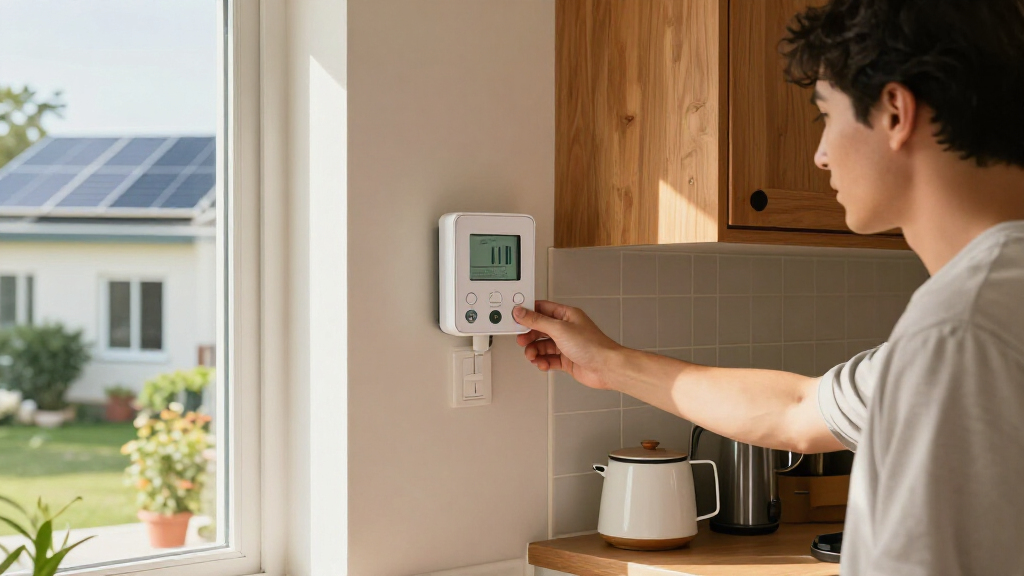
How We Picked
I ranked these monitors by how well they answer the questions buyers actually have: how much of the home can be measured, whether readings are available by circuit or only at an outlet, how the data connects to a phone or smart-home setup, and how demanding installation is. I also weighed flexibility, including the number of included sensors, smart-plug support, local control, and connection options. These distinctions matter more than a long feature list: a plug-in meter can be the right tool for one appliance but cannot replace a panel monitor.
The order favors monitors that offer useful whole-home context alongside circuit-level detail and a clear fit for everyday use. I give specialized picks their own place when their strengths serve a distinct need, such as Ethernet, open-API access, or uncomplicated outlet measurement. Similar sensor counts do not automatically make panel monitors interchangeable; compatibility, setup, and control preferences can shift the best choice. Where a product’s role is narrower, I treat that as a tradeoff rather than a flaw.
Factors to Consider When Choosing Best Home Electricity Monitors
Before choosing a monitor, I would start with the question you want its data to answer. Whole-home totals, circuit-by-circuit patterns, and the draw of a single appliance call for different hardware. These checks can help narrow the field before you compare apps and smart-home features.
Choose the Measurement Scope You Will Actually Use
A panel monitor and an outlet meter answer different questions, so decide whether you need a household overview or a reading for one device. Circuit-level tracking can help identify which parts of the home account for use, but it does not always isolate every appliance on a shared circuit. A plug-in meter is more direct for a compatible appliance, though it cannot show the home’s total demand. Some buyers benefit from both: panel data for patterns and an outlet meter for a closer look at selected devices. A common mistake is buying a simple watt meter expecting it to reveal circuit-level or whole-home information. Match the measurement scope to a real decision, such as checking a high-use circuit or comparing appliances.
Check Your Electrical Panel Before Buying CT Sensors
Current-transformer sensors need to fit the conductors and layout in your electrical panel, so sensor count alone is not a compatibility guarantee. Check the monitor’s installation instructions against your panel type, available space, and the circuits you want to track. A monitor with many sensors may still leave circuits unmeasured if your panel layout or monitoring goals do not line up with the supplied set. Do not assume every circuit can be measured independently or that every installation is suitable for DIY work. If the panel is crowded or you are unsure about safe access, plan for qualified electrical help. Verifying fit before purchase can prevent a feature-rich monitor from becoming a poor practical match.
Decide Whether App Data or Local Control Matters More
Connected monitors differ in how much they depend on a vendor’s app, cloud services, or a local smart-home platform. If you want straightforward charts and notifications, a standard app-centered setup may be enough. Home Assistant support and an open API can matter more if you want custom dashboards, automations, or greater control over how readings are used. Local control can also be a priority for buyers who want fewer cloud dependencies, but it may call for more configuration than a basic app. Ask what happens to data access when internet service is down and which integrations are actually supported. Choosing around your existing setup is usually easier than rebuilding automations around a monitor later.
Treat Sensor Count as Coverage, Not a Score
Sixteen sensors sounds like a clear advantage, but the useful question is how many important circuits you can monitor in your home. Larger sensor bundles can offer broader coverage, while a smaller or more focused setup may be enough for a household interested in only a few high-use areas. Count the circuits you want to follow and compare that list with the product’s sensor arrangement. Also check whether the monitor tracks the main feed separately from branch circuits; those readings serve different purposes. A higher count is less valuable if setup is complicated or the sensors cannot be placed as needed. Buy for the coverage you can use, rather than the largest number on the box.
Choose a Connection That Fits Your Home
Wi-Fi is convenient when the monitor can reach a stable signal near the electrical panel, but that location may sit in a utility room or basement with weak coverage. Ethernet can offer another route where a wired connection is practical, as with the Eyedro option in this lineup. Before selecting a network-dependent monitor, check whether the panel location has reliable connectivity and whether setup requires a particular band or network configuration. Plug-in meters avoid panel-network placement concerns but only measure devices connected through them. Network trouble can make otherwise useful readings inconsistent or unavailable in an app. Match the connection method to the actual installation spot, not just the router’s location.
Pay for Features That Change Your Decisions
More sensors, smart plugs, open APIs, and multiple connection methods are useful only when they support something you plan to do. Smart plugs can make appliance-level tracking easier for compatible devices, while extra circuit sensors help map broader household use. An open API can justify a more involved setup for a smart-home enthusiast but add little for someone who only wants occasional energy readings. A basic plug-in meter can be a sensible first step when you are investigating a single appliance. Avoid paying for integration depth you will not configure, but do not choose a limited meter if whole-home trends are the main goal. The right spend follows the decisions you want the data to inform.
Frequently Asked Questions
Can a plug-in watt meter replace a whole-home electricity monitor?
No. A plug-in meter reads the device connected through its outlet, so it can help you check a single compatible appliance but cannot report household totals or activity on other circuits. A panel monitor uses sensors at the electrical panel to track the main feed and, depending on the model and setup, individual circuits. If you only want to compare a few appliances, an outlet meter may be enough. If you want to understand household-wide patterns, choose a panel monitor or use an outlet meter as a supplement.
Do I need an electrician to install a circuit-level monitor?
It depends on the monitor, your panel, local rules, and your comfort with electrical work. CT sensors install at the panel, where access and placement require care; a product’s sensors do not make every installation suitable for DIY work. Read the manufacturer’s instructions and check panel compatibility before buying. If you are uncertain, the panel is crowded, or local requirements call for professional installation, use a qualified electrician. Plug-in meters avoid panel installation, though their measurement scope is much narrower.
Is a 16-sensor monitor enough for my home’s circuits?
There is no universal answer because homes differ in panel layout and in how many circuits the owner wants to track. A 16-sensor set can offer substantial coverage, but it may not mean every circuit is monitored independently or that every sensor will fit your panel as expected. List the circuits that matter to you, then compare that list with the monitor’s installation method and sensor configuration. Also check whether you need a separate main sensor for whole-home totals. Treat the sensor count as a starting point for checking coverage, not a guarantee.
Should I choose a monitor with Home Assistant or an open API?
Choose one if you plan to bring electricity data into custom dashboards, rules, or automations and are comfortable configuring integrations. In this lineup, the Refoss EM16P is specifically positioned for Home Assistant and open-API use, making it a distinct fit for that kind of setup. If you only want basic readings in a manufacturer’s app, those extra capabilities may not improve your day-to-day use. Check the current integration details and whether the functions you need work locally before buying. An integration label is useful only when it matches your intended workflow.
Should I monitor the main feed, individual circuits, or both?
A main-feed reading gives you a household-level picture, while circuit readings help show where that usage is concentrated. Main-only monitoring can be enough for tracking broad changes but may not identify which part of the home is responsible. Circuit-level data provides more detail, though it can require more sensors and setup and may still not isolate individual appliances on shared circuits. For buyers who want both context and diagnosis, a monitor that supports the main feed and selected circuits is a stronger fit. For one-device questions, an outlet meter may give a more direct answer than adding panel sensors.
Conclusion
For most households seeking a panel-based view with circuit detail, I would start with the Emporia Vue 3 as my best overall pick. The best value depends on the scope you need: the MECHEER two-pack is a practical fit for checking selected appliances, while buyers after whole-home insight should favor a panel monitor rather than an outlet meter. For a premium, more connected setup, I would look at the Emporia monitor with 16 sensors and four smart plugs if its added appliance tracking fits your plans. Beginners who only want to measure a device can start with a plug-in watt meter; those planning panel installation should first confirm fit and arrange help if needed. For specific needs, choose the Refoss EM16P for Home Assistant and open-API access, or the Eyedro 200A when Wi-Fi and Ethernet options matter. Pick by measurement scope and setup needs, not sensor count alone.
Fall Picks
fall essentials
As an affiliate, we earn on qualifying purchases.