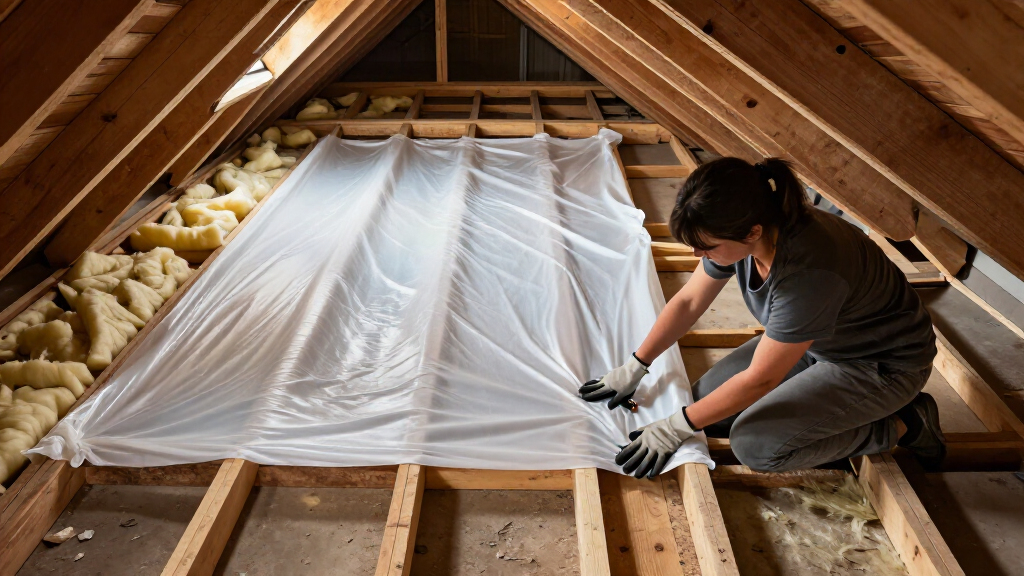

The best attic vapor barriers depend on whether your priority is controlling moisture diffusion or reflecting radiant heat—products in these categories are not interchangeable. CertainTeed MemBrain is my best overall pick for moisture control because it is a smart vapor retarder, while AtticFoil Original stands out for broad radiant-barrier coverage and RadiantGUARD Xtreme for narrower roll dimensions. The key tradeoff is choosing a product suited to your attic assembly rather than assuming reflective foil is a complete vapor-control solution. I compare all six options by their intended function, roll format, coverage, and installation fit. Read on for the full breakdown and help matching a product to your project.

Get backup power and energy gear delivered free with Prime
- Fast, free delivery on millions of items
- Prime Video, Amazon Music and more included
- Member-only deals all year
Key Takeaways
- MemBrain is the clearest moisture-control choice: Its smart vapor-retarder design gives it a different role from the reflective insulation rolls in this lineup.
- Reflective foil products are primarily radiant barriers: ZXQDRE, US Energy Products, Houseables, RadiantGUARD, and AtticFoil should not be treated as direct substitutes for a vapor retarder.
- Large rolls favor broad projects: The 1,000-square-foot US Energy Products, Houseables, and AtticFoil formats can reduce the need to join smaller sections, but may be awkward for limited attic work.
- Roll width affects handling and layout: RadiantGUARD’s 26-inch width and ZXQDRE’s 3-foot width may suit tighter runs better than 4-foot or 48-inch material.
- Product purpose matters more than reflective appearance: Buyers should confirm the assembly’s moisture-control needs and installation instructions before selecting foil marketed for radiant performance.
| ZXQDRE Sauna Foil Vapor Barrier, 3 ft x 100 ft, 300 sq ft |  | Best for Small, Mixed-Use Projects | Material: Aluminum | Roll dimensions: 3 ft x 100 ft | Coverage: 300 sq. ft. per roll | VIEW LATEST PRICE | See Our Full Breakdown |
| US Energy Products 1000 sq ft Reflective Insulation Roll, 4 ft x 250 ft |  | Best for Large Attic Coverage | Coverage: 1,000 sq. ft. | Roll dimensions: 4 ft x 250 ft | Thickness: 8 mils | VIEW LATEST PRICE | See Our Full Breakdown |
| CertainTeed MemBrain Smart Vapor Retarder, 120 in x 100 ft |  | Best for Changing Humidity Conditions | Model: 902010 | Roll dimensions: 120 in x 100 ft | Specified wall height: 10 ft | VIEW LATEST PRICE | See Our Full Breakdown |
| Houseables Radiant Barrier Insulation Roll, 250 ft × 4 ft, 1,000 sq ft |  | Best Perforated Option for Broad Coverage | Coverage: 1,000 sq. ft. | Roll dimensions: 4 ft x 250 ft | Construction: Double-sided, perforated aluminum | VIEW LATEST PRICE | See Our Full Breakdown |
| RadiantGUARD Xtreme Radiant Barrier Attic Insulation, 542 sq ft, 26 in x 250 ft |  | Best for Narrow Rafter Runs | Model: RG-X | Coverage: 542 sq. ft. | Roll dimensions: 26 in x 250 ft | VIEW LATEST PRICE | See Our Full Breakdown |
| AtticFoil Original Attic Radiant Barrier, 48-Inch Wide, 1,000 Sq. Ft. |  | Best for Open-Frame Attics | Manufacturer: AtticFoil | Coverage: 1,000 square feet | Width: 48 inches | VIEW LATEST PRICE | See Our Full Breakdown |
| attic vapor barrier | Roll dimensions | Coverage | Material | Construction |
|---|---|---|---|---|
| ZXQDRE Sauna Foil Vapor Barrie | 3 ft x 100 ft | 300 sq. ft. per roll | Aluminum | Reinforced, non-perforated |
| US Energy Products 1000 sq ft | 4 ft x 250 ft | 1,000 sq. ft. | — | Five-layer, non-perforated |
| CertainTeed MemBrain Smart Vap | 120 in x 100 ft | — | — | — |
| Houseables Radiant Barrier Ins | 4 ft x 250 ft | 1,000 sq. ft. | — | Double-sided, perforated aluminum |
| RadiantGUARD Xtreme Radiant Ba | 26 in x 250 ft | 542 sq. ft. | Reinforced aluminum | — |
| AtticFoil Original Attic Radia | — | 1,000 square feet | Double-sided pure aluminum foil with internal tear-resistant fabric | — |
More Details on Our Top Picks
ZXQDRE Sauna Foil Vapor Barrier, 3 ft x 100 ft, 300 sq ft
The ZXQDRE is a practical fit for a smaller attic or a project that also needs foil in a sauna, garage, or crawl space. Its reinforced, non-perforated aluminum layer is designed to limit moisture passage while reflecting up to 96% of radiant heat. Compared with the 1,000-square-foot US Energy Products roll, this one covers much less area, but its 3-foot width may be easier to handle in tight sections. It can be cut and stapled to framing, though installation still calls for careful fastening across rafters or studs. The listing also provides less construction detail than the larger US Energy Products roll, so I would choose it for a modest, clearly measured job rather than a whole-attic installation.
Pros:- Non-perforated foil is designed to help block moisture and condensation.
- Reflects up to 96% of radiant heat.
- Reinforced construction is designed to resist tearing during handling.
- Suitable for several applications, including attics, saunas, and garages.
Cons:- Covers only 300 square feet per roll, less than the US Energy Products and Houseables options.
- Must be fastened to studs or rafters, adding installation work.
- Product information gives limited detail about the reinforcement and installation requirements.
Best for: DIYers lining a small attic section who also want foil barrier material for a sauna, garage, or crawl space.
Not ideal for: Buyers covering a large attic in one project; its 300-square-foot roll may require multiple rolls and more seams than the 1,000-square-foot alternatives.
- Material:Aluminum
- Roll dimensions:3 ft x 100 ft
- Coverage:300 sq. ft. per roll
- Construction:Reinforced, non-perforated
- Radiant heat reflectivity:Up to 96%
- Recommended uses:Saunas, steam rooms, attics, crawl spaces, garages, and roofs
- Model number:XQD-026
Our verdict“Choose the ZXQDRE for a smaller attic or mixed-use project where a manageable roll matters more than maximum coverage.”
US Energy Products 1000 sq ft Reflective Insulation Roll, 4 ft x 250 ft
For a large attic, the 1,000-square-foot roll is the main reason to pick this product: one roll can cover more area with fewer breaks than the ZXQDRE’s 300-square-foot format. Its five-layer build combines double-sided foil, Mylar, and reinforced scrim, while the non-perforated construction is intended to limit moisture passage. The listed reflectivity reaches up to 97%, but that figure describes radiant heat reflection, not a guaranteed reduction in energy use; results depend on climate, installation, and the rest of the attic assembly. Compared with perforated Houseables foil, this is the more moisture-blocking style, but that may not suit every assembly. I would verify the project’s vapor-control requirements before choosing a non-perforated layer.
Pros:- Covers 1,000 square feet, reducing the need to join multiple rolls for large jobs.
- Five-layer construction includes reinforced woven polyethylene scrim.
- Reflects up to 97% of radiant heat.
- Designed for attics as well as sheds, warehouses, and house wrapping.
Cons:- Non-perforated construction may not fit every building assembly.
- Large roll dimensions can be awkward for a small or confined installation.
- Reflectivity does not guarantee cooling or energy savings in every climate.
Best for: Homeowners covering a broad attic or outbuilding area who want a reinforced, non-perforated reflective roll.
Not ideal for: Buyers whose assembly calls for a vapor-open or perforated barrier, or those handling a small area where a 250-foot roll is cumbersome.
- Coverage:1,000 sq. ft.
- Roll dimensions:4 ft x 250 ft
- Thickness:8 mils
- Materials:Aluminum foil, Mylar, and woven polyethylene scrim
- Construction:Five-layer, non-perforated
- Radiant heat reflection:Up to 97%
- Recommended uses:Attics, sheds, warehouses, and house wrapping
Our verdict“Pick this roll for broad attic coverage when a reinforced, non-perforated radiant barrier matches the assembly.”
CertainTeed MemBrain Smart Vapor Retarder, 120 in x 100 ft
Unlike the foil radiant barriers in this roundup, CertainTeed MemBrain is a smart vapor retarder, designed to change its permeance as humidity shifts. That makes it the distinct choice for assemblies where the goal is to limit winter moisture entry while allowing moisture to dry toward the interior in summer. The US Energy Products and Houseables rolls focus on reflecting radiant heat; MemBrain instead addresses moisture movement through a cavity, so I would not treat it as a like-for-like foil substitute. It is intended for use with unfaced insulation where a vapor retarder is required, and its 120-inch width is specified for 10-foot wall height. The wall-focused sizing and application mean attic buyers should confirm the assembly calls for this product before buying.
Pros:- Adjusts permeance with changing humidity conditions.
- Designed to limit moisture entry in winter and allow drying in summer.
- Installs similarly to polyethylene sheeting.
- Compatible with unfaced insulation where a vapor retarder is required.
Cons:- Does not provide the foil radiant-heat reflection described for the other barrier rolls.
- Use is dependent on the assembly requiring a vapor retarder.
- The stated 10-foot wall-height sizing may be a poor fit for attic-specific layouts.
Best for: Builders or renovators using unfaced insulation in an assembly that requires a humidity-responsive vapor retarder.
Not ideal for: Buyers seeking a foil radiant barrier for exposed attic rafters or a product specifically sized for a conventional attic installation.
- Model:902010
- Roll dimensions:120 in x 100 ft
- Specified wall height:10 ft
- Material description:Clear
- Insulation compatibility:Unfaced insulation
- Vapor-control behavior:Permeance adapts to changing humidity
- Intended application:Use where a vapor retarder is required
Our verdict“Choose MemBrain when humidity-responsive vapor control is needed in an appropriate insulated assembly, not as a substitute for attic radiant foil.”
Houseables Radiant Barrier Insulation Roll, 250 ft × 4 ft, 1,000 sq ft
The Houseables roll pairs 1,000-square-foot coverage with perforated, double-sided foil, making it a different choice from the non-perforated US Energy Products roll. The perforations may suit projects where a perforated radiant barrier is specified, while the broad format limits the number of roll changes across a large area. Its listed reflective value is greater than 97%, and the lightweight material is designed to be cut and installed with relative ease. The tradeoff is that the listing’s fire, smoke, and breathability standards should be checked against the exact project requirements rather than treated as a substitute for assembly guidance. Thin foil can also need careful handling. Compared with the narrower RadiantGUARD roll, Houseables is aimed at coverage, not tight attic spaces.
Pros:- Provides 1,000 square feet of coverage on one roll.
- Perforated, double-sided aluminum construction distinguishes it from non-perforated alternatives.
- Lightweight material is designed to be easy to cut and install.
- Product description cites multiple ASTM fire, smoke, and breathability standards.
Cons:- Perforated construction may not suit projects that need a non-perforated vapor barrier.
- Thin foil can be damaged if handled roughly during installation.
- Any cooling benefit depends on climate and correct installation.
Best for: DIYers covering a large attic who need a perforated, double-sided reflective roll and can confirm it suits their assembly.
Not ideal for: Buyers who need a non-perforated moisture barrier or a narrow roll for cramped rafter bays.
- Coverage:1,000 sq. ft.
- Roll dimensions:4 ft x 250 ft
- Construction:Double-sided, perforated aluminum
- Reflective value:Greater than 97%
- Model number:RaBa
- Pack count:1
- Product description:Lightweight, tear-resistant, and intended for new or existing buildings
Our verdict“Choose Houseables for broad coverage when a perforated reflective barrier fits the project’s assembly requirements.”
RadiantGUARD Xtreme Radiant Barrier Attic Insulation, 542 sq ft, 26 in x 250 ft
RadiantGUARD Xtreme stands apart through its 26-inch width: it is easier to place along narrow attic rafter runs than the 4-foot-wide US Energy Products and Houseables rolls. The reinforced aluminum is designed to block up to 95% of radiant heat, and the listing says it can be cut with common tools and stapled to rafters. That makes the installation approach clear, but it remains a DIY fastening job rather than a large, broad sheet that quickly covers open areas. Its 542-square-foot coverage sits between the ZXQDRE’s smaller roll and the 1,000-square-foot options. The product is described as fiber-free and Class A/Class 1 fire rated; I would treat those as listed claims and check project documentation where fire requirements apply.
Pros:- Narrow 26-inch width can suit rafter runs and tighter attic spaces.
- Reinforced aluminum is designed to block up to 95% of radiant heat transfer.
- Can be cut with common tools and installed by stapling to rafters.
- Described as fiber-free and Class A/Class 1 fire rated.
Cons:- Requires DIY installation with a staple gun.
- 542-square-foot coverage is less than the 1,000-square-foot Houseables and US Energy Products rolls.
- The listed temperature and utility-bill reduction claims are not substantiated in the supplied product details.
Best for: DIY attic owners insulating narrow rafter runs who prefer a long, 26-inch-wide reinforced roll.
Not ideal for: Buyers covering broad, open attic areas quickly or avoiding staple-gun installation; wider 1,000-square-foot rolls may fit those jobs better.
- Model:RG-X
- Coverage:542 sq. ft.
- Roll dimensions:26 in x 250 ft
- Material:Reinforced aluminum
- Radiant heat blocked:Up to 95%
- Recommended uses:Attics, roofs, windows, RVs, and metal buildings
- Installation:Cut to fit and staple to attic rafters
Our verdict“Pick RadiantGUARD for narrow attic rafter runs where its 26-inch width is more useful than a wider, higher-coverage roll.”
AtticFoil Original Attic Radiant Barrier, 48-Inch Wide, 1,000 Sq. Ft.
I’d choose this AtticFoil roll for an open-frame attic with horizontal installation, where its 48-inch width suits the intended layout. Its perforations let moisture pass through, making it a different kind of product from CertainTeed MemBrain, which is a smart vapor retarder rather than a radiant barrier. The double-sided aluminum surface is claimed to reflect 97% of radiant heat, while the internal tear-resistant fabric adds durability during handling. Included seam tape can simplify joining sections, though careful installation still matters. The main tradeoff is fit: compared with the wider-format US Energy Products roll, this narrower roll may mean more seams or a less convenient layout in some attics. It is a radiant barrier, not a substitute for choosing a vapor-control layer suited to the assembly.
Pros:- Perforations allow moisture to pass through the material
- Internal tear-resistant fabric supports handling during installation
- Double-sided pure aluminum construction
- Includes foil seam tape
Cons:- The 48-inch width is described as best for horizontal installation in open-frame attics
- Radiant barrier performance does not make it equivalent to a dedicated vapor retarder
- The 97% reflectivity figure is a manufacturer claim
Best for: Homeowners installing a radiant barrier horizontally across an open-frame attic who want perforated foil, reinforced material, and included seam tape.
Not ideal for: Buyers seeking a dedicated smart vapor retarder, or installers whose attic layout favors wider material or another installation orientation.
- Manufacturer:AtticFoil
- Coverage:1,000 square feet
- Width:48 inches
- Material:Double-sided pure aluminum foil with internal tear-resistant fabric
- Perforated:Yes; allows moisture to pass through
- Reflectivity:97% claimed
- Included components:AtticFoil insulation and foil tape
- Model number:1000AK2FT1
Our verdict“Choose this roll for a horizontal open-frame attic radiant-barrier installation, but pick a dedicated vapor retarder if moisture control is your primary need.”

How We Picked
I ranked these products by how clearly their stated design fits an attic buyer’s job: moisture vapor control, radiant-heat reduction, or a project where roll dimensions and coverage drive the choice. I gave the strongest fit for moisture management to a product identified as a smart vapor retarder, rather than treating reflective foil as equivalent. For the radiant-barrier options, I compared stated coverage, width, and roll length as practical indicators of how easily a buyer can plan a larger or more confined installation.
The ranking also reflects how much a shopper can infer from the product information provided. A large roll can be useful on a broad, uncomplicated surface, but it is not automatically better for a small or irregular attic. No product should be selected on reflective appearance alone: installation method, ventilation, climate, and the existing roof and ceiling assembly affect whether a vapor retarder or radiant barrier is appropriate. I distinguish the products by role and format, while advising buyers to confirm specifications and local building requirements before installation.
| attic vapor barrier | Material | Construction | Recommended uses |
|---|---|---|---|
| ZXQDRE Sauna Foil Vapor Barrie | Aluminum | Reinforced, non-perforated | Saunas, steam rooms, attics, crawl spaces, garages, and roofs |
| US Energy Products 1000 sq ft | — | Five-layer, non-perforated | Attics, sheds, warehouses, and house wrapping |
| CertainTeed MemBrain Smart Vap | — | — | — |
| Houseables Radiant Barrier Ins | — | Double-sided, perforated aluminum | — |
| RadiantGUARD Xtreme Radiant Ba | Reinforced aluminum | — | Attics, roofs, windows, RVs, and metal buildings |
| AtticFoil Original Attic Radia | Double-sided pure aluminum foil with internal tear-resistant fabric | — | — |
Factors to Consider When Choosing Best Attic Vapor Barriers
Before choosing among these six products, identify the problem you are trying to solve. Vapor control and radiant control are separate jobs, and a material marketed for one may not serve as the other in your attic assembly. These broader checks can prevent a mismatch that extra roll coverage cannot fix.
1. Identify Whether You Need Vapor Control or Radiant Control
Start by tracing the issue: moisture moving through building materials calls for a vapor-control strategy, while heat radiating from a hot roof deck is a different concern. Reflective foil products are generally discussed as radiant barriers, so their shiny surface alone does not establish that they are the right vapor retarder. A smart vapor retarder such as MemBrain is designed for a distinct moisture-management role. Do not add a low-permeance layer simply because the attic feels humid; layered materials can trap moisture if the assembly is poorly planned. Check the existing insulation, ceiling finish, roof construction, and climate before buying. If the source of moisture is unclear, resolve leaks and ventilation problems first rather than expecting a sheet product to correct them.
2. Check the Whole Assembly, Not Just the Attic Surface
A vapor-control layer works as part of a roof or ceiling assembly, so its position and continuity matter as much as the material name. Consider what layers already sit above and below the insulation, including roofing, sheathing, and interior finishes. Adding another barrier without understanding those layers can limit drying in the wrong direction. Common gaps around wiring, framing, hatches, and fixtures can also undermine a carefully chosen product. Map those details before estimating material, and follow the product maker’s installation guidance. When a project changes the existing assembly, local building rules or advice from a qualified building professional can help prevent moisture problems.
3. Match Roll Width to Access and Attic Geometry
Wider rolls can cover open runs with fewer seams, but they are harder to maneuver through a hatch and around trusses or ducts. Narrower formats may be easier to handle in tight spaces, though more joints can mean more cutting and careful detailing. Measure the actual working path rather than the attic floor alone, and note obstructions that create short sections or irregular cuts. A roll that looks efficient on paper can create waste when most of the surface is broken into small bays. Plan how the material will be carried, unrolled, and secured before choosing a width. For restricted access, manageable sections may be worth more than maximizing coverage per roll.
4. Estimate Coverage With Seams and Waste Included
Printed square footage is not the same as usable installed coverage. Overlaps, edges, openings, and cuts around framing all reduce the area a roll can cover. Large formats such as the 1,000-square-foot rolls can make sense for broad, straightforward projects, but they may leave substantial unused material on a small job. Sketch the attic in sections and include overlap allowances based on the maker’s instructions before ordering. Avoid stretching material or reducing required overlap just to match a roll’s stated area. If the attic has many small bays, a narrower roll or smaller quantity can be easier to use with less offcut waste.
5. Treat Ventilation and Heat Safety as Part of the Plan
Radiant barriers do not replace attic ventilation or insulation, and covering vents can interfere with the attic’s intended airflow. Identify soffit, ridge, gable, and other ventilation paths before installing any sheet material. Reflective surfaces may also create installation-specific concerns near wiring, lighting, or equipment, so follow the manufacturer’s clearances and fastening directions. Do not assume a radiant barrier will solve condensation, roof leaks, or inadequate insulation. Address air leaks from the living space and existing moisture sources as separate parts of the project. A product choice is only one piece of a safe, effective attic plan.
6. Pay More Attention to Fit Than to Roll Size
More coverage can lower the number of roll changes, but it does not make a product better suited to every attic. Pay for a format or material that matches the job: moisture-retarder performance for a moisture-control need, or a radiant-barrier product when radiant heat is the target. For a first-time installer, accessible instructions, a manageable width, and a layout that limits awkward cuts may matter more than maximum roll length. For a large open attic, a wider, higher-coverage roll may simplify handling across long runs. Compare specifications and installation requirements before choosing based on the product name or reflective finish. The best fit is the one that performs its stated role in the existing assembly.
Frequently Asked Questions
Can I use a reflective radiant barrier as my attic vapor barrier?
Do not assume the two are interchangeable. A reflective radiant barrier is selected for heat-reflection performance, while a vapor retarder is selected to manage moisture diffusion through an assembly. Product construction and permeability determine whether a material can serve both functions, and the product description alone may not answer that question. Check the technical data and installation instructions, then consider the existing layers and local climate. If the goal is moisture control, MemBrain is the product in this lineup explicitly identified as a smart vapor retarder.
Should a vapor barrier go on the attic side of the insulation?
There is no single placement that fits every climate and ceiling assembly. The right location depends on how the building is constructed, where moisture is coming from, and which direction the assembly needs to dry. Placing a low-permeance layer on the wrong side can trap moisture rather than control it. Review the full roof and ceiling layer sequence before installation, not just the insulation surface. Local code guidance or a building professional can help when the assembly is unusual or already has multiple vapor-resistant layers.
Is a 1,000-square-foot roll a better choice than a smaller roll?
It is a better fit mainly when the project has enough broad, continuous area to use that coverage. Large rolls from US Energy Products, Houseables, and AtticFoil may reduce roll changes on open runs, but they can be cumbersome in a tight attic or for a small repair. Coverage estimates should include seams, overlaps, cuts, and obstacles, rather than relying on the printed area alone. Measure the access route and work area before buying. If the layout is divided into many small bays, a narrower format may create less handling difficulty and waste.
Can I install a radiant barrier over existing attic insulation?
That depends on the product’s approved installation method and the attic’s ventilation design. Some radiant-barrier installations are intended to leave an air space, so laying foil directly on insulation may not provide the intended performance. Material placed across soffit vents or other airflow paths can also create problems. Check the instructions for the exact product and identify all ventilation openings before work begins. Keep radiant-barrier performance separate from insulation performance: a reflective sheet does not replace the insulation level the home needs.
When should I choose MemBrain instead of one of the foil rolls?
Choose MemBrain when your project calls for a vapor retarder and its smart-retarder characteristics suit the assembly; choose a foil roll when the project calls for a radiant barrier and its installation method fits the attic. These are different performance goals, so the product with more coverage is not automatically the better choice. Confirm that the intended location and surrounding materials support the product’s use. If you are trying to solve both moisture and heat concerns, treat them as separate design questions rather than expecting one sheet to handle both. The building assembly and manufacturer documentation should guide the final selection.
Conclusion
Best overall for moisture control: CertainTeed MemBrain is my leading choice when a smart vapor retarder is the actual need. Best value for broad radiant-barrier coverage: compare the large-format US Energy Products and Houseables rolls by their specifications and installation fit; either can suit a project where extensive coverage matters. Best premium-style pick for a broad attic run: AtticFoil Original offers a 48-inch format with 1,000 square feet of stated coverage. Best for beginners or tight spaces: RadiantGUARD Xtreme’s 26-inch width may be easier to handle in confined runs, while ZXQDRE’s 3-foot roll is another smaller-format option. Best for a specific moisture-control need: MemBrain remains the distinct choice in this lineup; do not substitute radiant foil without confirming it serves the required function. Match the product to the attic assembly first, then choose roll size and format.
Halloween Picks
halloween
As an affiliate, we earn on qualifying purchases.