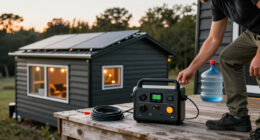
For most buyers seeking solar panel kits for home, I’d start with the ECO-WORTHY 4.68KWH 1200W 48V kit: it combines panels, battery storage, and an inverter in a more manageable package than the 10kW systems. The Renogy 400W Premium Kit is a stronger fit for buyers who want a recognizable component-focused setup, while the Jackery HomePower 3600 Plus suits people who value portability and a simpler power-station format. The main tradeoffs are system scale, installation complexity, storage capacity, and whether you need a permanent off-grid setup or backup power you can move. Read on for the full comparison of all 13 options and guidance on matching a kit to your home’s actual loads.

Get backup power and energy gear delivered free with Prime
- Fast, free delivery on millions of items
- Prime Video, Amazon Music and more included
- Member-only deals all year
Key Takeaways
- The 4.68kWh ECO-WORTHY kit is the most balanced starting point: it includes storage and an inverter without jumping straight to the footprint and setup demands of the 10kW systems.
- Large inverter ratings do not tell the whole story: the ECO-WORTHY 10kW options differ in panel and battery configurations, so compare usable storage and expected solar production, not just inverter output.
- Renogy’s 400W kit and the Topsolar 200W kit are component-led, smaller-scale choices: they suit buyers building around 12V needs better than households seeking whole-home off-grid power.
- Jackery’s two options prioritize convenience over fixed-system flexibility: the HomePower 3600 Plus is the larger portable choice, while the Solar Generator 1000 v2 is better matched to lighter, more limited backup needs.
- Several kits are designed around RV or off-grid use rather than a standard grid-connected home: buyers should verify electrical compatibility, installation requirements, and local rules before treating any listing as a whole-house solution.
| ECO-WORTHY 400W 12V Complete Solar Panel Kit for RV Off Grid | 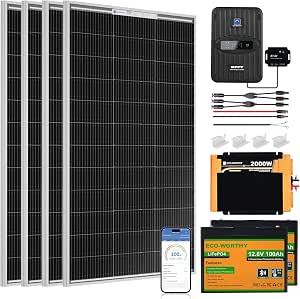 | Best All-in-One 12V Kit | Panel power: 400W total | Panels: Four 100W bifacial panels | System voltage: 12V | VIEW LATEST PRICE | See Our Full Breakdown |
| Renogy 400W Premium Solar Kit with 40A MPPT Charge Controller |  | Best for a Modular Starter Setup | Panel power: 400W total (four 100W panels) | Panel material: Monocrystalline silicon | Controller: 40A MPPT | VIEW LATEST PRICE | See Our Full Breakdown |
| ECO-WORTHY 4.68KWH Solar Power Complete Kit 1200W 48V with Lithium Battery and Inverter |  | Best Mid-Size Home Off-Grid System | Panel power: 1200W total | Panels: Six 195W bifacial panels | System voltage: 48V DC | VIEW LATEST PRICE | See Our Full Breakdown |
| ECO-WORTHY 10KW Off Grid Solar System Complete Kit with 2340W Solar Panels, 10KW Inverter, and Lithium Batteries |  | Best for High-Load Off-Grid Homes | Solar array power: 2340W total | Panels: 12 bifacial panels, 195W each | Inverter: 10KW | VIEW LATEST PRICE | See Our Full Breakdown |
| Jackery HomePower 3600 Plus Portable Power Station with Solar Panels |  | Best Portable Home Backup | Battery capacity: 3584Wh | Output: 3600W | Voltage: 120V and 240V in parallel | VIEW LATEST PRICE | See Our Full Breakdown |
| ECO-WORTHY 1.6KWH Complete Solar Panel Kit 400W 12V for RV Off-Grid |  | Best Complete 12V Kit for a Small Home Backup Setup | Maximum panel power: 400W | Number of panels: 4 | Panel efficiency: 23% | VIEW LATEST PRICE | See Our Full Breakdown |
| ECO-WORTHY 5KW Off Grid Solar System Complete Kit 2340W |  | Best Mid-Scale 48V Kit for Off-Grid Living | Total panel power: 2340W | Number of panels: 12 | Power per panel: 195W | VIEW LATEST PRICE | See Our Full Breakdown |
| ECO-WORTHY 10KW Off-Grid Solar System Complete Kit with 9 Solar Panels and Energy Storage |  | Best for High-Load, Split-Phase Off-Grid Homes | Inverter output: 10,000W continuous; 20,000W peak | Solar array capacity: 5310W | Number of panels: 9 bifacial panels | VIEW LATEST PRICE | See Our Full Breakdown |
| Topsolar 200W Monocrystalline Solar Panel Kit, 12V Off-Grid System |  | Best Starter Kit for a Small 12V Solar Setup | Maximum power: 200W | Number of panels: 2 | Panel configuration: Two 100W monocrystalline panels | VIEW LATEST PRICE | See Our Full Breakdown |
| Jackery Solar Generator 1000 v2 with 200W Solar Panel, 1070Wh, 1500W AC |  | Best Portable Backup for Short Outages | Battery capacity: 1070Wh | AC output: 1500W | Starting wattage: 3000W | VIEW LATEST PRICE | See Our Full Breakdown |
| ECO WORTHY 10kW Off-Grid Solar Panel Kit for Home with 48V 314Ah Battery and 10kW Inverter |  | Best for High-Load Off-Grid Homes | Maximum panel power: 2,950W | Solar panels: 5 panels, 590W each | Battery capacity: 16.1 kWh | VIEW LATEST PRICE | See Our Full Breakdown |
| ECO-WORTHY 48V Off Grid Solar System Complete Kit 1600W 6.24KWh for Home |  | Best for Moderate Off-Grid Loads | Maximum power: 1,600W | Solar panels: 8 bifacial panels, 195W each | Battery: 48V 100Ah lithium | VIEW LATEST PRICE | See Our Full Breakdown |
| ECO-WORTHY 10,000W Off-Grid Solar Panel Kit for Home with 10kW Inverter and High Capacity Battery |  | Best for Extended Energy Storage | PV capacity: 10,620W | Solar panels: 18 panels, 590W each | Battery capacity: 32.2 kWh | VIEW LATEST PRICE | See Our Full Breakdown |
More Details on Our Top Picks
ECO-WORTHY 400W 12V Complete Solar Panel Kit for RV Off Grid
For a buyer who wants more than panels and a charge controller, this kit bundles a 2000W pure sine wave inverter and two 12V 100Ah lithium batteries with its four 100W bifacial panels. That makes it a more ready-made off-grid package than the Renogy 400W Premium Solar Kit, which supplies panels and charging hardware but no battery or inverter. The stated ideal daily output is 1.6kWh, so this setup suits modest loads rather than whole-home power. Bifacial panels may capture additional light where their rear sides have suitable exposure, but the benefit depends on placement and surroundings. The tradeoff is a more involved installation: wiring batteries, inverter, and controller calls for care and some electrical know-how. Compared with the larger ECO-WORTHY 1200W kit, this is easier to match to RVs and small cabins, but offers less generation capacity.
Pros:- Bundles four 100W bifacial panels, a 40A MPPT controller, inverter, and two lithium batteries.
- Two 12V 100Ah batteries provide included energy storage.
- A 2000W pure sine wave inverter supports compatible AC appliances.
- 23% stated panel efficiency and bifacial construction may aid energy capture in suitable placements.
Cons:- Installation involves multiple components and may require electrical knowledge.
- A 400W array limits daily energy generation compared with the ECO-WORTHY 1200W and 2340W systems.
- Actual output varies with sunlight and installation conditions.
Best for: RV owners and small-cabin users who want panels, lithium storage, and an inverter in one 12V off-grid package.
Not ideal for: Homeowners seeking whole-house backup or a system that can run several high-demand appliances for extended periods; its 400W array and stated 1.6kWh ideal daily output are modest.
- Panel power:400W total
- Panels:Four 100W bifacial panels
- System voltage:12V
- Controller:40A MPPT
- Inverter:2000W pure sine wave
- Battery:Two 12V 100Ah lithium batteries
- Stated ideal daily output:1.6kWh
- Panel efficiency:23%
Our verdict“Choose this if you want a bundled 12V solar-and-storage setup for an RV or small cabin, not whole-home capacity.”
Renogy 400W Premium Solar Kit with 40A MPPT Charge Controller
The Renogy is the more modular choice among these 400W options: it pairs four monocrystalline panels with a 40A MPPT controller, Bluetooth monitoring, mounting brackets, and cables, leaving battery and inverter selection to the buyer. That flexibility can be useful when expanding an existing 12V setup or choosing storage separately. It is less complete than the ECO-WORTHY 400W 12V Complete Solar Panel Kit, which includes both lithium batteries and a 2000W inverter, so a new off-grid installation will need more separately sourced equipment. Phone-based monitoring helps track system status without relying only on controller indicators, while the included hardware reduces some parts matching. The listed panel weight is 56.4 pounds, a practical installation concern for roof work. Its 12V orientation also makes it a poor match for buyers planning a higher-voltage home system.
Pros:- Four 100W monocrystalline panels provide 400W of rated array power.
- Includes a 40A MPPT controller and Bluetooth monitoring module.
- Z-brackets, cables, and an adaptor kit are included.
- Five-year warranty on materials and workmanship is specified.
Cons:- Battery and inverter are not included, adding component-selection and installation work.
- The 12V configuration is not suited to higher-voltage system plans.
- The listed 56.4-pound weight can make roof handling harder.
Best for: DIY buyers with an existing 12V battery bank who want a 400W panel-and-controller kit with phone monitoring and included mounting hardware.
Not ideal for: Shoppers seeking a ready-to-run home backup package; this kit does not list batteries or an inverter, unlike the ECO-WORTHY 400W complete kit.
- Panel power:400W total (four 100W panels)
- Panel material:Monocrystalline silicon
- Controller:40A MPPT
- System orientation:12V
- Monitoring:Bluetooth module included
- Included hardware:Z-brackets, cables, adaptor kit
- Listed weight:56.4 pounds
- Warranty:Five years on materials and workmanship
Our verdict“Pick this modular kit if you already have 12V storage or want to choose your battery and inverter separately.”
ECO-WORTHY 4.68KWH Solar Power Complete Kit 1200W 48V with Lithium Battery and Inverter
This kit steps beyond the RV-scale 400W systems with a 1200W bifacial array, a 48V 50Ah lithium battery, and a 3500W inverter. Its stated daily generation of about 4.68kWh under optimal sunlight gives a small off-grid home or cabin more room for routine appliance use than the ECO-WORTHY 400W 12V Complete Solar Panel Kit. The 48V design and inverter capacity make it a better fit for a fixed installation, though the supplied battery capacity is still a constraint for sustained or overnight heavy loads. WiFi monitoring and parallel connection support add flexibility, but they do not remove the need to plan loads, wiring, and installation carefully. Compared with the 10KW ECO-WORTHY system, this kit is a less expansive step into home-scale power; it will not match that system’s inverter rating or storage package.
Pros:- Six 195W bifacial panels provide 1200W of rated solar power.
- Includes a 48V 50Ah lithium battery and 3500W inverter.
- Stated ideal-condition daily generation is approximately 4.68kWh.
- WiFi monitoring and support for parallel connections add system flexibility.
Cons:- Battery capacity may limit overnight or prolonged high-demand use.
- Installation and system setup require planning and technical care.
- The stated daily output depends on optimal sunlight conditions.
Best for: Owners of small off-grid homes or cabins who need more daily generation and inverter capacity than a 400W kit provides.
Not ideal for: Households expecting extended high-load backup or whole-home coverage; the 48V 50Ah battery is smaller than the storage offered by the 10KW ECO-WORTHY kit.
- Panel power:1200W total
- Panels:Six 195W bifacial panels
- System voltage:48V DC
- Battery:48V 50Ah lithium
- Inverter:3500W
- Stated ideal daily output:Approximately 4.68kWh
- Panel dimensions:58.86 x 26.18 x 1.18 inches
- Monitoring:WiFi monitoring
Our verdict“Choose this for a small off-grid home that needs a substantial step up from 400W, while accepting limited storage for heavy loads.”
ECO-WORTHY 10KW Off Grid Solar System Complete Kit with 2340W Solar Panels, 10KW Inverter, and Lithium Batteries
This is the lineup’s most ambitious fixed-installation package, pairing a 10KW inverter with twelve 195W bifacial panels and two 48V 100Ah lithium batteries. That combination targets homes, farms, and cabins with heavier loads, rather than the smaller energy needs served by the ECO-WORTHY 4.68KWH 1200W kit. The listed 2340W of panel power and stated 9.36kWh daily output under optimal sunlight describe the generation side; the inverter’s 10KW rating describes the maximum supported output, not how much energy the panels make each day. Real-time app monitoring and support for parallel inverter connections give room to manage or expand a system. The tradeoff is scale: installation and electrical integration are more involved, and the product data recommends professional installation. This is a home system, not a simple plug-and-play backup unit.
Pros:- 10KW inverter is suited to higher simultaneous loads than the 3500W inverter in the ECO-WORTHY 1200W kit.
- Two 48V 100Ah lithium batteries are included.
- Twelve bifacial 195W panels provide 2340W of rated array power.
- App monitoring and parallel inverter support allow system oversight and expansion.
Cons:- Professional installation is recommended, adding complexity to setup.
- The 2340W array and stated 9.36kWh ideal daily output do not mean the system can sustain maximum inverter output all day.
- The scale and technical requirements make it excessive for modest household backup needs.
Best for: Owners of off-grid homes, farms, or large cabins who need substantial inverter capacity, lithium storage, and a system designed for expansion.
Not ideal for: Renters, small-home users, or buyers seeking a portable backup station; this fixed, technically involved system is larger than their needs.
- Solar array power:2340W total
- Panels:12 bifacial panels, 195W each
- Inverter:10KW
- Inverter voltage:120V/240V
- Battery:Two 48V 100Ah lithium batteries
- Stated ideal daily output:9.36kWh
- Certifications:UL 1741, UL 1973, UL 9540A
- Parallel inverter support:Up to 60KW
Our verdict“Choose this fixed off-grid system when high inverter capacity and substantial storage matter more than easy installation or portability.”
Jackery HomePower 3600 Plus Portable Power Station with Solar Panels
Unlike the ECO-WORTHY kits, the Jackery centers the system on a portable battery power station rather than a permanently wired solar installation. Its 3584Wh capacity and 3600W output make it a convenient option for backup appliances, and the included four 200W panels can recharge it when sunlight is available. AC and gas-generator charging provide alternatives when solar conditions are poor, while wheels and a telescopic handle make moving the 77.2-pound unit more manageable. This is easier to reposition than the ECO-WORTHY 10KW off-grid system, but it is not a direct replacement for a high-capacity home array: its listed outlet count is one, and expanding capacity requires additional units. The panels and power station ship separately, so buyers should plan for separate delivery. Its main advantage is flexible backup, not whole-home integration.
Pros:- 3584Wh battery capacity and 3600W output support selected backup loads.
- Four 200W solar panels and solar connectors are included in the product package.
- AC, solar, and gas-generator charging offer multiple recharge paths.
- Wheels and a telescopic handle aid movement despite its substantial weight.
Cons:- At 77.2 pounds, the power station is heavy to lift and relocate.
- The power station and solar panels ship separately.
- Larger capacity expansion requires additional units, and only one outlet is listed.
Best for: Households wanting movable backup for selected appliances, with solar, AC, or generator charging and no permanent system installation.
Not ideal for: Buyers seeking a fixed, multi-circuit whole-home solar system or a large rooftop array; this portable station has a single listed outlet and requires more units for larger capacity.
- Battery capacity:3584Wh
- Output:3600W
- Voltage:120V and 240V in parallel
- Included solar panels:Four 200W panels
- Charging options:AC, solar, gas generator
- Weight:77.2 pounds
- Cycle life:6000 cycles
- Listed outlets:One
Our verdict“Pick this portable station for movable backup and flexible recharging, but choose a fixed ECO-WORTHY system for broader home power needs.”
ECO-WORTHY 1.6KWH Complete Solar Panel Kit 400W 12V for RV Off-Grid
This kit brings panels, storage, charging, and AC conversion together, making it a more complete small-system choice than the Topsolar 200W Monocrystalline Solar Panel Kit, which does not include a battery or inverter. Its four 100W panels and 12V 100Ah lithium battery suit a shed, cabin, or a few essential home loads, while the 1100W pure sine wave inverter can run compatible AC devices within its capacity. The MPPT controller and Bluetooth module add useful charging control and visibility. The tradeoff is scale: the stated 1.6 kWh daily output depends on ideal sunlight, and the battery’s stored energy is not enough for extended whole-home backup. Compared with larger 48V systems in this roundup, this is easier to match to modest loads, but it still calls for proper installation knowledge.
Pros:- Includes panels, MPPT controller, lithium battery, inverter, and Bluetooth module
- 1100W pure sine wave inverter supports compatible household AC devices
- Lithium battery is specified for over 3000 cycles
- 23% panel efficiency and MPPT charging support better use of available sunlight
Cons:- 400W of panels and 1.6 kWh stated daily output limit the system to modest loads
- Installation and wiring require technical care
- Actual generation varies with sunlight and site conditions
Best for: Homeowners outfitting a shed, small cabin, or emergency circuit who want panels, a battery, controller, and inverter in one 12V package.
Not ideal for: Households seeking whole-home backup or sustained operation of several large appliances; the 12V, 100Ah battery and 400W array are modest for those loads.
- Maximum panel power:400W
- Number of panels:4
- Panel efficiency:23%
- Battery:12V 100Ah lithium
- Charge controller:40A MPPT
- Inverter:1100W pure sine wave
- AC output voltage:110V
- Stated daily energy:Up to 1.6 kWh under ideal conditions
Our verdict“Choose this integrated 12V kit for modest backup or cabin loads, not as a substitute for a larger home energy system.”
ECO-WORTHY 5KW Off Grid Solar System Complete Kit 2340W
The appeal here is a 48V battery-and-inverter setup paired with 2340W of panels: a practical middle ground between the small 12V ECO-WORTHY 1.6KWH kit and the much larger 10kW systems in this roundup. The 5kW inverter gives more room for simultaneous compatible loads, while the 100Ah lithium battery provides storage for use beyond the sunniest hours. Twelve 195W panels spread collection across a larger array, so buyers need suitable mounting area and a plan for wiring and placement. The listed 5kW figure describes inverter capacity, not panel production; the array is rated at 2340W, so daily energy depends on sunlight and system conditions. This is a more substantial DIY option than the Topsolar 200W kit, but it is still an off-grid system that needs careful sizing for actual household use.
Pros:- Complete system includes panels, 48V lithium battery, and inverter
- 5kW inverter offers more appliance capacity than small 12V kits
- 48V architecture suits a more substantial off-grid installation
- Twelve monocrystalline panels provide a 2340W array
Cons:- The 2340W array is well below the inverter’s 5kW rating
- Twelve panels require significant mounting space and careful installation
- 120V output may not suit loads requiring a different voltage arrangement
Best for: DIY-minded cabin owners or homeowners building a 48V off-grid setup with moderate daily loads and room for a 12-panel array.
Not ideal for: Buyers with limited roof or ground-mount space, or anyone expecting the 5kW inverter rating to mean 5kW of continuous solar generation.
- Total panel power:2340W
- Number of panels:12
- Power per panel:195W
- Panel efficiency:25%
- Battery:48V 100Ah lithium
- Inverter power:5kW
- Output voltage:120V
- Panel materials:Aluminum, monocrystalline silicon, and tempered glass
Our verdict“Pick this for a space-ready DIY off-grid build that needs a 48V system, while keeping expectations tied to its 2340W array.”
ECO-WORTHY 10KW Off-Grid Solar System Complete Kit with 9 Solar Panels and Energy Storage
This is the strongest fit in this batch for a home-scale off-grid build: it combines a 10kW inverter, 120V/240V split-phase output, and nine 590W bifacial panels. That output format gives buyers more flexibility for compatible household circuits than the 120V-only ECO-WORTHY 5KW kit. The 5310W array and listed 20.48 kWh battery capacity also put it in a different class from the 400W ECO-WORTHY 1.6KWH kit, though actual solar production depends on conditions and the supplied product description should be checked for exact component configuration. Bifacial panels may collect additional light from the rear when the installation surface and layout allow it. The drawback is the scale: large panels, system complexity, and the recommendation for experienced installation make this a poor match for a first-time DIY buyer or a small backup need.
Pros:- 10kW inverter supports substantial loads within system limits
- 120V/240V split-phase output suits compatible household circuits
- Nine 590W bifacial panels provide a 5310W array
- Listed 20.48 kWh battery capacity offers substantial storage
Cons:- Large panels and system components require considerable space
- Installation complexity makes it a poor fit for novice DIY work
- Bifacial output depends on mounting and surrounding conditions
Best for: Experienced off-grid homeowners who need split-phase output, substantial battery storage, and have space and installation support for a large array.
Not ideal for: First-time solar buyers or households seeking a portable, simple backup option; the large panels and system setup call for experienced installation.
- Inverter output:10,000W continuous; 20,000W peak
- Solar array capacity:5310W
- Number of panels:9 bifacial panels
- Power per panel:590W
- Panel efficiency:23.23%
- Battery capacity:20.48 kWh
- Battery voltage:48V
- Output:120V/240V split-phase
- Inverter features:Dual MPPT, Wi-Fi monitoring, and parallel capability
Our verdict“Choose this for a substantial off-grid home build with experienced installation, not for a small or portable backup system.”
Topsolar 200W Monocrystalline Solar Panel Kit, 12V Off-Grid System
Topsolar keeps the system simple: two 100W panels, a 30A charge controller, mounting brackets, and cables make this the lightest commitment for a small off-grid project. It is a better entry point than the ECO-WORTHY 1.6KWH kit when a buyer already has storage and only needs to add panel charging; unlike that ECO-WORTHY package, it does not include a battery or inverter. The 200W array and 12V output are suited to modest charging needs in a shed, boat, or RV, not household backup for multiple appliances. Its 22% efficiency and aluminum construction are useful on an exposed installation, but the product data gives little detail on long-term warranty coverage. Installation still involves wiring and controller setup, so “starter” means smaller scale rather than plug-and-play.
Pros:- Includes two panels, a 30A controller, mounting brackets, and cables
- 22% monocrystalline panel efficiency
- 12V output fits many small off-grid battery systems
- Aluminum construction is suited to outdoor installation
Cons:- 200W array is too small for substantial household loads
- Battery and inverter are not included
- Long-term warranty coverage is not detailed in the product data
Best for: RV, boat, or shed owners who already have a compatible 12V battery and need a compact panel-and-controller kit.
Not ideal for: Homeowners seeking an all-in-one home backup package; this kit lacks both battery storage and an inverter.
- Maximum power:200W
- Number of panels:2
- Panel configuration:Two 100W monocrystalline panels
- Panel efficiency:22%
- Charge controller:30A
- Output voltage:12V
- Amperage capacity:20A
- Panel material:Aluminum
Our verdict“Choose Topsolar for a modest 12V charging project when you already own the battery and do not need AC power conversion.”
Jackery Solar Generator 1000 v2 with 200W Solar Panel, 1070Wh, 1500W AC
Unlike the fixed-array ECO-WORTHY systems, the Jackery pairs a portable power station with a 200W solar panel, so it is easier to move between emergency use, road trips, and a small backup role at home. Its 1070Wh capacity and 1500W AC output can handle compatible devices, while the 23.8-pound unit is far simpler to place than the nine-panel ECO-WORTHY 10KW system. Portability comes at the cost of endurance: the listed runtime is about two hours at full load, and this is not a whole-home system. The product data also says the panel and power station ship separately, which may complicate setup despite the title presenting them as a bundle. For a limited set of essentials, it is more convenient; for sustained home loads, a fixed kit with larger storage makes more sense.
Pros:- Portable 23.8-pound power station is easier to place and move than fixed home arrays
- 1500W AC output supports compatible appliances and electronics
- 1070Wh battery capacity provides useful short-term device backup
- Includes a 200W solar panel according to the product title
Cons:- About two hours of runtime is listed at full load
- Product data says the solar panel and power station ship separately
- Not designed to replace a larger fixed home backup system
Best for: Households needing movable, short-duration backup for selected devices, plus campers and road trippers who value a compact power station.
Not ideal for: Homeowners seeking prolonged outage coverage or whole-home power; its 1070Wh capacity and roughly two-hour full-load runtime are limited.
- Battery capacity:1070Wh
- AC output:1500W
- Starting wattage:3000W
- Solar panel:200W
- Output voltage:120V
- Total power outlets:3
- Weight:23.8 pounds
- Listed runtime:Approximately 2 hours
Our verdict“Pick the Jackery for portable, short-duration backup and travel use, rather than sustained whole-home power.”
ECO WORTHY 10kW Off-Grid Solar Panel Kit for Home with 48V 314Ah Battery and 10kW Inverter
This kit pairs a 10kW split-phase inverter with 16.1 kWh of battery storage, making it a stronger fit for homes with substantial loads than the ECO-WORTHY 48V 1600W kit. It can supply 120V and 240V circuits, while the five 590W panels provide 2,950W of stated solar capacity for recharging the battery. That combination favors buyers who need serious inverter capacity but don’t need the larger panel array and 32.2 kWh storage of the ECO-WORTHY 10,000W kit with 18 panels. The tradeoff is a mismatch between a powerful inverter and a comparatively modest solar array: recovering stored energy may take time, depending on sunlight and household use. Professional installation and careful handling are also likely, given the system’s scale.
Pros:- 10kW continuous inverter supports 120V/240V split-phase output
- 16.1 kWh battery provides substantial energy storage
- Five 590W monocrystalline panels offer 2,950W of listed capacity
- Scalable configuration and monitoring features support system management
Cons:- The 2,950W array may recharge the large battery slowly under heavy use
- Professional installation is advised for the system’s complexity
- Large, heavy components require careful delivery and handling
Best for: Off-grid homeowners who need 120V/240V output and substantial battery storage for larger household loads, but want a smaller array and battery bank than a 32.2 kWh system.
Not ideal for: DIY beginners or households seeking quick battery recovery from a large solar array; this kit has complex installation needs and only 2,950W of listed panel capacity.
- Maximum panel power:2,950W
- Solar panels:5 panels, 590W each
- Battery capacity:16.1 kWh
- Battery voltage:48V
- Inverter output:10,000W continuous, 20,000W peak
- Output voltage:120V/240V split-phase
- Panel material:Monocrystalline silicon with tempered glass
Our verdict“Choose this kit for high-load off-grid use with split-phase power, but choose the 18-panel ECO-WORTHY kit if you need more solar input and longer stored-energy capacity.”
ECO-WORTHY 48V Off Grid Solar System Complete Kit 1600W 6.24KWh for Home
Among these three ECO-WORTHY systems, this is the more restrained option: it combines 1,600W of bifacial panels with a 3,500W inverter and a 48V 100Ah battery. That makes it more approachable for a cabin or a carefully managed household than either 10kW kit, though it cannot match their inverter capacity or stored energy. The supplied information describes about 6.24 kWh of daily energy, a useful planning figure rather than a guarantee of output; actual generation depends on sunlight and conditions. Cold-weather charging support down to -4°F and remote monitoring add practical appeal, but eight panels and a full off-grid setup still call for electrical know-how. I’d favor this over the larger kits for moderate loads, not for running a whole home without careful load planning.
Pros:- Bifacial panels provide 1,600W of stated maximum capacity
- 3,500W inverter is suited to moderate loads
- 48V 100Ah lithium battery is included
- Remote monitoring and cold-weather charging support are specified
Cons:- Lower inverter and battery capacity than the 10kW ECO-WORTHY kits
- Off-grid installation may be difficult for buyers without electrical experience
- Actual daily energy production varies with sunlight and site conditions
Best for: Cabin owners or technically capable homeowners who want a complete 48V off-grid system for selected appliances and can manage daily energy use.
Not ideal for: Households expecting whole-home backup for multiple high-demand appliances; its 3,500W inverter and 6.24 kWh battery are smaller than those in the two 10kW kits.
- Maximum power:1,600W
- Solar panels:8 bifacial panels, 195W each
- Battery:48V 100Ah lithium
- Listed daily energy:Approximately 6.24 kWh
- Inverter power:3,500W
- Output voltage:48V
- Cold-weather charging:Specified down to -4°F
Our verdict“Pick this kit for a moderate-load cabin or home setup where 48V storage and a smaller inverter are enough, rather than paying the complexity of a 10kW-scale system.”
ECO-WORTHY 10,000W Off-Grid Solar Panel Kit for Home with 10kW Inverter and High Capacity Battery
For buyers who want both high inverter output and a deep reserve, this is the most storage-focused kit in the group: its 32.2 kWh battery capacity is double that of the five-panel ECO WORTHY 10kW kit. It also includes 18 panels rated at 590W each, for 10,620W of listed PV capacity, giving the battery bank a much larger potential charging source. The 10kW inverter supports 120V/240V split-phase output, and the stated expansion support can suit a system that may grow over time. This scale is also the main drawback: it needs substantial installation planning, component handling, and space for the array. Compared with the 1,600W ECO-WORTHY kit, it is built for far higher loads and longer reserves, but it is a poor match for modest needs or a simple DIY setup.
Pros:- 32.2 kWh of battery storage from two 48V 314Ah batteries
- 18 high-output panels provide 10,620W of listed PV capacity
- 10kW inverter supports 120V/240V split-phase output
- Monitoring and parallel expansion support allow system management and growth
Cons:- Large system requires professional installation and careful electrical planning
- Panels and batteries require considerable space and careful handling
- Its capacity may be excessive for homes with modest energy needs
Best for: Off-grid homeowners with high energy use who need split-phase power, a large battery reserve, and a substantial solar array to support extended operation.
Not ideal for: Small households, occasional backup users, or DIY beginners who lack room, installation support, or a need for a 32.2 kWh battery bank.
- PV capacity:10,620W
- Solar panels:18 panels, 590W each
- Battery capacity:32.2 kWh
- Battery voltage:48V
- Inverter output:10,000W
- Output voltage:120V/240V split-phase
- Maximum power:11,000W
- Maximum voltage:500V
- Amperage capacity:100A
Our verdict“Choose this system when extended storage and a large array matter more than installation simplicity or a compact home energy setup.”

How We Picked
I ranked these solar panel kits for home by how clearly their components and capacity suit a home buyer’s intended job: small backup, a modest off-grid setup, or a larger independent power system. I weighed included panels, battery storage, inverter capacity, system voltage, and whether the package appears to combine the parts a buyer would otherwise need to source separately. Kits with a more coherent balance of generation, storage, and conversion rank ahead of options whose main advantage is a single headline wattage.
I also considered setup demands, flexibility, and likely buyer fit. Portable power stations rank well for convenience but not as substitutes for a fixed whole-home system; 12V kits can be practical for compact loads but are not direct peers of 48V systems. The ranking favors useful balance and clear role over sheer scale, while noting that specifications and included components should be confirmed with the seller before purchase. Because these products span RV kits, portable stations, and large off-grid packages, I treat “home” suitability as dependent on the buyer’s loads, wiring plan, and local installation requirements.
Factors to Consider When Choosing Solar Panel Kits For Home
Before choosing a kit, I’d work backward from the circuits you need to power and the hours you need them to run. A kit’s headline wattage cannot tell you how long appliances will operate, whether the inverter can start a motor, or whether the equipment can connect safely to your home. These checks help separate a compact backup system from a true off-grid design.
1. Separate panel output from stored energy
Panel wattage describes potential generation under favorable conditions; battery capacity describes how much energy you can keep for later. A system with substantial panels but limited storage may serve daytime loads well and still offer little overnight backup. Conversely, a large battery can run out if the array cannot replenish it through cloudy weather or heavy daily use. Estimate daily energy use in kilowatt-hours, then compare that figure with both the kit’s battery capacity and realistic local solar production. Leave room for conversion losses and seasonal changes rather than planning around ideal sunlight. This distinction matters especially when comparing the 400W kits with the larger 48V packages.
2. Match inverter output to appliance starting loads
List the appliances you expect to run at the same time and check both their running watts and their startup surge. Refrigerators, pumps, and some power tools can briefly draw much more than their normal operating load. An inverter’s continuous rating is not a promise that every combination of household appliances will work, and surge ratings vary by model. A 10kW inverter may handle larger simultaneous loads, but it does not create extra stored energy or solar production. For backup use, decide which circuits are essential and whether an electrician can isolate them safely. This often leads to a smaller, well-matched system rather than an oversized inverter.
3. Treat system voltage as an installation choice
12V systems are common in RV and compact off-grid applications, while 48V setups are more suited to higher power levels because they can reduce current and related wiring demands. That does not make a 48V kit automatically compatible with an existing home electrical system. Confirm that the inverter, battery, charge controller, and panels are designed to work together, including their voltage and current limits. Check whether the package includes the required cables, breakers, mounting hardware, and monitoring equipment; included components can vary by bundle. A mismatch can lead to extra purchases or unsafe operation. If you are unsure about the wiring plan, get a qualified installer to review it before ordering.
4. Decide whether portability is a feature or a limitation
Portable power stations such as the Jackery options simplify temporary backup and can be easier to relocate than a fixed battery-and-inverter installation. Their convenience may be valuable for renters, occasional outages, or powering selected devices away from the house. The tradeoff is that a portable unit may not integrate neatly with household circuits or support the same expansion path as a modular off-grid system. Fixed kits can offer more room for larger arrays and battery banks but require planning for mounting, wiring, ventilation, and service access. Avoid buying based on portability alone if your goal is automatic backup for hardwired loads. First decide whether you need power at outlets, selected circuits, or the whole property.
5. Check the installation and permitting path before choosing scale
Off-grid kits and portable stations do not all follow the same installation rules, and connecting equipment to household wiring may trigger permits or inspections. A large system can require structural review for panel mounting, electrical protection, battery placement, and professional commissioning. Confirm local requirements and whether the equipment is suitable for the intended connection before committing to a package. Also ask how the system handles overcurrent protection, grounding, and battery management rather than assuming every cable or safety component is included. Buyers who want a simple backup option may find a portable station easier to deploy, while a permanent system can justify the added installation work. The right scale is the one you can install and maintain safely, not merely the largest one listed.
6. Pay for capacity you can use, not capacity you cannot maintain
More panels and batteries can help with heavier loads, but they also add space, wiring, installation, and maintenance demands. Before moving from a 1200W kit to a 10kW package, check whether your daily usage, roof or ground space, and budget for installation support that scale. Ask about battery chemistry, usable capacity, expansion limits, and replacement availability, since these shape long-term ownership. A package that bundles panels, storage, and an inverter may reduce compatibility work, but a component-focused kit can offer more choice if you already have equipment. Avoid assuming that a complete-kit label means every item needed for a safe, permitted installation is included. Choose the smallest system that meets your measured loads with a sensible reserve.
Frequently Asked Questions
Can an off-grid solar kit power an entire house?
It can, but the answer depends on your household’s daily energy use, peak loads, storage, and local sunlight—not the kit’s name alone. Compare your utility usage with the system’s battery capacity and expected solar production, then account for cloudy periods and seasonal variation. Large inverter capacity helps with simultaneous loads but does not guarantee enough stored energy for overnight use. Many buyers start by powering essential circuits rather than trying to run every appliance. Have a qualified electrician confirm the design and any required permits before connecting equipment to home wiring.
Is a 12V kit suitable for a typical home?
A 12V kit can suit small, low-power uses such as limited backup, a shed, or an RV-style setup, but it is not automatically a practical whole-home system. Higher household loads can require substantial current at 12V, which affects wiring, protection, and system design. The 48V kits in this roundup are aimed at larger off-grid arrangements, though they still need careful compatibility checks. Choose voltage based on the loads and equipment you plan to use, not simply the panel wattage. If you expect to power household circuits, get a system plan reviewed before buying.
Should I choose a portable power station or a fixed solar kit?
A portable power station is a better fit when you want movable backup for selected devices and value a simpler, self-contained format. A fixed kit makes more sense when you want an installed array, a larger battery bank, or a system designed around recurring off-grid use. Portable models may be less convenient for connecting hardwired circuits or expanding into a larger home system. Fixed packages call for more attention to mounting, wiring, safety equipment, and permitting. Decide first which loads you need to power and where you need that power delivered.
How much battery storage should I plan for?
Start with the energy your priority loads use over the period you want to cover, then compare that amount with the battery’s usable capacity. A battery sized for a few hours of essential backup will differ greatly from one intended to cover overnight or several cloudy days. Include inverter losses and remember that some appliances have high startup surges. More storage is useful only if the panels can recharge it under your local conditions and the battery suits the system voltage. A load list and a few days of electricity-use data can make this estimate far more accurate than choosing by package size.
What should I verify before ordering a complete solar kit?
Confirm the exact included components, their electrical compatibility, and whether the listing includes the cables, breakers, mounting parts, and monitoring tools required for your plan. Check battery usable capacity, inverter continuous and surge ratings, charge-controller limits, and panel specifications rather than relying on a bundle’s headline wattage. Ask whether the equipment is intended for RV use, standalone off-grid use, or connection to household circuits. Review installation instructions, warranty terms, and access to replacement components. Finally, check local permitting and have a qualified professional review any connection to home wiring.
Conclusion
For the broadest balance of included generation, storage, and home-scale potential, I’d choose the ECO-WORTHY 4.68KWH 1200W 48V kit as the best overall, provided its capacity matches your measured loads. The Topsolar 200W kit is the best value for small, simple 12V needs, while the ECO-WORTHY 10kW systems are the premium picks for buyers planning a larger off-grid installation who can handle the added design and installation work. For beginners who want a more approachable backup format, I’d favor the Jackery HomePower 3600 Plus; the smaller Jackery Solar Generator 1000 v2 is better for lighter, portable needs. Choose the Renogy 400W kit if you want a component-focused 12V setup, and reserve the 10kW ECO-WORTHY packages for buyers who have confirmed their storage, panel, and inverter requirements. The right choice is the one that fits your loads and installation plan—not simply the biggest number on the product page.
Evergreen bestsellers Picks
bestsellers
As an affiliate, we earn on qualifying purchases.