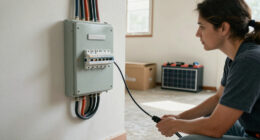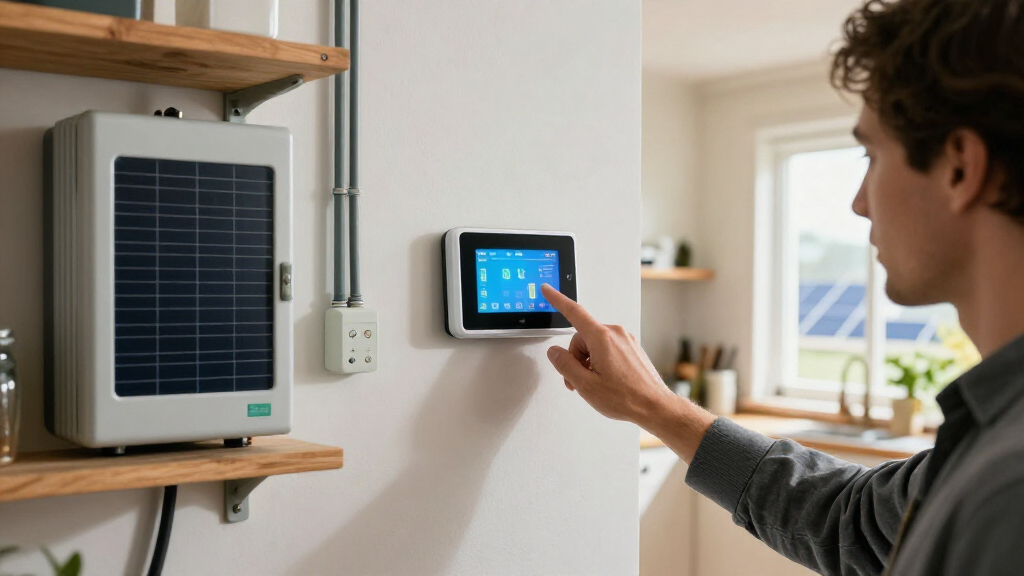
Smart home energy monitors reveal where household electricity goes, but the right choice depends on whether you want whole-panel data, circuit-by-circuit detail, or readings from individual appliances. I rank the Emporia Vue 3 Home Energy Monitor as the best overall for its broad monitoring approach and the range of sensor bundles available. The Refoss EM16P stands out for open API and Home Assistant integration, while Eve Energy Matter Smart Outlet suits buyers focused on tracking a single plugged-in device. The main tradeoff is between panel installation and detailed circuit coverage versus simpler plug-in monitoring with a narrower view. Read on for the full comparison and guidance on matching a monitor to your panel, smart-home setup, and energy goals.

Get backup power and energy gear delivered free with Prime
- Fast, free delivery on millions of items
- Prime Video, Amazon Music and more included
- Member-only deals all year
Key Takeaways
- Emporia Vue 3 leads as the most adaptable starting point in this lineup, with versions ranging from a base monitor to bundles with 8 or 16 circuit sensors.
- More circuit sensors do not automatically mean a better fit: panel space, circuit layout, and installation compatibility determine whether 16- or 18-circuit coverage is useful.
- Refoss EM16P is the clearest choice for buyers who value open API access and Home Assistant integration over a more closed app-first setup.
- The lineup spans two different jobs: panel monitors such as Siemens Inhab track household or branch-circuit usage, while Eve and Emporia plug-in products meter selected appliances.
- Bundles can reduce setup gaps: the Emporia 16-sensor and 4-smart-plug bundle pairs panel-level monitoring with appliance-level readings, while simpler kits avoid buying sensors you may not use.
| Emporia Vue 3 Home Energy Monitor |  | Best Overall | Model: EMV3A-2P-WH | System compatibility: Single phase, single-split phase, and 2-wire; some 3-wire and 3-phase setups need an additional sensor | Sensor accuracy: ±2% | VIEW LATEST PRICE | See Our Full Breakdown |
| Emporia Vue 3 Home Energy Monitor with 16 Circuit Sensors |  | Best for Whole-Panel Circuit Detail | Model: EMV3A-2P-16 | Included branch sensors: 16, rated 50A each | Supported systems: Single phase, single-split phase, and 2-wire; some 3-wire and 3-phase 4-wire Wye systems require an additional 200A sensor | VIEW LATEST PRICE | See Our Full Breakdown |
| Leviton LWHEM-2R Whole Home Energy Monitor with One Pair of Current Transformers |  | Best for Leviton Smart Breaker Homes | Model: LWHEM-2R | Connectivity: Wi-Fi | Included current transformers: 1 pair | VIEW LATEST PRICE | See Our Full Breakdown |
| Emporia Vue 3 Home Energy Monitor with 8 Circuit Sensors |  | Best Middle Ground for Circuit Monitoring | Model: EMV3A-2P-8 | Circuit sensors: 8 | Supported systems: Single phase, single-split phase, and 2-wire; select 3-wire and 3-phase systems need an additional sensor | VIEW LATEST PRICE | See Our Full Breakdown |
| Square D WISEREMPV Energy Monitor System, White |  | Best for Appliance Alerts and Smart-Home Links | Color: White | Remote monitoring app: Sense mobile app | Energy tracking: Live usage by appliance | VIEW LATEST PRICE | See Our Full Breakdown |
| Emporia Energy Monitoring Smart Plug, 4-Pack |  | Best for Plug-In Appliance Tracking | Model: EMSO1-4 | Pack size: 4 plugs | Operating voltage: 120 V | VIEW LATEST PRICE | See Our Full Breakdown |
| Meross Smart Home Energy Monitor with 16 Branch Circuit Sensors |  | Best for Local Circuit Data and Long History | Model: EM16 | Main circuit capacity: 2 circuits, up to 200A | Branch circuit capacity: 16 circuits, up to 60A | VIEW LATEST PRICE | See Our Full Breakdown |
| Smart Home Energy Monitor with 16 Circuit Sensors |  | Best for Time-of-Use and Solar Tracking | Model: SEM-Meter | Circuit sensors: 16 × 50A | Connectivity: 2.4 GHz Wi-Fi | VIEW LATEST PRICE | See Our Full Breakdown |
| Refoss EM16P Smart Home Energy Monitor with Open API and Home Assistant Integration |  | Best for Cloud-Free Home Assistant Control | Model: EM16P | Connectivity and interfaces: Built-in Web UI, Open API, and MQTT | Cloud requirement: None | VIEW LATEST PRICE | See Our Full Breakdown |
| Eve Energy Strip Smart Power Strip with 3 Outlets and Energy Metering |  | Best for Apple Home Desk Setups | Model: 10EBA4101 | Outlets: 3 independently switched outlets | Voltage and maximum current: 120 V; 15 A | VIEW LATEST PRICE | See Our Full Breakdown |
| Emporia Energy Monitor with 16 Sensors and 4 Smart Plugs Bundle |  | Best for Whole-Home Monitoring Plus Plug Control | Included components: 1 energy monitor, 16 sensors, 4 smart plugs | Connectivity: Wi-Fi | App compatibility: iOS and Android | VIEW LATEST PRICE | See Our Full Breakdown |
| Siemens Inhab Smart Home Energy Monitor with 16 Circuit Sensors and 2 Main Sensors |  | Best for Main-Service and Circuit Visibility | Model: INHEM1216 | Main sensors: 2 × 200A CTs | Circuit sensors: 16 × 50A CTs | VIEW LATEST PRICE | See Our Full Breakdown |
| Eve Energy Matter Smart Outlet with Power Meter |  | Best for Local, Outlet-Level Monitoring | Model: 20ECN4101 | Number of outlets: 2, independently controlled | Operating voltage: 120 V AC | VIEW LATEST PRICE | See Our Full Breakdown |
| Meross Smart Home Energy Monitor with 18-Circuit Monitoring | | Best for Home Assistant and Local Data | Model: EM16 | Circuit monitoring: 2 main circuits (200A) and 16 branch circuits (60A) | Accuracy: ±2% | VIEW LATEST PRICE | See Our Full Breakdown |
| smart home energy monitor | Model | Connectivity |
|---|---|---|
| Emporia Vue 3 Home Energy Moni | EMV3A-2P-WH | 2.4 GHz Wi-Fi with internet connection |
| Emporia Vue 3 Home Energy Moni | EMV3A-2P-16 | 2.4 GHz Wi-Fi with internet connection |
| Leviton LWHEM-2R Whole Home En | LWHEM-2R | Wi-Fi |
| Emporia Vue 3 Home Energy Moni | EMV3A-2P-8 | 2.4 GHz Wi-Fi with internet connection |
| Square D WISEREMPV Energy Moni | — | — |
| Emporia Energy Monitoring Smar | EMSO1-4 | 2.4 GHz Wi-Fi |
| Meross Smart Home Energy Monit | EM16 | — |
| Smart Home Energy Monitor with | SEM-Meter | 2.4 GHz Wi-Fi |
| Refoss EM16P Smart Home Energy | EM16P | — |
| Eve Energy Strip Smart Power S | 10EBA4101 | Wi-Fi |
| Emporia Energy Monitor with 16 | — | Wi-Fi |
| Siemens Inhab Smart Home Energ | INHEM1216 | Wi-Fi and mobile app |
| Eve Energy Matter Smart Outlet | 20ECN4101 | Matter and Thread |
| Meross Smart Home Energy Monit | EM16 | — |
More Details on Our Top Picks
Emporia Vue 3 Home Energy Monitor
I’d make the standard Emporia Vue 3 my flexible starting point for whole-home monitoring. It tracks household use, solar production, and net metering, then adds circuit-level detail if you buy optional branch sensors. That lets buyers begin with the main energy picture rather than committing to a full panel of sensors immediately. Compared with the Vue 3 with 8 Circuit Sensors, this version offers less out-of-box appliance detail, but it can grow to 16 optional sensors instead of stopping at a smaller included set. Its ±2% accuracy and UL and CE listings add useful confidence, while the app supports alerts and energy-management automation. The tradeoff is panel installation and dependence on 2.4 GHz Wi-Fi and internet; one-second data is also short-lived, not a long-term history.
Pros:- Tracks whole-home electricity use, solar production, and net metering.
- Supports up to 16 optional branch sensors for circuit-level monitoring.
- App offers real-time reporting, alerts, and energy-management automation.
- UL and CE listed, with stated ±2% sensor accuracy.
Cons:- Branch sensors for appliance-level tracking are sold separately.
- Requires a compatible circuit-panel installation, 2.4 GHz Wi-Fi, and internet.
- One-second data is retained for only three hours and is available while the app is open.
Best for: Homeowners who want whole-home and solar monitoring now, with the option to add selected circuit sensors later.
Not ideal for: Buyers who want appliance-level circuit data immediately without purchasing separate sensors, or who need monitoring that works without internet.
- Model:EMV3A-2P-WH
- System compatibility:Single phase, single-split phase, and 2-wire; some 3-wire and 3-phase setups need an additional sensor
- Sensor accuracy:±2%
- Connectivity:2.4 GHz Wi-Fi with internet connection
- Optional branch sensor capacity:Up to 16 50A sensors
- Data retention:1-second data: 3 hours; 1-minute data: 7 days; 1-hour data: indefinitely
- Certifications:UL Listed and CE Listed
- Warranty:1 year
Our verdict“Choose this Vue 3 if you want a capable whole-home monitor that can expand gradually, and skip it if you expect circuit-by-circuit tracking in the box.”
Emporia Vue 3 Home Energy Monitor with 16 Circuit Sensors
This bundle is the clearest choice for buyers who want to see many circuits from the outset: it pairs whole-home monitoring with 16 included 50A branch sensors. That makes it more ready for appliance-level investigation than the standard Emporia Vue 3, where branch sensors are an added purchase. I’d favor it for a home with several major loads to track, such as HVAC, water heating, and cooking circuits, provided the panel has room and the wiring suits the sensors. The app adds live reporting, alerts, and automation, while stated accuracy is ±2%. The tradeoff is a more involved panel installation and potential unused sensors if you only care about a few circuits. Like the other Vue 3 models, it relies on 2.4 GHz Wi-Fi and internet; certain 3-wire and three-phase systems also need an extra sensor.
Pros:- Includes 16 50A branch circuit sensors for monitoring individual loads.
- Tracks whole-home use, solar production, and net metering.
- App supports live reporting, notifications, and energy-management automation.
- Stated ±2% measurement accuracy and UL and CE listings.
Cons:- Panel installation requires working access to the electrical circuit panel.
- Requires 2.4 GHz Wi-Fi and an internet connection.
- Some 3-wire and three-phase configurations need an additional 200A sensor.
Best for: Homeowners who want to monitor many individual circuits, alongside whole-home use and solar or net metering, without sourcing branch sensors separately.
Not ideal for: Renters, people without access to their electrical panel, or households that only need a whole-home reading and would leave most included sensors unused.
- Model:EMV3A-2P-16
- Included branch sensors:16, rated 50A each
- Supported systems:Single phase, single-split phase, and 2-wire; some 3-wire and 3-phase 4-wire Wye systems require an additional 200A sensor
- Measurement accuracy:±2%
- Connectivity:2.4 GHz Wi-Fi with internet connection
- Data retention:1-second data: 3 hours; 1-minute data: 7 days; 1-hour data: indefinitely
- Certifications:UL Listed and CE Listed
- Warranty:1 year
Our verdict“Pick this bundle over the standard Vue 3 when you have many circuits to identify and want the 16 sensors included from the start.”
Leviton LWHEM-2R Whole Home Energy Monitor with One Pair of Current Transformers
The Leviton LWHEM-2R is a more ecosystem-focused pick than the Emporia Vue 3 models. It monitors household energy consumption and production through Wi-Fi and the My Leviton app, but its strongest distinction is what it can do alongside Leviton 2nd Gen Smart Circuit Breakers: remote breaker control, schedules, and alerts. With a compatible transfer switch and backup power system, it can also shed selected loads during an outage, which gives it a role beyond energy visibility. The included setup has one pair of current transformers, with inputs for up to three pairs, so it is not as immediately circuit-focused as the Emporia package with 16 sensors. I’d choose Leviton when compatible breakers are already part of the plan; buyers starting from scratch may find Emporia’s sensor bundles more direct. Advanced controls depend on compatible hardware.
Pros:- Monitors real-time household energy consumption and production.
- Works with compatible Leviton smart breakers for remote control, schedules, and alerts.
- Can support automatic load shedding with a compatible transfer switch and backup power system.
- Includes a two-year limited warranty.
Cons:- Breaker control features require compatible Leviton 2nd Gen Smart Circuit Breakers.
- Automatic load shedding needs a compatible transfer switch and backup power system.
- Includes one pair of current transformers, fewer than the 16 branch sensors supplied with the Emporia bundle.
Best for: Homeowners building around Leviton 2nd Gen Smart Circuit Breakers who want energy monitoring tied to breaker schedules, alerts, and backup-power load control.
Not ideal for: Buyers who want broad circuit-by-circuit monitoring without adding compatible Leviton breakers or backup-power equipment.
- Model:LWHEM-2R
- Connectivity:Wi-Fi
- Included current transformers:1 pair
- Optional current transformer inputs:Up to 3 pairs
- App:My Leviton
- Compatible devices:Leviton 2nd Gen Smart Circuit Breakers
- Warranty:Two-year limited warranty
- Included components:Monitor, 1 pair of current transformers, installation accessories, and guide
Our verdict“Choose Leviton if compatible smart breakers and backup-power controls matter more than getting a large set of circuit sensors in the box.”
Emporia Vue 3 Home Energy Monitor with 8 Circuit Sensors
For buyers who want more than a whole-home reading but do not need 16 monitored circuits, this 8-sensor Vue 3 bundle strikes a practical middle ground. It includes sensors for selected circuits, so you can start investigating larger household loads without buying the 16-sensor Emporia bundle. It still tracks whole-home electricity use plus solar or net metering, and the same app supports live data, alerts, and energy-management automation. That makes it a better fit than the standard Vue 3 for immediate circuit detail, while leaving more room for expansion than a fixed, narrowly focused setup. The tradeoffs are the same core installation and connectivity demands: access to the panel, 2.4 GHz Wi-Fi, and internet. Some electrical configurations require an additional sensor, and the brief retention of one-second data limits its use as a fine-grained long-term record.
Pros:- Includes eight circuit sensors for immediate monitoring of selected loads.
- Tracks whole-home use, solar production, and net metering.
- Offers app and web access, live energy data, notifications, and automation.
- UL and CE listed, with stated ±2% measurement accuracy.
Cons:- Eight sensors may not cover a home with many circuits of interest.
- Requires panel access, 2.4 GHz Wi-Fi, and an internet connection.
- Some 3-wire and three-phase setups require an additional sensor.
Best for: Homeowners who want to track a handful of high-use circuits, such as HVAC or a water heater, plus whole-home and solar data.
Not ideal for: People who need detailed monitoring across many circuits immediately, or who cannot access the electrical panel or provide 2.4 GHz Wi-Fi.
- Model:EMV3A-2P-8
- Circuit sensors:8
- Supported systems:Single phase, single-split phase, and 2-wire; select 3-wire and 3-phase systems need an additional sensor
- Measurement accuracy:±2%
- Connectivity:2.4 GHz Wi-Fi with internet connection
- Compatible interfaces:iPhone, Android, and web app
- Certifications:UL and CE listed
- Warranty:1 year
Our verdict“Choose the 8-sensor Vue 3 if you want circuit-level insight for a select group of loads without opting for the 16-sensor bundle.”
Square D WISEREMPV Energy Monitor System, White
The Square D WISEREMPV takes a different route from the panel-and-branch-sensor approach of the Emporia Vue 3: its supplied description centers on the Sense mobile app, appliance activity, alerts, and energy budgets. That makes it a candidate for people who want to spot appliance behavior and connect energy awareness to devices such as Alexa, Google Home, Philips Hue, TP-Link, or WeMo. Compared with the Emporia 8- and 16-sensor bundles, the listed information does not specify included circuit sensors, measurement accuracy, or supported electrical configurations, so I would not choose it when those details are central to the buying decision. The app is required for remote monitoring, and the available product data offers less clarity about installation and panel-level coverage than the Emporia options. Its appeal is the alert-and-integration angle, not a clearly documented circuit count.
Pros:- Sense app supports live energy use by appliance.
- Customizable alerts can notify users about appliance activity.
- Includes budgeting features for energy expenditures.
- Lists integrations with Alexa, Google Home, Philips Hue, TP-Link, and WeMo.
Cons:- Remote monitoring requires the Sense mobile app.
- Provided product data does not specify sensor count or measurement accuracy.
- Provided product data does not identify supported electrical configurations.
Best for: Smart-home users who prioritize appliance activity alerts, energy budgets, and links with listed connected-home platforms.
Not ideal for: Buyers who need confirmed circuit-sensor counts, stated measurement accuracy, or clearly specified electrical-system compatibility before choosing a panel monitor.
- Color:White
- Remote monitoring app:Sense mobile app
- Energy tracking:Live usage by appliance
- Alerts:Customizable appliance activity alerts
- Energy management:Budgeting features for energy expenditures
- Smart home integrations:Amazon Alexa, Google Home, Philips Hue, TP-Link, and WeMo
Our verdict“Consider this Square D option if appliance alerts and smart-home integrations lead your priorities, but favor an Emporia Vue 3 when sensor coverage and system specifications need to be explicit.”
Emporia Energy Monitoring Smart Plug, 4-Pack
Four plug-in meters make this Emporia set a simple way to see how much individual lamps, fans, or humidifiers use without opening an electrical panel. In the Emporia app, I can check energy use, switch compatible devices remotely, and schedule on-off control; Alexa and Google Assistant add voice control. Compared with the Emporia Vue 3 panel monitor, these plugs are easier to place and focus on specific outlets, but they cannot show whole-home or circuit-level consumption. The tradeoff is capacity: each plug supports a 10A continuous load, so this is not the pick for high-draw appliances. A 2.4 GHz Wi-Fi connection is also required, which may rule it out on networks configured for 5 GHz only.
Pros:- Tracks energy use for four separately connected appliances.
- Supports remote control and schedules through the Emporia app.
- Works with Amazon Alexa and Google Assistant.
- Push-button control is available directly on each plug.
Cons:- Requires 2.4 GHz Wi-Fi and does not support 5 GHz connections.
- The 10A continuous-load limit excludes many high-draw appliances.
- Provides outlet-level readings rather than whole-home or branch-circuit monitoring.
Best for: Renters or homeowners who want to track and schedule several modest-load 120V devices without installing sensors in a circuit panel.
Not ideal for: Buyers seeking whole-home or circuit-by-circuit data, or anyone who needs to monitor an appliance drawing more than 10A continuously.
- Model:EMSO1-4
- Pack size:4 plugs
- Operating voltage:120 V
- Continuous load:10 A
- Peak load:15 A for up to 1 hour per day
- Connectivity:2.4 GHz Wi-Fi
- Control and voice compatibility:App, remote, touch, push button; Amazon Alexa and Google Assistant
- Dimensions:1.97 × 3.31 × 1.5 inches
- Certifications and warranty:ETL, FCC; 1 year
Our verdict“Choose this four-pack for app-based tracking and control of everyday plug-in devices, not for a whole-home energy picture.”
Meross Smart Home Energy Monitor with 16 Branch Circuit Sensors
The Meross EM16 is a strong fit for buyers who want whole-home and branch-circuit readings while keeping data local. It covers two main circuits up to 200A and as many as 16 branch circuits up to 60A, then adds usage charts, alerts, exportable reports, and up to five years of stored data without a subscription. Home Assistant and Open API support make it more flexible for automation than the Smart Home Energy Monitor with 16 Circuit Sensors, whose local setup depends on MQTT and Home Assistant. The Meross also reports ±1% measurement accuracy. Its main limitation is electrical compatibility: it does not support Delta systems, and fitting clamp sensors inside a panel calls for a compatible setup and suitable installation skills.
Pros:- Monitors two main circuits and up to 16 branch circuits.
- Stores data for up to five years and provides charts, alerts, and hourly exports.
- Offers Home Assistant, Open API, and web control with no subscription required.
- Measures voltage, current, power, and power factor with stated ±1% accuracy.
Cons:- Does not support Delta electrical systems.
- Installation requires a compatible circuit panel and work inside it.
- Its many configuration and integration options may be more than a basic monitoring setup needs.
Best for: Home Assistant users and technically comfortable homeowners who want local circuit monitoring, long-term records, and alerts without cloud dependence.
Not ideal for: Households with a Delta electrical system or buyers who want plug-in monitoring without accessing the circuit panel.
- Model:EM16
- Main circuit capacity:2 circuits, up to 200A
- Branch circuit capacity:16 circuits, up to 60A
- Measurement accuracy:±1%
- Supported electrical systems:Single-phase 2-wire, split-phase 3-wire, and 3-phase 4-wire Wye with earthed neutral; no Delta
- Data storage:Up to 5 years
- Integrations and control:Home Assistant, Open API, Wi-Fi, and web control
- Dimensions and weight:4.5 × 3.48 × 1.1 inches; 3.19 lb
- Certification and warranty:ETL-certified; compliant with UL 61010 testing standard; 2 years
Our verdict“Pick the Meross EM16 if local access, long data retention, and broad branch-circuit coverage matter more than simple installation.”
Smart Home Energy Monitor with 16 Circuit Sensors
This 16-sensor monitor suits buyers who want to connect circuit readings to electricity costs, time-of-use rates, or solar production. Its app reports real-time usage and estimated costs, while MQTT allows local operation with Home Assistant. Compared with the Meross EM16, which includes Open API and web control alongside Home Assistant support, this model is a more focused choice for rate and solar tracking; its hourly exports are retained for 90 days, while daily, monthly, and yearly exports remain available permanently. The costs of that focus are setup and compatibility: installation requires panel access, local MQTT operation depends on a Home Assistant setup, and panels accessible only at the busbars may need separate flexible sensors. It also does not support Delta three-phase systems.
Pros:- Includes 16 sensors for circuit-level monitoring.
- Tracks real-time use and estimated costs with customizable time-of-use rate templates.
- Supports solar monitoring and local MQTT operation with Home Assistant.
- Keeps daily, monthly, and yearly exports permanently.
Cons:- Installation requires access to the circuit panel; busbar-only access may call for separate flexible sensors.
- Local operation requires a Home Assistant setup with MQTT.
- Does not support Delta three-phase electrical systems.
Best for: Homeowners with time-of-use electricity rates or solar who already use Home Assistant and want to track circuit-level consumption and estimated costs.
Not ideal for: Buyers who want a simple plug-in monitor, do not have Home Assistant for local MQTT, or have a Delta three-phase electrical system.
- Model:SEM-Meter
- Circuit sensors:16 × 50A
- Connectivity:2.4 GHz Wi-Fi
- Accuracy:1%
- Electrical compatibility:Single-phase up to 240VAC line-neutral, split-phase 120/240VAC, and three-phase up to 415Y/240VAC; no Delta
- Smart home integration:Home Assistant via MQTT
- Data history:Hourly exports retained 90 days; daily, monthly, and yearly exports retained permanently
- Dimensions and weight:3.1 × 1.2 × 4.18 inches; 4.05 lb
- Warranty:1 year
Our verdict“Choose this monitor for rate-aware and solar-related circuit tracking if you can handle panel installation and Home Assistant setup.”
Refoss EM16P Smart Home Energy Monitor with Open API and Home Assistant Integration
The Refoss EM16P is aimed at owners who want local access without relying on a vendor cloud. Its built-in web interface, Open API, and MQTT provide several ways to work with energy data, while native Home Assistant integration supports circuit alerts and solar-use automation. Like the Meross EM16, it can monitor two main circuits and up to 16 branches, with stated ±1% accuracy that drops to ±2% at low current. That makes it a compelling local-control alternative, though the Meross specifies data retention of up to five years while the Refoss description does not state a retention period. Both require panel installation, so neither is as approachable as the Emporia Smart Plug 4-Pack. The Refoss is best for automation-minded buyers prepared to work with circuit-panel sensors.
Pros:- Provides local access through its web interface, Open API, and MQTT without a cloud requirement.
- Offers native Home Assistant integration and solar-use automation.
- Monitors two main circuits and up to 16 branch circuits.
- Uses clamp-on sensors and carries ETL certification.
Cons:- Requires installation in a home circuit panel.
- Measurement accuracy is stated as ±2% at low current.
- The supplied product data does not specify a data-retention period.
Best for: Home Assistant users who want cloud-free access through a web interface, API, or MQTT and plan to automate solar use or circuit alerts.
Not ideal for: Renters, buyers seeking outlet-only monitoring, or anyone who needs the stated accuracy to remain ±1% at low current.
- Model:EM16P
- Connectivity and interfaces:Built-in Web UI, Open API, and MQTT
- Cloud requirement:None
- Main circuit sensors:2 sensors, 2–200A each
- Branch circuit sensors:Up to 16 sensors, 1–60A each
- Measurement accuracy:±1%; ±2% at low current
- Installation:Clamp-on circuit-panel sensors
- Dimensions and weight:4.5 × 3.5 × 1.1 inches; 4.24 lb
- Certification and warranty:ETL certified; compliant with UL 61010; 2 years
Our verdict“Choose the Refoss EM16P for cloud-free Home Assistant and API access, provided panel installation and reduced low-current accuracy suit your setup.”
Eve Energy Strip Smart Power Strip with 3 Outlets and Energy Metering
The Eve Energy Strip turns energy monitoring into a practical three-outlet control point: each outlet switches independently, so a buyer can schedule or shut off separate desk or entertainment devices and track their power use. Onboard buttons offer control without opening the app, and built-in surge, overcurrent, and overvoltage protection add safeguards for connected equipment. Compared with the Emporia Smart Plug 4-Pack, the Eve consolidates three outlets into one strip and supports up to 15A overall, but it is tied to Apple Home and requires a current iPhone or iPad. It also measures only devices connected to its outlets; the Meross EM16 is the better choice for circuit-level and whole-home data. Its 120V Type B format limits where it can be used.
Pros:- Three independently switched outlets allow separate control of connected devices.
- Tracks power consumption and supports schedules through Siri or the Eve app.
- Onboard buttons provide direct outlet control.
- Includes surge, overcurrent, and overvoltage protection.
Cons:- Requires an iPhone or iPad with the latest iOS or iPadOS.
- Limited to 120V power and Type B sockets.
- Monitors devices on the strip rather than whole-home or branch-circuit energy use.
Best for: Apple Home households that want to meter and independently schedule several desk, media, or other 120V devices from one strip.
Not ideal for: Android-only households, buyers seeking whole-home circuit monitoring, or anyone needing a plug format other than 120V Type B.
- Model:10EBA4101
- Outlets:3 independently switched outlets
- Voltage and maximum current:120 V; 15 A
- Maximum power:1,800 W
- Connectivity:Wi-Fi
- Compatibility:Apple Home; requires an iPhone or iPad with the latest iOS or iPadOS
- Cable length:6.3 ft
- Dimensions and weight:10.8 × 2.5 inches; 1.7 lb
- Protection and warranty:Surge, overcurrent, and overvoltage protection; 2 years
Our verdict“Pick the Eve strip if you want outlet-level energy readings and independent control in an Apple Home setup, rather than panel-wide monitoring.”
Emporia Energy Monitor with 16 Sensors and 4 Smart Plugs Bundle
I’d choose this bundle when the goal is to connect panel-level energy data with control of everyday plug-in devices. The 16 circuit sensors show where household electricity is going, while the four included smart plugs let you monitor and schedule selected appliances without buying a separate plug pack. It also supports solar net metering, a useful distinction from the Eve Energy outlet, which measures power at its outlets rather than across a home’s circuits. The tradeoff is a more involved setup: the sensors wire into the main electrical panel, and remote access and stored data depend on cloud connectivity. Compared with the Siemens Inhab, this package adds plug control but does not list two dedicated 200A main sensors in its included components.
Pros:- Tracks usage across up to 16 individual circuits.
- Includes four Wi-Fi smart plugs for device monitoring and scheduling.
- Supports solar net metering.
- Works with the Emporia app on iOS and Android, plus Alexa.
Cons:- Panel installation involves wiring sensors and may require an electrician.
- Cloud connectivity is required for data storage and remote access.
- This bundle is limited to 16 circuit sensors.
Best for: Households that want circuit-level tracking, solar net metering, and a few remotely controlled appliances in one package.
Not ideal for: Buyers who want local-only data access or prefer not to install sensors inside an electrical panel.
- Included components:1 energy monitor, 16 sensors, 4 smart plugs
- Connectivity:Wi-Fi
- App compatibility:iOS and Android
- Voice compatibility:Alexa
- Monitoring:Real-time energy usage
- Solar feature:Solar net metering
- Data:Cloud storage
Our verdict“Choose this Emporia bundle if you want panel-level tracking paired with four smart plugs, and skip it if cloud dependence or panel wiring is a deal-breaker.”
Siemens Inhab Smart Home Energy Monitor with 16 Circuit Sensors and 2 Main Sensors
The Siemens Inhab is the more explicit choice for buyers who want both whole-home readings and detailed branch-circuit data: its kit specifies two 200A main sensors and 16 sensors for individual circuits. In the app, real-time and historical data can support alerts, peak-demand management, and excess-solar management. That makes it a stronger fit for someone who wants to connect household usage patterns with service-level or solar monitoring, rather than simply control a handful of devices as with the Emporia bundle. The cost of that panel-level view is installation inside a compatible electrical panel; it is not a plug-in monitor. Its stated region is limited to the United States and Canada, and buyers seeking local Home Assistant access may prefer the Meross EM16, which specifically lists that support.
Pros:- Includes two 200A main sensors and 16 50A circuit sensors.
- Tracks whole-home use and generation alongside up to 16 branch circuits.
- App offers real-time and historical data with customizable alerts.
- Includes peak-demand and excess-solar management features.
Cons:- Requires installation in an electrical panel.
- Supported regions are limited to the United States and Canada.
Best for: Homeowners in the United States or Canada who want dedicated main-service readings, up to 16 circuit readings, and app-based demand or solar management.
Not ideal for: Renters, buyers outside the United States and Canada, or anyone looking for a plug-in monitor or listed Home Assistant integration.
- Model:INHEM1216
- Main sensors:2 × 200A CTs
- Circuit sensors:16 × 50A CTs
- Circuit capacity:Up to 16 branch circuits
- Connectivity:Wi-Fi and mobile app
- Supported regions:United States and Canada
- Certifications:CE marked; UL Listed in the United States and Canada
- Dimensions:1.1 × 5.71 × 2.76 in
Our verdict“Pick the Siemens Inhab for specified main-service and branch-circuit coverage, provided your location and electrical panel are compatible.”
Eve Energy Matter Smart Outlet with Power Meter
The Eve Energy is not a substitute for a panel-based monitor: it measures power at two individually controlled outlets, not across household circuits. That narrower scope is an advantage if you mainly want to track and automate a specific appliance without opening your electrical panel. Its Matter and Thread support connects it with compatible Apple Home, Alexa, Google Home, or SmartThings setups, and local communication works without an Eve cloud account or tracking. Compared with the Emporia bundle, it offers fewer monitoring points but avoids panel wiring; compared with the Eve Energy Strip, it provides two outlets in a compact outlet format rather than three strip outlets. The key limitation is platform setup: you need a compatible hub or Thread router and a supported mobile device.
Pros:- Measures power and controls two outlets independently.
- Matter and Thread support works with several major smart-home platforms.
- Local communication does not require an Eve cloud account or tracking.
- Supports app, voice, and remote control.
Cons:- Does not provide whole-home or electrical-panel monitoring.
- Requires a compatible platform hub or Thread router.
- Requires a supported iOS, iPadOS, or Android device.
Best for: Smart-home users who want power readings and independent control for two plug-in devices, with local Matter-based operation.
Not ideal for: Buyers who need whole-home or circuit-level energy data, or who lack a compatible hub or Thread router.
- Model:20ECN4101
- Number of outlets:2, independently controlled
- Operating voltage:120 V AC
- Maximum wattage:1800 W
- Connectivity:Matter and Thread
- Compatible platforms:Apple Home, Amazon Alexa, Google Home, Samsung SmartThings
- Required hub:Compatible platform hub or Thread router
- Certification:UL-certified
Our verdict“Choose the Eve Energy for local monitoring and control of two specific devices, not for a whole-home energy picture.”
Meross Smart Home Energy Monitor with 18-Circuit Monitoring
For buyers who want energy data they can use beyond a manufacturer’s app, the Meross EM16 stands out with Home Assistant support, an Open API, and local data access. It monitors two 200A main circuits and up to 16 branch circuits, giving it broad panel coverage comparable to the Siemens Inhab. The Meross listing also specifies up to five years of data storage, exportable hourly reports, and ±2% accuracy, details that suit hands-on energy tracking and automation. Its clamp-on sensors and CT reading inversion are intended to simplify setup, though this remains an electrical-panel installation—not an outlet monitor like the Eve Energy. Compatibility needs attention: it supports several listed single- and three-phase systems but explicitly excludes Delta, and three-phase use requires a four-wire Wye system with an earthed neutral.
Pros:- Monitors two 200A main circuits and up to 16 branch circuits.
- Supports Home Assistant, Open API, and local data access without a subscription.
- Stores up to five years of data and offers exportable hourly reports.
- Clamp-on installation and CT reading inversion support setup.
Cons:- Does not support Delta electrical systems.
- Three-phase installations must use a four-wire Wye system with an earthed neutral.
- Panel installation may be unsuitable for buyers seeking a simple plug-in monitor.
Best for: Home Assistant users and technically confident homeowners who want local access, long-term history, and monitoring across main and branch circuits.
Not ideal for: Buyers with a Delta electrical system, an unsupported three-phase setup, or no appetite for panel-based installation.
- Model:EM16
- Circuit monitoring:2 main circuits (200A) and 16 branch circuits (60A)
- Accuracy:±2%
- Supported electrical systems:Single-phase 2-wire, split-phase 3-wire, and 3-phase 4-wire Wye with earthed neutral; no Delta
- Home Assistant:Supported
- Data storage:Up to 5 years
- Installation:Clamp-on
- Certifications:ETL-certified; compliant with UL 61010 testing standard
- Warranty:2 years
Our verdict“Choose the Meross EM16 if local Home Assistant data and broad circuit coverage matter more than universal electrical-system compatibility.”
How We Picked
I ranked these products around how well they answer the main buyer question: do you need a view of the whole electrical panel, individual branch circuits, or just selected plug-in devices? I weighed the monitoring scope, sensor count and included accessories, smart-home integration, usability, and the amount of installation or setup a buyer may need. I also treated product variations as meaningful: the Emporia Vue 3 base unit and its 8- and 16-sensor versions suit different coverage needs, while a smart plug is not a substitute for a panel monitor.
The ranking favors useful coverage and flexibility for a typical household, then gives distinct credit to products that serve a clearer specialty, such as open integration or appliance-level measurement. A higher sensor count did not win by itself; extra sensors help only if they match the home’s circuits and panel. I also considered the tradeoff between broader insight and setup demands, so plug-in options remain relevant for renters or targeted appliance tracking even though they cannot map an entire home.
Factors to Consider When Choosing Smart Home Energy Monitors
Before choosing a model, decide what question you want the data to answer. A monitor that tracks your panel can reveal broad household patterns, while a plug-in meter helps isolate one appliance. These checks can prevent paying for sensors or installation features that do not fit your home.
Choose the Monitoring Scope Before the Sensor Count
Start by separating whole-home monitoring from appliance monitoring. A panel-based system can show total usage and, with branch sensors, give a more detailed picture of selected circuits; a smart plug only reports the device connected to it. Buyers sometimes compare sensor counts as if they were directly interchangeable, but a circuit sensor cannot measure every appliance plugged into a shared circuit individually. If your goal is to find a high-use appliance, a plug-in meter may answer that question more clearly. If you want broad household patterns or circuit-level visibility, a panel system is the better starting point. Choose coverage based on the decisions you plan to make, not the largest number printed in a listing.
Check Panel Compatibility and Installation Needs
Panel monitors require access to the electrical panel, and their fit depends on its layout, available space, and the circuits you want to monitor. A product listing’s sensor count does not confirm that every sensor will fit neatly in your particular panel. Before buying, verify the manufacturer’s compatibility guidance and identify whether your panel and circuits match the system’s requirements. Many homeowners may prefer a qualified electrician for panel work, especially if they are unfamiliar with electrical equipment. A plug-in monitor sidesteps panel access but only covers the connected load. Treat installation effort as part of the product choice rather than an afterthought.
Match Sensor Coverage to How Your Home Is Wired
More branch sensors can make it easier to separate major loads, but the ideal count depends on the number and arrangement of circuits that matter to you. Some circuits supply multiple rooms or appliances, so a reading may not identify the exact device responsible for a change. Large homes or buyers tracking many dedicated loads may benefit from a 16- or 18-circuit setup, while a smaller monitoring plan may call for fewer sensors. Check whether the kit includes the sensor count you need or whether the base model requires add-ons. Avoid buying extra sensors solely for future flexibility if you have no likely use for them. A well-matched partial view can be more useful than a large sensor set installed without a clear plan.
Decide How Much Smart-Home Integration Matters
Energy data is more useful when it fits the apps and automations you already use. If you rely on Home Assistant or want access through an open API, prioritize documented integration and confirm which data and controls are exposed. Other buyers may prefer a straightforward manufacturer app and have little need to connect the monitor to a wider system. Matter support on a smart outlet can make it easier to include that outlet in a compatible smart home, but it does not turn a plug-in meter into a panel monitor. Check the exact product and hub requirements instead of assuming that devices from one brand share identical integrations. The right choice depends on whether you value easy setup, flexible data access, or cross-platform control most.
Consider Whether a Bundle Fits Your Monitoring Plan
Bundles can combine panel sensors and smart plugs, giving you different views of household consumption without assembling a system piece by piece. That mix helps when you want circuit context alongside a direct reading from a specific appliance. It can be unnecessary if you only need to track one plug-in load or if your existing setup already covers the relevant circuits. Compare included components with your actual plan, including how many monitored outlets you expect to use and whether the panel sensors suit your wiring. A bundle is not automatically better value when some components will sit unused. Pick the simplest package that covers the measurements you will act on.
Set Expectations for What Energy Data Can Tell You
A monitor can show usage patterns, but the detail available depends on where sensors are placed and how loads share circuits. Whole-home totals help identify when consumption rises; branch readings can narrow the source, while a plug-in meter can isolate one connected device. None of these views automatically explains every change or guarantees savings. Think about what follow-up action you would take if a reading is high, such as changing a schedule or checking a particular appliance. If you want device-level detail, confirm that the measurement method can actually isolate that device. Buying with a specific question in mind makes the data easier to interpret and reduces the chance of paying for coverage you will not use.
Frequently Asked Questions
Can a plug-in energy monitor replace a whole-home panel monitor?
No. A plug-in monitor measures the appliance connected to that outlet, so it can help answer questions about one device but cannot report the whole home’s electricity use. A panel monitor measures at the electrical panel and can provide total or branch-circuit data depending on its sensors. If you want to identify a specific appliance, a plug-in unit may be the simpler choice. If you want household-wide patterns, panel monitoring is the more suitable type. Some homes may benefit from using both approaches for different questions.
Should I choose an 8-, 16-, or 18-circuit monitor?
Choose based on the circuits you want to track and what your panel can accommodate, not on sensor count alone. An 8-sensor kit may cover the loads that matter to a buyer with a focused monitoring plan, while larger kits can support wider branch-circuit coverage. Circuit counts do not guarantee individual appliance readings, since multiple loads can share one circuit. Before ordering, review the panel layout and the product’s compatibility details. If you are unsure which loads are on which circuits, getting help identifying them can prevent an oversized or poorly matched setup.
Do I need an electrician to install a panel energy monitor?
Panel monitors involve electrical equipment inside the home’s panel, so installation is a different task from plugging in a smart outlet. Whether professional installation is needed depends on the product instructions, local rules, panel design, and your comfort with electrical work. Buyers who are not trained to work around a panel should use a qualified electrician rather than treating the installation as a routine smart-home setup. Check the manufacturer’s installation guidance before purchasing and ask about panel compatibility in advance. Plug-in monitors avoid panel installation, but provide a narrower measurement view.
Is Home Assistant or open API support worth prioritizing?
It matters most if you want energy data to feed dashboards, automations, or custom workflows outside a manufacturer’s app. The Refoss EM16P is the lineup’s clearest fit for buyers who specifically want open API access and Home Assistant integration. If you only need to view usage in a standard app, that flexibility may add little to your day-to-day use. Confirm the available data, setup requirements, and ongoing support for any integration before choosing. Do not assume that every monitor or smart plug from a brand offers the same level of access.
When does a bundle with panel sensors and smart plugs make sense?
A mixed bundle can be useful when you want household or circuit context as well as direct readings from selected plug-in appliances. The Emporia bundle with 16 sensors and 4 smart plugs is the most explicit example in this lineup of combining those two measurement styles. It may be more than you need if you only want a reading from one appliance or already have enough panel coverage. Make a short list of the loads you want to monitor and check which included parts serve each one. The best bundle is the one whose components you will actually install and use.
Conclusion
For most households seeking a flexible panel-based starting point, I recommend the Emporia Vue 3 Home Energy Monitor as best overall; choose its 8- or 16-sensor version when you already know how much circuit coverage you want. The base Vue 3 is my best value-style pick for buyers who do not need a large sensor set upfront, while the Siemens Inhab is the premium-leaning choice for shoppers seeking a broader panel-monitoring setup with 16 circuit sensors and 2 main sensors. For beginners who want to avoid panel installation, the Eve Energy Matter Smart Outlet offers a simpler route to measuring one plugged-in load. Choose the Refoss EM16P for Home Assistant and open API priorities, or the Emporia bundle for combined panel and appliance tracking. Match the product to the view you need: whole-home, branch-circuit, or individual-device data.