TL;DR

Get backup power and energy gear delivered free with Prime
- Fast, free delivery on millions of items
- Prime Video, Amazon Music and more included
- Member-only deals all year
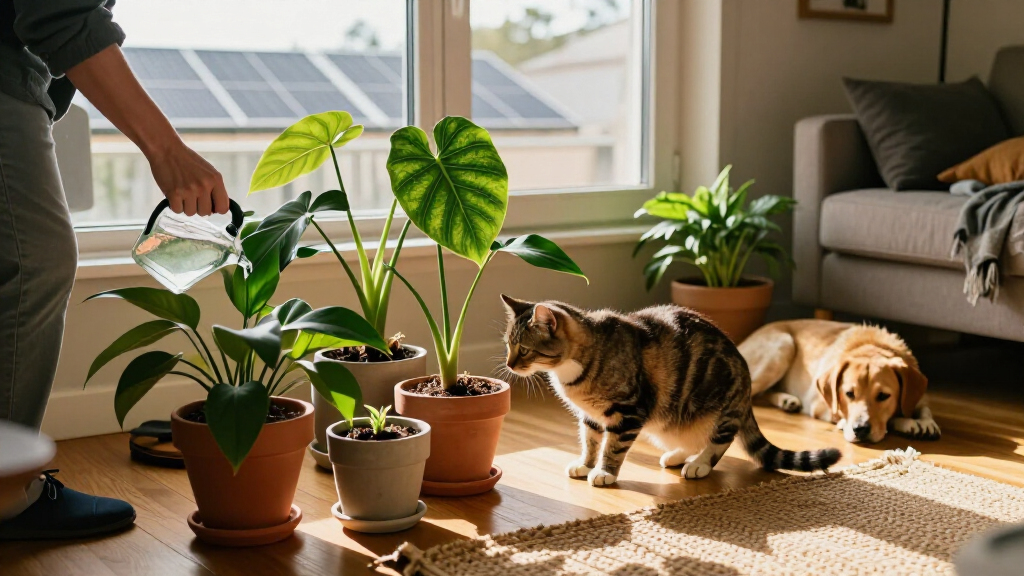
An Ideal Home report names six popular houseplants as suitable options for homes with cats and dogs: spider plant, Kentia palm, calathea, Chinese money plant, Boston fern and polka dot plant. The report cautions that “pet-friendly” does not mean pet-proof: eating large quantities of any plant can cause stomach upset or irritation.
Ideal Home has highlighted six houseplants it describes as suitable for homes with cats and dogs, offering pet owners options for adding indoor greenery without choosing plants identified in the report as toxic. The list includes spider plants, Kentia palms, calatheas, Chinese money plants, Boston ferns and polka dot plants, but experts quoted in the report caution that no plant is entirely pet-proof.
Jo Lambell, founder of Beards & Daisies, recommends spider plants and Kentia palms. She describes spider plants as non-toxic and easy to care for, while warning that cats may chew them. Kentia palms, she says, are considered safe for pets and can cope with lower light, making them a possible choice for a hallway or living-room corner.
Gardening Express plant expert Nick Wood identifies calatheas, Chinese money plants and polka dot plants as pet-friendly choices. The report says calatheas suit rooms with suitable indirect light; Chinese money plants prefer bright, indirect light and soil that dries slightly between waterings. Polka dot plants need bright, indirect light to retain their colour and lightly moist soil, with regular pinching recommended to encourage fuller growth.
The sixth option, the Boston fern, is described by Lambell as a safe choice that likes humidity, including conditions often found in bathrooms. The report also mentions hanging planters and pot grids as ways to keep plants out of pets’ reach or discourage digging. It does not provide veterinary citations or detail the basis for each plant’s safety classification.
Choosing Greenery Around Pets
The list gives pet owners specific plants to investigate rather than assuming all popular houseplants are alike. That can help households make more informed choices when adding greenery, particularly because the report notes that some houseplants are toxic to pets.
However, the practical takeaway is not that these plants can be left within reach without concern. Access and chewing still matter: Lambell says eating a large amount of even a pet-safe plant can upset an animal’s stomach. Hanging pots or barriers may reduce contact, but they do not replace monitoring pets that repeatedly chew or dig at plants.
pet-safe houseplants for cats and dogs
As an affiliate, we earn on qualifying purchases.
As an affiliate, we earn on qualifying purchases.
The Six Plants and Their Care
The recommendations combine plant-safety descriptions with basic care notes. Spider plants are presented as easy to maintain and propagate; the report says cats may nibble them. Kentia palms offer taller, architectural foliage and tolerate lower-light locations, according to Lambell.
Wood’s suggestions include calatheas, whose patterned leaves are the main attraction, and round-leaved Chinese money plants, which the report says should be allowed to dry slightly between waterings. Boston ferns are linked to humid rooms, while polka dot plants need bright, indirect light and lightly moist soil. The source also notes that polka dot varieties can have pink or white markings.
The article’s advice is about houseplant selection and care, not a guarantee that every individual plant or growing condition will be suitable for every pet. It does not give a detailed account of plant varieties, amounts that might cause symptoms, or veterinary treatment guidance.
““Even pet-safe plants can upset a tummy if they’re eaten in bulk, so it’s worth keeping an eye on any serial chewers.””
— Jo Lambell, founder of Beards & Daisies
As an affiliate, we earn on qualifying purchases.
Limits of the Safety Claims
The source describes the six plants as pet-friendly, but it does not include independent veterinary references, toxicity data, or details about how the classifications were established. It also does not specify how much of a plant a pet would need to eat before becoming unwell.
The report’s own caveat is that any plant may cause physical irritation if too much is eaten. Individual pets may behave differently, and the source does not address plant identification errors, pesticides or other substances that may be present on foliage. Readers should not interpret the list as a guarantee that ingestion is harmless.
As an affiliate, we earn on qualifying purchases.
Check Plants Before Bringing Them Home
Pet owners considering any of the six options can use the names in the report as a starting point, then confirm the plant’s identity and suitability with a veterinarian or a reliable animal-poisoning resource. Keep plants where pets cannot readily chew them, and watch for repeated nibbling or digging.
If a pet eats a plant and appears unwell, contact a veterinarian for advice rather than relying on a general “pet-friendly” label. The source provides no further scheduled update; its guidance remains a list of suggested plants and care tips, with the ingestion warning applying across the group.
hanging planters for pet-safe plants
As an affiliate, we earn on qualifying purchases.
As an affiliate, we earn on qualifying purchases.
Key Questions
Which six houseplants does the report recommend?
The list names spider plant, Kentia palm, calathea, Chinese money plant, Boston fern and polka dot plant.
Does pet-friendly mean a plant is safe to eat?
No. The report cautions that eating a large amount of any plant can upset a pet’s stomach or cause physical irritation. “Pet-friendly” should not be treated as a guarantee that ingestion is harmless.
Which of the listed plants may suit a low-light spot?
Lambell says the Kentia palm copes well in lower light. The report recommends bright, indirect light for Chinese money plants and polka dot plants.
What should I do if my pet eats a houseplant?
The source does not give treatment instructions. If your pet eats a plant and becomes unwell, contact a veterinarian and provide the plant’s name or a clear identification if available.
Source: rss
Halloween Picks
halloween
As an affiliate, we earn on qualifying purchases.