A transformer is a device that changes high-voltage electricity from power lines into lower, safer levels for your home appliances. It works by using electromagnetic induction, with coils that switch voltage up or down depending on the turns ratio. In your house, step-down transformers guarantee your devices receive the proper voltage to work safely and efficiently. If you’re curious about how they protect and power your daily life, keep exploring to learn more.
Key Takeaways
- A transformer converts high-voltage electricity to a lower, safer voltage suitable for household use.
- It operates on electromagnetic induction between two coils wrapped around a magnetic core.
- Step-down transformers reduce voltage from power lines to approximately 120V or 230V for homes.
- Proper maintenance and inspections ensure the transformer functions correctly and safely.
- Transformers protect appliances and electrical systems by providing stable, appropriate voltage levels.
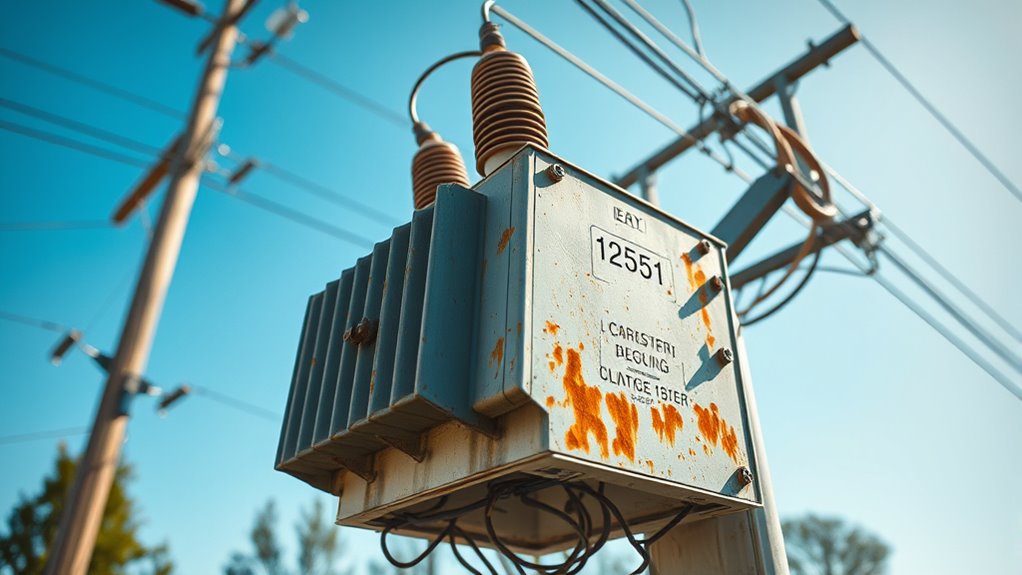
Ever wondered how your home safely gets the right amount of electricity? The answer lies in a device called a transformer. Transformers are essential components in electrical systems, responsible for voltage conversion, which ensures that the electricity entering your house is at a safe, usable level. When electrical power travels from power plants through high-voltage lines, it’s far too strong for household appliances. That’s where transformers step in, reducing the voltage to a safer, more manageable level for everyday use.
Transformers safely reduce high-voltage power for everyday household use.
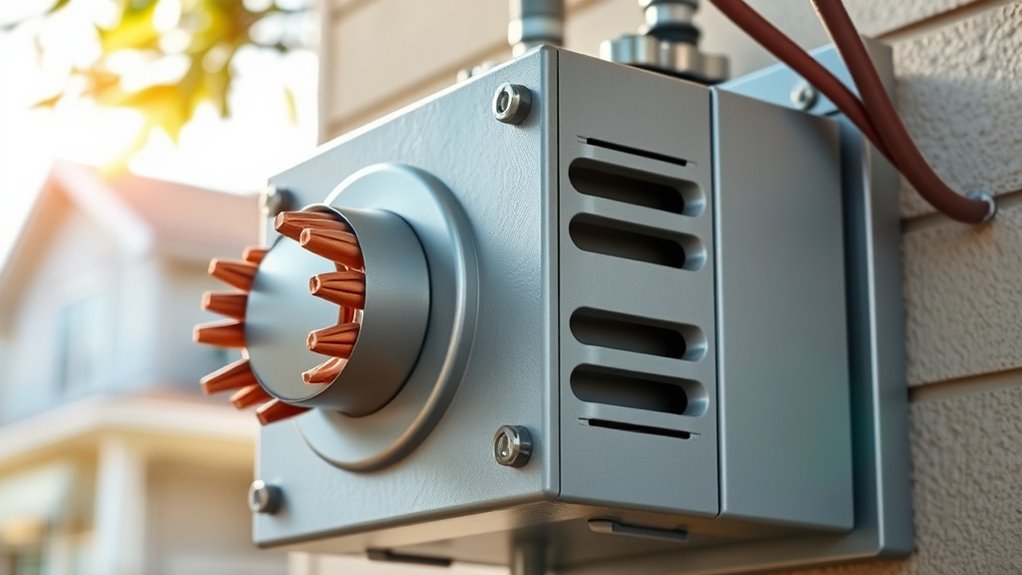
At its core, a transformer works on the principle of electromagnetic induction. It consists of two coils of wire wrapped around a common magnetic core. When alternating current flows through the primary coil, it creates a magnetic field that induces a voltage in the secondary coil. The ratio of turns between these coils determines whether the transformer steps up or steps down the voltage. In your home, a step-down transformer lowers the high-voltage electricity to a standard voltage—usually 120 volts in North America or 230 volts in many other parts of the world—making it suitable for your appliances and electronics.
Maintaining your transformer is critical for the safety and reliability of your electrical system. Proper transformer maintenance involves regular inspections, checking for signs of wear or damage, and ensuring connections are secure. Over time, dust, moisture, or corrosion can impair its performance, leading to inconsistent voltage levels or even equipment failure. By keeping an eye on your transformer, you can prevent potential outages or electrical hazards. If you notice flickering lights, frequent circuit breaker trips, or unusual buzzing sounds, it’s a sign that your transformer might need professional attention. Addressing these issues early can save you from more costly repairs and help maintain a steady flow of electricity.
Understanding the importance of voltage conversion and transformer maintenance gives you a clearer picture of how your home’s electrical system operates smoothly. These devices are designed to keep your appliances running safely and efficiently, protecting both your devices and your household. While transformers are built to last, they do require proper care to perform at their best. Regular inspections, timely repairs, and ensuring they’re free from obstructions or damage are key steps in maintaining a reliable power supply. So, next time you flip a switch and your lights turn on, remember the crucial role that transformers play behind the scenes, stepping down high-voltage power to a safe level for your home. Recognizing the importance of proper maintenance can help ensure your electrical system remains safe and efficient for years to come.
Frequently Asked Questions
How Do Transformers Differ From Power Inverters?
Transformers differ from power inverters mainly in their function. Transformers handle voltage conversion by stepping up or down AC voltage, and come in various types like step-down or step-up models. Power inverters, on the other hand, convert DC to AC power, allowing you to run AC devices from batteries or solar panels. While transformers modify existing AC power, inverters create AC from DC sources, serving different roles in electrical systems.
Can I Replace a Household Transformer Myself?
If you’re considering a DIY repair, like replacing a household transformer, it’s best to exercise caution. For example, John tried replacing his home’s step-down transformer but underestimated electrical risks. Always follow safety precautions, such as turning off power and using insulated tools. If you’re unsure or unfamiliar with electrical work, it’s safer to hire a licensed electrician. Electrical repairs can be dangerous without proper knowledge and safety measures.
What Are Signs My Transformer Needs Repair?
You’ll notice your transformer needs repair if you experience frequent power surges or notice strange noises like buzzing or humming. These signs indicate it’s struggling to regulate voltage properly. Additionally, if your devices are malfunctioning or your power supply feels inconsistent, it’s time to have it checked. Ignoring these signs could lead to damage or electrical hazards, so don’t delay in calling a professional to inspect and repair your transformer.
Are There Different Types of Step-Down Transformers?
Think of different step-down transformers as guardians, each designed for specific needs. You’ll find types like toroidal, laminated core, and encapsulated, each offering unique voltage regulation and safety features. These variations guarantee your appliances receive the right power safely. Always follow safety precautions when handling or installing them, and choose the type that best fits your household’s voltage requirements for maximum performance and protection.
How Energy-Efficient Are Home Transformers?
Home transformers are generally quite energy-efficient, helping reduce overall energy consumption. Many modern transformers boast high efficiency, often exceeding 95%, which minimizes power loss during voltage conversion. By choosing a well-rated, high-efficiency transformer, you guarantee less wasted energy and lower your electricity bills. Keep in mind that proper maintenance and avoiding overloads can also help maintain ideal transformer efficiency and maximize savings over time.
Conclusion
Now you see how transformers quietly keep your home running smoothly, converting high voltage to safe levels. But have you ever wondered what happens if this vital step fails? The lights might flicker, appliances could falter, or worse, power could cut out unexpectedly. It’s a silent guardian, yet its importance is immense. So next time you flip a switch, remember—there’s more happening behind the scenes than you realize, holding your home’s power steady, just in time.