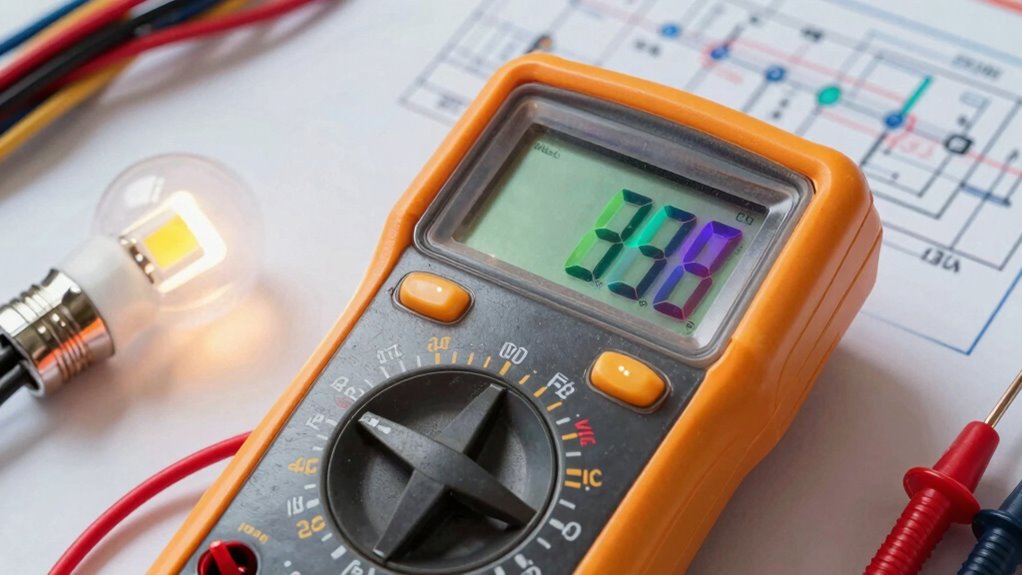

To easily understand volts, amps, and watts, think of volts as water pressure pushing electricity, amps as the flow or volume of that water, and watts as the work or power electricity can do. They work together in a simple formula: watts = volts x amps. By knowing these basics, you can better grasp how devices work and stay safe. Keep exploring, and you’ll discover how these concepts help you make smarter electrical choices.

Get backup power and energy gear delivered free — and shop member deals
- Fast, free delivery on millions of items
- Access to Prime Big Deal Days deals on October 6–7
- Prime Video, Amazon Music and more included
Key Takeaways
- Think of volts as water pressure, amps as water flow, and watts as the total work or energy used.
- Use the simple formula: Watts = Volts x Amps to connect the concepts easily.
- Visualize voltage like water pressure pushing current, and amps as the amount of water flowing.
- Check device labels to see how volts, amps, and watts relate for safety and efficiency.
- Practice with real-world examples to see how power, current, and pressure work together.
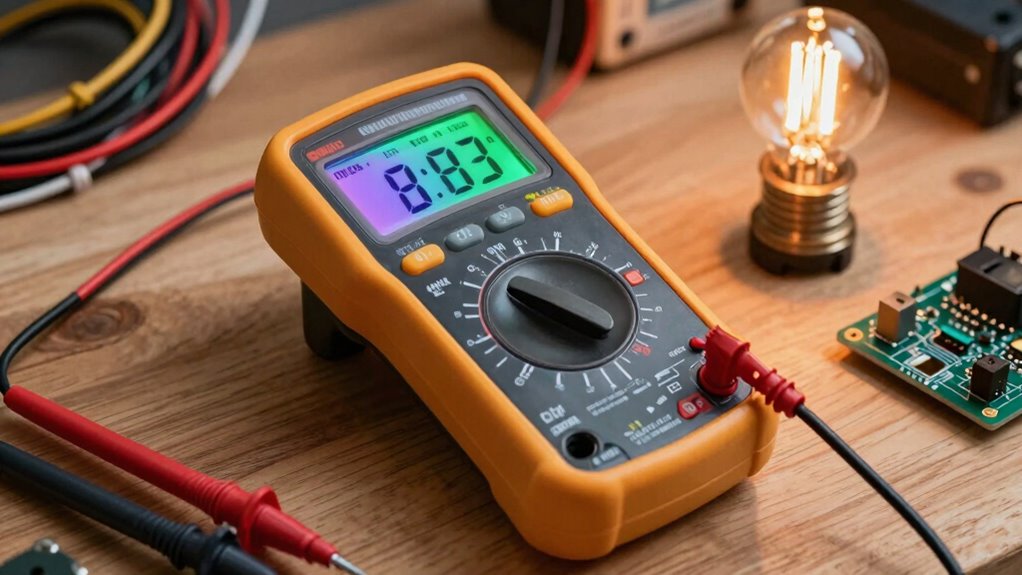
Have you ever wondered what volts, amps, and watts really mean and how they relate to each other? Understanding these basic electrical concepts can seem tricky at first, but once you get the hang of them, it becomes much easier to grasp how electricity powers your home and devices safely and efficiently. Grasping these terms isn’t just about knowing the numbers; it’s about ensuring electrical safety and improving power efficiency. When you understand how they connect, you can better manage energy use and prevent electrical hazards.
Think of volts as the pressure of electricity in a circuit. It’s similar to water pressure in a hose—higher volts mean more potential energy pushing the current through wires. Amps, on the other hand, measure the flow or the amount of electric current that passes through a conductor. You can picture it like the volume of water flowing through the hose. Watts are the unit of power, representing how much work the electricity can do over time. The relationship between these three is straightforward: Watts equal volts multiplied by amps (W = V x A). This formula reveals how much power a device consumes or needs to operate.
Knowing this relationship helps you make smarter decisions about electrical safety and power efficiency. For instance, if you’re using a device that requires 1200 watts, and your home’s supply voltage is 120 volts, then you know that the device draws 10 amps (since 1200 W ÷ 120 V = 10 A). This awareness can help you avoid overloading circuits, which is critical for electrical safety. Overloading can cause overheating or fires, so understanding your device’s power needs keeps you and your home safe.
From a power efficiency perspective, knowing how volts, amps, and watts work together allows you to pick energy-efficient appliances. For example, an energy-efficient light bulb might use fewer watts to produce the same brightness as a traditional bulb, meaning it consumes less power while still providing ample illumination. This reduces your energy bills and lessens the strain on your electrical system.
In essence, understanding volts, amps, and watts empowers you to manage your electrical usage wisely. It helps you select safe, efficient appliances and use them without risking damage or danger. When you see these numbers—be it on your device labels or your energy bills—remember how they relate and what they mean. This knowledge isn’t just technical; it’s practical, making your home safer and more energy-smart. Recognizing the importance of power consumption can help you make more informed choices about your electrical devices and usage habits.
electrical multimeter for voltage and current
As an affiliate, we earn on qualifying purchases.
As an affiliate, we earn on qualifying purchases.
Frequently Asked Questions
How Do Volts, Amps, and Watts Relate in Real-World Applications?
In real-world applications, volts, amps, and watts relate through simple electrical formulas like Watts = Volts x Amps, helping you understand power consumption. When you know the voltage and current, you can easily calculate the power used with power conversion. This understanding helps you choose the right appliances, avoid overloads, and save energy, making your electrical systems safer and more efficient.
What Safety Precautions Should I Take When Working With Electrical Measurements?
When working with electrical measurements, prioritize electrical safety by always wearing protective gear like insulated gloves and safety goggles. Make certain to turn off power sources before testing or measuring to prevent shocks. Use properly rated tools and equipment to avoid short circuits. Keep your workspace dry, and stay alert to potential hazards. Following these precautions helps protect you from electrical accidents and ensures accurate measurements.
How Can I Measure Volts, Amps, and Watts at Home?
To measure volts, amps, and watts at home, you need a multimeter. First, set it to voltage to measure voltage regulation across outlets or devices. Switch to current mode to check current flow, but make certain the meter is in series with the circuit. For watts, multiply the voltage and current readings. Always turn off power before connecting or adjusting the multimeter to stay safe and get accurate measurements.
Why Do Different Devices Have Varying Wattage Ratings?
Different devices have varying wattage ratings because they’re designed for specific functions, power needs, and efficiency levels. Higher wattage often means more power consumption, which impacts electrical safety and energy efficiency. When you choose devices, consider their wattage to guarantee safe usage and maximum power efficiency. This way, you avoid overloads, save energy, and maintain a safe environment in your home.
How Does Resistance Affect Voltage, Current, and Power?
Resistance acts like a narrowing river, slowing current’s flow and affecting voltage regulation. When resistance increases, it’s as if the current faces a dam, reducing its strength and converting electrical energy into heat. This resistance impact means less current flows, and power drops. Conversely, low resistance allows a smooth flow, maintaining voltage and maximizing power. Understanding this helps you see how resistance controls the dance between voltage, current, and power.
energy-efficient LED light bulbs
As an affiliate, we earn on qualifying purchases.
As an affiliate, we earn on qualifying purchases.
Conclusion
Now that you’ve seen how volts, amps, and watts work together, it’s like tuning a guitar string—you just need the right balance. Think of volts as the tension, amps as the pluck, and watts as the sound that fills the room. When you understand how they connect, you can easily navigate any electrical project with confidence. It’s simpler than you think—like piecing together a puzzle, and soon, everything will click perfectly into place.
As an affiliate, we earn on qualifying purchases.
As an affiliate, we earn on qualifying purchases.
Fall Picks
fall essentials
As an affiliate, we earn on qualifying purchases.