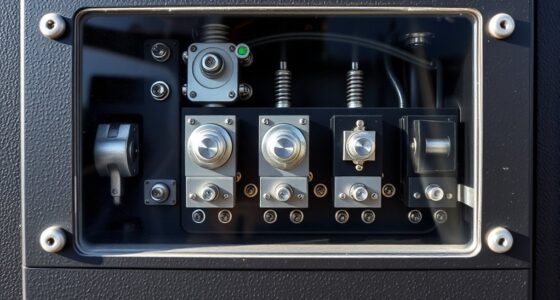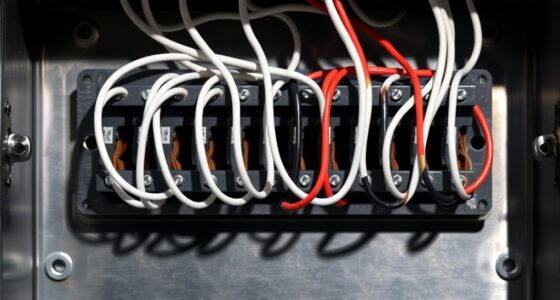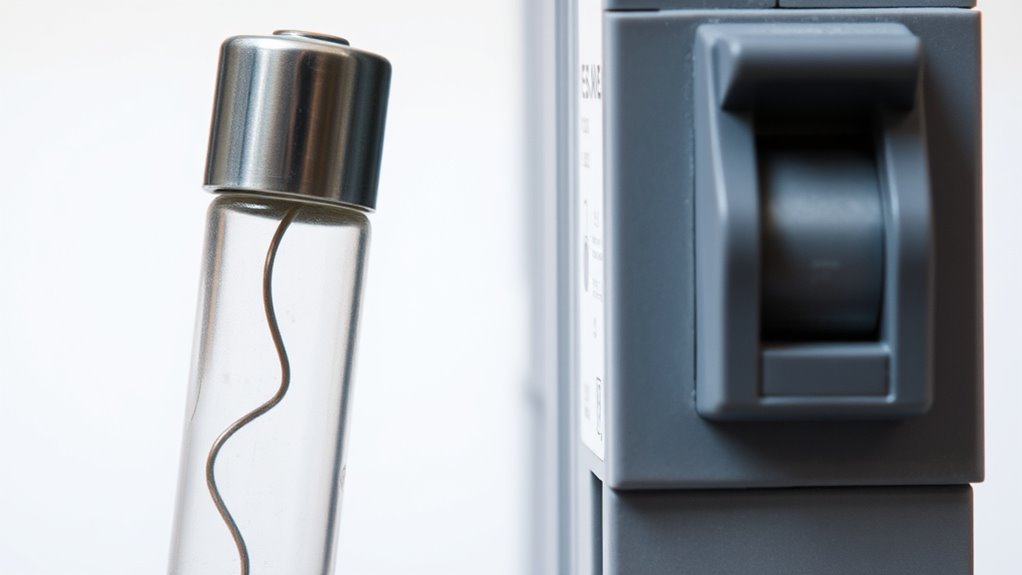

When protecting your electrical system from overcurrent, fuses and circuit breakers have key differences. Fuses are simple, disposable devices that melt when current is too high, stopping the flow instantly. Circuit breakers can be reset and reused after tripping, making them more convenient for frequent protection. Fuses are cost-effective for short-term needs, while breakers suit situations needing easy adjustments. To understand which option best fits your needs, explore their differences further.
Key Takeaways
- Fuses contain a metal strip that melts to break the circuit, stopping current flow instantly.
- Circuit breakers can be reset after tripping, making them reusable and suitable for frequent use.
- Fuses are simple, cost-effective, ideal for short-term protection, but need replacement after blowing.
- Circuit breakers are more durable, offering longer lifespan and easier resetting, suitable for regular protection.
- Choose fuses for quick, high-voltage protection; select circuit breakers for flexibility and ease of maintenance.
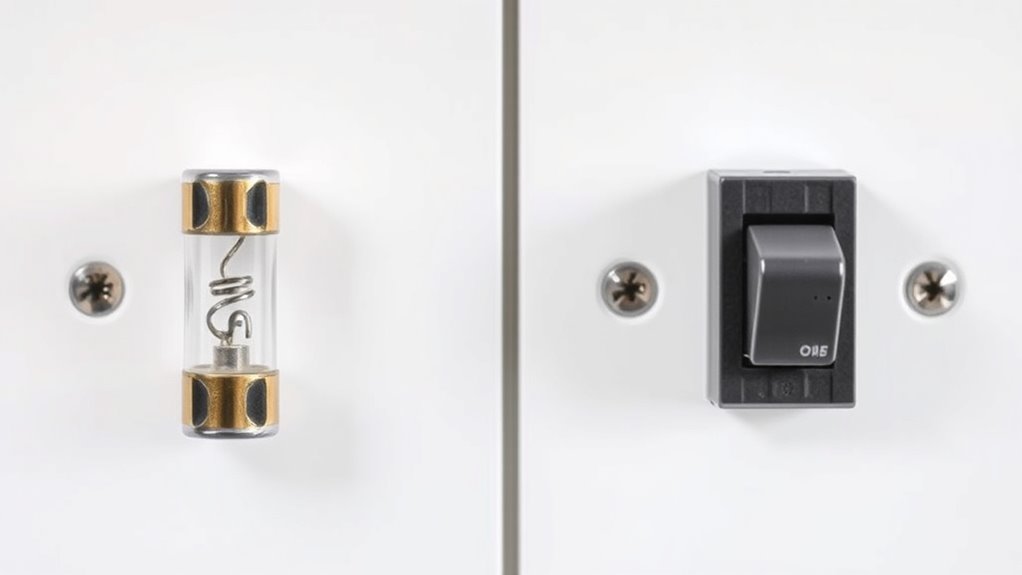
Fuses, on the other hand, are simpler devices that contain a thin metal wire or strip designed to melt when current exceeds a certain threshold. When that happens, the fuse breaks the circuit, stopping the flow of electricity. Fuses have a finite lifespan—once the wire melts, you need to replace the fuse. This limits their reuse but also ensures a clear, immediate interruption. Fuse longevity depends on factors like current surges, temperature, and how often they blow. If a fuse experiences frequent trips, it could indicate underlying issues like wiring problems or overloaded circuits. Proper fuse selection, with the right current rating, is vital for guaranteeing reliable protection without nuisance blowing. Additionally, fuses are often favored for high-voltage applications where quick disconnection is critical. In terms of longevity, circuit breakers generally last longer than fuses because they can be reset multiple times, provided they aren’t damaged. Fuses, however, are more straightforward and sometimes more reliable in certain applications, such as in high-voltage or specialized equipment. But they need regular replacement, which can become inconvenient and costly if failures happen often. When choosing between fuses and circuit breakers, consider how often you’ll need to replace or reset them and what level of protection you require. If you prefer a device that’s easy to reset and offers flexibility, a circuit breaker with the appropriate type for your load is usually better. But if you want a simple, cost-effective solution for short-term protection, fuses might be the way to go. Whatever you choose, understanding their differences helps guarantee your electrical system stays safe and efficient.
Frequently Asked Questions
Can Fuses Be Reused After They Blow?
No, fuses can’t be reused after they blow. When a fuse blows, it means the metal strip inside has melted to protect your circuit, so you need a fuse replacement. Unlike breakers, which can be reset and reused, fuses must be replaced. Regular breaker maintenance helps prevent overcurrent issues, but always replace blown fuses with the correct type to guarantee safety and proper circuit protection.
Which Is More Cost-Effective Long-Term: Fuses or Breakers?
Breakers are more cost-effective long-term because they last longer and can be reset easily, saving you money over time. Statistically, circuit breakers have a lifespan of about 30-40 years, while fuses often need replacement after just one use. When comparing cost, maintenance differences favor breakers since they require less frequent replacement and less ongoing upkeep, making them a smarter choice financially in the long run.
Are Breakers Better for Residential or Industrial Use?
Breakers are generally better for both residential and industrial use because they offer easier installation and better circuit compatibility. In residential settings, breakers simplify wiring and can be reset easily after tripping, making them user-friendly. For industrial applications, they handle higher currents and provide reliable protection. Their design reduces installation complexity and guarantees safety across various environments, making them a versatile choice for most electrical systems.
How Do I Choose the Right Fuse or Breaker Rating?
To choose the right fuse or breaker rating, start with your system’s load requirements and select a device with a rating slightly above normal operating current, but below the conductor’s maximum capacity. Consider safety to prevent overloads or false trips. Always follow manufacturer guidelines and local electrical codes. Proper rating selection guarantees safety, protects your equipment, and minimizes risks of electrical failures or hazards.
What Are the Environmental Impacts of Each Protection Type?
You might notice that fuses often use eco-friendly materials like glass and metal, making them easier to recycle. Breakers, however, involve plastics and complex components that can be harder to recycle and may have a higher environmental impact. When choosing, consider recyclability options and eco-friendly materials, as fuses generally leave a smaller environmental footprint. Both types contribute to safety, but breakers may require more sustainable disposal practices.
Conclusion
Remember, when it comes to overcurrent protection, choosing between fuses and breakers depends on your needs. Fuses are simple and reliable, while breakers are reusable and offer easier reset options. Think of it this way: “A stitch in time saves nine.” Addressing electrical issues early with the right protection can save you headaches later. So, pick what suits your situation best, and keep your electrical system safe and sound.