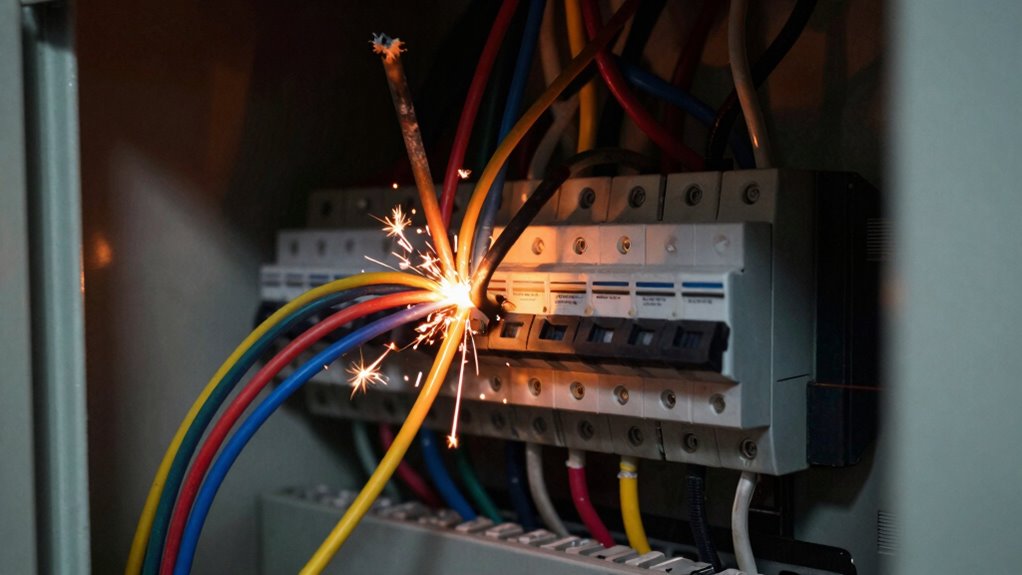
If your breaker keeps tripping, it likely means there’s an overload, a wiring issue, or a faulty breaker at play. Too many devices on one circuit or high-power appliances can cause it to trip to prevent overheating or fires. Damaged wiring or short circuits also trigger trips, which could be dangerous if ignored. Sometimes, the breaker itself is faulty. To keep your home safe, it’s best to get a professional to check out the real cause—discover more inside.

Get backup power and energy gear delivered free with Prime
- Fast, free delivery on millions of items
- Prime Video, Amazon Music and more included
- Member-only deals all year
Key Takeaways
- Circuit overloads from too many devices or high-power appliances cause breakers to trip for safety.
- Faulty wiring, short circuits, or ground faults can trigger trips independently of overloads.
- Malfunctioning or worn-out breakers may trip without any electrical overloads.
- Frequent tripping indicates underlying issues that could pose fire risks or damage appliances.
- Professional inspection and proper wiring practices are essential to prevent persistent breaker trips.

If your circuit breakers keep tripping, it’s a clear sign that something in your electrical system isn’t right. This can be frustrating and even dangerous if you don’t address the root cause. Breakers are designed to protect you and your home by shutting off power when they detect a problem. But repeated trips often point to underlying issues like circuit overload or faulty wiring, which compromise electrical safety. Understanding why your breakers keep tripping helps you prevent potential hazards such as electrical fires or damage to appliances.
One common reason for frequent breaker trips is circuit overload. This happens when you plug in too many devices or appliances onto a single circuit. Your electrical system has a limited capacity, measured in amps, and exceeding that capacity causes the breaker to trip as a protective measure. Think about how many high-power devices—like space heaters, hair dryers, or multiple lights—you might be running simultaneously. When the total electrical demand exceeds the circuit’s limit, the breaker responds by cutting off power to prevent overheating and potential fires. If this is the cause, redistributing your appliances across different circuits or reducing usage can often solve the problem. However, if overload isn’t the issue, or if trips persist even after balancing your devices, it might indicate underlying wiring issues, such as damaged or degraded wiring, which can be hazardous. Recognizing electrical safety concerns early can help you avoid serious risks.
Electrical safety is paramount, so don’t ignore frequent breaker trips. Faulty wiring, faulty appliances, or a worn-out breaker itself can all cause trips that aren’t related to overloads. Sometimes, a breaker may trip because it’s malfunctioning and needs replacement. Other times, the wiring in your home might have become damaged or corroded, creating short circuits or ground faults that trip the breaker as a safety measure. These problems require a professional inspection to diagnose accurately and fix safely. Ensuring proper wiring practices, such as correct gauge and insulation, is crucial for maintaining safety and preventing issues like heat buildup or fires. Modern electrical systems often include safety devices that can influence how circuits respond to faults, adding complexity to troubleshooting. Attempting to fix electrical issues on your own can be risky, especially if you’re unfamiliar with electrical codes and safety procedures. The presence of home security systems and smart devices can also influence circuit capacity and safety considerations.
In any case, persistent breaker trips shouldn’t be brushed off. They’re your home’s way of signaling that something isn’t right. Whether it’s a simple overload, a wiring issue, or a faulty breaker, addressing the problem promptly ensures electrical safety and keeps your home protected. If you’re unsure about the cause or how to fix it, consulting a licensed electrician is always the safest bet. Remember, safeguarding your home from electrical faults isn’t just about convenience—it’s about protecting your loved ones from potential harm.
As an affiliate, we earn on qualifying purchases.
Frequently Asked Questions
Can a Faulty Breaker Cause Electrical Fires?
Yes, a faulty breaker can cause an electrical fire risk. If it’s past its circuit breaker lifespan or damaged, it might not trip properly during a power surge or overload. This failure can lead to overheating wires, increasing the chance of a fire. Regularly inspecting and replacing breakers guarantees they function correctly, reducing your electrical fire risk and keeping your home safe from potential hazards.
How Often Should I Replace or Upgrade My Circuit Breaker?
Think of your circuit breaker as the heart of your home’s electrical system. Typically, a breaker’s lifespan is around 20-25 years. You should consider upgrading when it starts tripping frequently, shows signs of wear, or if your electrical demands grow. An upgrade timing guarantees safety and efficiency, preventing potential hazards. Regular inspections by a professional can help you determine the right moment to replace your breaker before problems arise.
Are There Specific Appliances That Frequently Trip Breakers?
Certain appliances, like space heaters, hair dryers, and microwave ovens, often trip breakers because of appliance malfunctions or circuit overloads. When these devices draw more current than the circuit can handle, the breaker trips to prevent overheating or fires. If you notice frequent trips when using specific appliances, it’s a sign of an overload or malfunction, and you should have an electrician inspect your wiring and appliances to guarantee safety.
Can Overloading Be Prevented Without Unplugging Devices?
Yes, you can prevent overloading without unplugging devices by using surge protection devices and ensuring circuit compatibility. Surge protectors help distribute power evenly and safeguard against voltage spikes, reducing the risk of overloads. Additionally, verify that your appliances are compatible with your circuit’s capacity. By doing so, you minimize overloads and keep your breaker from tripping, all without the hassle of unplugging multiple devices constantly.
What Safety Precautions Should I Take When Resetting a Breaker?
Ever wonder what safety precautions you should take when resetting a breaker? First, turn off all connected devices to prevent a circuit overload. Check for signs of a ground fault, like sparks or smell of burning. When resetting, make sure your hands are dry and stand on a dry surface. Use insulated tools if needed. Are you prepared to handle unexpected sparks or issues safely? Always prioritize your safety first.
electrical wiring inspection kit
As an affiliate, we earn on qualifying purchases.
As an affiliate, we earn on qualifying purchases.
Conclusion
Now that you understand why breakers trip, think of your electrical system as a delicate dance. When one step is out of sync—overloading or faulty wiring—the whole performance stalls. By addressing these issues, you restore harmony and keep your system running smoothly. Don’t ignore the signs; fixing the root cause is like tuning an instrument—necessary for a flawless performance. Keep your electrical dance in rhythm, and your home stays safe and energized.
ground fault circuit interrupter (GFCI) outlet
As an affiliate, we earn on qualifying purchases.
As an affiliate, we earn on qualifying purchases.
circuit overload protection device
As an affiliate, we earn on qualifying purchases.
As an affiliate, we earn on qualifying purchases.
Halloween Picks
halloween
As an affiliate, we earn on qualifying purchases.