
Demand management in modern homes means you can control and reduce your energy use during peak times, helping you save money and support the grid. With smart technology like automated thermostats and appliances, you can optimize your energy consumption effortlessly. This approach not only strengthens grid stability but also encourages sustainable habits. If you want to discover how these strategies can make your home more efficient and eco-friendly, there’s more to explore below.

Get backup power and energy gear delivered free — and shop member deals
- Fast, free delivery on millions of items
- Access to Prime Big Deal Days deals on October 6–7
- Prime Video, Amazon Music and more included
Key Takeaways
- Demand management controls energy use during peak times to prevent grid overloads in modern homes.
- Smart technology automates and optimizes energy consumption for efficiency and cost savings.
- It shifts high-demand activities to off-peak hours, reducing environmental impact.
- Real-time feedback promotes awareness and encourages sustainable energy habits.
- Overall, it enhances home comfort, efficiency, and supports a resilient, environmentally responsible energy system.

Have you ever wondered how modern homes can efficiently balance their energy demands? The answer lies in demand management, a concept that’s transforming the way you consume and conserve energy. At its core, demand management involves controlling and reducing energy use during peak periods to guarantee your home runs smoothly without overloading the grid. This process is crucial for improving energy efficiency, which means getting the most out of every kilowatt you use while minimizing waste. Thanks to advancements in smart technology, this task has become easier and more more intuitive than ever before.
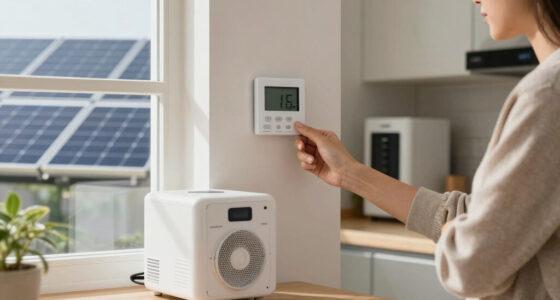
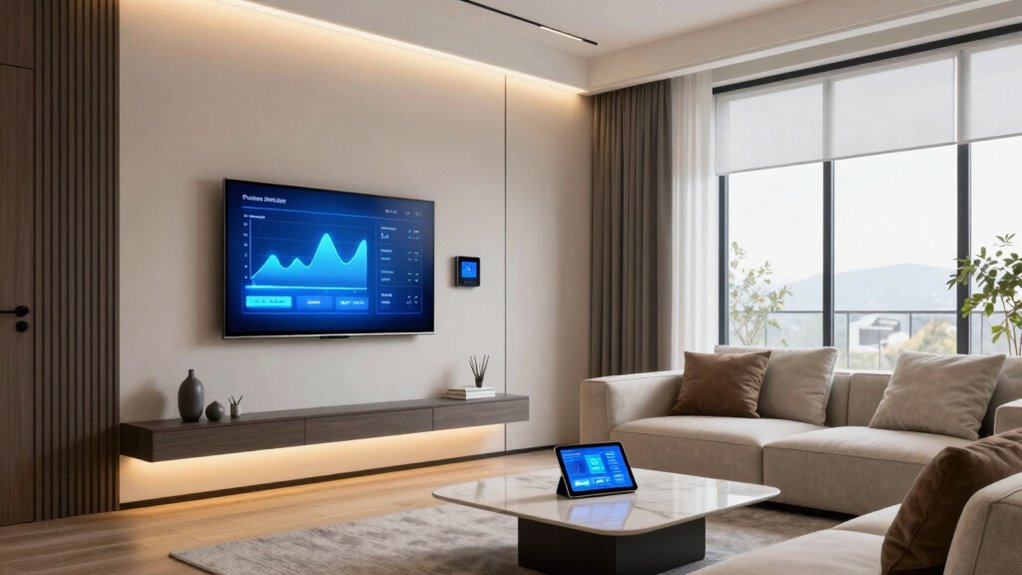
Smart technology plays a pivotal role in demand management by allowing you to automate and optimize your energy consumption. With smart thermostats, lighting systems, and appliances, you can schedule and adjust usage based on real-time data. For example, your thermostat can learn your daily routines and make subtle temperature adjustments during peak hours, reducing energy use without sacrificing comfort. These devices communicate with each other and with your utility provider, creating a seamless network that balances your needs with the grid’s capacity. Additionally, the integration of smart technology into modern homes has significantly enhanced the ability to manage energy demand efficiently. Incorporating demand response programs can further support grid stability by incentivizing you to reduce consumption during critical times. Staying informed about energy management protocols can help you optimize your home’s performance even further. Embracing local automation also enables your home to respond more dynamically to real-time energy needs, making demand management even more effective.
Smart devices automate and optimize energy use, balancing comfort with efficiency through real-time data and seamless communication.
When you implement demand management strategies, you’re not only saving money on your energy bills but also contributing to a more sustainable environment. During peak times, electricity demand spikes, often leading to the need for additional power generation that can be costly and environmentally taxing. By shifting some of your energy use to off-peak hours or reducing unnecessary consumption during high-demand periods, you help ease this load. Smart technology makes this shift effortless—your devices can automatically delay certain functions or turn off when not needed, all while maintaining your comfort and convenience. Incorporating energy efficiency techniques can further optimize your overall consumption, making your home even smarter.
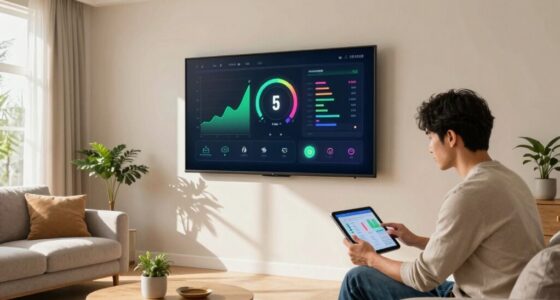
Furthermore, demand management encourages you to be more mindful of your energy habits. With real-time feedback from smart meters or apps, you become aware of how different activities impact your overall consumption. You might discover that running your dishwasher late at night or adjusting your heating during the day can considerably reduce your energy footprint. This awareness fosters more sustainable habits and supports broader efforts to stabilize the grid during times of stress. As you adopt these practices, you contribute to a more resilient and adaptable energy system that benefits everyone.
Ultimately, demand management for modern homes isn’t just about cutting costs; it’s about creating a smarter, more efficient way to live. By harnessing the power of smart technology, you gain control over your energy use, helping to guarantee that your home remains comfortable while promoting energy efficiency and environmental responsibility. It’s a win-win situation—saving money, conserving resources, and making your home more resilient in the face of growing energy demands.
Frequently Asked Questions
How Does Demand Management Impact Home Energy Costs?
Demand management helps you reduce your home energy costs by shifting usage to off-peak times, leading to significant energy savings. When you manage demand effectively, you avoid high rates during peak hours, which results in cost reduction. By using smart devices and energy-efficient systems, you can optimize your energy consumption, making your home more affordable to operate while also supporting a more sustainable environment.
Can Demand Management Systems Be Integrated With Smart Home Devices?
Imagine your smart devices having a lively chat about saving energy—yes, demand management systems can totally be integrated with them. You’ll find smart device compatibility is key, allowing seamless control. With thoughtful user interface design, managing your energy becomes intuitive, like chatting with a friend. You get to optimize consumption effortlessly, making your home smarter and more efficient—no tech jargon required, just simple, clever control.
What Are the Environmental Benefits of Demand Management in Homes?
Demand management in homes reduces energy waste and lowers greenhouse gas emissions, benefiting the environment. By integrating renewable energy sources, you support cleaner power generation. Behavioral incentives motivate you to shift energy use to off-peak times, further decreasing demand on the grid. This combination not only minimizes your carbon footprint but also encourages sustainable habits, making your home more eco-friendly and contributing to a healthier planet.
Is Demand Management Suitable for All Types of Residential Properties?
Demand management suits most property types, but its effectiveness varies depending on your property’s size and systems. For larger homes or those with advanced management strategies, implementing demand management can optimize energy use and lower costs. Smaller or older properties might need tailored solutions. Always assess your property’s specific needs and consult experts to choose suitable management strategies, ensuring you maximize benefits regardless of your property type.
How Secure Are Demand Management Technologies From Cyber Threats?
Demand management technologies are increasingly secure, but cyber security and data privacy remain crucial concerns. While advancements protect your systems from cyber threats, vulnerabilities can still exist if updates and safeguards aren’t maintained. You must stay vigilant, ensuring your devices are regularly updated and protected. This contrast between robust technology and potential risks highlights the importance of proactive measures, making your home’s demand management both effective and safe from cyber threats.
Conclusion
As you embrace demand management in your modern home, you open a future of smarter energy use and cost savings. But the real question is—are you ready for the changes it will bring? Will you harness the full potential of these innovations, or let the opportunities slip away? The choice is yours, and the moment to act is now. Because in this new energy landscape, what you do next could redefine your home’s future—and your own.
Fall Picks
fall essentials
As an affiliate, we earn on qualifying purchases.