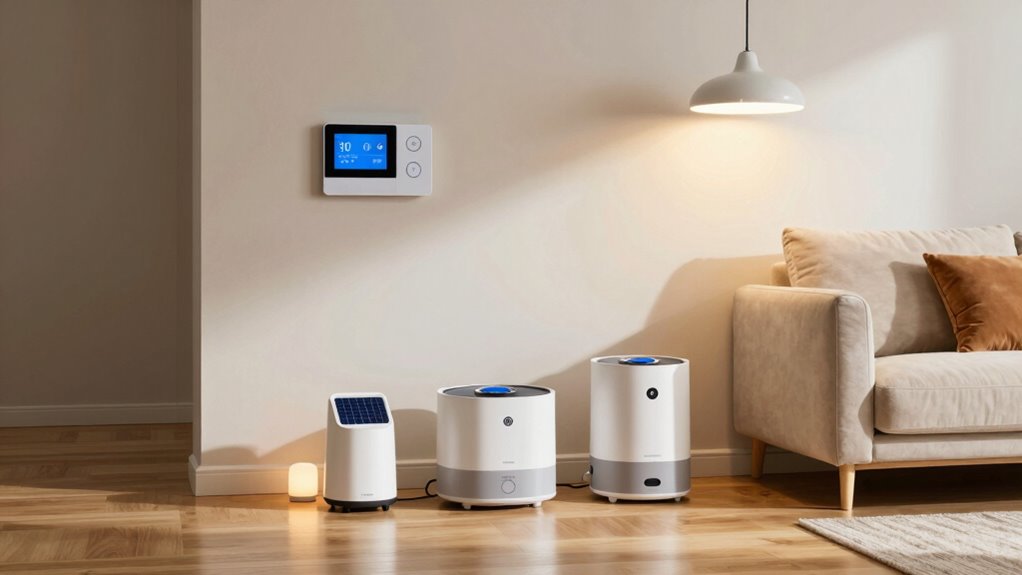

To start improving your electrical efficiency, focus on upgrading to energy-saving appliances with high ratings like ENERGY STAR. Use smart home tech, such as smart thermostats and lighting, to control and monitor your energy use remotely. Include smart plugs and natural landscaping to reduce unnecessary consumption and heating or cooling needs. Small changes can make a big difference in lowering bills and environmental impact. Keep exploring for more tips to create a smarter, more sustainable home.
Key Takeaways
- Prioritize energy-efficient appliances with high ratings like ENERGY STAR to reduce long-term utility costs.
- Use smart thermostats and lighting to automate and optimize energy use based on schedules and occupancy.
- Implement smart plugs and monitors to track consumption and eliminate phantom loads effectively.
- Incorporate natural landscaping and other passive strategies to lower heating and cooling demands.
- Make small upgrades, such as installing smart devices, to maximize home efficiency and sustainability over time.
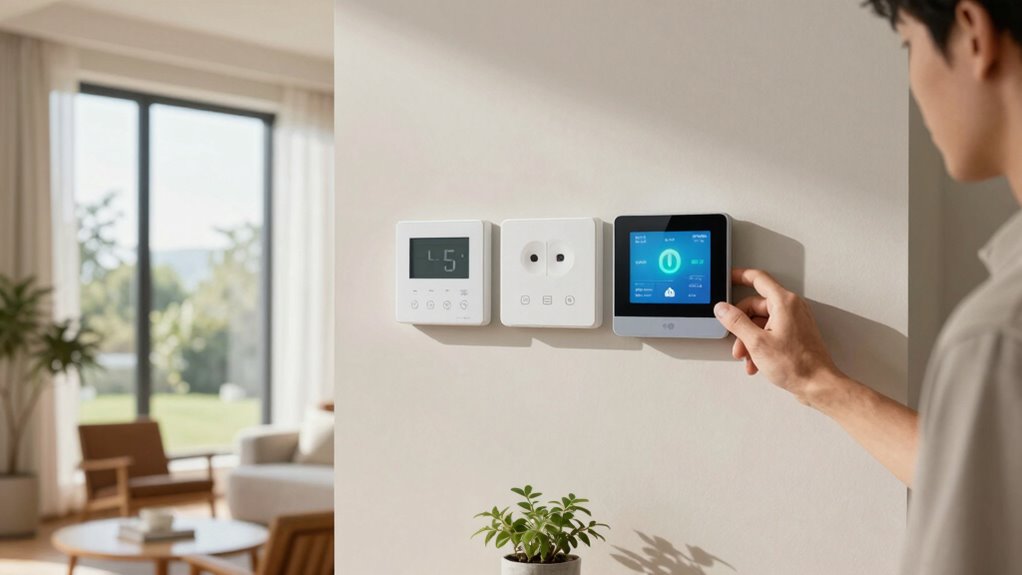
Are you looking for ways to reduce your electricity bills and minimize your environmental impact? Making smarter electrical choices can seem overwhelming at first, but starting with the right tools and technology makes a significant difference. One of the easiest ways to begin is by investing in energy-saving appliances. These appliances are designed to use less energy without sacrificing performance, helping you cut costs on your utility bills. Look for products with high energy-efficiency ratings, such as ENERGY STAR-certified devices, which meet strict standards set by the government. From refrigerators and dishwashers to washing machines and lighting, replacing outdated appliances with energy-efficient models can lead to noticeable savings over time.
Upgrade to ENERGY STAR appliances to save energy and reduce utility bills effortlessly.
In addition to energy-saving appliances, incorporating smart home technology can elevate your approach to electrical efficiency. Smart thermostats, for example, allow you to control your heating and cooling systems remotely, ensuring you’re only using energy when needed. They can learn your schedule and adjust the temperature automatically, reducing unnecessary energy consumption. Smart lighting systems also play a crucial role; you can automate lights to turn off when rooms are unoccupied or dim them during daylight hours, further cutting down on electricity use. These devices often come with apps that give you real-time insights into your energy consumption, making it easier to identify where you can improve.
Implementing smart home technology isn’t just about convenience; it’s about gaining control over your energy habits. By monitoring your usage, you can make informed decisions to optimize your home’s efficiency. For instance, some smart plugs let you schedule or remotely turn off appliances that tend to stay on unnecessarily. This prevents phantom loads—energy used by devices in standby mode—which can account for a surprising portion of your electricity bill. Proper home electrical planning can also help you design a system that minimizes waste and maximizes efficiency, ensuring your investments are well-integrated. Understanding energy-efficient technologies can help you choose the best options for your home’s needs, making your efforts even more effective. Additionally, exploring energy-efficient lighting options can further enhance your home’s overall efficiency and reduce long-term costs.
Furthermore, incorporating natural landscaping can reduce the need for excessive heating or cooling by providing shade and windbreaks, complementing your electrical efficiency efforts. When you combine energy-saving appliances with smart home tech, you create a cohesive system that maximizes efficiency and sustainability.
Start small by upgrading key appliances or installing a smart thermostat, and then expand your system over time. Doing so doesn’t just reduce your expenses but also lessens your carbon footprint. Remember, every bit of energy you save adds up, especially when you’re making conscious choices about your home’s electrical use. With consistent effort, these investments in smarter technology will pay off in lower bills and a more environmentally friendly lifestyle, making your home more efficient and comfortable for years to come.

Midea 3.1 Cu.ft Mini Fridge with Freezer, Energy Star Certified, for Dorm
- Energy Efficient Compressor: Uses R600A high-efficiency compressor
- Even Airflow System: Multi-air flow for consistent temperature
- Compact Space-Saving Design: Fits in tight spaces like dorms and offices
As an affiliate, we earn on qualifying purchases.
As an affiliate, we earn on qualifying purchases.
Frequently Asked Questions
How Do I Determine My Home’s Current Energy Consumption?
To determine your home’s current energy consumption, start by using energy monitoring tools or smart meters to track usage over time. Observe your consumption patterns during different parts of the day and across various appliances. This data helps you identify high-energy devices and peak usage times, enabling you to make smarter efficiency choices. Regular monitoring empowers you to reduce waste, lower bills, and optimize your home’s energy use effectively.
Are Energy-Efficient Appliances More Cost-Effective Long-Term?
Energy-efficient appliances are definitely more cost-effective long-term, saving you more than you’d imagine—think of savings so big, they could fill a room! They typically have longer appliance lifespans and lower maintenance costs, which means fewer repairs and replacements over time. Investing in them pays off by reducing your energy bills and maintenance expenses, making your household more sustainable and your wallet happier in the long run.
What Government Incentives Are Available for Upgrading Electrical Systems?
You can take advantage of government incentives like rebate programs and renewable incentives when upgrading your electrical systems. These programs often offer cash rebates or tax credits that reduce your upfront costs. Check with local and federal agencies to find specific offers available in your area. By leveraging these incentives, you not only save money but also make eco-friendly choices that support renewable energy initiatives and improve your home’s efficiency.
How Often Should I Have My Electrical System Inspected?
Think of your electrical system as a garden that needs regular tending. You should have it inspected at least once every three to five years to guarantee electrical safety and catch issues early. Regular inspections act as a shield, preventing unseen dangers from turning into costly problems. Staying proactive with inspection frequency keeps your home safe, efficient, and shining brightly, just like a well-tended garden in full bloom.
Can Smart Home Technology Improve Electrical Efficiency?
Yes, smart home technology can improve your electrical efficiency. By integrating a smart grid, you can optimize energy use during off-peak times, saving money and reducing waste. Energy monitoring devices give you real-time data on your consumption, helping you identify areas to cut back. These tools work together to make your home more efficient, eco-friendly, and cost-effective, giving you greater control over your energy habits.
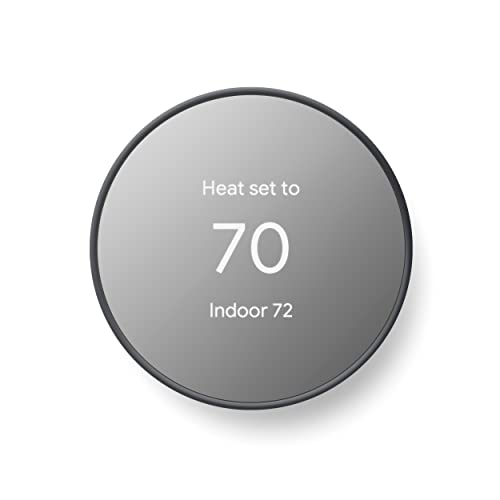
Google Nest Thermostat – Smart Thermostat for Home – Programmable Wifi Thermostat – Charcoal
- Energy Star Certified: Helps save energy and stay comfortable
- Wi-Fi Connectivity: Supports 2.4 GHz and 5 GHz networks
- Bluetooth Low Energy: Wireless interconnect for easy setup
As an affiliate, we earn on qualifying purchases.
As an affiliate, we earn on qualifying purchases.
Conclusion
Now that you’re equipped with smarter electrical efficiency choices, you can confidently make decisions that save energy and money. Remember, small changes add up over time—are you ready to take control of your energy use and make a real difference? By choosing energy-efficient appliances, unplugging unused devices, and embracing smart technology, you’re not just saving cash but also helping the environment. Isn’t it time you started making smarter choices today?

Govee Smart Light Bulbs, A19 Color Changing Light Bulb, 800 LM, E26 Base
- 16 Million DIY Colors: Includes 54 preset scene modes
- Music Sync Function: Changes color with sound detection
- Smart Voice Control: Control via voice commands and app
As an affiliate, we earn on qualifying purchases.
As an affiliate, we earn on qualifying purchases.

TP-Link Tapo Smart Plug Mini, Matter Compatible, Compatible with Alexa, Google Home & Samsung SmartThings, Energy Monitoring, 15A, UL Certified, 2.4G Wi-Fi Only, Tapo P110M(4-Pack)
- Matter-Certified Compatibility: Works with major smart home platforms
- Energy Monitoring: Tracks and visualizes energy consumption
- Cost Estimation: Provides energy cost insights and billing integration
As an affiliate, we earn on qualifying purchases.
As an affiliate, we earn on qualifying purchases.