
Grid-tied solar changes how you use power every day by letting you generate your own clean energy from the sun and reduce your reliance on the utility. You can store excess energy, feed it back to the grid for credits, and control when you use solar power for your appliances. This system makes your energy use more sustainable, cost-effective, and customizable. Keep exploring to discover even more ways it can benefit your home and savings.
Key Takeaways
- Simplified grid connection allows homeowners to generate and use their own solar power more easily.
- Excess energy can be fed back into the grid for credits, reducing overall electricity costs.
- Real-time data access enables better management and optimization of daily energy consumption.
- Increased energy independence decreases reliance on utility providers and rate fluctuations.
- Solar power aligns with sunlight availability, promoting efficient, sustainable daily energy use.
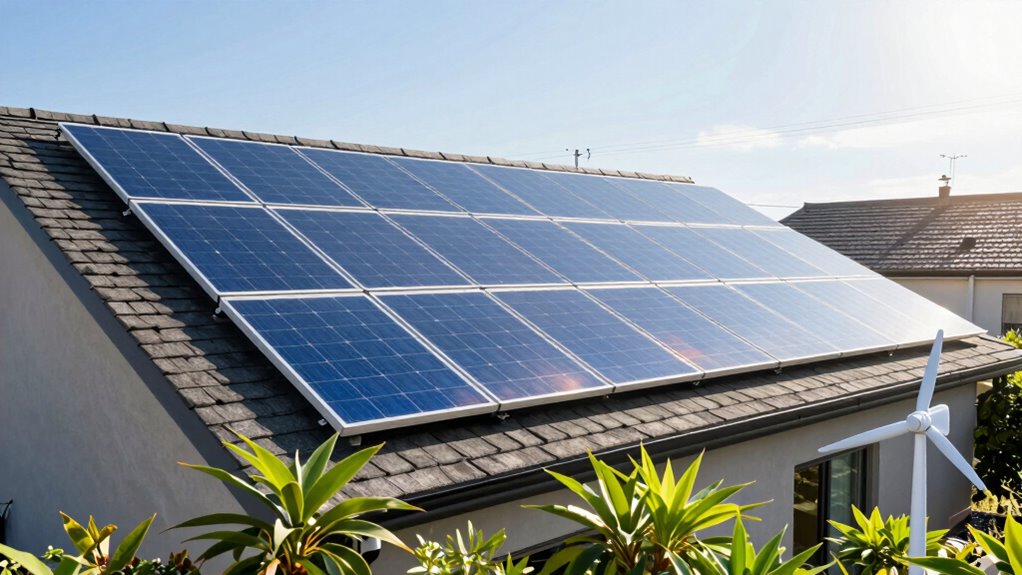
Recent changes to grid-tied solar policies are transforming how homeowners and businesses harness solar energy. These updates are making it easier for you to take control of your power use, emphasizing the importance of energy independence and cost savings. With new policies, you might find that generating your own electricity no longer requires extensive investments or complicated setups. Instead, you can install a system that seamlessly connects to the grid, allowing you to produce your own clean energy while still having access to the main power supply when needed.
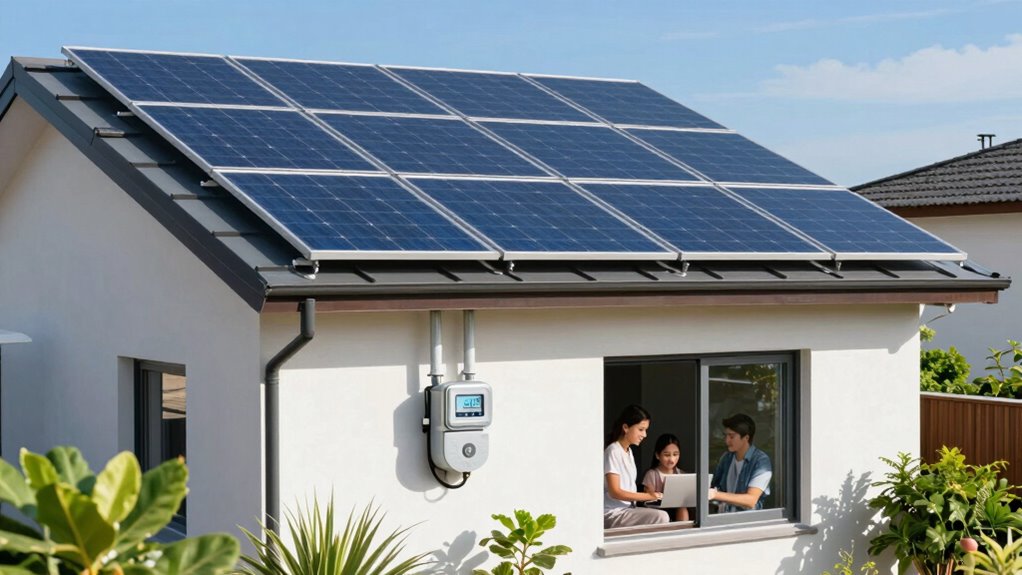
One of the most notable impacts of these changes is how they influence your daily power consumption. You’re no longer just a passive consumer; you become an active participant in your energy ecosystem. When the sun shines, your solar panels produce electricity that you can use immediately, reducing your reliance on the grid. This shift not only makes your power use more sustainable but also helps you achieve energy independence. As you generate more of your own energy, you become less vulnerable to rising utility rates or power outages, giving you more control over your energy future.
Cost savings are a central benefit of these policy changes. By producing your own electricity, you can markedly cut your monthly utility bills. The ability to store excess energy in batteries or feed it back into the grid for credits means you’re maximizing your investment. Over time, these savings add up, making solar a smart financial choice. Plus, many policies now support incentives or rebates, further reducing your upfront costs and accelerating your return on investment. You might notice that your energy bills become more predictable, shielding you from fluctuating electricity prices.
Another key aspect is how these changes reshape your understanding of power use throughout the day. With net metering and real-time access to energy data, you can better manage when to use certain appliances or charge batteries. This flexibility allows you to optimize your energy consumption, ensuring you’re using the solar power you generate most efficiently. As a result, your overall energy footprint diminishes, and your reliance on fossil fuels decreases.
In essence, recent grid-tied solar policy updates empower you to take charge of your energy needs. They foster a more sustainable, cost-effective, and resilient energy approach—one where you’re less dependent on external sources and more in control of your power consumption. This shift not only benefits your wallet but also contributes to a cleaner environment, making solar energy a smart, forward-looking choice for everyday power use.

1200W Solar Panel Kit Grid Tie System: 12 * 100W Monocrystalline Solar Panels + 1200W MPPT Grid Tie Inverter DC 18-60V to 120V AC + PV Combiner Box + Solar Cables for Home On-Grid Solar Power System
- Complete 1200W Solar Kit: Includes panels, inverter, cables, and combiner box
- High-Efficiency Monocrystalline Panels: Premium cells with pre-attached weatherproof cables
- Wide Range Grid Tie Inverter: DC 18-60V input for flexible panel configurations
As an affiliate, we earn on qualifying purchases.
As an affiliate, we earn on qualifying purchases.
Frequently Asked Questions
How Does Grid-Tied Solar Affect Electricity Bills Long-Term?
Grid-tied solar lowers your electricity bills long-term by reducing reliance on the grid and maximizing solar panel efficiency. As you produce more renewable energy, your bills decrease, especially during sunny months. Battery backup options let you store excess power for use during cloudy days or outages, further cutting costs. Over time, these systems save you money and provide energy independence, making your power use more sustainable and economical.
What Maintenance Is Required for Grid-Tied Solar Systems?
You need to perform regular maintenance like solar panel cleaning to keep your system efficient and guarantee maximum sunlight absorption. Additionally, inspecting your inverter periodically helps detect any issues early, preventing system downtime. Most maintenance tasks are straightforward, but scheduling professional inspections at least once a year can prolong your system’s lifespan and optimize performance, saving you money and energy in the long run.
Can Grid-Tied Solar Systems Work During Power Outages?
No, grid-tied solar systems typically don’t work during power outages because they shut off to guarantee system safety and prevent back-feeding electricity into the grid. To keep power running during outages, you can add a battery backup to your system. This setup allows you to maintain power safely and continuously, giving you energy independence while protecting utility workers and your home’s electrical system.
How Does Excess Solar Energy Get Credited or Compensated?
When your solar panels produce excess energy, it gets credited to your account through net metering. Your utility company tracks these energy credits, which offset your future electricity bills. Fundamentally, you’re selling surplus power back to the grid, earning credits that reduce what you owe. This system encourages you to maximize solar energy use, ensuring you benefit financially and environmentally from your solar investment.
Are There Specific Permits or Regulations for Installing Grid-Tied Solar?
Yes, you need to obtain a local permit before installing a grid-tied solar system. Check zoning laws in your area to guarantee compliance, as they can dictate system size, placement, and safety standards. Typically, you’ll submit documentation and may need inspections. These regulations help ensure your installation is safe and adheres to community guidelines, making the process smoother and avoiding potential fines or legal issues later on.
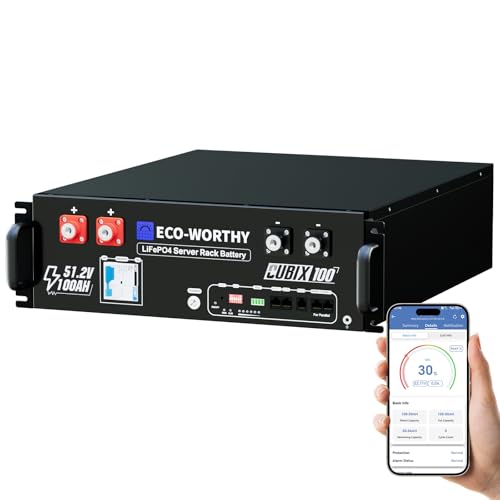
ECO-WORTHY Cubix100 48V 100Ah LiFePO4 Lithium Battery w/Bluetooth | UL9540 & UL1973 & CEC Listed | 5120Wh Server Rack Battery for Solar Energy Storage, Home Backup Power
- Safety Certifications: UL9540, UL1973, CEC listed
- Advanced Communication: Built-in Bluetooth, WiFi, CAN/RS485 interfaces
- Smart Monitoring: Monitor via ECO-WORTHY app
As an affiliate, we earn on qualifying purchases.
As an affiliate, we earn on qualifying purchases.
Conclusion
As you embrace grid-tied solar, picture your home basking in sunlight, seamlessly feeding excess energy back into the vibrant web of the power grid. The days of just consuming electricity fade into a dance of giving and receiving, empowering you to take control of your energy flow. With every sunbeam, you’re not only brightening your home but also illuminating a cleaner, greener future—turning your everyday power use into a confident step toward sustainability.
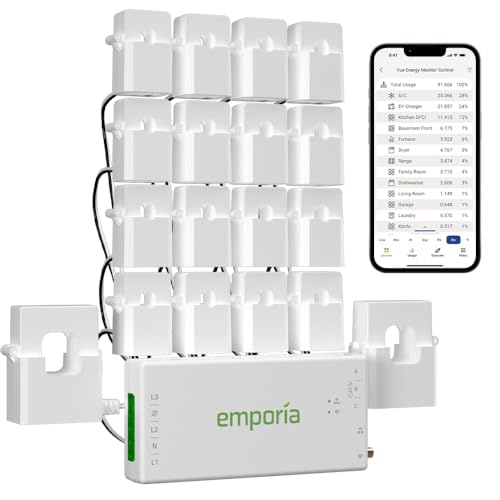
Emporia Vue 3 Home Energy Monitor – Smart Home Automation Module and Real Time Electricity Usage Monitor, Power Consumption Meter, Solar and Net Metering for UL Certified Safe Energy Monitoring
- UL Certified for Safety: Meet rigorous safety standards in the US and Canada
- Easy Installation in Circuit Panel: Supports various home electrical systems with clamp-on sensors
- Continuous Energy Monitoring: Manage and control energy use anytime, anywhere
As an affiliate, we earn on qualifying purchases.
As an affiliate, we earn on qualifying purchases.
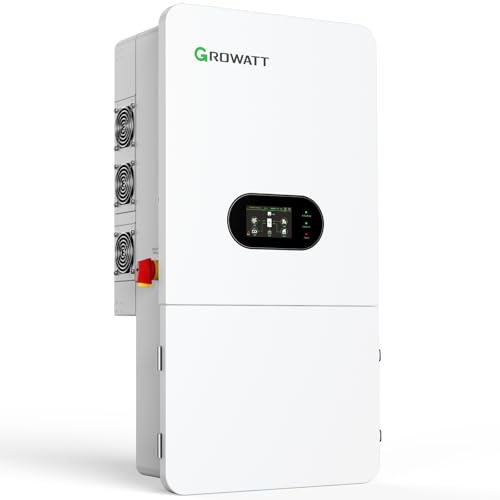
GROWATT Solar Inverter,10000W Hybrid, Pure Sine Wave, 3 MPPT Solar Controllers 200A Battery Charging, 120V/240V Split Phase, 48V Li/Lead Acid Compatible, UL1741, IEEE1547 Off-Grid On-Grid Home Use
- Trusted Brand with 10-Year Warranty: Reliable support for over a decade
- High Solar Input Capacity: Supports up to 15,000W solar input
- Multiple MPPTs for Efficiency: 3 MPPTs with 2 strings each
As an affiliate, we earn on qualifying purchases.
As an affiliate, we earn on qualifying purchases.