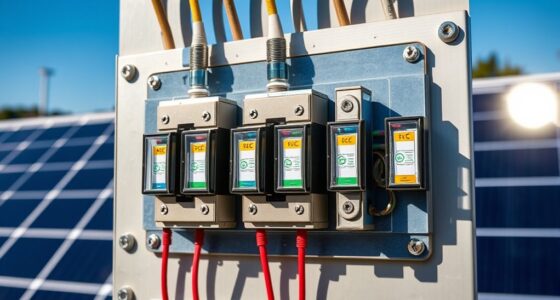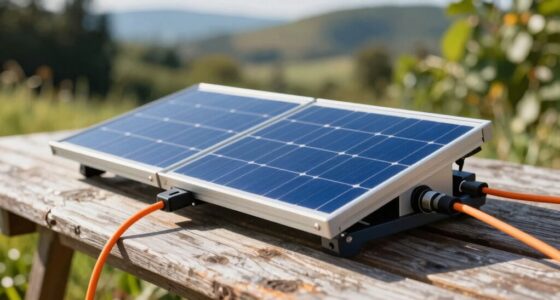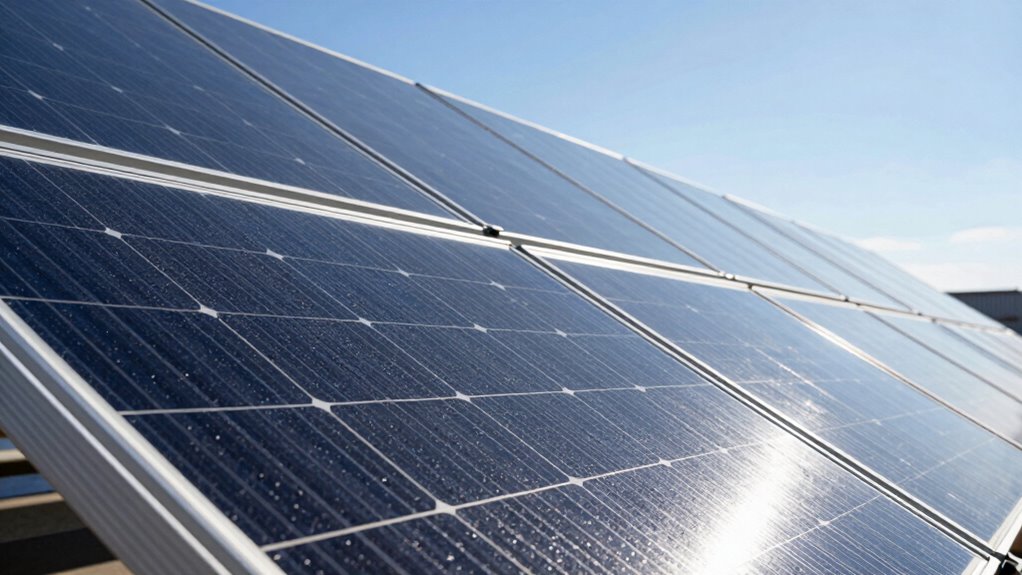

Solar arrays manage heat and reduce efficiency loss through a mix of design features and materials. They use reflective coatings and specialized backings to reflect solar radiation, while proper spacing and orientation improve airflow for cooling. Some systems incorporate active cooling methods like liquid cooling, especially in hot climates. Durable, heat-resistant materials help maintain performance over time. To discover more about how these strategies work together to maximize energy output, keep exploring the options available.
Open a free Amazon Business account
Business pricing, bulk buying and tax-exempt orders.
As an affiliate, we earn on qualifying purchases.
Key Takeaways
- Solar arrays use passive cooling techniques like reflective coatings and panel spacing to reduce heat absorption.
- Active cooling methods, such as liquid cooling systems, help maintain optimal panel temperatures.
- Materials with high thermal conductivity and heat-resistant properties improve heat dissipation and durability.
- Proper installation and orientation optimize airflow and natural cooling to minimize efficiency loss.
- Regular maintenance prevents dust and debris buildup, which can trap heat and reduce panel performance.
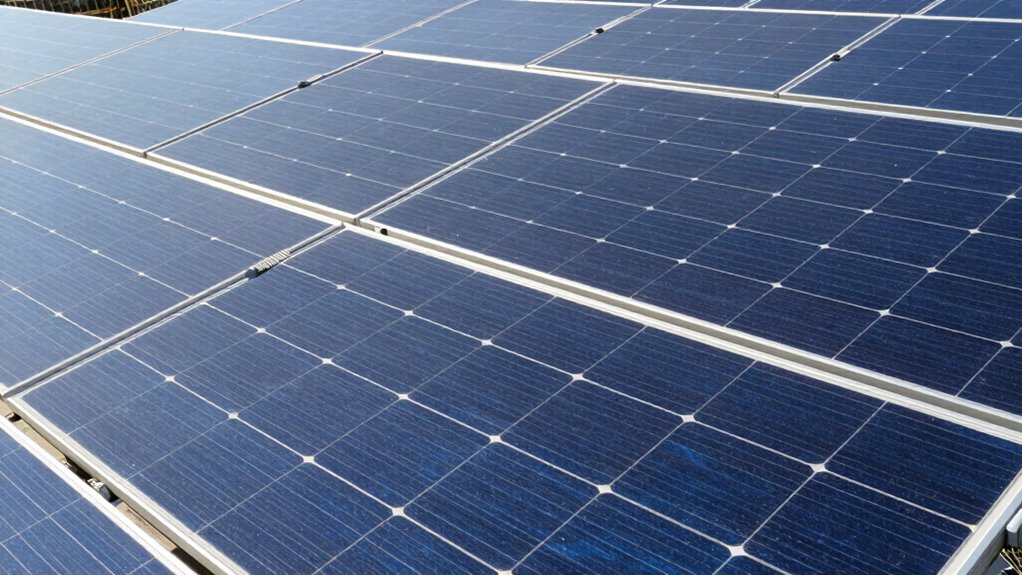
Solar arrays are a pivotal technology for harnessing renewable energy, but their efficiency depends heavily on managing heat. When sunlight hits the panels, it generates electricity, but excess heat can considerably reduce this efficiency. That’s why effective thermal management becomes indispensable. You need systems in place to keep the panels cool, guaranteeing they operate at ideal temperatures. These systems can include passive techniques like ventilation and reflective coatings, or active cooling methods such as liquid cooling or fans. The goal is to prevent the panels from overheating, which causes the photovoltaic cells to work less efficiently, decreasing energy output.
Material durability also plays an essential role in how well solar arrays handle heat. The materials used in constructing solar panels must withstand high temperatures without degrading over time. If the materials aren’t durable enough, prolonged exposure to heat can lead to cracking, warping, or delamination, all of which impair performance. You want panels built with high-quality, heat-resistant materials that can endure environmental stresses without losing their structural integrity. This resilience guarantees the longevity of the system and maintains efficiency despite temperature fluctuations. Additionally, understanding heat transfer mechanisms can help in designing better cooling systems that optimize energy efficiency.
Durable, heat-resistant materials ensure solar panels withstand high temperatures and maintain long-term efficiency.
To maximize thermal management, manufacturers often incorporate heat-dissipating features directly into the panel design. For instance, some solar arrays include aluminum backing or specialized coatings that reflect solar radiation, reducing heat absorption. These innovations help keep the cells cooler and maintain higher efficiency levels. Proper installation techniques also matter—placing panels with appropriate spacing allows for better airflow, aiding in natural cooling. In addition, integrating active cooling systems might be necessary in high-temperature environments, especially for large-scale solar farms or concentrated solar power systems. Incorporating thermal management strategies during installation can significantly improve overall panel performance in challenging climates. Furthermore, selecting the right orientation and tilt angle can facilitate better heat dissipation and cooling efficiency.
You should also consider the environment where the panels are installed. Hotter climates require more robust thermal management strategies and materials with high durability. Regular maintenance, such as cleaning dust and debris, can prevent heat buildup and guarantee optimal cooling. When panels are well-designed with thermal management in mind and made from durable materials, they can sustain performance over many years, even under harsh conditions. Moreover, being aware of the thermal conductivity of panel materials can influence cooling solution effectiveness. Recognizing the importance of environmental factors can lead to more tailored and efficient cooling solutions.
As an affiliate, we earn on qualifying purchases.
Frequently Asked Questions
How Do Different Weather Conditions Affect Solar Array Heating?
Different weather conditions greatly impact solar array heating. On hot, sunny days, ambient temperature effects can cause panels to overheat, reducing efficiency despite ample sunlight. Snow or rain can cool panels, improving performance but potentially causing shading issues. Solar panel coatings help manage heat and mitigate temperature fluctuations, ensuring better efficiency. You should consider these weather factors and coatings when evaluating your solar system’s performance, especially in varying climates.
Can Cooling Systems Extend Solar Panel Lifespan?
Yes, cooling technology can extend your solar panel’s lifespan. By reducing the heat they endure, cooling systems prevent thermal stress and degradation of materials. This not only maintains peak efficiency but also prolongs the panels’ durability over time. Implementing effective cooling solutions, like passive cooling or liquid cooling, helps your solar arrays stay cooler, ultimately leading to better performance and a longer service life.
What’s the Role of Shading in Heat Buildup?
Shading plays a key role in heat buildup by reducing direct sunlight, which helps manage heat and improves overall efficiency. Proper shade management prevents hot spots that cause uneven heating and damage. By strategically shading parts of your solar array, you support heat mitigation, keeping panels cooler and maintaining ideal performance. Effective shade management ensures your system operates efficiently, especially during peak sunlight hours, extending its lifespan and maximizing energy output.
Are There Materials That Better Resist Heat-Induced Efficiency Loss?
Yes, materials with high material durability and low thermal conductivity help resist heat-induced efficiency loss in solar arrays. These materials prevent excessive heat buildup, allowing your solar panels to operate more effectively even in hot conditions. For example, using advanced composites or specialized coatings can improve heat resistance, ensuring your panels maintain ideal performance and prolonging their lifespan. Choosing the right materials is key to maximizing energy output in hot environments.
How Do Solar Array Manufacturers Test Heat Resistance?
Imagine a solar panel basking under a blazing sun, its surface tested by intense heat. Manufacturers simulate this by exposing panels to high temperatures in controlled environments, ensuring they meet rigorous manufacturing standards. They measure thermal regulation efficiency, monitor temperature fluctuations, and observe performance drops. This process guarantees the panels can endure real-world heat, maintaining peak performance and longevity even in scorching conditions.
high heat resistant solar panels
As an affiliate, we earn on qualifying purchases.
As an affiliate, we earn on qualifying purchases.
Conclusion
As you explore how solar arrays combat heat and maintain efficiency, remember that ongoing innovations hint at even more surprising solutions. Will new materials or designs reveal the full potential of these solar giants? The future holds secrets that could revolutionize clean energy. Stay curious and watch closely — what’s coming next might just change everything you thought you knew about solar power’s resilience. The next breakthrough could be closer than you think.
As an affiliate, we earn on qualifying purchases.
As an affiliate, we earn on qualifying purchases.
NFL season / tailgating Picks
team gear
As an affiliate, we earn on qualifying purchases.