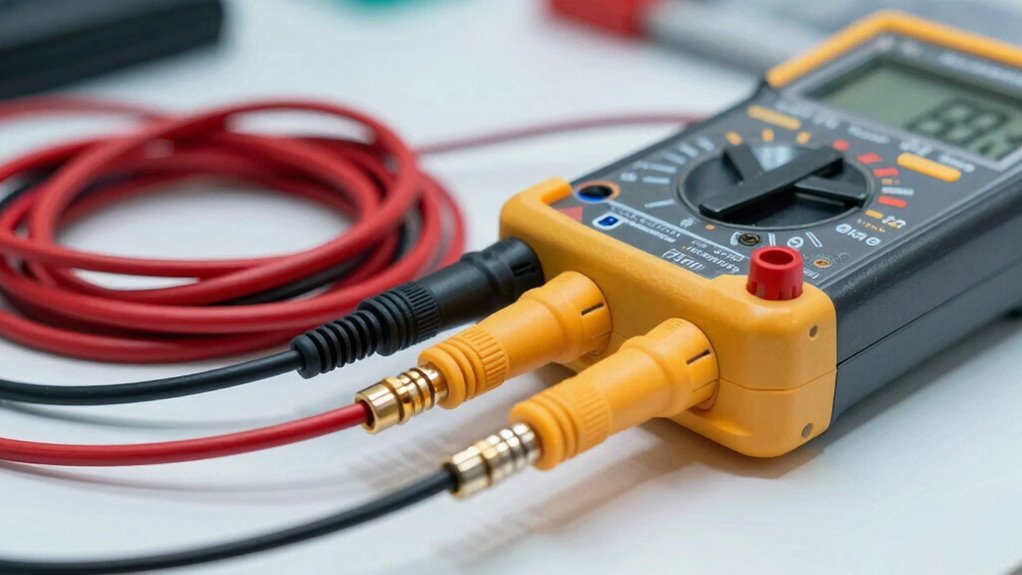

Using good test leads guarantees your measurements are accurate and reliable, reducing errors caused by worn or poor-quality cables. They help minimize electromagnetic interference, leading to clearer signals and safer testing conditions. Well-designed leads also protect against electrical shocks and prevent damage to your equipment, extending their lifespan. Investing in high-quality leads boosts both safety and precision. Keep exploring to discover how choosing the right leads can make your measurements safer and more dependable.

Get backup power and energy gear delivered free with Prime
- Fast, free delivery on millions of items
- Prime Video, Amazon Music and more included
- Member-only deals all year
Key Takeaways
- High-quality test leads ensure accurate measurements, reducing errors and enhancing safety during diagnostics.
- Proper shielding minimizes electromagnetic interference, leading to clearer, more reliable signals.
- Durable leads prevent degradation and faulty readings, maintaining measurement safety over time.
- Appropriate material composition enhances insulation, reducing the risk of electrical shocks and equipment damage.
- Regular inspection and maintenance of leads promote consistent performance and safer testing environments.

When working with electrical measurements, using the right test leads is crucial for safety and accuracy. The quality of your test leads directly impacts the reliability of your readings, especially when it comes to calibration precision. Good test leads ensure that the measurements you take are exact, which is essential for diagnosing problems, maintaining equipment, or conducting experiments. Cheap or worn-out leads can introduce errors, leading to inaccurate data that might cause you to misjudge a circuit’s condition. Investing in high-quality test leads minimizes these inaccuracies, giving you confidence that your readings reflect the true state of the system.
Another critical aspect to contemplate is how well your test leads minimize signal interference. Poorly shielded or low-quality leads are more susceptible to picking up electromagnetic noise from nearby equipment or power lines. This interference can distort your measurements, making it harder to distinguish actual signals from background noise. When you use well-designed test leads with proper shielding and insulation, you reduce the chances of signal interference, ensuring clearer, more reliable data. This clarity is especially important when working with delicate signals or low-voltage measurements where even slight noise can skew results. Additionally, test lead quality plays a vital role in maintaining consistent measurement performance over time. Properly maintained and high-quality leads also help prevent measurement errors caused by degraded components or poor connections. Using proper storage practices for your test leads can further extend their lifespan and preserve measurement accuracy. Regular inspection and cleaning of your test leads further ensure their optimal performance and reliable measurements. To ensure longevity and performance, understanding the material composition of your test leads can help you select the best options for your specific applications.
high quality test leads for multimeters
As an affiliate, we earn on qualifying purchases.
As an affiliate, we earn on qualifying purchases.
Frequently Asked Questions
How Do I Choose the Right Test Leads for My Equipment?
To choose the right test leads for your equipment, start by checking test lead compatibility with your devices. Confirm the connectors fit securely and match voltage ratings. Consider lead length and insulation quality for safety and convenience. Store your leads properly with lead storage tips—coiled neatly and kept in a dry place—to prevent damage. Selecting the right leads enhances measurement accuracy and safety during testing.
What Safety Standards Should Test Leads Meet?
You should guarantee your test leads meet safety standards like IEC 61010 and CAT ratings that specify their use in different environments. Focus on material durability to withstand wear and tear, and check insulation quality to prevent electrical shocks. Using leads that adhere to these standards guarantees safer measurements, reduces risks, and maintains equipment integrity. Always verify certification labels before purchasing or using test leads for reliable and safe operation.
Can Inexpensive Test Leads Affect Measurement Accuracy?
Inexpensive test leads can considerably impact measurement accuracy, especially if they lack durability or have poor insulation. Studies show that low-quality leads are prone to signal interference, which can skew readings by up to 15%. These cheap leads often wear out faster, increasing the risk of faulty connections. Ultimately, investing in higher-quality test leads guarantees reliable results and safer measurements, saving you time and preventing costly errors.
How Often Should Test Leads Be Inspected or Replaced?
You should inspect your test leads regularly—at least once a month—and replace them if you notice damage or wear, especially considering lead durability. Follow your calibration frequency guidelines, typically annually or more often if used heavily or in harsh environments. Proper inspections guarantee accurate measurements and safety. Replacing leads when needed prevents erroneous readings and potential hazards, maintaining both measurement integrity and your safety during testing.
What Are Common Mistakes When Using Test Leads?
Don’t bungle your measurements like a caveman with a stone tablet. Common mistakes include using damaged or worn-out test leads, which compromise durability and measurement consistency. Always guarantee leads are properly connected, not tangled, and free from cracks or exposed wires. Ignoring these details can lead to inaccurate readings and safety hazards. Regularly inspecting your test leads keeps them reliable, prolongs their life, and guarantees safer, more precise measurements.
As an affiliate, we earn on qualifying purchases.
Conclusion
By choosing quality test leads, you open the secret to safer, more accurate measurements—it’s like wielding a shield against potential hazards. Never underestimate the power of good leads; they transform your testing experience from risky to rock-solid. Skimping on quality isn’t just a bad idea—it’s inviting disaster into your workspace. Invest wisely in your tools, because when it comes to safety and precision, good test leads are truly your best defense—more essential than you might realize.
As an affiliate, we earn on qualifying purchases.
durable test leads for electrical diagnostics
As an affiliate, we earn on qualifying purchases.
As an affiliate, we earn on qualifying purchases.
Halloween Picks
halloween
As an affiliate, we earn on qualifying purchases.