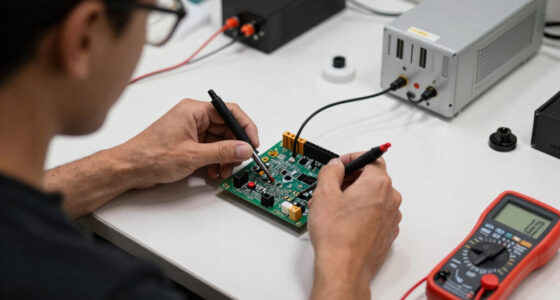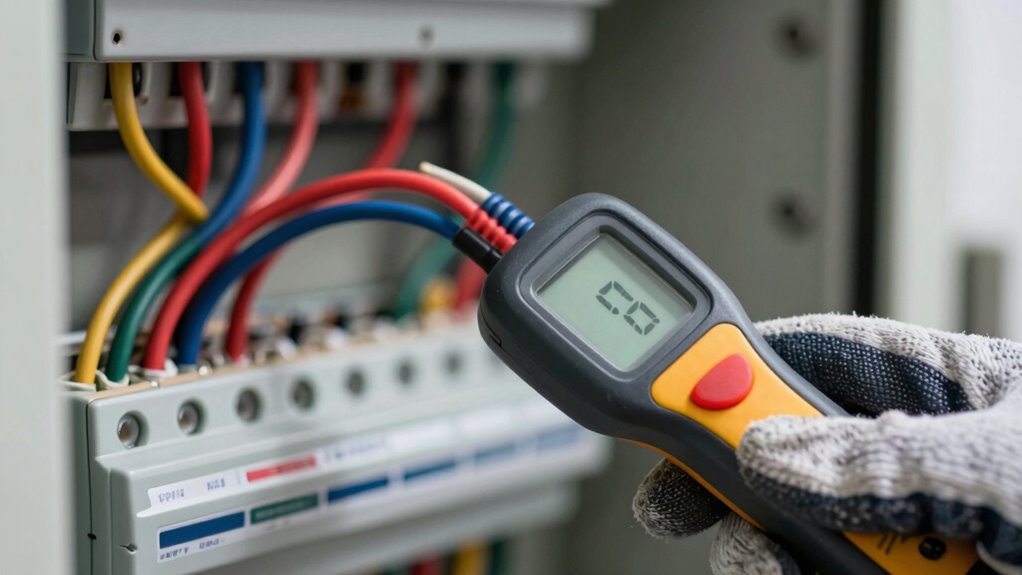

Non-contact voltage testers can quickly tell you if a wire or outlet is live, helping you identify energized circuits without touching them. However, they can’t tell you how much voltage is present, if the wiring is correct, or if it’s safe to work on. They’re useful for initial safety checks, but environmental factors and damage can affect accuracy. To learn more about their proper use and limitations, keep exploring.

Get backup power and energy gear delivered free with Prime
- Fast, free delivery on millions of items
- Prime Video, Amazon Music and more included
- Member-only deals all year
Key Takeaways
- They can detect the presence of voltage without direct contact but cannot measure its exact amount.
- They indicate if a circuit is live but cannot confirm proper wiring or grounding.
- They may produce false positives or negatives due to environmental factors or weak batteries.
- They cannot identify electrical faults, proper wiring, or circuit safety beyond voltage presence.
- Always verify with a multimeter and follow safety guidelines, as testers have limitations.
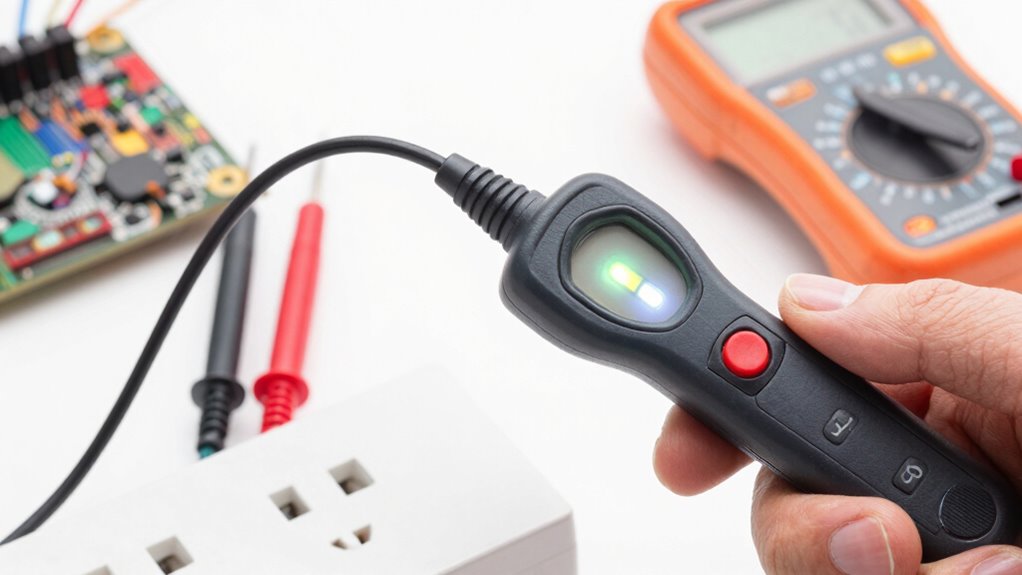
Non-contact voltage testers are handy tools that can quickly help you determine if a wire or outlet is energized, but understanding what they can and can’t tell you is essential for safe and effective use. When you’re working around electricity, safety precautions should always be your top priority. These testers are designed to detect the presence of voltage without making direct contact with the conductor, making them a valuable safety device. However, they are not infallible, and relying solely on them without understanding their limitations can lead to unsafe situations. Familiarize yourself with electrical standards in your area, and always follow manufacturer instructions and safety guidelines when using these testers.
These testers can reliably indicate whether a circuit is live by sensing the electric field around a wire or outlet. If the tester glows or beeps, you know there’s voltage present. This feature helps you quickly identify energized circuits, ensuring you don’t accidentally cut into live wires. But remember, a non-contact tester can sometimes give false negatives, especially if the voltage is low or if the device’s battery is weak. Conversely, they may occasionally give false positives due to nearby electrical fields or interference. So, while they are excellent for initial checks, you shouldn’t rely on them exclusively to determine if a circuit is completely de-energized. Understanding requirements traceability in electrical testing can further enhance your safety practices. Additionally, it’s important to recognize that environmental conditions, such as moisture or dust, can also affect the tester’s accuracy. Regularly testing your tools and understanding their limitations can help prevent misinterpretations.
What they cannot tell you is the amount of voltage present or whether a wire is properly grounded. They also can’t detect whether a circuit is safe to work on or if it’s properly wired according to electrical standards. For example, if a wire is damaged or improperly installed, the tester might still register as live, but that doesn’t mean it’s safe to handle. Additionally, non-contact testers can’t identify faults or other issues that might cause electrical hazards. For this reason, they should be used as a preliminary safety check rather than a definitive test. Always verify with a multimeter or a more comprehensive testing device if you need detailed information about voltage levels or wiring conditions. Using the correct tools and techniques for electrical testing can significantly improve safety and accuracy in your work.
digital multimeter for electrical testing
As an affiliate, we earn on qualifying purchases.
As an affiliate, we earn on qualifying purchases.
Frequently Asked Questions
Can Non-Contact Testers Identify the Exact Voltage Level?
Non-contact testers can’t identify the exact voltage level, as their main function is to detect presence, not measure voltage accuracy. They may give you a general indication of voltage, but calibration issues can affect their reliability, leading to inaccurate readings. You’ll need a contact voltage tester or multimeter for precise measurements. Always remember, non-contact testers are useful for safety checks but shouldn’t replace more accurate tools when exact voltage levels matter.
Are Non-Contact Testers Reliable for All Wire Types?
Non-contact testers are generally reliable for most wire types, but their accuracy depends on proper wire insulation and correct tester calibration. If the wire’s insulation is damaged or worn, the tester might give false readings. Regularly calibrate your tester to make certain of consistent results. Keep in mind that extremely high or low voltage levels might not be accurately detected, especially with wires that have thick or unusual insulation.
Do Testers Detect Voltage in Sealed or Insulated Cables?
Non-contact voltage testers generally can’t detect voltage in sealed or insulated cables due to insulation limitations. The testers rely on electromagnetic fields, which can’t penetrate thick or sealed insulation effectively. Your device’s compatibility with different cable types matters—some testers perform better with certain materials. So, for sealed or highly insulated cables, you may need a contact tester or other testing methods, as non-contact testers might not give reliable readings.
Can They Distinguish Between Live and Neutral Wires?
Yes, non-contact voltage testers can distinguish between live and neutral wires by detecting the voltage present, often indicated by a change in the tester’s light or sound. Wire color helps identify the purpose of a wire, but always verify with testing. Keep in mind, testing duration should be brief; prolonged testing can lead to false readings. Always exercise caution and double-check with proper tools.
Are Non-Contact Testers Safe to Use on All Electrical Systems?
Non-contact testers are generally safe for most electrical systems if you follow safety precautions, like wearing insulated gloves and keeping a safe distance. However, guarantee you perform calibration procedures regularly to maintain accuracy. Avoid using them on damaged or wet equipment, and always double-check readings with a multimeter if you’re unsure. These steps help protect you and ensure reliable results across different electrical systems.
non-contact voltage tester with audible alert
As an affiliate, we earn on qualifying purchases.
As an affiliate, we earn on qualifying purchases.
Conclusion
Remember, non-contact voltage testers are handy tools, but they have limits. They can quickly detect the presence of voltage, helping you avoid shocks, but they won’t tell you the exact voltage level or if a wire is live but harmless. Did you know that over 80% of electrical accidents happen because of misjudging voltage presence? So, always double-check with more precise tools and follow safety protocols to stay safe and avoid surprises.
electrical circuit tester for safety checks
As an affiliate, we earn on qualifying purchases.
As an affiliate, we earn on qualifying purchases.
grounding tester for electrical wiring
As an affiliate, we earn on qualifying purchases.
As an affiliate, we earn on qualifying purchases.
Halloween Picks
halloween
As an affiliate, we earn on qualifying purchases.