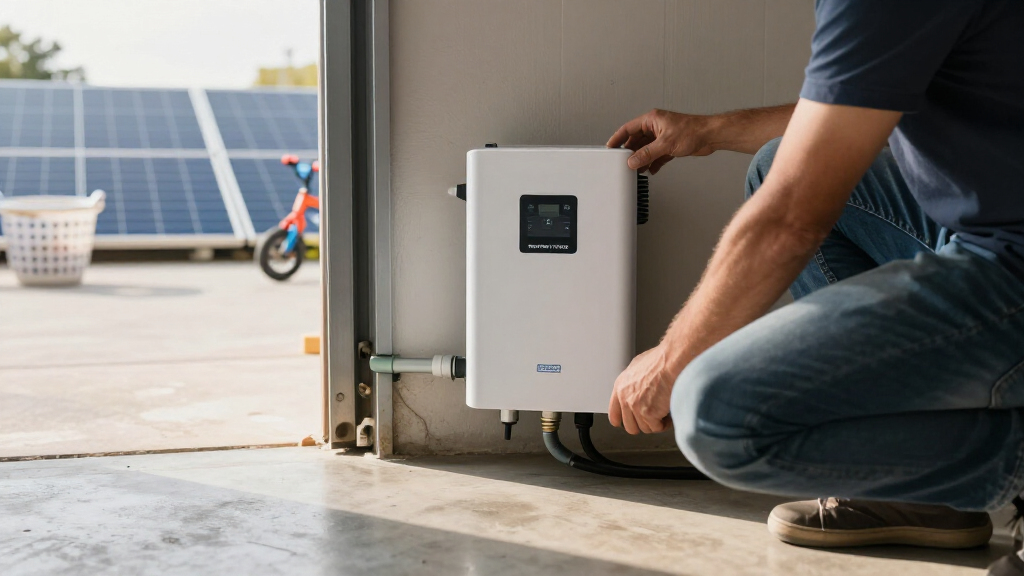

Whole-house solar inverters need to match your home’s 120/240V loads, solar array, battery bank and grid setup; a high wattage label alone does not tell the whole story. I’d put the SUNGOLDPOWER SPH8048P first for its 8,000W split-phase output, dual MPPTs and UL1741 certification, while the Growatt 10,000W stands out for buyers who need more output and phase flexibility. The ECO-WORTHY 6KW is a more approachable option for a smaller system, though its capacity leaves less room for large simultaneous loads. Across this group, the main tradeoffs are output headroom, grid compatibility, solar charging capacity and setup complexity. Read on for how each inverter fits a different whole-home plan and what to check before choosing.

Get backup power and energy gear delivered free — and shop member deals
- Fast, free delivery on millions of items
- Access to Prime Big Deal Days deals on October 6–7
- Prime Video, Amazon Music and more included
Key Takeaways
- SUNGOLDPOWER SPH8048P is the most balanced pick here: 8,000W split-phase output, two MPPTs and UL1741 certification suit many residential designs, though the battery and panel system still need careful matching.
- The two 12,000W SUNGOLDPOWER FR12K-B and POWLAND models target high simultaneous loads; their larger output only helps if the battery bank can supply the required current.
- Growatt’s 10,000W model is the standout when three-phase support matters, a capability the split-phase focused options do not advertise.
- The 5,000W Ampinvt and 6,000W ECO-WORTHY make more sense for limited loads or staged systems than for homes expecting to run many large appliances together.
- Several models list UL1741 certification, but specifications alone do not confirm that a complete installation meets local utility, permitting and grid-interconnection requirements.
| HumsiENK 8000W 48V Hybrid Solar Inverter, 120/240V Split Phase with 10000W MPPT Charger, UL1741 Certified |  | Best Overall | Continuous Output Power: 8000W (12000W surge) | Output Voltage: 120/240V split phase, 60 Hz pure sine wave | Battery Voltage: 48V DC | VIEW LATEST PRICE | See Our Full Breakdown |
| 6500W Hybrid Solar Inverter, 48V Split Phase 120V, Dual MPPT 300V/60A Charger |  | Best Value | System Voltage: 48V DC | Output: 120V AC split phase, pure sine wave | Max PV Array Power: 4500W + 4500W (dual channel) | VIEW LATEST PRICE | See Our Full Breakdown |
| Ampinvt 5000W 48V Off-Grid Pure Sine Wave Solar Inverter with 100A MPPT Charger |  | Best for Cabins and Small Off-Grid Homes | Battery Voltage: 48V | Output Voltage: 120V; supports 120/208/240V configurations | Waveform: Pure sine wave | VIEW LATEST PRICE | See Our Full Breakdown |
| SUNGOLDPOWER SPH8048P 8000W 48V Pure Sine Wave Solar Inverter, Split Phase 120V/240V, UL1741 Certified |  | Best for Battery-Charging Muscle | Continuous Output Power: 8000W (16000W peak) | Output Voltage: 120V/240V AC split phase, settable, 60 Hz | Battery Voltage: 48V DC | VIEW LATEST PRICE | See Our Full Breakdown |
| SUNGOLDPOWER 12000W 48V Split Phase All-in-One Solar Inverter (FR12K-B) |  | Best Premium for Large Homes | Continuous Output Power: 12000W | Output: 120V/240V split phase, pure sine wave | Battery Voltage: 48V (40–60Vdc) | VIEW LATEST PRICE | See Our Full Breakdown |
| Growatt 10,000W Hybrid Solar Inverter, 48V, Split-Phase and Three-Phase |  | Best Overall | Battery voltage: 48V | Output configurations: 120/240V split-phase or 120/208V three-phase | Maximum solar input: 15,000W | VIEW LATEST PRICE | See Our Full Breakdown |
| ECO-WORTHY 6KW 48V Split-Phase All-in-One Solar Inverter with 9kW MPPT Charger |  | Best Value for Mid-Size Homes | Continuous output power: 6000W | Peak output power: 12000W | Output voltage: 120/240V AC split-phase, pure sine wave | VIEW LATEST PRICE | See Our Full Breakdown |
| POWLAND 12000W Hybrid Solar Inverter, 48V DC to 120V/240V AC Split Phase, Dual 200A MPPT, UL1741 |  | Best for High-Demand Households | Continuous output power: 12000W | AC output: 120V/240V split phase | MPPT: Built-in dual 200A, 99.9% efficiency | VIEW LATEST PRICE | See Our Full Breakdown |
| SUNGOLDPOWER SPH10048P 10000W 48V Pure Sine Wave Solar Inverter with 2 MPPTs | | Best for Battery Flexibility | Continuous output power: 10000W | Peak output power: 20000W | Output voltage: 120V/240V AC (settable split or single phase) | VIEW LATEST PRICE | See Our Full Breakdown |
| ECO-WORTHY 10,000W 48V Off-Grid Solar Inverter Charger with Dual MPPT |  | Best for True Off-Grid Setups | Power: 10,000W | Output: 120V/240V split-phase or 120V single-phase | Solar controllers: 2 independent MPPT controllers | VIEW LATEST PRICE | See Our Full Breakdown |
| whole house solar inverter | Continuous Output Power | Battery Compatibility | Output Voltage | Battery Voltage |
|---|---|---|---|---|
| HumsiENK 8000W 48V Hybrid Sola | 8000W (12000W surge) | — | 120/240V split phase, 60 Hz pure sine wave | 48V DC |
| 6500W Hybrid Solar Inverter | — | Lead acid / lithium with BMS communication | — | — |
| Ampinvt 5000W 48V Off-Grid Pur | — | 48V lead-acid and LiFePO4 lithium | 120V; supports 120/208/240V configurations | 48V |
| SUNGOLDPOWER SPH8048P 8000W 48 | 8000W (16000W peak) | 48V AGM/Sealed, Gel, Flooded, Lithium; battery-free operation supported | 120V/240V AC split phase, settable, 60 Hz | 48V DC |
| SUNGOLDPOWER 12000W 48V Split | 12000W | — | — | 48V (40–60Vdc) |
| Growatt 10,000W Hybrid Solar I | — | — | — | 48V |
| ECO-WORTHY 6KW 48V Split-Phase | 6000W | — | 120/240V AC split-phase, pure sine wave | — |
| POWLAND 12000W Hybrid Solar In | 12000W | 48V LiFePO4 and lead-acid | — | — |
| SUNGOLDPOWER SPH10048P 10000W | 10000W | AGM, Gel, Flooded, Lithium, User Mode; battery-free capable | 120V/240V AC (settable split or single phase) | — |
| ECO-WORTHY 10,000W 48V Off-Gri | — | AGM, Gel, Flooded, Lithium | — | — |
More Details on Our Top Picks
HumsiENK 8000W 48V Hybrid Solar Inverter, 120/240V Split Phase with 10000W MPPT Charger, UL1741 Certified
This option stands out for balancing raw capability with genuinely whole-house readiness at a manageable size. Compared with the SUNGOLDPOWER SPH8048P, which matches the 8000W output, the HumsiENK accepts 10000W of PV input through its dual-channel MPPT and does it in a chassis that’s nearly 20 pounds lighter — a real difference when you’re the one holding it against a wall. The native 120/240V split phase output means a well pump or electric dryer runs without external transformers, and the ≤10ms switchover keeps computers and HVAC control boards from rebooting during outages. Scalability to 48kW via six parallel units gives it headroom the smaller 6500W unit simply can’t offer. The tradeoff: it’s from a newer brand, so long-term firmware support and warranty service are less proven than established names, and batteries cost extra.
Pros:- All-in-one design bundles inverter, 10000W MPPT charger, and 160A battery charger in one unit
- Native 120/240V split phase runs heavy 240V appliances without an external transformer
- ≤10ms UPS switchover protects sensitive electronics through outages
- Scalable to 48kW with six parallel units and app-based remote monitoring
Cons:- At 35 lbs it requires wall mounting, which complicates solo installation
- Batteries sold separately, so full backup capability needs added investment
- Relatively unknown brand raises questions about long-term support and firmware updates
Best for: Homeowners building a true whole-house backup system who want 240V appliance support and room to expand later
Not ideal for: Buyers who prioritize a proven, established brand with a long support track record — this is a newer name in the market
- Continuous Output Power:8000W (12000W surge)
- Output Voltage:120/240V split phase, 60 Hz pure sine wave
- Battery Voltage:48V DC
- MPPT Solar Charger Capacity:10000W dual-channel
- Battery Charger Current:160A
- UPS Switching Time:≤10ms
- Parallel Capability:Up to 6 units (48kW total)
- Certifications:UL1741, FCC Part 15 Class B
Our verdict“The strongest all-around pick for a scalable whole-house system, provided you’re comfortable with a newer brand.”
6500W Hybrid Solar Inverter, 48V Split Phase 120V, Dual MPPT 300V/60A Charger
Where the HumsiENK 8000W and the SUNGOLDPOWER FR12K-B push big wattage for full-home coverage, this 6500W model makes its case on flexibility per dollar. The headline feature is battery-less operation — it runs directly from solar during the day, so you can start a system now and add batteries later, something most competitors don’t allow as gracefully. Its dual MPPT channels accept up to 9000W of panels, which is generous for the output rating, and the four operation modes (Utility, Battery, Solar, Hybrid) let you tune energy strategy to your utility rates. The compromises are real, though: a 300V max PV open-circuit voltage is far less forgiving of high-voltage string designs than the 500V-rated SUNGOLDPOWER units, there’s only one AC output, and WiFi monitoring is an optional add-on rather than included.
Pros:- Runs with or without a battery connected, allowing staged system builds
- Dual MPPT channels accept up to 9000W of PV input
- Compatible with lead acid and lithium batteries including BMS communication
- Four configurable operation modes for flexible energy management
Cons:- 300VDC max PV open-circuit voltage limits string design options
- Single AC output restricts circuit separation strategies
- WiFi/GPRS remote monitoring costs extra rather than shipping included
Best for: Budget-conscious builders who want to phase in a solar system — panels first, batteries later
Not ideal for: Homes with 240V appliances like well pumps or electric dryers, since output is limited to 120V
- System Voltage:48V DC
- Output:120V AC split phase, pure sine wave
- Max PV Array Power:4500W + 4500W (dual channel)
- Max PV Open Circuit Voltage:300VDC
- Max Solar Charge Current:150A (configurable)
- Battery Compatibility:Lead acid / lithium with BMS communication
- Operation Modes:UTL, BAT, SOL, HBR
- Parallel Support:Yes
Our verdict“The smart entry point for buyers who want hybrid functionality and solar-first expansion without paying for output they don’t need yet.”
Ampinvt 5000W 48V Off-Grid Pure Sine Wave Solar Inverter with 100A MPPT Charger
Not every whole-house project is a 4000-square-foot suburban home. The Ampinvt 5000W is sized for cabins, workshops, and small off-grid houses where the load list is lights, a fridge, a well pump, and maybe a mini-split. Compared with the 6500W hybrid unit, it trades peak wattage for a wider 60–500V DC PV input range and 98% MPPT tracking efficiency, which gives installers more freedom with long panel strings or awkward roof orientations. The four charging modes — including mains-and-solar hybrid — mean a generator or shore power can supplement cloudy weeks. Its flexible output configurations (120/208/240V) are unusual at this power class. The drawbacks are mostly in the details: WiFi monitoring requires an optional module, and USB configuration demands a CH340T driver install that will frustrate anyone who isn’t comfortable poking around device settings.
Pros:- Wide 60–500V DC PV input range with 98% MPPT tracking efficiency
- Flexible 120/208/240V output configurations
- Four charging modes including hybrid mains-and-solar
- Built-in transfer switch and generator control contacts
Cons:- WiFi monitoring requires an optional add-on module
- USB configuration requires CH340T driver installation
- Lower output than similarly priced hybrid competitors
Best for: Off-grid cabin or small-home owners who need dependable mid-size power and flexible PV wiring
Not ideal for: Households running central air conditioning or multiple 240V appliances simultaneously — 5000W continuous won’t cover it
- Battery Voltage:48V
- Output Voltage:120V; supports 120/208/240V configurations
- Waveform:Pure sine wave
- MPPT Charge Controller:100A, up to 98% tracking efficiency
- Maximum PV Power:5500W
- PV Input Voltage:60–500V DC
- Battery Compatibility:48V lead-acid and LiFePO4 lithium
- Communication:RS485/Wi-Fi and USB
Our verdict“A sensible mid-size choice for modest off-grid loads where wiring flexibility matters more than raw wattage.”
SUNGOLDPOWER SPH8048P 8000W 48V Pure Sine Wave Solar Inverter, Split Phase 120V/240V, UL1741 Certified
The SPH8048P earns its spot with a 200A maximum charging current — the highest in this batch alongside its bigger sibling — paired with 16000W peak surge that handles motor starts like compressors and table saws. Compared with the HumsiENK 8000W, it’s heavier at 53.5 lbs but gives back a 500VDC max open-circuit voltage (versus tighter limits elsewhere), opening up more string configurations, plus time-slot charging and discharging that lets you exploit off-peak utility rates. WiFi monitoring ships included here rather than as an optional extra, a genuine convenience the 6500W unit doesn’t match. The catch is ecosystem coupling: parallel operation and some app features work best within the SunGoldPower battery ecosystem, which limits your component choices if you already own another brand’s batteries. And that weight means a two-person install, minimum.
Pros:- 200A max battery charging refills large banks quickly
- Time-slot charging/discharging optimizes around peak and off-peak tariffs
- 500VDC max open-circuit voltage allows flexible string wiring
- WiFi monitoring included plus BMS communication
Cons:- 53.5 lbs makes installation genuinely difficult without help
- Parallel operation and app features are limited outside the SunGoldPower battery ecosystem
Best for: Owners of large battery banks who need fast recharging and time-of-use rate optimization
Not ideal for: Buyers with existing third-party battery banks, since parallel and app features lean toward the SunGoldPower ecosystem
- Continuous Output Power:8000W (16000W peak)
- Output Voltage:120V/240V AC split phase, settable, 60 Hz
- Battery Voltage:48V DC
- Max Battery Charging Current:200A
- Max Open Circuit Voltage:500VDC
- Battery Compatibility:48V AGM/Sealed, Gel, Flooded, Lithium; battery-free operation supported
- Connectivity:WiFi included; CAN, USB, RS485 (BMS)
- Certification:UL1741
Our verdict“The pick for fast battery turnaround and tariff scheduling, best bought as part of a matched SunGoldPOWER system.”
SUNGOLDPOWER 12000W 48V Split Phase All-in-One Solar Inverter (FR12K-B)
When 8000W isn’t enough — central air plus an electric water heater plus a workshop — the FR12K-B is the answer in this lineup. Its 12kW continuous output and 13.2kW of dual-MPPT PV input outmuscle everything here except parallel-stacked systems, and unlike the POWLAND 12000W competitor in this roundup, it adds built-in AC breakers and PV rapid shutdown, cutting separate breaker hardware and improving firefighter safety compliance. Scaling to 72kW across six parallel units means even a fully electric rural property can start with one unit and grow. The tradeoffs are the flip side of that capability: it demands a 48V battery bank (no lower-voltage compatibility), weighs enough that a professional electrician is realistic if not required, and at this class you’re paying a premium for headroom a smaller home will never use. Overkill is expensive; so is a brownout.
Pros:- 12kW continuous output with 120V/240V split phase for heavy appliances
- 13.2kW dual-MPPT PV input capacity
- Scalable parallel operation up to 6 units (72kW total)
- Built-in AC breakers and PV rapid shutdown simplify installation and safety
Cons:- Strictly requires a 48V battery system, incompatible with lower-voltage setups
- Heavy-duty installation realistically requires a professional electrician
Best for: Owners of large or all-electric homes and workshops needing 12kW+ of continuous whole-house power
Not ideal for: Small homes and cabins — the output and price are wasted on modest loads, and installation demands outweigh the benefit
- Continuous Output Power:12000W
- Output:120V/240V split phase, pure sine wave
- Battery Voltage:48V (40–60Vdc)
- Max PV Input:13200W (6600W + 6600W dual MPPT)
- MPPT Voltage Range:125–425Vdc (500Vdc max open-circuit)
- Solar Charging Current:Up to 200A
- Grid/Generator Charging:Up to 120A
- Parallel Support:Up to 6 units (72kW max)
Our verdict“The heavy-hitter for large all-electric homes, worth the premium only if your load list genuinely exceeds 8kW.”
Growatt 10,000W Hybrid Solar Inverter, 48V, Split-Phase and Three-Phase
This Growatt unit earns the top spot because it is the only inverter in this lineup that handles both split-phase and three-phase output, which matters if your home has a 120/208V service or you plan to expand into a small commercial setup. Compared with the POWLAND 12000W, it gives up a bit of raw continuous power but gains three MPPT trackers instead of relying on dual controllers, so panel strings on different roof faces can be tuned independently. The ability to run grid-tied or off-grid, then parallel up to six units for 60kW, makes it the most flexible long-term platform here. The tradeoff: the 10-year warranty applies only in the United States, and you will need to budget separately for batteries, which are not bundled.
Pros:- Unique three-phase plus split-phase output flexibility
- Three MPPT trackers for complex roof layouts
- Scales to 60kW with six parallel units
- UL 1741 SA/SB certified for grid interaction with under 10ms backup transfer
Cons:- Warranty and after-sales support limited to US customers
- Batteries not included, so total system cost adds up quickly
Best for: Homeowners planning a whole-house system they may expand later, especially those with three-phase service or mixed panel orientations
Not ideal for: Buyers outside the United States, since the 10-year warranty and after-sales support stop at the border
- Battery voltage:48V
- Output configurations:120/240V split-phase or 120/208V three-phase
- Maximum solar input:15,000W
- MPPT trackers:3
- Maximum parallel system capacity:60kW (6 units)
- Maximum efficiency:97.5%
- Backup transfer time:<10ms
- Certifications:UL 1741 (SA/SB), IEEE 1547
- Warranty:10 years (US only)
Our verdict“If you want one inverter platform that can grow with your household and handle unusual electrical service, this is the one to build around.”
ECO-WORTHY 6KW 48V Split-Phase All-in-One Solar Inverter with 9kW MPPT Charger
Not every household needs 10 or 12 kilowatts, and this ECO-WORTHY unit is the smart pick when 6,000W continuous covers your essentials. Its standout trick is packing a 9,000W MPPT charge controller into the chassis, meaning you skip buying a separate charge controller the way you would with some competitors — a real cost and wiring saving. Compared with the larger ECO-WORTHY 10,000W model, it gives up PV headroom and parallel expansion but is far lighter and simpler to mount. The 12,000W peak surge rating is enough to start well pumps and air conditioner compressors, and the touchscreen plus built-in WiFi make monitoring less of a chore than the LCD-only SUNGOLDPOWER units. The catch: split-phase wiring still warrants an electrician, and warranty terms are not spelled out up front.
Pros:- Integrated 9kW MPPT charger eliminates a separate component purchase
- 12,000W peak power handles motor and compressor startup
- Touchscreen display and WiFi monitoring with fault codes
- Multiple output modes plus BMS communication with server rack batteries
Cons:- Split-phase 240V output realistically requires professional installation
- Requires a 48V battery bank, adding meaningful system cost
- No warranty details disclosed up front
Best for: Budget-conscious homeowners or cabin builders who want a true all-in-one unit for split-phase appliances like water heaters and washing machines
Not ideal for: Households running central AC plus multiple large appliances at once — 6kW continuous will run out of headroom
- Continuous output power:6000W
- Peak output power:12000W
- Output voltage:120/240V AC split-phase, pure sine wave
- MPPT capacity:9000W (500VDC max open-circuit)
- Max charging current:120A solar / 100A AC
- Display:LED capacitive touchscreen with WiFi
- Certification:UL
Our verdict“The most complete package for the money if your whole-house needs stop around six kilowatts and you want fewer boxes on the wall.”
POWLAND 12000W Hybrid Solar Inverter, 48V DC to 120V/240V AC Split Phase, Dual 200A MPPT, UL1741
When the question is raw capacity, this POWLAND inverter answers it: 12,000W continuous is enough to run central AC, a refrigerator, and power tools simultaneously without load-shedding anxiety. Its differentiator against the Growatt 10,000W is the optional battery-free mode, which routes excess solar straight to the house and grid — letting you start without a battery bank and cut upfront battery costs substantially. Parallel six units and you reach 72,000W, the highest ceiling in this roundup. The dual 200A MPPT at 99.9% efficiency also squeezes more out of weak morning light than most rivals. The tradeoffs are real: the CT sensor needed for grid feedback is sold separately, and you are locked into 48V battery voltage, so existing 24V banks will not carry over.
Pros:- 12,000W continuous output runs central AC and heavy loads together
- Battery-free mode reduces upfront battery costs by feeding solar directly to home and grid
- Scalable to 72,000W across six parallel units
- IP65 casing and 45dB operation suit garage or covered outdoor installs
Cons:- CT sensor for grid feedback is optional and sold separately
- Locked to 48V battery voltage with no flexibility
Best for: Large households or small RV parks that need serious simultaneous load capacity and want the option to defer battery purchases
Not ideal for: Owners of 24V or 12V battery banks, since this unit only works with 48V systems
- Continuous output power:12000W
- AC output:120V/240V split phase
- MPPT:Built-in dual 200A, 99.9% efficiency
- Solar input range:90-500VDC / 200A
- Battery compatibility:48V LiFePO4 and lead-acid
- Parallel capability:Up to 6 units (72,000W)
- Ingress protection:IP65
- Certification:UL1741
Our verdict“The strongest pick when wattage is the deciding factor and you want the freedom to add batteries later rather than all at once.”
SUNGOLDPOWER SPH10048P 10000W 48V Pure Sine Wave Solar Inverter with 2 MPPTs
What separates this SUNGOLDPOWER model from the pack is how forgiving it is on the battery side: AGM, gel, flooded, lithium, and a user-defined mode are all supported, plus a battery-free option — the widest chemistry spread in this batch. If you already own a mix of older lead-acid banks or want to migrate to lithium gradually, this unit will follow you, unlike the POWLAND’s stricter 48V LiFePO4-or-lead-acid framing. The time-slot scheduling is a quietly valuable feature too, letting you charge from the grid during off-peak tariffs and discharge during peak hours, which trims electricity bills in a way the ECO-WORTHY 6KW cannot match. On the downside, at 54 lbs and 26 inches long it is the most physically demanding install here, and split-phase configuration is genuinely complex without professional help.
Pros:- Widest battery chemistry compatibility including user-defined mode
- Time-slot charging schedules exploit peak and valley electricity tariffs
- 20,000W peak power starts motors up to 6HP
- All-in-one design with dual MPPT controllers and CAN/USB/RS485 ports
Cons:- Heavy at 54 lbs, complicating installation
- Split-phase setup is complex and often needs a professional
Best for: Homeowners with existing lead-acid banks or mixed battery chemistries who also want to exploit time-of-use electricity rates
Not ideal for: DIYers mounting hardware solo — the weight and split-phase wiring complexity make this a two-person, likely professional job
- Continuous output power:10000W
- Peak output power:20000W
- Output voltage:120V/240V AC (settable split or single phase)
- MPPT controllers:2 built-in, 500VDC max open-circuit
- Max battery charging current:200A
- Battery compatibility:AGM, Gel, Flooded, Lithium, User Mode; battery-free capable
- Motor capacity:6HP
- Certification:UL1741
Our verdict“The right choice when your battery situation is unusual or evolving and you want tariff-aware charging as a bonus.”
ECO-WORTHY 10,000W 48V Off-Grid Solar Inverter Charger with Dual MPPT
This model earns its place by being unapologetically built for life away from the grid — and that single-mindedness is the point. It cannot feed power back to the utility, which sounds like a limitation but makes it simpler and better suited to remote properties where net metering is irrelevant. Against the Growatt 10,000W hybrid, you trade grid-tie capability for a straightforward package that still takes 11,000W of PV across two independent MPPT controllers and pushes 200A of charging. Parallel support up to six units for 60kW means even fully off-grid homesteads with heavy loads can scale. The honest tradeoff: skip this if grid interconnection or net metering is anywhere in your future, and plan on a licensed electrician for the permanent AC/DC wiring it demands.
Pros:- Accepts up to 11,000W of PV across two independent MPPT controllers
- Scales to 60kW with six parallel units
- Works with AGM, gel, flooded, and lithium 48V batteries
- Simplified design purpose-built for off-grid reliability
Cons:- Cannot feed power back to the utility grid
- Permanent installation and integrated AC/DC wiring typically require a licensed electrician
Best for: Remote cabins and off-grid homesteads that will never connect to utility power and want maximum solar input per unit
Not ideal for: Anyone who wants net metering or grid sell-back now or later, since grid-tie is not supported at all
- Power:10,000W
- Output:120V/240V split-phase or 120V single-phase
- Solar controllers:2 independent MPPT controllers
- Maximum PV input:11,000W total (2 × 5,500W)
- Maximum battery charging:200A
- Parallel support:Up to 6 units (60kW total)
- Battery compatibility:AGM, Gel, Flooded, Lithium
- Grid-tie capability:Not supported
Our verdict“If your property has no utility connection and never will, this delivers big solar throughput without paying for grid-tie features you cannot use.”

How We Picked
I ranked these inverters around whole-home fit: split-phase 120/240V output, usable continuous wattage, solar charging capacity, battery compatibility, grid or off-grid operation, and listed certifications. For a house, output needs to cover the loads that may run together, while the MPPT inputs and charging limits need to suit the planned array and battery bank. I gave more weight to clear residential capabilities and flexibility than to a large headline wattage on its own.
The SUNGOLDPOWER SPH8048P leads because its 8,000W output, dual MPPTs and UL1741 listing form a balanced combination for many home designs. Higher-output models rank well for heavier loads, but require more from the battery bank and system design; the Growatt earns a distinct place for advertised three-phase support. Lower-output and off-grid focused picks can suit smaller or isolated systems, but rank below the more flexible options for buyers seeking broad whole-home coverage. Product descriptions do not settle local code approval, warranty service or real-world performance, so those details should be verified for the exact model and installation.”
Factors to Consider When Choosing Whole House Solar Inverters
I’d start by defining the electrical system the inverter must serve, then match the inverter to the rest of the design. Whole-house coverage can mean backing up essential circuits or supporting nearly every load, and those plans call for different capacity and wiring. These checks help prevent a powerful-looking unit from becoming the wrong fit.
Decide What Whole-Home Coverage Means
Write down which circuits you expect to run during an outage and which large appliances may operate at the same time. A well pump, oven, air conditioner or workshop tool can change the load calculation far more than small electronics. Separate essential backup from whole-panel coverage, since the latter may need a larger inverter or load management. Ask an electrician to account for motor starting surges as well as steady draw. A 12,000W model does not automatically power every household load concurrently if the battery or wiring cannot deliver that energy. Choosing a realistic load plan can reduce oversizing while avoiding nuisance overloads.
Match Split-Phase Output to the Home
Most North American homes use both 120V and 240V circuits, so check that the inverter’s output and neutral arrangement match the panel and intended loads. Split-phase support is central to serving typical residential panels; a nominal wattage rating does not confirm the wiring details. If the property uses three-phase service or equipment, verify the service configuration with a qualified installer before choosing a model. Compare output limits per leg as well as total output, because an uneven load can hit a limit early. Ask how the inverter handles grid connection, transfer switching and neutral bonding in the specific installation. These details affect compatibility and safety even when two products advertise similar power.
Size the Battery for Power and Runtime
Inverter output and stored energy solve different problems: output governs how many loads can run at once, while battery capacity governs how long they can run. A powerful inverter connected to a modest battery bank may shut down under heavy demand or drain quickly. Check the battery’s continuous discharge rating, peak rating, voltage and communication compatibility against the inverter’s requirements. Include conversion losses and reserve capacity when estimating runtime instead of dividing battery capacity by the appliance label alone. Decide which loads can be deferred during an outage, since shifting them can reduce the battery size needed. Get the installer to confirm that cables, fuses and battery connections can handle the maximum current.
Check Solar Inputs Against the Array
MPPT count and input limits determine how the panels can be arranged and how well the inverter can manage different roof orientations. Compare the array’s open-circuit voltage, operating voltage and current with each tracker’s permitted range, including cold-weather voltage increases. Two MPPTs can help separate panel groups facing different directions, but they do not remove the inverter’s total solar input ceiling. A large advertised charger rating is not the same as permission to connect an array of any size. Confirm whether solar charging can meet household use while also replenishing batteries in the seasons that matter to you. A designer should check the panel layout and local climate before the equipment is ordered.
Verify Grid Rules, Certification and Backup Behavior
For a grid-connected system, check the exact inverter model against local utility and permitting rules before purchase. A product listing that mentions UL1741 does not by itself establish that every configuration is approved for export or accepted by a local authority. Confirm whether the unit can operate in the intended on-grid, off-grid or backup mode and what equipment is needed for safe isolation during outages. Ask how the system behaves when the grid returns and whether solar can recharge batteries while serving loads. If export is not allowed or desired, confirm how the system limits it. Written confirmation from the installer and utility can prevent expensive redesigns.
Plan for Installation and Service
All-in-one equipment can reduce the number of separate components, but it still needs correctly sized protection, ventilation, wiring and commissioning. Before buying, confirm the installer is willing to support that exact model and can obtain its manuals, firmware and replacement parts. Check the warranty terms, who handles claims and how service works if the retailer disappears. Consider the unit’s mounting location, noise, clearance and access for maintenance. Remote monitoring can help spot faults, but it does not replace a service plan or clear fault documentation. A slightly less powerful inverter with dependable local support may be a better home system choice than a difficult-to-service unit with higher output.
Frequently Asked Questions
Can one inverter run my entire house during a power outage?
Possibly, but the answer depends on the loads you want to run together, their startup surges and the inverter’s limits on each output leg. A model’s headline wattage cannot establish whole-home coverage without a load calculation. Heating, cooling, cooking and water pumps can exceed available power when they run at the same time. Some homes use a backed-up subpanel or load controls to prioritize circuits. Have an electrician compare your panel loads with inverter and battery limits before treating the system as whole-house backup.
Is a 12,000W inverter automatically better than an 8,000W model?
No. The larger rating can support more simultaneous demand, but only when the batteries, cables and protective equipment can supply that power. Higher output may add cost and system complexity without improving a home whose peak loads remain modest. Compare surge capability and output per leg, not just the total number on the product name. Also check whether the solar input and charging limits match your planned array. Choose the capacity that fits measured loads and planned expansion.
Do I need a hybrid inverter if I want battery backup?
Not always; the right choice depends on whether the system must work with the grid, export solar, or operate independently. Hybrid models can combine solar, battery and grid functions, while an off-grid unit may be intended for systems without utility interaction. Product labels are not enough to confirm the exact backup or export behavior. Check transfer operation, grid charging, anti-islanding provisions and utility acceptance for the model and configuration. An installer can map those requirements to your service and local rules.
How do I know whether my battery bank can support the inverter?
Compare the inverter’s maximum battery current and voltage range with the battery bank’s continuous and peak discharge ratings. The battery management system must allow the load, and the wiring and overcurrent protection must handle it too. Capacity in kilowatt-hours estimates runtime; it does not alone show whether the battery can deliver the inverter’s full power. For a 48V system, high loads can mean substantial current, so cable sizing and connection layout matter. Ask the installer to confirm power limits and battery communication compatibility in writing.
Does a UL1741 listing mean I can connect the inverter to my utility?
It is a useful certification detail, but it does not guarantee that a specific system setup will be approved by your utility or permitting authority. Acceptance can depend on the exact model revision, operating mode, settings and local interconnection rules. Confirm whether the intended setup allows export, limits export or serves backup loads only. Ask the installer to verify the listing documentation and obtain required approvals before ordering equipment. That check is especially important when the product listing gives limited configuration detail.
Conclusion
For many homes seeking balanced 120/240V capability, I’d choose the SUNGOLDPOWER SPH8048P as best overall, provided its limits match the load plan and local approval requirements. Buyers prioritizing more simultaneous output can compare the SUNGOLDPOWER FR12K-B and POWLAND 12,000W, with battery capacity and installer support deciding between them. For value in a smaller system, the ECO-WORTHY 6KW is the more restrained pick; buyers wanting a simpler off-grid setup can look at the Ampinvt 5,000W, while accepting its lower output. The Growatt 10,000W is my premium choice for buyers who need its broader phase support. Beginners should begin with a clear load plan and a qualified installer, then shortlist the SPH8048P or ECO-WORTHY based on required capacity rather than choosing by wattage alone.
Fall Picks
fall essentials
As an affiliate, we earn on qualifying purchases.