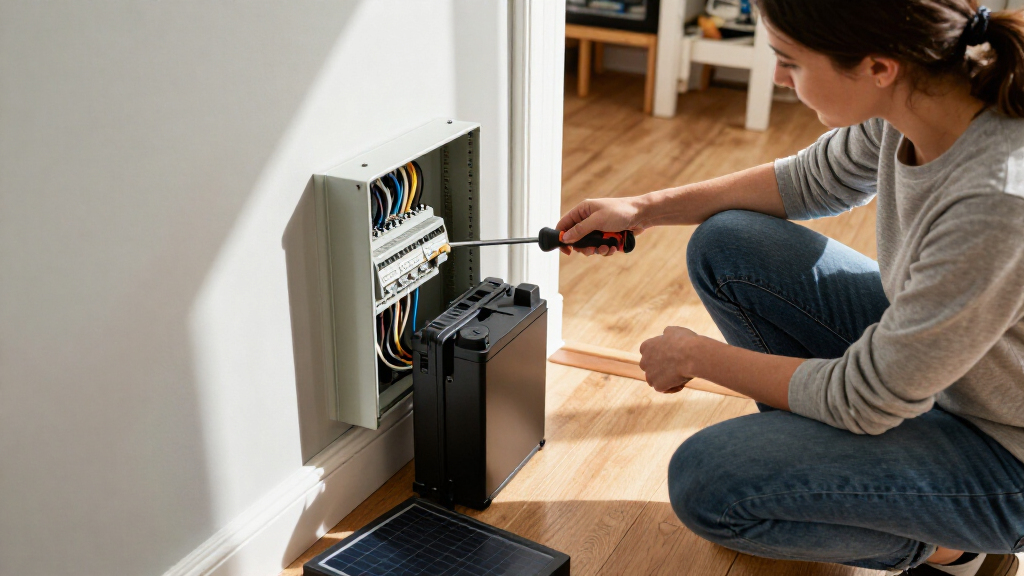

For most households seeking home battery backup systems, my best overall pick is the Jackery HomePower 3600 Plus: its 3,584Wh capacity and 3,600W output offer a useful balance of stored energy and appliance support. The EcoFlow DELTA Pro Ultra with Extra Battery stands out for buyers who need a larger 12kWh setup, while the ECO-WORTHY PowerMega 48V system with a 10kW hybrid inverter suits people planning a more integrated home energy installation. The central tradeoff is between portable, ready-to-use power stations and larger systems that can support more loads but ask more of your space, setup, and electrical planning. Capacity, output, solar compatibility, and installation needs matter more than a single headline number. Read on for the full breakdown and help choosing a system that fits your outage plan.
Complete the kit


Key Takeaways
- Jackery HomePower 3600 Plus is my best overall balance in this lineup, pairing 3,584Wh of capacity with 3,600W output without moving to the largest systems.
- The two EcoFlow 1,024Wh models suit lighter backup needs, but their capacity is a clear limit for running multiple household loads through a long outage.
- The Jackery Explorer 5000 Plus and DELTA Pro Ultra with Extra Battery put more stored energy and output ahead of compactness and simple placement.
- ECO-WORTHY’s 16.07kWh battery offers substantial storage, but the battery-only configuration is not interchangeable with a complete system that includes a hybrid inverter.
- Solar bundles and integrated inverter systems change the setup equation: the Jackery solar-panel bundle adds panels, while ECO-WORTHY’s 10kW system includes an inverter for a more integrated approach.


| home battery backup system | Weight | Battery type | Outlets | Battery capacity |
|---|---|---|---|---|
| EcoFlow Portable Power Station | 26.7 pounds | LiFePO4 | 6 | — |
| Jackery HomePower 3600 Plus Po | 77.2 pounds | LFP | 2 | — |
| ECO-WORTHY Powermega 48V 314Ah | — | LiFePO4 | — | — |
| EcoFlow Delta 3 Portable Power | — | LiFePO4 | 13 | — |
| Jackery HomePower 3600 Plus wi | 77.2 pounds | LFP | 4 | — |
| BLUETTI FridgePower Portable P | 41.9lb | — | — | 2016Wh |
| EF ECOFLOW DELTA 3 Max Portabl | — | — | 3 | 2048Wh |
| Anker SOLIX S2000 Portable Pow | 35.7lb | — | — | 2010Wh |
| Jackery Explorer 5000 Plus Pow | 134.5lb | — | 2 | 5040Wh |
| ECO-WORTHY PowerMega 48V 314Ah | 293.2lb | — | — | 314Ah |
| EF ECOFLOW 12kWh Power Station | — | LiFePO4 | — | 12kWh package |
More Details on Our Top Picks
EcoFlow Portable Power Station Delta 3 Classic, 1024Wh, 1800W AC
The Delta 3 Classic is a practical middle ground for buyers who want a portable battery for essentials rather than a home-scale reserve. Its 1,024Wh capacity and 1,800W output can support smaller appliances and electronics, while the stated one-hour fast-charge time helps restore the battery between outages. LiFePO4 cells and a UPS feature add useful backup-oriented credentials, and app control lets you check and manage power remotely.
Compared with the larger Jackery HomePower 3600 Plus, this EcoFlow is easier to move and takes up less space, but its capacity is much better suited to shorter outages. It also lacks the Delta 3 model’s listed expansion to 5kWh. At 26.7 pounds, it is portable in the practical sense, not effortless to carry, and it cannot use the Delta 2 Smart Extra Battery.
Pros:- 1,024Wh capacity and 1,800W continuous output cover a useful mix of essential devices.
- Listed one-hour fast charging can shorten downtime between uses.
- LiFePO4 battery, UPS feature, and app control support backup-focused monitoring and use.
- Six outlets and 100W USB-C output accommodate a range of devices.
Cons:- Its 1,024Wh capacity offers less outage runtime than the 3,584Wh Jackery HomePower 3600 Plus.
- At 26.7 pounds, it is less convenient to carry than a small electronics-only backup.
- It is not compatible with the Delta 2 Smart Extra Battery.
Best for: Households seeking a quick-recharging, movable backup for routers, lights, phones, and a few smaller appliances.
Not ideal for: Buyers who need to run major household loads for long outages or want to expand capacity with a Delta 2 Smart Extra Battery.
- Capacity:1,024Wh
- Continuous output:1,800W
- Surge power:3,600W
- Battery type:LiFePO4
- Weight:26.7 pounds
- Outlets:6
- USB-C output:100W
- Charging time:1 hour fast charge; 2.5 hours solar
Our verdict“Choose the Delta 3 Classic for fast-recharging portable backup for essential devices, not extended whole-home coverage.”
Jackery HomePower 3600 Plus Power Station, 3584Wh, 3600W AC Output
For outage planning, the Jackery HomePower 3600 Plus prioritizes stored energy over easy lifting: its 3,584Wh capacity and 3,600W AC output provide substantially more reserve than the 1,024Wh EcoFlow Delta 3 Classic. That larger battery can keep essential appliances running longer before a recharge is needed, while the listed AC, solar, and hybrid charging options give owners more than one way to replenish it.
The tradeoff is its 77.2-pound weight. Wheels and a telescopic handle help with moving it across a floor, but it is not a grab-and-go unit for stairs or frequent room changes. The product data lists only two outlets, so buyers with several simultaneous AC loads may need to plan connections carefully. Its parallel 120V and 240V capability adds flexibility, but requires setup rather than delivering every configuration from one standalone unit.
Pros:- 3,584Wh capacity stores far more energy than the 1,024Wh EcoFlow Delta 3 models.
- 3,600W AC output suits a broader range of household appliances than smaller portable units.
- AC, solar, and hybrid charging options offer flexibility for replenishment.
- Wheels and a telescopic handle make floor-level movement easier.
Cons:- At 77.2 pounds, it is difficult to carry over stairs or long distances.
- Two listed outlets may limit convenient connection of several AC-powered devices.
- The 240V capability is specified for parallel use, so buyers may need additional setup.
Best for: Households that want a large portable reserve for multi-hour outages and can roll the unit into position before an emergency.
Not ideal for: People who need a lightweight backup to carry upstairs, or households that need many AC connections without additional equipment.
- Capacity:3,584Wh
- AC output:3,600W
- Voltage:120V; 240V in parallel
- Battery type:LFP
- Weight:77.2 pounds
- Outlets:2
- Charging time:AC: 2.5 hours; solar: 4 hours; hybrid AC+DC: 2 hours
- Lifespan:6,000 cycles; 10-year lifespan
Our verdict“Pick the HomePower 3600 Plus if longer portable runtime matters more than easy lifting or a high number of built-in outlets.”
ECO-WORTHY Powermega 48V 314Ah LiFePO4 Battery, 16.07kWh, UL1973 Certified
The ECO-WORTHY Powermega 48V is a different class of backup from the portable power stations in this roundup. Its 16.07kWh capacity is several times that of the Jackery HomePower 3600 Plus, making it a better fit for a home energy-storage setup intended to cover substantial loads or longer outages. UL1973 certification, fire-suppression modules, and a 200A active-balancing BMS give buyers concrete safety and battery-management features to evaluate.
This is not a plug-in substitute for the EcoFlow Delta 3: the product data describes a 48V battery system, not a self-contained AC power station with household outlets. Installation and inverter compatibility need planning, and the missing weight and dimensions make delivery and placement harder to assess in advance. The touchscreen, wireless monitoring, and expansion claim up to 241kWh suit technically prepared owners, but add complexity for someone seeking simple outage backup.
Pros:- 16.07kWh energy capacity exceeds the portable Jackery HomePower 3600 Plus by a wide margin.
- UL1973 certification and listed fire-suppression and dual-protection features support safety planning.
- 200A active-balancing BMS and multiple communication options provide system monitoring and battery management.
- Parallel expansion is listed up to 241kWh, leaving room for a larger storage system.
Cons:- A 48V battery system requires compatible equipment and technical installation rather than simple plug-in use.
- Weight and dimensions are not provided, complicating placement and delivery planning.
- No built-in AC output or household outlet count is specified.
Best for: Homeowners planning a professionally configured 48V storage system who need much more capacity than a portable power station provides.
Not ideal for: Buyers who want a ready-to-use backup with built-in AC outlets, or who cannot arrange technical installation and system compatibility checks.
- Voltage:48V
- Capacity:314Ah
- Energy:16.07kWh
- Certification:UL1973
- Battery type:LiFePO4
- Battery management system:200A active-balancing BMS
- Monitoring and communications:7-inch HD touchscreen, WiFi, Bluetooth, RS485, CAN
- Warranty:10 years
Our verdict“Choose the Powermega 48V for a planned, expandable residential storage installation, not portable plug-and-play backup.”
EcoFlow Delta 3 Portable Power Station, 1024Wh, 1800W
The EcoFlow Delta 3 makes more sense than the Delta 3 Classic for buyers who expect their backup needs to grow. Both are listed at 1,024Wh and 1,800W, but this model supports expansion to 5kWh with extra batteries, giving it a path from short-term essential-device backup toward longer coverage. Its 13 outlets also make it easier to connect several devices at once than the Classic’s six outlets.
Fast charging is another strength: the listed 56-minute full charge can help restore reserve between outages, while the LiFePO4 battery is specified for 4,000 cycles to 80% capacity. Compared with the much larger Jackery HomePower 3600 Plus, this unit is easier to fit into a smaller home but starts with far less stored energy. Expansion requires extra batteries, and the 120V-only output does not suit buyers who need 240V backup.
Pros:- Expansion to 5kWh offers a growth path that the Delta 3 Classic does not list.
- Thirteen outlets allow more devices to connect at once than the Classic’s six.
- Listed 56-minute full charging time helps replenish the backup reserve quickly.
- LiFePO4 battery is rated for 4,000 cycles to 80% capacity.
Cons:- The base 1,024Wh capacity is much smaller than the Jackery HomePower 3600 Plus’s 3,584Wh.
- Expansion requires additional batteries rather than providing larger capacity out of the box.
- 120V output does not serve loads that require 240V.
Best for: Households wanting a compact 120V backup now, with the option to add battery capacity as their needs change.
Not ideal for: Buyers who need high capacity immediately, 240V output, or do not want to purchase and manage extra batteries.
- Capacity:1,024Wh
- Power output:1,800W
- Surge power:3,600W
- Battery type:LiFePO4
- Cycle life:4,000 cycles to 80% capacity
- Outlets:13
- Expandability:Up to 5kWh with extra batteries
- Charging time:Full charge in 56 minutes
Our verdict“Choose the Delta 3 if you want compact backup with a clear expansion path and can work within 120V output.”
Jackery HomePower 3600 Plus with 2x200W Solar Panels, 3584Wh, 3600W AC Output
This Jackery HomePower 3600 Plus bundle pairs the same 3,584Wh, 3,600W power station offered in the standalone Jackery listing with two 200W solar panels. For buyers who want solar charging equipment included from the outset, that makes the bundle a more direct starting point than the standalone unit, while its 3,584Wh capacity gives it far more stored energy than either 1,024Wh EcoFlow Delta 3 model.
The larger battery and solar pairing come with real handling costs: the station weighs 77.2 pounds, so its wheels and telescopic handle help mainly on level surfaces. The panels also add equipment to position and manage. Compared with the standalone HomePower 3600 Plus, the listed bundle data specifies four outlets rather than two, but it still calls for planning around placement and charging. This is portable backup, not a lightweight unit to carry between rooms.
Pros:- Two 200W solar panels are included, unlike the standalone HomePower 3600 Plus listing.
- 3,584Wh capacity and 3,600W output provide substantially more reserve than the EcoFlow Delta 3 models.
- Four listed outlets offer more AC connections than the standalone Jackery listing.
- AC, solar, and gas-generator charging options provide several ways to recharge.
Cons:- The 77.2-pound station is difficult to carry, even with wheels and a telescopic handle.
- Solar panels require outdoor placement and add equipment to set up and store.
- The 3,584Wh capacity is still a finite reserve for households with high loads or prolonged outages.
Best for: Homeowners who want a high-capacity outage battery and a solar-panel set included for charging away from the grid.
Not ideal for: Buyers who need a compact, easy-to-carry backup or who already own compatible solar panels and do not need another pair.
- Capacity:3,584Wh
- AC output:3,600W
- Battery type:LFP
- Voltage:120V; 240V in parallel
- Weight:77.2 pounds
- Outlets:4
- Solar panels:2 × 200W
- Cycle life and lifespan:6,000 cycles; 10 years
Our verdict“Pick this bundle over the standalone Jackery if you want its high-capacity station with two solar panels included and can manage the bulky equipment.”
BLUETTI FridgePower Portable Power Station, 2016Wh, 1800W LFP Battery Backup
The BLUETTI FridgePower is built around a focused home-backup job: keeping a refrigerator and other moderate-load essentials running, with a 10ms UPS switch intended to reduce interruptions when utility power drops. Its 2016Wh battery is close in capacity to the Anker SOLIX S2000, but BLUETTI adds expansion up to 8064Wh for households that want longer coverage without starting with a much larger system. The slim 75mm design can fit narrow spaces where bulkier units may be awkward, though its 41.9-pound weight makes it a poor choice for frequent carrying. The main limit is its 1800W output: compared with the EF ECOFLOW DELTA 3 Max, it has less headroom for demanding appliances. I’d choose it for outage-ready refrigerator support, not whole-home power.
Pros:- 10ms UPS switching is designed to reduce interruption to connected equipment during outages.
- Slim 75mm form factor fits narrow spaces near kitchen appliances.
- Expandable capacity up to 8064Wh can extend backup duration.
- Alexa and Google Home compatibility supports voice control.
Cons:- 1800W output is less suited to high-draw appliances than the EF ECOFLOW DELTA 3 Max.
- At 41.9 pounds, it is cumbersome for frequent transport.
- Wall mounting requires additional setup and installation.
Best for: Households seeking a space-saving backup for a refrigerator, router, lights, and other moderate-wattage essentials, with the option to add capacity later.
Not ideal for: Buyers who need to run high-wattage appliances or want a light unit to move regularly; its 1800W output and 41.9-pound weight are limiting.
- Battery capacity:2016Wh
- Battery chemistry:LFP
- Output wattage:1800W
- Surge power:3600W
- UPS switching:10ms
- Expandable capacity:Up to 8064Wh
- Weight:41.9lb
- Dimensions:13.78 x 2.95 x 22.83in
Our verdict“Choose the FridgePower for compact, expandable refrigerator backup, but look elsewhere if your outage plan includes higher-wattage appliances.”
EF ECOFLOW DELTA 3 Max Portable Power Station, 2048Wh LFP Battery, 2400W
When an outage is intermittent or a household can recharge between disruptions, the EF ECOFLOW DELTA 3 Max stands out for its stated 0–80% charging time of just over an hour. Its 2048Wh LiFePO4 battery is similar in capacity to the BLUETTI FridgePower and Anker SOLIX S2000, while its listed 2400W output gives it more continuous-power headroom than either. The product description also cites X-Boost mode up to 3400W; I would treat that as a mode-specific figure rather than the standard output when matching appliances. Three outlets may constrain how many devices can connect at once, and this portable unit still weighs enough to make frequent moving a chore. Compared with the Jackery Explorer 5000 Plus, it offers much less stored energy, but is a more manageable fit for essential circuits and smaller backup loads.
Pros:- Fast stated AC recharge can help restore backup readiness between outages.
- 2400W listed output exceeds the 1800W BLUETTI FridgePower and 1500W Anker SOLIX S2000.
- LiFePO4 battery chemistry is suited to repeated charge-and-discharge use.
- App control supports monitoring and energy management.
Cons:- Three listed outlets can limit simultaneous device connections.
- Its 2048Wh capacity is far below the Jackery Explorer 5000 Plus for extended backup.
- The product description gives both 2400W output and 3400W X-Boost figures, so buyers need to check appliance compatibility against the standard rating.
Best for: Households that can recharge from grid power or solar between outages and want a roughly 2kWh unit with more output headroom than 1800W-class alternatives.
Not ideal for: Buyers seeking long-duration whole-home coverage or many simultaneous connections; its 2048Wh capacity and three listed outlets may fall short.
- Battery capacity:2048Wh
- Battery chemistry:LiFePO4
- Output wattage:2400W
- X-Boost maximum:Up to 3400W
- Charging time:0–80% in just over an hour
- Outlets:3
- Dimensions:9.4 x 12 x 19.44in
- Warranty:5 years
Our verdict“Pick the DELTA 3 Max if quick recharging and extra output headroom matter more than a large battery or a high outlet count.”
Anker SOLIX S2000 Portable Power Station, 2010Wh, 1500W
The Anker SOLIX S2000 makes the most sense for buyers who want about 2kWh of stored energy in a notably compact package. At 35.7 pounds and 8.2 x 11.1 x 12.7 inches, it is easier to stow or move than the BLUETTI FridgePower, though the BLUETTI offers a higher 1800W output and UPS-oriented features. Anker’s 1500W continuous rating is the key constraint: it suits essentials such as networking gear, lighting, and selected small appliances, but leaves less room for high-draw equipment than the EF ECOFLOW DELTA 3 Max. Solar and AC charging options add flexibility for replenishing the battery, and the listed 10,000-cycle lifespan is a notable longevity claim. I would not select it as a whole-home solution; its appeal is portable, moderate-load backup rather than maximum power or expansion.
Pros:- Compact dimensions and 35.7-pound weight make it easier to store and move than the BLUETTI FridgePower.
- 2010Wh capacity provides substantial stored energy for a portable unit.
- AC and solar charging options offer flexibility for recharging.
- Listed lifespan of up to 10,000 cycles supports repeated use.
Cons:- 1500W output is lower than the BLUETTI FridgePower and EF ECOFLOW DELTA 3 Max.
- No 12V DC port is available.
- No capacity-expansion figure is provided for extending backup duration.
Best for: Apartment residents and homeowners who want a compact, movable battery for communications, lights, and moderate essential loads.
Not ideal for: Households needing to power high-wattage appliances, expand capacity for long outages, or use a 12V DC connection.
- Battery capacity:2010Wh
- Battery chemistry:LiFePO4
- Continuous power output:1500W
- Peak power:3000W
- Weight:35.7lb
- Dimensions:8.2 x 11.1 x 12.7in
- Charging options:AC and solar
- Warranty:5 years
Our verdict“Choose the SOLIX S2000 for compact, movable backup of moderate loads, not for high-power appliances or a growing home storage setup.”
Jackery Explorer 5000 Plus Power Station, 5040Wh, 7200W AC Output
For households that need to run demanding appliances rather than just phones and lights, the Jackery Explorer 5000 Plus offers a substantial step up: 5040Wh capacity and 7200W rated output. That combination exceeds the portable units here, including the 2048Wh EF ECOFLOW DELTA 3 Max, and its capacity can expand up to 60kWh for longer backup plans. The tradeoff is scale: at 134.5 pounds, this is not a grab-and-go power station, and its two listed outlets may require careful planning or compatible distribution equipment. The ECO-WORTHY PowerMega provides a 10kW hybrid inverter and 16.1kWh usable energy, making it a more installation-oriented alternative; Jackery instead fits buyers who want a high-output battery station with expansion options. Check the intended circuit and connection setup before treating its output as whole-home coverage.
Pros:- 7200W rated output supports larger loads than the smaller portable stations in this lineup.
- 5040Wh capacity starts with substantially more stored energy than the roughly 2kWh options.
- Expandable capacity up to 60kWh can support longer-duration backup plans.
- LiFePO4 battery chemistry and stated solar recharging support repeated backup use.
Cons:- At 134.5 pounds, it is difficult to move without planning.
- Two listed outlets may require additional compatible equipment for multiple loads.
- Solar charging at the stated maximum input involves setup beyond simply placing the unit indoors.
Best for: Homeowners who need high output for major appliances and want a battery station with substantial capacity expansion potential.
Not ideal for: Buyers who need a light, frequently movable unit or expect a simple plug-in solution to power many circuits without checking connection requirements.
- Battery capacity:5040Wh
- Battery chemistry:LiFePO4
- Expandable capacity:Up to 60kWh
- Maximum power:14.4kW
- Outlets:2
- Weight:134.5lb
- Recharge time:About 2 hours with up to 4000W input
Our verdict“Choose the Explorer 5000 Plus for high-output, expandable battery backup if its weight and connection setup suit your home.”
ECO-WORTHY PowerMega 48V 314Ah LiFePO4 Energy Storage System with 10kW Hybrid Inverter, Bluetooth & WiFi
The ECO-WORTHY PowerMega is the most installation-oriented option in this group: it pairs a 48V battery with a 10kW hybrid inverter and up to 16.1kWh of usable energy. That makes it a different class of backup from the BLUETTI FridgePower or Anker SOLIX S2000, which are portable stations for selected appliances rather than a large home-storage system. Its 240V output, pure sine wave, and stated single- or split-phase flexibility suit buyers planning a fixed backup or solar-storage setup. WiFi and Bluetooth monitoring add visibility into the system, while the 293.2-pound weight and shipment of the battery separately mean installation and delivery logistics need advance planning. The Jackery Explorer 5000 Plus is easier to frame as a portable station, but has less stated usable energy and lower rated output. I’d favor ECO-WORTHY only when a substantial installed system is the goal.
Pros:- Up to 16.1kWh usable energy is substantially more than the portable stations in this batch.
- 10kW hybrid inverter and 240V output support a larger home-storage configuration.
- Smart BMS with active balancing and safety protections is designed for battery management.
- WiFi and Bluetooth provide remote monitoring options.
Cons:- At 293.2 pounds, it requires careful delivery, placement, and installation planning.
- Battery ships separately and may arrive in multiple packages.
- Its fixed-system format is less convenient than the Jackery Explorer 5000 Plus for portable backup.
Best for: Homeowners planning a fixed solar-storage or off-grid setup who need 240V output, high inverter capacity, and substantial stored energy.
Not ideal for: Renters, buyers seeking a portable plug-in backup, or households without space and support for handling a 293.2-pound system and installation logistics.
- Battery capacity:314Ah
- Usable energy:Up to 16.1kWh
- Battery voltage:51.2V
- Hybrid inverter output:10kW
- Output voltage:240V
- Waveform:Pure sine wave
- Weight:293.2lb
- Warranty:10 years
Our verdict“Choose the PowerMega for a substantial, installation-based home storage system, not for simple portable backup.”
EF ECOFLOW 12kWh Power Station: DELTA Pro Ultra with Extra Battery
The DELTA Pro Ultra is the strongest fit here for buyers who want a scalable home backup system, not a compact station for occasional device charging. Its listed 7,200W output can support more demanding household loads than the 3,600W Jackery HomePower 3600 Plus, while the included extra battery brings the package to 12kWh. Expansion up to 90kWh offers room to build longer outage coverage over time, a scale that the portable 1–5kWh options in this roundup do not match.
The tradeoff is practical: at 293.6 pounds, it is a substantial installation and moving challenge, and setup across multiple packages may be more involved than using a smaller portable unit. Its high-capacity format also makes less sense for buyers who only need to keep a fridge and a few devices running. I’d choose it for larger backup demands, but skip it if portability or simple setup is the priority.
Pros:- 7,200W output is suited to heavier household appliances and multiple loads.
- 12kWh package capacity provides more stored energy than the smaller portable stations in this roundup.
- Expandable capacity up to 90kWh supports longer backup needs as the system grows.
- Solar and vehicle charging options add flexibility when grid power is unavailable.
Cons:- At 293.6 pounds, the system is difficult to move and is not a grab-and-go backup.
- Multi-package setup can be more involved than using a compact portable power station.
- Its large capacity and output may be unnecessary for buyers with only basic backup needs.
Best for: Homeowners seeking high output and expandable battery capacity to support multiple household loads during extended outages.
Not ideal for: Renters, buyers with limited installation space, or anyone who needs a lightweight, simple-to-move backup for a few essential devices.
- Battery capacity:12kWh package
- Expandable capacity:Up to 90kWh
- Output wattage:7,200W
- Maximum power:21.6kW
- Battery type:LiFePO4
- Charging options:Solar and vehicle power
- Total power outlets:6
- Item weight:293.6 lb
- Dimensions:27.2 × 18.9 × 8.4 in
Our verdict“Choose the DELTA Pro Ultra if you need high-output, expandable home backup and can accommodate a heavy, more involved system.”
How We Picked
I ranked these home battery backup systems by how well their capacity, AC output, and system design match realistic household backup needs. I looked at whether a unit is a portable power station, a bundled solar setup, a battery intended for a compatible inverter, or a larger system that includes an inverter. Those distinctions affect what a buyer can power and what additional equipment or planning may be needed.
The ranking favors useful capability with manageable setup demands, then gives larger systems credit for serving bigger loads or longer outages while accounting for their footprint and integration requirements. I also compared closely related models rather than treating similar products as separate winners: the two 1,024Wh EcoFlow options are near one another, and the Jackery solar bundle is judged against the base HomePower 3600 Plus. Published capacity and output figures are useful starting points, not a guarantee of runtime; actual results depend on appliance draw, conversion losses, and how the system is configured.
Factors to Consider When Choosing Home Battery Backup Systems
Picking a backup system starts with the outage plan, not the largest capacity figure. I would work from the appliances that matter, how long they need to run, and whether the system must be portable or integrated into the home.
Size for Essential Loads and Runtime
List the devices you expect to use during an outage and estimate their wattage and hours of operation. A refrigerator cycling on and off, for example, does not draw its full rated power every minute, while a heater or kettle can use substantial energy quickly. Add up the energy needs over the period you want to cover, then leave room for conversion losses and unexpected use. A larger battery extends runtime, but it does not automatically let you run more appliances at once. The 1,024Wh portable options in this roundup suit a narrower load plan than the 3,584Wh or 5,040Wh units. Avoid sizing only for a brief outage if your local outages often last overnight or longer.
Match Output to Startup and Running Loads
Capacity answers how much energy is stored; output describes how much power the system can supply at a given moment. Check both the continuous output and any surge rating against appliances with motors, compressors, or heating elements. A refrigerator may need a short startup surge beyond its steady running draw, and several devices running together can exceed the inverter limit even when plenty of battery remains. Add the expected simultaneous loads rather than assuming every appliance can plug in at once. A higher-output model can handle a broader mix of equipment, but it may be larger and more involved than a small essential-load backup requires. Confirm appliance requirements and the manufacturer’s operating limits before buying.
Choose Portable Backup or Home Integration
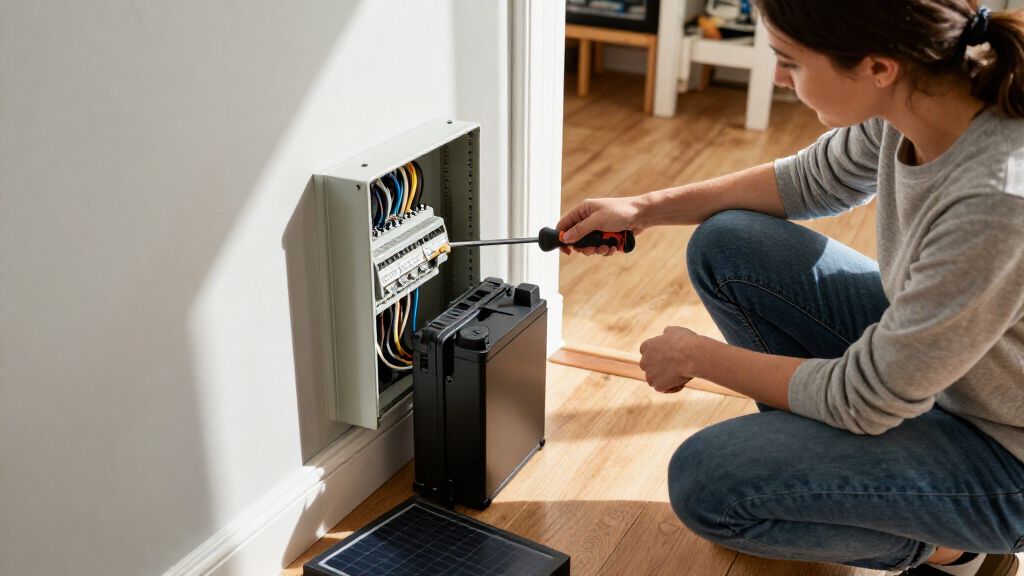
Portable power stations are designed around a simpler use pattern: charge the unit, connect devices, and move it if needed. A battery paired with a hybrid inverter is a different kind of purchase, with compatibility, installation, and electrical configuration to plan. Do not assume a high-capacity battery can power household circuits by itself; a battery-only product may need a compatible inverter and other equipment. For circuit-level backup or a permanent home energy setup, ask a qualified electrician how the system connects and what local rules apply. If you mainly need a few appliances during outages, a portable unit may avoid complexity you would not use. Choose the architecture before comparing capacity figures.
Decide Whether Solar Charging Fits Your Outage Plan
Solar input can help replenish stored energy when an outage lasts beyond the battery’s initial charge, but panels are not a guarantee of continuous power. Output varies with sunlight, weather, panel placement, and the system’s solar-input limits. A bundle with panels offers a more ready-made starting point, while a station sold alone leaves you to choose compatible panels separately. Check connector compatibility, maximum solar input, and whether the unit can charge while powering devices. If outages are short or panels cannot be placed in reliable sun, paying for solar hardware may not match your use. For prolonged outages, consider both panel capacity and the energy your household will consume each day.
Plan for Expansion, Compatibility, and Placement
Some buyers may want to add batteries later, but expansion only helps when the added battery is compatible with the main unit and the system supports the intended configuration. Confirm which components are included, which are optional, and whether the product is a standalone station or part of a larger storage system. Physical size and weight matter too: a high-capacity unit is less useful if there is no safe, practical place to keep or move it. For fixed installations, account for ventilation, clearances, wiring, and access to service. Think about the backup plan you may need in a few years, but do not buy expansion capability without a credible use for it. Compatibility details can matter as much as the battery’s headline capacity.
Compare Total Setup Needs, Not Just the Main Unit
The product name or battery rating may not tell you everything required for a working backup arrangement. Check whether the package includes panels, an inverter, cables, or only the battery, then identify any equipment needed to connect your intended loads. A bundled product can simplify shopping, but only if its included components fit your site and energy plan. An inverter-based system may support a more integrated setup while requiring professional planning and installation. Also review the manufacturer’s warranty, operating temperature limits, charging options, and service terms before committing. Comparing complete, compatible setups prevents a low-complexity product from appearing similar to a system that needs extra components.
Frequently Asked Questions
Can a portable power station run my whole house during an outage?
Usually, a portable power station is better treated as backup for selected appliances than as an automatic whole-house power source. Its available capacity limits how long it can supply energy, while its AC output limits how many loads can run at once. Whole-home or circuit-level backup also depends on a suitable connection method and, in many cases, additional equipment and professional electrical work. Identify the circuits or devices you want to support and compare their combined running and startup demands with the system’s specifications. If your goal is seamless coverage for household circuits, focus on systems designed for that installation rather than relying on a portable unit alone.
How much battery capacity do I need to keep a refrigerator running?
There is no single capacity figure that fits every refrigerator, since energy use varies by model, age, room temperature, and how often the door opens. Check the appliance label or manual, and if possible use a plug-in energy meter to estimate daily consumption under normal conditions. Then allow extra capacity for inverter losses and for other devices you may want to run at the same time. A battery’s watt-hour rating estimates stored energy, but it does not guarantee a specific number of hours in your home. Also confirm that the inverter can handle the refrigerator’s startup surge, not just its average running draw.
Should I buy a battery-only system or one with an inverter included?
A battery-only product can suit a buyer who already has a compatible inverter and understands the system’s electrical requirements. If you do not, the battery may not be ready to power household AC appliances on its own, and the extra components can affect the total setup. An inverter-inclusive system brings more of the power-conversion equipment together, though it may still need installation, compatible wiring, and configuration. Compare what is actually in the package and ask a qualified installer to confirm compatibility with your home and intended loads. The right choice depends on your existing equipment and whether you want a portable setup or a fixed installation.
Will solar panels keep a home battery charged during a multi-day outage?
Solar panels can extend backup time, but they cannot promise that a battery will stay charged through several days without enough sunlight. Daily energy recovered depends on panel capacity, sun exposure, weather, shading, and the battery system’s solar-input limits. Your household’s daily consumption matters just as much: using more energy than the panels replace will steadily reduce the remaining charge. Prioritize essential loads and check that panels, cables, and the power station are compatible. For a longer outage plan, estimate likely daily solar production conservatively and keep a lower-consumption fallback plan.
What should I check before connecting a battery system to household circuits?
First, confirm that the system is designed for the type of circuit connection you want; a standard outlet on a portable station is not the same as a home transfer setup. Ask a qualified electrician about transfer equipment, circuit selection, grounding, permits, and local electrical requirements. Never feed power into household wiring through an improvised connection, since that can create hazards for occupants and utility workers. Verify the system’s output limits against the circuits and appliances you plan to back up. A clear installation plan also helps reveal whether you need an inverter, additional batteries, or other components before purchase.
Conclusion
My best overall pick is the Jackery HomePower 3600 Plus for its balanced combination of 3,584Wh capacity and 3,600W output. For buyers seeking a simpler starting point for a few essential devices, the EcoFlow DELTA 3 Classic is my best-for-beginners choice, provided its 1,024Wh capacity matches a modest backup plan. I would call the Jackery HomePower 3600 Plus with solar panels the best value in setup convenience for shoppers who want panels included, while recognizing that the bundle is only worthwhile if solar charging suits their location. For a larger, more capable setup, the EcoFlow DELTA Pro Ultra with Extra Battery is my best premium pick; for buyers planning an inverter-based energy installation, the ECO-WORTHY PowerMega system with 10kW hybrid inverter better fits that specific need. Choose based on the loads you must support and the system style you can install, not capacity alone.