Solar-powered backup power stations pair a battery station with solar panels so you can keep essentials running during outages or off-grid trips without fuel or fumes. After comparing capacity, inverter output, battery chemistry, and solar recharge speed across 13 popular models, the Anker SOLIX C1000 Gen 2 stands out as the best overall pick for its balance of 1024Wh capacity, 2000W output, and fast solar recharging. For serious home backup, the Jackery HomePower 3600 Plus delivers expandable whole-home power, while the MARBERO 155Wh kit is the cheapest way to get started with solar. The main tradeoff in this category is simple: capacity and output cost money and weight, while affordable kits sacrifice runtime and recharge speed. Keep reading for the full breakdown of which model fits your needs and budget.

Get backup power and energy gear delivered free with Prime
- Fast, free delivery on millions of items
- Prime Video, Amazon Music and more included
- Member-only deals all year
Complete the kit


Key Takeaways
- The 1024Wh class (EcoFlow Delta 3 Classic, Jackery Solar Generator 1000 V2, Anker SOLIX C1000 Gen 2) is the sweet spot of this lineup — enough power for outages and camping at a midrange price, and the three models differ mainly in solar input speed and inverter wattage.
- Budget 300W-class kits from no-name brands bundle a small 40–60W panel that takes a full day or more of sun to refill the battery — fine for phones and lights, frustrating for anything bigger. The Anker SOLIX C300 is the most polished option in this tier because of faster solar input and app control.
- The BLAVOR and BROWEY models with built-in solar panels are the most convenient for grab-and-go emergencies, but their tiny integrated panels charge far slower than any detachable panel kit.
- LFP (LiFePO4) batteries now dominate the category, appearing in the Jackery 1000 V2, HomePower 3600 Plus, BLAVOR, and BROWEY — buyers should expect 3,000+ cycle lifespans and avoid older NMC units if longevity matters.
- Only the Jackery HomePower 3600 Plus is genuinely suited to whole-home backup with 3584Wh and expansion to 21kWh; every other model here is a room-or-two solution at best, and comparing them on that basis is misleading.


More Details on Our Top Picks
EF ECOFLOW Solar Generator Delta 3 Classic with 220W Solar Panel, 1024Wh
The EcoFlow DELTA 3 Classic earns the top spot because it is the only kit in this lineup that genuinely bridges emergency home backup and off-grid living. The included 220W panel at up to 25% efficiency recharges the 1024Wh battery in under six hours, faster than most bundled kits here. Its 1800W output (3600W surge) means refrigerators and microwaves are realistic loads, while X-Boost stretches capability to 2600W for resistive appliances — something the 300W-class options simply cannot attempt. The sub-10ms UPS switchover is the real differentiator for anyone protecting computers or medical devices. Compared with the Jackery Solar Generator 1000 V2, the EcoFlow charges noticeably faster from the wall and doubles as an uninterruptible supply. The tradeoff: weight and bulk make it a two-hand carry, and the panel and station ship separately.
Pros:- 1024Wh capacity with 1800W output runs real appliances, not just gadgets
- 0–80% wall recharge in 45 minutes is best-in-class for the price
- Sub-10ms UPS switchover protects sensitive electronics during outages
- Included 220W panel recharges the battery in under 6 hours of good sun
Cons:- Heavy and bulky compared with sub-300Wh options like the Jackery Explorer 300
- Panel and station arrive in separate shipments, complicating setup
Best for: Homeowners who want one system that runs a fridge during an outage and still fits in an RV for weekend trips
Not ideal for: Backpackers and day-trippers — at this weight and price it is overkill for charging phones and cameras
- Capacity:1024Wh
- Output Power:1800W (3600W surge)
- Expandable Power:Up to 2600W with X-Boost
- Wall Charging:0–80% in 45 minutes
- Solar Panel:220W, up to 25% efficiency
- Battery Type:LiFePO4
- UPS Response:Under 10ms
- Battery Life:10+ years
Our verdict“If one purchase needs to cover both home outages and off-grid weekends with real appliances, this is the kit to buy.”
Anker SOLIX S2000 Portable Power Station, 2010Wh, 3000W Peak
Where the EcoFlow DELTA 3 covers a night or two of essentials, the Anker SOLIX S2000 nearly doubles the stored energy at 2010Wh, making it the strongest pick here for extended outages. The standout spec is 10,000 charge cycles — roughly double or more what competing LiFePO4 units in this guide offer — which translates to a genuinely 15-year asset rather than a device you replace. Compared with the Jackery HomePower 3600 Plus, the S2000 gives up raw expandability but wins on portability at 35.7 lbs in a compact chassis. Note that this listing is station-only, so solar panels cost extra — the EcoFlow kit is the better value if you want panels included. The 1500W continuous ceiling also means no hair dryers or electric kettles.
Pros:- 2010Wh capacity nearly doubles the runtime of 1000Wh-class rivals
- 10,000-cycle battery rated for roughly 15 years of service
- Lightest footprint in its capacity class at 35.7 lbs
- Four input sources: solar, AC, generator, and car outlet
Cons:- 1500W continuous output limits high-draw appliances
- No 12V DC port, which frustrates some RV and van setups
- Solar panels not included in this listing
Best for: Households preparing for multi-day outages who want a long-lived battery to run fridges, CPAP machines, and lights
Not ideal for: Buyers wanting a complete solar kit out of the box — panels are a separate purchase, unlike the bundled options here
- Capacity:2010Wh
- Continuous Power:1500W
- Peak Power:3000W
- Battery Type:LiFePO4
- Cycle Life:10,000 cycles
- Weight:35.7 lbs
- Input Support:Solar, AC, generator, car outlet
Our verdict“This is the pick when outage duration matters more than portability or an all-in-one kit.”
Jackery Explorer 300 Portable Power Station, 292Wh
At 7.5 lbs, the Jackery Explorer 300 is less than half the weight of the similarly-sized Anker SOLIX C300 (15.5 lbs), and that difference defines who should buy it. This option makes the most sense for hikers, kayakers, and festival-goers who carry their power on their backs — laptops, cameras, and drones are its natural workload. The LiFePO4 chemistry with 4,000+ cycles is a meaningful upgrade over older Jackery units and older NMC competitors, so it will survive years of weekend trips. Pair it with a 100W panel and you are at 80% in under three hours. The obvious limitation: 300W output rules out anything with a heating element, and unlike the budget kits in this roundup, no panel is included, so the true cost of a solar setup is higher than the sticker suggests.
Pros:- Featherweight at 7.5 lbs, easily the most packable station in this roundup
- LiFePO4 battery rated for 4,000+ cycles
- Well-rounded port selection including USB-C PD and a car socket
- Reaches 80% via solar in 2.8 hours with a 100W panel
Cons:- No solar panel included in the box
- 300W ceiling cannot handle kettles, heaters, or power tools
Best for: Outdoor adventurers who need to keep laptops, cameras, and drones alive without carrying real weight
Not ideal for: Anyone planning home backup or running appliances — 292Wh and 300W covers devices, not fridges
- Capacity:292Wh
- Rated Output:300W (600W surge)
- Weight:7.5 lbs
- Battery Chemistry:LiFePO4
- Charge Cycles:Over 4,000
- Outlets:2 AC, 1 USB-C PD, 2 USB-A, 1 car port
- Solar Recharge:80% in 2.8 hours with 100W panel
Our verdict“Buy this if you measure your gear in pounds and ounces; skip it if you measure in watt-hours.”
Anker SOLIX C300 Portable Power Station with 60W Solar Panel, 288Wh, 300W
Unlike the bare Jackery Explorer 300, the Anker SOLIX C300 arrives with a 60W panel in the box, which makes it the cleanest entry point for someone building their first solar setup without shopping for extras. The 68-minute wall recharge is the fastest in this capacity class and a genuine quality-of-life feature — you top it off before leaving the house rather than planning around charging overnight. With 11 ports across AC, USB-C, and car sockets, it handles a family’s worth of small devices simultaneously. The tradeoffs are real: at 15.5 lbs it is twice the weight of the Jackery despite near-identical capacity, so it is better suited to car camping than trail use. And like all 300W units, appliances are off the menu — the EcoFlow DELTA 3 is the step-up if you need more muscle.
Pros:- Solar panel included, unlike the similarly-priced Jackery Explorer 300
- 68-minute AC recharge is the fastest in its class
- 11 ports charge a whole family’s devices at once
- LiFePO4 chemistry with long cycle life
Cons:- 15.5 lbs is heavy for its 288Wh capacity
- Station and panel ship separately
- 300W output caps it at device-level loads
Best for: First-time solar buyers and car campers who want station plus panel in a single purchase with no compatibility guesswork
Not ideal for: Weight-conscious hikers and anyone hoping to run appliances beyond 300W
- Battery Capacity:288Wh
- Power Output:300W (600W surge)
- Ports:11 total including 3 AC and 3 USB-C
- Recharge Time:68 minutes via AC
- Battery Type:LiFePO4
- Included Panel:60W solar panel
- Weight:15.5 lbs
Our verdict“The least-hassle way to own a working solar generator on day one, as long as you carry it by car rather than on foot.”
Portable Solar Generator 300W with 60W Solar Panel
This 300W generator with a bundled 60W panel competes directly with the Anker SOLIX C300 kit on paper, and the comparison reveals where the savings come from. The 20.5% panel conversion efficiency is respectable, and the package includes every cable you need — AC adapter, car charger, and solar connections — plus an SOS flashlight that the Anker lacks, a small but real safety feature for campers. What you give up compared with brand-name rivals is polish: the junction box is not waterproof, so the panel needs careful placement in rain or dew, and the battery benefits from regular top-ups rather than sitting drained in a closet. Compared with the even cheaper MARBERO 155Wh kit, this option doubles the output headroom, making it the better choice for a small camp setup.
Pros:- Complete kit with panel, cables, and adapters included at a low price
- 20.5% solar conversion efficiency is competitive for budget panels
- Built-in SOS flashlight adds emergency utility
- Three input methods: AC, solar, and carport
Cons:- Non-waterproof junction box limits placement in wet weather
- Battery performance degrades if left uncharged for long periods
- 300W ceiling excludes virtually all household appliances
Best for: Budget-conscious campers and emergency-prep beginners who want a full solar kit for the lowest possible spend
Not ideal for: Anyone needing set-and-forget reliability — the non-waterproof junction box and maintenance expectations make it a poor choice for unattended home backup
- Power Output:300W
- Solar Panel:60W monocrystalline
- AC Outlets:2 x 300W max
- USB Ports:4, including quick charge
- DC Port:9V–12.6V / 10A max
- Conversion Efficiency:20.5%
- Battery Management System:Yes
Our verdict“A fair-value first step into solar power for casual camping, provided you accept build compromises the big brands don’t ask of you.”
Jackery Solar Generator 1000 V2 with 200W Solar Panel
The Jackery Solar Generator 1000 V2 earns its spot by pairing a genuine 1500W AC output with an included 200W panel at a price point where most rivals force you to buy panels separately. Compared with the BLAVOR 1600W, its solar input is roughly five times faster in full sun, meaning the battery actually refills during a real outage instead of trickling back. The one-hour fast charge is the standout convenience — the BLAVOR and BROWEY units need around three hours. The tradeoff: activation of fast charging requires the app, which will annoy buyers who want plug-and-play simplicity, and at 23.8 lbs it’s a two-handed carry.
Pros:- 1500W AC output runs fridges, power tools, and multiple appliances at once
- 1-hour fast charging beats nearly every midsize competitor
- LFP battery rated for 4000+ cycles, over 10 years of use
- Included 200W solar panel charges the unit in about 6 hours
Cons:- Fast charging requires app activation, an unnecessary hurdle
- Solar panel ships separately, so the kit arrives in two deliveries
Best for: Campers and outage-preppers who want a complete generator-plus-panel kit with the fastest recharge in its class
Not ideal for: Buyers who want solar included with zero panel-management fuss — the panel ships separately and adds packing bulk
Our verdict“If you want a single purchase that covers a weekend off-grid or a day-long outage with the fastest recharge around, this is the midsize pick to beat.”
BLAVOR Portable Power Station 1600W with Built-in Solar Panel
What makes the BLAVOR 1600W unusual is its built-in 40W foldable solar panel — the power station charges itself whenever sunlight hits it, no extra gear to carry or connect. That’s a genuine advantage over the Jackery 1000 V2, which needs its separate 200W panel attached to harvest any solar at all. The catch is math: 40W of panel against a 1024Wh battery means built-in solar is a trickle, not a refill — roughly a full day of strong sun for a complete charge. Think of it as battery maintenance rather than primary charging. The 100W two-way USB-C port is the faster everyday option, and the 1600W rated output handles most household appliances comfortably.
Pros:- Built-in foldable solar panel eliminates separate panel packing
- 1600W rated output with 3200W peak covers most appliances
- 100W two-way USB-C charges fast from a single cable
- LiFePO4 chemistry rated past 3500 cycles
Cons:- 40W built-in panel is slow — full solar charging takes a full sunny day or more
- Heavier and bulkier than comparable midsize units without the integrated panel
Best for: Boondockers and balcony campers who value never needing to pack or attach a separate panel
Not ideal for: Anyone expecting solar to meaningfully recharge the battery — 40W is too slow to rely on for a full recovery
Our verdict“Choose this if you’d rather accept slow solar than ever carry a separate panel — but charge it from the wall before you leave home.”
Jackery HomePower 3600 Plus Portable Power Station
This is the only unit in this lineup built for serious home backup, and the gap between it and everything else here is enormous. Its 3584Wh capacity is more than three times the Jackery 1000 V2 or BLAVOR, and its expandability to 21kWh means it can run essentials through multi-day outages, not just a few hours. The luggage-style wheels and telescopic handle matter at this weight class — you won’t want to lift it. The tradeoffs are predictable: it costs a premium, no solar panel is included, and real expansion means buying additional battery units. Compared with the smaller options in this guide, it sacrifices grab-and-go portability for raw endurance, which is exactly the right trade for whole-home buyers.
Pros:- 3584Wh capacity expandable to 21kWh for multi-day outages
- 3600W output (7200W in parallel) runs heavy household loads
- Hybrid charging refills in as little as 2 hours
- 6000-cycle LFP battery rated for 10 years of daily-cycling use
Cons:- No solar panel included — add a substantial accessory cost for solar charging
- Meaningful capacity expansion requires purchasing extra battery units
Best for: Homeowners in outage-prone areas who need to run refrigeration, medical devices, or well pumps for days
Not ideal for: Campers and car travelers — it’s overkill in capacity, cost, and size for anything you carry to a campsite
Our verdict“If a blackout means spoiled food or a dead CPAP machine, this is the one unit here that treats an outage as an inconvenience instead of an emergency.”
BROWEY 1600W Portable Power Station with Built-in Solar Panel
On paper, the BROWEY 1600W looks nearly identical to the BLAVOR — same 1024Wh capacity, same 1600W output, same built-in solar concept. Where it pulls ahead is connectivity: eight ports including 100W USB-C PD, so a family can charge laptops, phones, cameras, and run an appliance simultaneously without juggling adapters. Its 3-hour charge to 80% from AC also beats the BLAVOR’s solar-dependent approach for everyday use. The honest weakness is transparency: weight and dimensions aren’t clearly published, and the built-in panel wattage isn’t specified either — reasonable guesses say it’s as slow as the BLAVOR’s. If you’re choosing between the two, pick BROWEY for the port selection and BLAVOR for its documented specs.
Pros:- Eight ports including 100W USB-C PD charge a full kit of devices at once
- Pure sine wave 1600W output safe for sensitive electronics
- 3-hour AC charge to 80% is quick for this capacity class
- Award-winning design with a genuinely integrated solar panel
Cons:- Weight and dimensions not disclosed — portability is a question mark
- Built-in panel wattage unspecified, likely too slow for primary charging
Best for: Families and small crews who need to charge many devices at once from one station
Not ideal for: Spec-conscious buyers — the missing weight, dimension, and panel-wattage figures make comparison shopping harder than it should be
Our verdict“A sensible alternative to the BLAVOR if port count matters more to you than published specs — just ask the seller for the weight before ordering.”
MARBERO 155Wh Solar Generator with 30W Solar Panel Kit
The MARBERO kit is the cheapest way into solar backup in this roundup, and unlike most budget listings, it’s genuinely complete: station, 30W panel, and converter in one box. At 3.7 pounds it’s the lightest option here by a wide margin — a fraction of the 23.8-pound Jackery 1000 V2 — and it fits in a backpack. The compromise is capacity: 155Wh keeps phones, lights, and a small fan alive, but a refrigerator is off the table entirely. The 100W AC outlet is fine for a laptop or a small TV, nothing more. Compared with the Anker SOLIX C300 (288Wh), you get half the battery but an included panel and a lower price, which is the right trade if solar charging on a budget is the goal.
Pros:- Complete kit includes panel, station, and converter — nothing else to buy
- 3.7-pound weight makes it genuinely backpack-portable
- Built-in LED flashlight with multiple emergency modes
- IP65 waterproof panel handles rain and rough outdoor use
Cons:- 155Wh capacity can’t sustain larger appliances at all
- 6-7 hour solar charge time is too slow for urgent recharges
Best for: First-time buyers, hikers, and emergency-kit builders who need phone and light charging for under the price of midsize units
Not ideal for: Anyone backing up a fridge, CPAP, or power tools — 155Wh runs out in an hour or two under those loads
Our verdict“Buy it as an affordable introduction to solar backup or a camping convenience — not as your household’s emergency plan.”
Portable Solar Generator with Panel, 300W Power Station and 40W Foldable Solar Panel
This kit pairs a 280Wh power station with a 40W foldable solar panel at a price point well below premium bundles like the Jackery Solar Generator 1000 V2, and that affordability is its whole argument. For someone buying their first solar generator, having the panel included in the box removes the guesswork of matching compatibility. Compared with the similarly-sized MARBERO 155Wh kit, the extra capacity here means a laptop, phones, and a small fan can run through a weekend away from an outlet.
The tradeoff is patience: a 40W panel recharging 280Wh is slow — expect most of a sunny day for a full refill. The 300W output ceiling also rules out anything with a heating element, so this is a device-charging kit, not an appliance backup. Safety protections are present and appreciated at this price, but the lithium-ion chemistry won’t match the cycle life of LiFePO4 models like the Anker SOLIX C1000.
Pros:- Solar panel included in the box, so the kit works out of the gate
- Wide port selection including USB-C, QC3.0, and four AC outlets
- Genuine budget pricing for a complete solar generator kit
- Built-in safety protections and an emergency flashlight
Cons:- 40W panel is slow to refill the 280Wh battery, often requiring a full day of sun
- Standard lithium-ion chemistry offers fewer charge cycles than LiFePO4 rivals
- 280Wh capacity runs dry quickly if you’re charging multiple devices daily
Best for: First-time buyers and casual campers who want a complete, affordable solar charging kit for phones, tablets, and laptops
Not ideal for: Anyone planning to run appliances like coffee makers or mini-fridges — the 300W limit and modest capacity won’t handle them
- Power Output:300W
- Battery Capacity:280Wh
- Solar Panel:40W foldable
- AC Outlets:2 x 110V/300W, 2 x 110V/100W
- USB Ports:3 x 5V/3A, 1 x QC3.0, 1 x USB-C
- DC Ports:9V-12.6V/10A max
- Protection Features:Short circuit, over-current, over-voltage, overload
Our verdict“A sensible entry point for light-duty outdoor charging, as long as you accept slow solar recharging and a strict 300W ceiling.”
Anker SOLIX C1000 Gen 2 Portable Power Station, 1024Wh, 2000W
The SOLIX C1000 Gen 2 justifies its price through speed and chemistry. A 49-minute AC recharge and 1.8-hour solar recharge leave rivals like the EF ECOFLOW Delta 3 Classic looking leisurely, and the LiFePO4 battery will outlast the lithium-ion cells in budget kits like the 300W bundle above by several times over. With 2000W continuous output, it runs power tools, microwaves, and full-size appliances that small 300W stations can’t touch, and the UPS function keeps a router or CPAP machine alive through an outage without a blink.
But you’re paying for that speed. At 11.3 kg, it’s the heaviest option in this tier — fine for car camping, awkward for a backpack. The 600W solar input cap means buyers wanting the fastest off-grid refill will need to buy extra panels, which pushes total cost even higher. Compared with the Jackery Explorer line, you get faster charging but less bundled value, since no panel ships in the box.
Pros:- HyperFlash AC recharging hits full in about 49 minutes
- LiFePO4 chemistry delivers far more charge cycles than standard lithium-ion
- 2000W continuous output with 3000W peak handles real appliances
- UPS pass-through keeps critical devices running during outages
Cons:- Premium price, and no solar panel included
- 11.3 kg is heavy for a mid-capacity portable unit
- 600W solar input limit means faster off-grid recharging requires buying additional panels
Best for: Home-backup-minded buyers and frequent campers who want fast recharging and a battery built to last a decade
Not ideal for: Budget shoppers or anyone needing a grab-and-go pack for hiking — the price and 11.3 kg weight work against both
- Capacity:1024Wh
- Continuous Output:2000W (3000W peak)
- Battery Type:LiFePO4
- AC Recharge Time:49 minutes
- Solar Recharge Time:1.8 hours
- Output Ports:9
- Weight:11.3 kg
- Dimensions:15.1″L x 8.2″W x 9.6″H
Our verdict“The pick for buyers who prioritize recharge speed and long-term battery life and are willing to pay a premium for both.”
Portable Solar Generator 300W Power Station with 60W Foldable Solar Panel
At 6.5 pounds for the station and 4 pounds for the panel, this kit is the most carry-friendly pairing in the roundup’s small-capacity tier. The 60W foldable panel is the standout spec — 50% more solar harvesting than the 40W panel bundled with the earlier 300W kit, which translates to meaningfully faster recharges at camp. Compared with the Anker SOLIX C300, the extra 8Wh of capacity is a wash, but the larger panel gives this kit the edge for extended off-grid stretches where wall outlets don’t exist.
One caveat deserves emphasis: the solar panel may not ship in the main package depending on the seller, so verify before ordering or you may end up with a station and nothing to feed it. The 65W maximum wall/car charging speed is also sluggish — fine when solar is doing the heavy lifting, frustrating at home. And with roughly 1000 charge cycles rated, the battery won’t age as gracefully as the LiFePO4 cells in the Anker SOLIX C1000 Gen 2.
Pros:- 60W panel charges noticeably faster than 40W competitor kits
- Featherweight at 6.5 lbs for the station and 4 lbs for the panel
- Eight output ports support charging several devices at once
- Full recharge in about 3 hours via solar
Cons:- Solar panel availability varies by listing — confirm it’s included before buying
- 65W wall/car charging cap makes non-solar recharging slow
- Around 1000 charge cycles, well short of LiFePO4 longevity
Best for: Campers and van-lifers who recharge primarily by solar and need a light kit they can actually carry to a site
Not ideal for: Buyers who mostly recharge from wall outlets — the 65W input cap makes home top-ups painfully slow
- Battery Capacity:296Wh
- Power Output:300W
- Solar Panel:60W foldable
- Output Ports:8
- Charging Time:3 hours
- Station Weight:6.5 lbs
- Panel Weight:4 lbs
- Input Charging Voltage:12-25V
Our verdict“The lightest genuine solar kit for sun-powered camping, provided you confirm the panel ships with it and rarely rely on wall charging.”
How We Picked
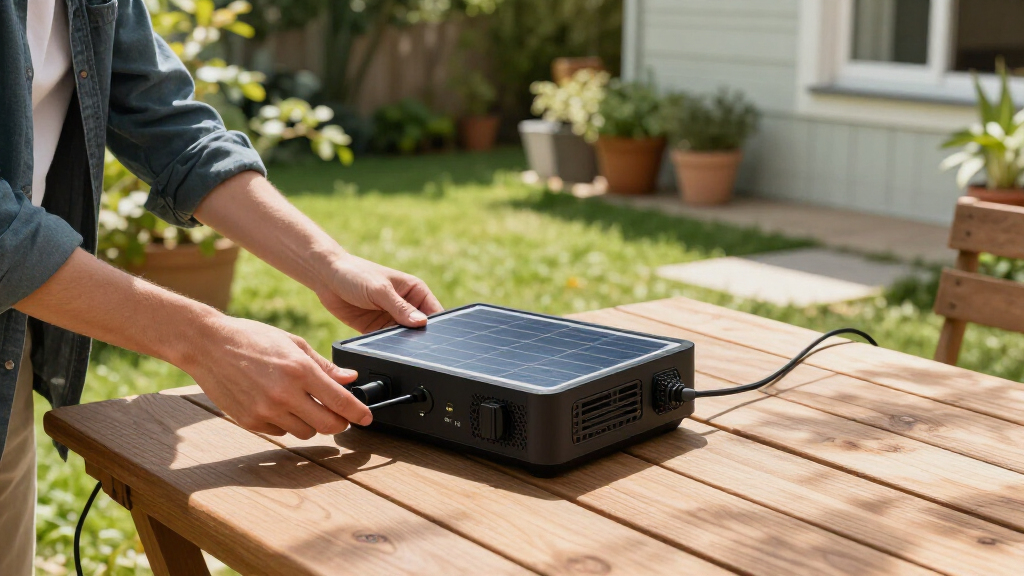
I evaluated each station and kit on the criteria that actually determine whether it works when you need it: usable capacity versus advertised capacity, continuous and peak inverter output (which decides what appliances it can actually run), solar input wattage and recharge time, battery chemistry and rated cycle life, and the practical stuff — weight, port selection, expandability, and warranty. Because this is a roundup of solar-powered backup, paired panels mattered as much as the stations themselves: a great battery with a 40W panel is a slow solar solution no matter how good the station is.
The ranking reflects a simple logic: models that can genuinely cover emergency home loads rank highest, midrange 1000Wh-class kits fill the versatile middle, and small 155–300Wh kits rank lower not because they are bad but because they serve a narrower mission — phones, lights, and short trips. Price-per-watt-hour and panel quality broke ties within tiers. The best budget kits earned their spots by including a real panel and an LFP battery rather than cutting corners on chemistry.
Factors to Consider When Choosing Solar-powered Backup Power Stations
Before choosing a station, it helps to understand the patterns I found across all 13 products — and the mistakes that lead buyers to pick the wrong one.Match Capacity to What You Actually Need to Run
The most common mistake is buying capacity based on the box number rather than your real loads. A refrigerator needs roughly 1–2 kWh per day, a CPAP machine a fraction of that, and a space heater can drain a 300Wh station in under 20 minutes. List the devices you genuinely need during an outage, add their daily watt-hours with a 20% buffer, and buy from there. In this roundup alone, capacities range from 155Wh to 3584Wh — a 23x spread — which shows how different the missions are. If your goal is bridging overnight outages for essentials, the ~1kWh class is the realistic floor. Paying for capacity you will never use is wasted money and weight you have to store.
Solar Panel Wattage Matters More Than Station Capacity
A station is only as solar-capable as its input limit and the panel that feeds it. Many budget kits pair a 300Wh battery with a 40–60W panel, which means 6–10 hours of ideal sun for a full recharge — and real-world conditions are rarely ideal. The EcoFlow and Jackery kits include 200W+ panels that refill a 1kWh battery in roughly 2–4 hours of good sun, a difference you feel on day two and three of an extended outage. Also check the station’s maximum solar input: some budget models cap input so low that adding a bigger panel does nothing. My advice is to budget for at least 100W of panel per 500Wh of battery if solar recharge is your primary plan rather than a nice-to-have.
Battery Chemistry and Cycle Life Determine Long-Term Value
LiFePO4 (LFP) batteries now dominate the midrange and premium end of this category, and for good reason: they are rated for 3,000–4,000 charge cycles versus roughly 500–800 for older lithium-ion chemistries. That translates to roughly a decade of regular use versus two or three years of noticeable degradation. Some of the cheapest kits in this roundup still use older chemistry, and the low sticker price hides a shorter lifespan. Since backup stations sit charged most of their life, chemistry also affects how safely they can be stored at 100%. If you plan to keep the unit for emergencies over the long haul, LFP is worth paying extra for even at smaller capacities.
Inverter Output Decides What You Can Plug In
Capacity tells you how long you can run things; inverter wattage tells you whether you can run them at all. A 300W station cannot power even a modest microwave, and surges from refrigerators or pumps can trip a low-wattage inverter instantly. Look at both continuous output (the 300W, 1500W, 2000W, or 3600W rating) and peak/surge output, which covers motor startup for a few seconds. In this lineup, only the Anker C1000 and Jackery HomePower 3600 Plus can realistically handle kitchen appliances and power tools. A practical rule: add up the running watts of everything you want on simultaneously, then double it for surge headroom.
Expandability Changes the Math for Home Backup
If your real goal is home backup rather than camping, buy a platform, not a single product. The Jackery HomePower 3600 Plus accepts expansion batteries up to 21kWh, which means a modest initial purchase can grow into a system that runs a household through multi-day outages. Non-expandable models lock you into whatever capacity you bought, and chaining separate stations together is clumsy and inefficient. Expansion batteries also tend to be cheaper per watt-hour than buying a second complete station. The tradeoff is that expandable platforms use proprietary batteries, so you are committing to one ecosystem — check the cost per additional kWh before you commit rather than after.
Beware of Bundled Kits That Cut Corners on Panels
Several generic kits in this category win on headline numbers but quietly bundle low-quality panels with poor cell matching and no bypass diodes, which means partial shade can kill output entirely. Name-brand panels from Anker, Jackery, and EcoFlow cost more per watt but deliver closer to their rated output and hold up better after years on a roof or draped over a van. Also watch for kits that advertise peak wattage in the product name while the continuous rating is half that — a ‘1600W’ station that sustains 800W is a different product than the name implies. My rule of thumb: if the brand is unfamiliar, verify the continuous output, cycle life rating, and warranty length before comparing prices against name-brand kits.
Frequently Asked Questions
Can a solar power station actually run my refrigerator during an outage?
Yes, but capacity and inverter output both have to clear the bar. A typical fridge draws 100–200W running with startup surges of 800–1200W, so you need at least a 1000Wh battery and a 1500W-class inverter — which puts the EcoFlow Delta 3 Classic, Jackery 1000 V2, and Anker SOLIX C1000 Gen 2 in range, each covering roughly 8–12 hours of fridge runtime per charge. The critical part is recharging: with a 200W panel in decent sun you can roughly keep pace with the fridge’s draw, stretching the runtime indefinitely in good weather. Smaller 300W stations can handle a fridge briefly, but the surge will trip many of them, so check peak output before trying. For multi-day fridge coverage plus lights and devices, the Jackery HomePower 3600 Plus is the only option in this lineup built for it.
Is a built-in solar panel (like on the BLAVOR or BROWEY) enough for real charging?
Built-in panels are a convenience feature, not a primary charging method. A panel integrated into a station’s casing typically produces 20–60W at best, oriented flat regardless of the sun’s angle, so refilling a 1024Wh battery can take several sunny days. Where they shine is as a trickle charger that keeps the battery topped off in storage and offsets small daily loads like phones and LED lights. If your plan involves meaningful solar recharge — say, recovering 50% of capacity in a day — you want a detachable panel of 200W or more positioned and tilted toward the sun. Treat built-in panels as a bonus layer of redundancy rather than the reason to buy.
How much solar panel wattage should I buy with my station?
A useful target is 150–250W of panel per 1000Wh of battery capacity for stations you intend to recharge primarily from the sun. The 200–220W panels bundled with the EcoFlow Delta 3 and Jackery 1000 V2 hit this ratio, refilling a 1kWh battery in roughly 2–4 hours of good sun. If you mostly charge from the wall and only use solar during outages, a smaller panel is acceptable as an emergency trickle source. Just confirm the station’s maximum solar input before buying extra panels — the budget 300W kits in this roundup cap input low enough that a bigger panel would be wasted. And in real conditions, expect about 60–75% of rated panel output due to clouds, angle, and heat.
Should I buy one large station or several smaller ones for the same money?
One larger station usually wins for home backup, while multiple small ones can make sense for households with scattered needs. A single 1000Wh+ unit gives you a proper inverter for appliances, one system to recharge and maintain, and better cost per watt-hour. Two 300Wh kits cost a similar amount but can’t run a microwave or fridge, and you have to babysit twice the solar setups. The exception is families where one person needs a CPAP overnight while another needs power at a campsite — independent smaller units avoid draining a shared battery. If you ever think you’ll want whole-home backup later, put that money toward an expandable platform like the HomePower 3600 Plus instead of accumulating separate small stations.
What can a 155–300Wh budget kit realistically power?
Set expectations correctly and these kits are genuinely useful: smartphones (20–50 full charges), tablets, LED lights, radios, fans, drones, and laptops — a 300Wh station will recharge a laptop roughly 8–10 times. What they cannot do is run anything with a heating element or motor: no kettles, microwaves, hair dryers, or refrigerators. Their small 30–60W panels also mean a full day of sun for a full recharge, so think of them as daily-use trickle systems rather than rapid-recovery backup. For car camping, emergency phone power, or a bedside medical-device backup for short outages, the MARBERO and Anker SOLIX C300 do the job at a fraction of the price of the big kits. Buying one expecting fridge coverage is the single most common disappointment in this category.
Conclusion
The right pick depends entirely on what you’re backing up. For the best overall balance, I’d point most buyers to the Anker SOLIX C1000 Gen 2: 1024Wh, a 2000W inverter that handles kitchen appliances, and fast solar recharging make it the most versatile station in the lineup. The EcoFlow Delta 3 Classic is the strongest value pick in the same class thanks to its bundled 220W panel and efficient solar input. For premium whole-home backup, the Jackery HomePower 3600 Plus is in a different league entirely — nothing else here expands to 21kWh. Beginners and budget buyers should start with the MARBERO 155Wh kit or the Anker SOLIX C300 with panel to learn their real power needs cheaply. For grab-and-go emergency readiness, the BLAVOR or BROWEY built-in-panel stations work as set-and-forget bedside backups. Whatever you choose, size the battery to your loads and the panel to your battery — those two decisions matter more than any brand name.
Halloween Picks
halloween
As an affiliate, we earn on qualifying purchases.