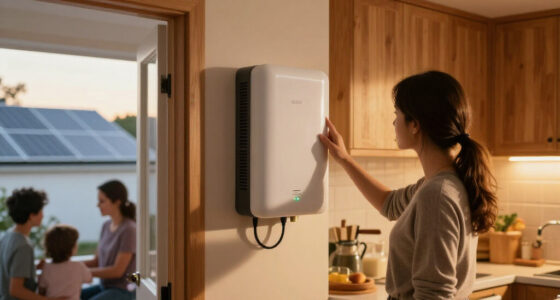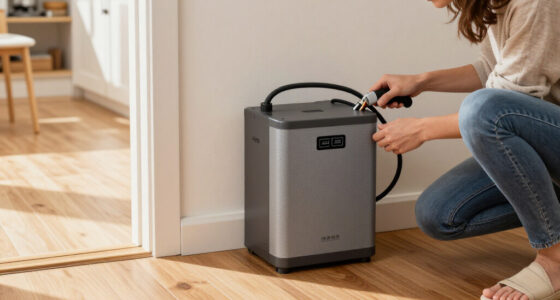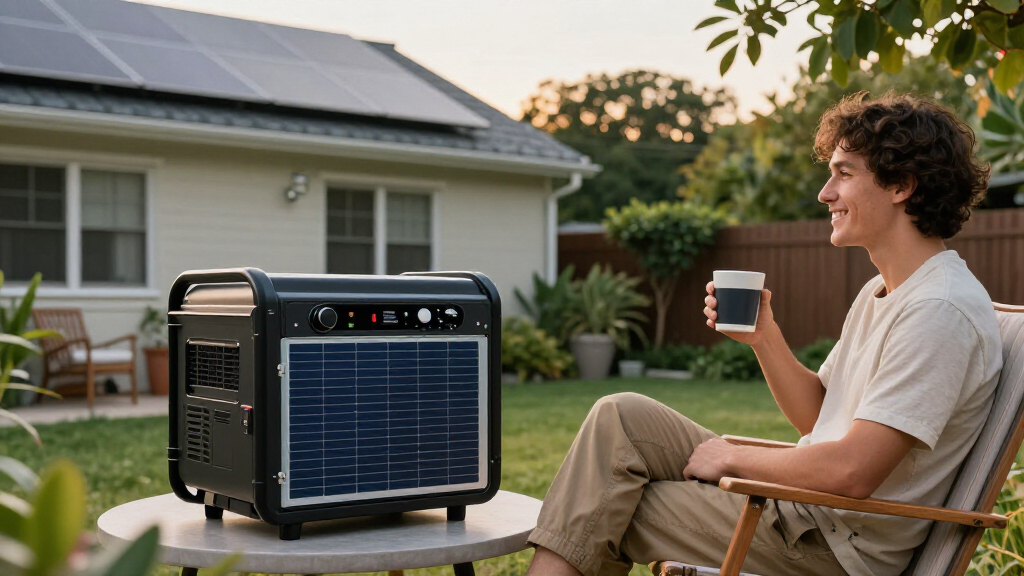

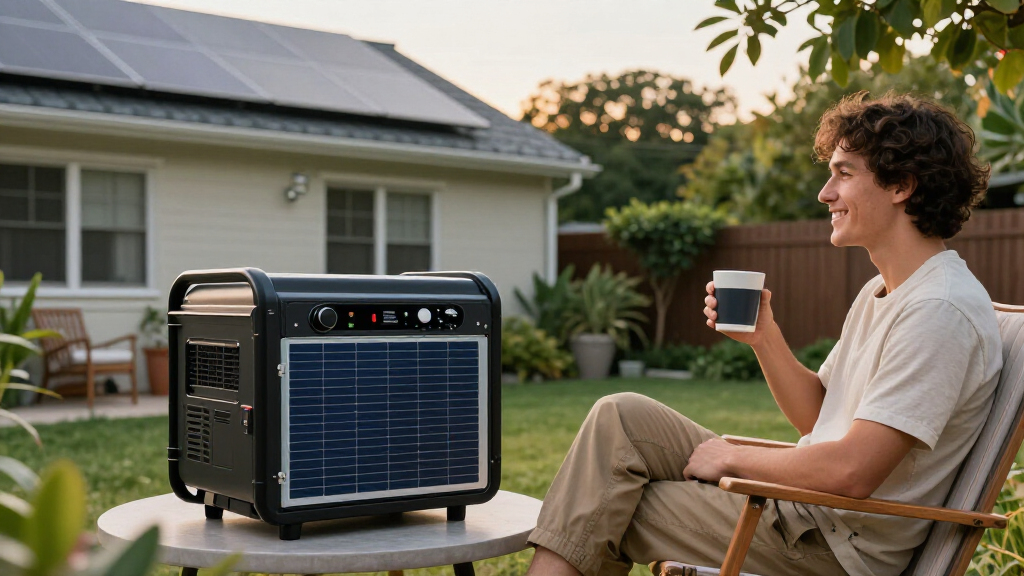
Solar-powered backup generators range from small 88Wh units that keep a phone and a light running to 6,000W split-phase systems that can carry essential home circuits through an outage. The OSCAL PowerMax 6000 stands out as the best overall pick for true home backup, pairing massive output with three 400W panels for fast recharging. If your needs are lighter, the Jackery Solar Generator 1000 V2 strikes the best balance of capacity, brand reliability, and portability, while the MARBERO 88Wh kit is the cheapest way to get started with solar backup. The main tradeoff in this category is capacity versus cost and weight — bigger batteries mean real money and real pounds — plus the fact that bundled solar panels on budget models are often underpowered for the battery they feed. Keep reading for the full breakdown of all 15 models and which one fits your situation.

Get backup power and energy gear delivered free with Prime
- Fast, free delivery on millions of items
- Prime Video, Amazon Music and more included
- Member-only deals all year
Complete the kit


Key Takeaways
- The OSCAL PowerMax 6000 was the only model in this lineup offering 120V/240V split-phase output, making it the sole option capable of running heavy appliances like well pumps or dryers during a home outage.
- Bundled solar panels on budget models (21W–40W) often need 20+ hours of full sun to recharge their own battery, so buyers wanting meaningful solar recharge should target 200W+ panel kits like the Jackery 1000 V2 or OSCAL bundles.
- Several mid-range models (BLAVOR, BROWEY) now include built-in folding solar panels with 1024Wh LiFePO4 batteries — a genuine space-saving innovation, but the integrated panels are too small to be the primary charging method.
- True capacity for the money improved sharply at the ~$1,000 tier: the Jackery 1000 V2 delivers roughly triple the usable watt-hours per dollar of the sub-$150 entry-level kits.
- Two products in this roundup (the 300W Portable Power Station without a panel, and the Jackery Explorer 300 alone) are not actually solar generators out of the box — they only make sense if you already own compatible panels.
| BLAVOR 1600W Solar Generator with 1024Wh Capacity and Built-In 40W Solar Panel |  | Best Overall | Capacity: 1024Wh | Rated Power: 1600W (3200W peak) | Battery Type: LiFePO4, 4000+ cycles | VIEW LATEST PRICE | See Our Full Breakdown |
| MARBERO Solar Powered Generator 88Wh, 120W Surge with 21W Solar Panel Kit |  | Best Budget Starter Kit | Capacity: 88Wh | Output Wattage: 80W (120W surge) | Solar Panel: 21W | VIEW LATEST PRICE | See Our Full Breakdown |
| Portable Solar Generator with 40W Solar Panel, 300W Power Station |  | Best Mid-Size Camping Value | Battery Capacity: 220Wh | Output Wattage: 300W | Solar Panel: 40W | VIEW LATEST PRICE | See Our Full Breakdown |
| Solar Powered Generator 100W with 40W Solar Panels – Portable Power Station |  | Best Ultralight Emergency Kit | Battery Capacity: 146Wh | Running Wattage: 100W (200W starting) | Solar Panel: 40W monocrystalline | VIEW LATEST PRICE | See Our Full Breakdown |
| 200W Solar Powered Generator with 40W Solar Panel – Portable Power Station |  | Best for Photographers and Remote Work | Battery Capacity: 146Wh | Output Wattage: 200W | Solar Panel: 40W foldable | VIEW LATEST PRICE | See Our Full Breakdown |
| MARBERO 237Wh Solar Generator with 60W Solar Panel |  | Best Budget Starter Kit | Battery Capacity: 237Wh | Power Output: 300W pure sine wave | Solar Panel: 60W foldable, included | VIEW LATEST PRICE | See Our Full Breakdown |
| Jackery HomePower 3600 Plus with 2 Solar Panels |  | Best Premium Home Backup | Capacity: 3584Wh | Output: 3600W (120V, 240V in parallel) | Battery Chemistry: LFP (Lithium Iron Phosphate) | VIEW LATEST PRICE | See Our Full Breakdown |
| Jackery Solar Generator 300 with 40W Solar Panel |  | Best Lightweight Pick | Capacity: 292Wh | Output: 300W (600W surge) | Battery Chemistry: LiFePO4 | VIEW LATEST PRICE | See Our Full Breakdown |
| OSCAL PowerMax 6000 Solar Generator with 3x400W Solar Panels |  | Best Whole-Home Value | Capacity: 3600Wh | Continuous Output: 6000W (9000W surge) | Solar Panels: 3 x 400W included | VIEW LATEST PRICE | See Our Full Breakdown |
| BROWEY 1600W Portable Power Station with Built-in 40W Solar Panel |  | Best All-in-One Design | Battery Capacity: 1024Wh LiFePO4 | Output: 1600W (3200W peak) pure sine wave | Built-in Solar Panel: 40W | VIEW LATEST PRICE | See Our Full Breakdown |
| BROWEY 1600W Portable Power Station with 1024Wh LiFePO4 Battery and Built-in Solar Panel |  | Best All-in-One Design | Battery Capacity: 1024Wh | Battery Cell Type: LiFePO4 | Output Wattage: 1600W (3200W peak) | VIEW LATEST PRICE | See Our Full Breakdown |
| Portable Power Station 300W, 110V Solar Generator 280Wh (Without Solar Panel) | 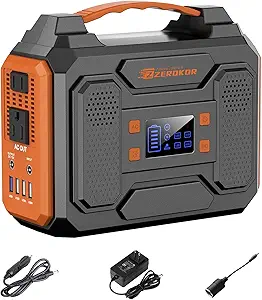 | Best Budget Starter Unit | Capacity: 280Wh | Output Wattage: 300W | Voltage: 110V | VIEW LATEST PRICE | See Our Full Breakdown |
| Jackery Explorer 300 Portable Power Station, 292Wh |  | Best Lightweight Pick | Capacity: 292Wh | Rated Output: 300W (600W surge) | Battery Chemistry: LiFePO4 | VIEW LATEST PRICE | See Our Full Breakdown |
| Portable Solar Generator 300W with 60W Solar Panel |  | Best Complete Kit Under Budget | Output Wattage: 300W | Included Solar Panel: 60W foldable | Voltage: 110 volts | VIEW LATEST PRICE | See Our Full Breakdown |
| Jackery Solar Generator 1000 V2 with 200W Solar Panel, 1070Wh, 1500W AC |  | Best for Serious Home Backup | Capacity: 1070Wh | Running Wattage: 1500W (3000W starting) | Included Solar Panel: 200W | VIEW LATEST PRICE | See Our Full Breakdown |
| solar-powered backup generator | Weight | Capacity |
|---|---|---|
| BLAVOR 1600W Solar Generator w | — | 1024Wh |
| MARBERO Solar Powered Generato | 2.3 lbs | 88Wh |
| Portable Solar Generator with | 5 lbs | — |
| Solar Powered Generator 100W w | — | — |
| 200W Solar Powered Generator w | 3.0 lbs | — |
| MARBERO 237Wh Solar Generator | — | — |
| Jackery HomePower 3600 Plus wi | 77.2 lbs | 3584Wh |
| Jackery Solar Generator 300 wi | 7.5 lbs | 292Wh |
| OSCAL PowerMax 6000 Solar Gene | 45.5 kg (~100 lbs) | 3600Wh |
| BROWEY 1600W Portable Power St | 26 lbs | — |
| BROWEY 1600W Portable Power St | 26.5 pounds | — |
| Portable Power Station 300W | 5.1 lbs | 280Wh |
| Jackery Explorer 300 Portable | 7.5 lbs | 292Wh |
| Portable Solar Generator 300W | — | — |
| Jackery Solar Generator 1000 V | 23.8 lbs | 1070Wh |
More Details on Our Top Picks
BLAVOR 1600W Solar Generator with 1024Wh Capacity and Built-In 40W Solar Panel
This option stands out for being the only kit in this batch with enough capacity and output to function as a genuine home backup rather than just a camping toy. The 1024Wh battery and 1600W rated output mean it can run a refrigerator, microwave, or power tools — things the MARBERO 88Wh kit or the 146Wh units simply cannot touch. The LiFePO4 chemistry rated for 4,000+ cycles also means it should outlast the lithium-ion packs in smaller stations by several years of regular use. The clever touch is the built-in 40W panel: unfold and it trickle-charges itself, no cables or setup. The tradeoff is weight and price — it is far heavier than the sub-4-pound units here, and serious solar recharging still means buying an external panel, since 200W of input takes hours even in good sun.
Pros:- 1024Wh capacity runs refrigerators and larger appliances
- LiFePO4 battery rated for 4,000+ charge cycles
- Built-in solar panel lets it self-charge with zero setup
- 100W USB-C fast charging and multiple recharge methods
Cons:- External solar panel for faster recharging is sold separately
- Heavy and bulky compared with sub-5-pound camping kits
- Solar input capped at 200W, so full solar recharges take a full day
Best for: Homeowners and RV travelers who need whole-appliance backup power with a battery that lasts years
Not ideal for: Backpackers and day-trippers — the size and weight defeat the point of a carry-along kit
- Capacity:1024Wh
- Rated Power:1600W (3200W peak)
- Battery Type:LiFePO4, 4000+ cycles
- Built-In Solar Panel:40W
- External Solar Input:Up to 200W
- USB-C Port:100W fast charging
- Recharging Methods:AC wall, car, built-in panel, external panel
Our verdict“If you want one purchase that covers both campsite comforts and real emergency backup, this is the pick that justifies its higher price.”
MARBERO Solar Powered Generator 88Wh, 120W Surge with 21W Solar Panel Kit
At the other end of the spectrum from the BLAVOR 1600W, this MARBERO kit is built around one idea: lowest possible cost of entry into solar backup. For roughly the price of a nice camp lantern, you get a 2.3-pound station, eight output ports, and a 21W panel — a complete, working solar loop. Compared with the 300W station with 40W panel (B0DHC51QJV), you give up roughly two-thirds of the battery capacity and most AC headroom, but you also spend far less and carry half the weight. The 21W panel charges the 88Wh battery slowly, so think of this as a phone-and-headlamp lifeline, not a mini-fridge runner. Its surge rating of 120W means anything with a motor or heating element is off the table.
Pros:- Very low price for a complete kit with panel included
- Extremely light at 2.3 pounds for backpacking
- Eight output ports cover phones, tablets, and small gadgets
- Simple operation for solar beginners
Cons:- 88Wh capacity runs out quickly under sustained use
- 21W panel recharges slowly, especially in weak sun
- 120W surge ceiling excludes nearly all appliances
Best for: First-time buyers, students, and car-campers who want to try solar backup without a big spend
Not ideal for: Anyone planning to run a CPAP, mini-fridge, or laptop for hours — 88Wh drains fast under real loads
- Capacity:88Wh
- Output Wattage:80W (120W surge)
- Solar Panel:21W
- Total Power Outlets:8
- Voltage:110V
- Weight:2.3 lbs
- Dimensions:6.5″ x 3.2″ x 4.6″
Our verdict“The cheapest credible way to own a working solar generator — just accept that it powers essentials, not appliances.”
Portable Solar Generator with 40W Solar Panel, 300W Power Station
This kit hits a sweet spot the extremes miss: with 220Wh of capacity, a 300W inverter, and a 40W panel, it can genuinely run a small fan, string lights, or a projector at camp — jobs the MARBERO 88Wh kit can’t attempt — while staying at just 5 pounds, far more packable than the BLAVOR 1600W. The port selection is the most versatile in this batch for mixed-device campsites: two AC outlets, two USB-C, three USB-A, and a carport let a whole group charge at once without fighting over sockets. The honest limitation is runtime — pull the full 300W and you get about two hours, so this is an evening-and-morning station, not a weekend of power unless the panel gets good sun daily. Compared with the Jackery Solar Generator 300 (292Wh), you trade brand polish and some capacity for a noticeably lower bundled price.
Pros:- 300W inverter handles fans, lights, and small appliances
- Bundled 40W panel recharges meaningfully faster than 21W kits
- Eight ports including dual USB-C for group charging
- 5-pound weight is easy to move around camp
Cons:- Only about 2 hours of runtime at full 300W load
- 220Wh depletes fast on multi-day trips without daily sun
- No LiFePO4 chemistry, so fewer lifetime cycles than the BLAVOR
Best for: Car campers and small groups who need laptop and small-appliance power for overnight trips
Not ideal for: Home outage backup — 220Wh won’t carry a fridge or medical device through a night
- Battery Capacity:220Wh
- Output Wattage:300W
- Solar Panel:40W
- Output Ports:2 AC, 3 USB-A, 2 USB-C, 1 DC carport
- Weight:5 lbs
- Run Time:Up to 2 hours at 300W load
- Frequency:60 Hz
Our verdict“The best balance of power, ports, and packability for campers who’ve outgrown phone-charger stations but don’t need home backup.”
Solar Powered Generator 100W with 40W Solar Panels – Portable Power Station
Where the 300W kit (B0DHC51QJV) is built around campsite comfort, this unit is optimized for the go-bag and glovebox scenario. The aluminum-and-tempered-glass construction feels more rugged than typical plastic stations, and the built-in LED flashlight with emergency modes makes it a legitimate piece of an emergency kit rather than just a battery with a handle. Seven ports covering AC, USB, and DC keep a phone, radio, and headlamp topped up during an outage. The catch is capacity: 146Wh with a 100W ceiling means it powers communications gear, not appliances. Compared with the 200W grey-and-orange sibling (B0FBS5KZKB), you get the same battery but a lower inverter rating — enough of a gap that small AC devices on the edge of 100W are out of reach here.
Pros:- Rugged aluminum and tempered glass build quality
- Built-in LED flashlight with emergency modes
- 40W panel included for self-sufficient recharging
- Seven ports to keep multiple small devices alive
Cons:- 100W output ceiling excludes most AC appliances
- 146Wh capacity needs frequent solar top-ups for ongoing use
- Recharging speed depends heavily on clear sunlight
Best for: Preppers and commuters building a car or home emergency kit focused on lights and communication devices
Not ideal for: Anyone wanting to run a fan, TV, or mini-fridge — the 100W inverter rules them out
- Battery Capacity:146Wh
- Running Wattage:100W (200W starting)
- Solar Panel:40W monocrystalline
- Total Power Outlets:7
- Material:Aluminum, monocrystalline silicon, tempered glass
- Dimensions:7.5″ x 3.7″ x 6.1″
- Warranty:12 months
Our verdict“A purpose-built emergency companion for lights, phones, and radios — buy it for the go-bag, not the campsite kitchen.”
200W Solar Powered Generator with 40W Solar Panel – Portable Power Station
This model shares its 146Wh battery with the 100W emergency unit (B0G24B6VW6) but doubles the inverter to 200W of AC output — a meaningful difference for its natural audience: photographers, drone pilots, and remote workers who need to charge camera batteries, a laptop, and a drone pack off-grid without hauling a 5-pound station. At 3 pounds with a foldable 40W panel, it slips into a camera bag alongside gear where the 220Wh 300W station would dominate the load. Charging flexibility is solid for this class: solar, wall, and car inputs mean you can leave home full and trickle-charge from the dashboard between shoots. The honest weakness is depth — 146Wh is roughly two full laptop charges plus camera batteries, so multi-day shoots without sun require rationing or a second recharge plan.
Pros:- 200W inverter handles laptop AC chargers comfortably
- Foldable 40W panel packs flat in a camera bag
- Solar, wall, and car recharging options
- LED indicators make charge status readable at a glance
Cons:- 146Wh capacity limits multi-day use without reliable sun
- 200W ceiling still excludes heating and motorized devices
- Lithium-ion chemistry offers fewer cycles than LiFePO4 rivals
Best for: Photographers, drone operators, and remote workers needing repeated laptop and camera-battery charges off-grid
Not ideal for: Families wanting appliance backup — 146Wh and 200W are strictly small-electronics territory
- Battery Capacity:146Wh
- Output Wattage:200W
- Solar Panel:40W foldable
- Number of Outlets:7
- Battery Type:Lithium Ion
- Voltage:110V
- Weight:3.0 lbs
Our verdict“A purpose-built power companion for gear-heavy creators who count every pound and every watt-hour.”
MARBERO 237Wh Solar Generator with 60W Solar Panel
Buying a power station and a solar panel separately is where most budget buyers overspend, and that is exactly the problem this kit solves. The 237Wh capacity with a 60W panel included makes it the most complete entry point in this roundup for the money. Compared with the Jackery Solar Generator 300, you give up roughly 55Wh of capacity, but you get the panel in the box instead of paying extra for one — a real difference for first-time buyers on a tight budget. The 300W pure sine wave inverter handles phones, laptops, drones, and small lights cleanly, though it will shut down on anything like a kettle or microwave. The tradeoff is honest capacity: this is a weekend-camping and short-outage solution, not a home backup system.
Pros:- Solar panel included, so no separate purchase needed
- Pure sine wave output is safe for sensitive electronics like laptops
- Built-in LED flashlight with emergency modes adds real camping utility
- Compact, tote-friendly form factor for car camping
Cons:- 237Wh capacity drains quickly when running anything beyond small devices
- 60W panel means slow full recharges, often a full day of good sun
- No published weight or cycle-life rating makes long-term value hard to judge
Best for: First-time campers and students who want a complete solar charging kit under a modest budget without buying panels separately
Not ideal for: Anyone planning to run kitchen appliances or power tools — the 300W ceiling and small battery will not support them
- Battery Capacity:237Wh
- Power Output:300W pure sine wave
- Solar Panel:60W foldable, included
- Voltage:110V
- Outlets:Multiple (AC, USB)
- Extras:LED flashlight with emergency modes
- Warranty:30-day return policy
Our verdict“A sensible first solar generator for light camping duty, as long as you accept it is a small-device charger and nothing more.”
Jackery HomePower 3600 Plus with 2 Solar Panels
This is the option in this lineup built for whole-home emergencies rather than campsites. With 3584Wh of capacity and 3600W of output, it sits in an entirely different class from the MARBERO 237Wh kit — enough to run refrigerators, space heaters, and well pumps through an extended outage. What justifies the premium price is the LFP battery rated for 6,000 cycles and a 10-year lifespan, roughly double the cycle life of cheaper units like the OSCAL PowerMax 6000. The wheels and telescopic handle matter more than they sound, because at 77.2 pounds you will not want to lift it. The tradeoffs are real: solar panels ship separately, and expanding capacity through parallel units adds setup complexity most casual buyers should avoid.
Pros:- 3584Wh capacity supports refrigeration and heating through long outages
- 6,000-cycle LFP battery with 10-year expected lifespan
- Charges fast: full AC recharge in 2.5 hours, solar in about 4
- Wheels and telescopic handle make 77 pounds manageable around the house
Cons:- Solar panels ship separately, adding cost and delivery friction
- Parallel expansion for more capacity involves a more complex setup
- One of the most expensive options in this roundup by a wide margin
Best for: Homeowners in outage-prone areas who want multi-day appliance backup and are willing to pay for decade-scale battery life
Not ideal for: Campers and van-lifers — the size, weight, and price are wasted on small-device charging
- Capacity:3584Wh
- Output:3600W (120V, 240V in parallel)
- Battery Chemistry:LFP (Lithium Iron Phosphate)
- Cycle Life:6,000 cycles, ~10-year lifespan
- Recharge Time:AC 2.5 hrs, Solar 4 hrs, Hybrid 2 hrs
- Weight:77.2 lbs
- Dimensions:15.2 x 12.2 x 19.3 inches
- Outlets:4
Our verdict“The closest thing here to a true home backup system — buy it for outages, not for the outdoors.”
Jackery Solar Generator 300 with 40W Solar Panel
At 7.5 pounds, this is the lightest genuinely capable solar generator in the roundup, and that single fact defines who it is for. Hikers, kayak campers, and anyone carrying gear on their body will feel the difference against the BROWEY 1600W, which weighs 26 pounds for similar-class output. The LiFePO4 chemistry rated for 4,000+ cycles is unusual at this size — most small units use shorter-lived cells — so it should last years of regular trips. The honest catch: the included 40W panel takes about 7.5 hours to reach 80%, so sun-dependent recharging is slow, and the 292Wh capacity plus 300W output means laptops and cameras, not appliances. It is a trail tool, not a backup power source for a house.
Pros:- 7.5-pound carry weight is unmatched in this lineup
- LiFePO4 battery with 4,000+ cycles outlasts typical small-station cells
- Six output ports including USB-C PD covers every common device
- Solar panel included for genuine off-grid recharging
Cons:- 40W panel charges slowly — plan a full sunny day for a substantial recharge
- 292Wh capacity limits multi-day trips without sun
- Larger and pricier than a simple power bank for phone-only needs
Best for: Backpackers, paddlers, and photographers who need to carry their power on foot and mainly charge cameras, drones, and laptops
Not ideal for: Buyers seeking emergency home backup — the capacity and output are far below what an outage requires
- Capacity:292Wh
- Output:300W (600W surge)
- Battery Chemistry:LiFePO4
- Cycle Life:Over 4,000 cycles
- Weight:7.5 lbs
- Solar Panel:40W included
- Solar Recharge:80% in 7.5 hrs (40W panel)
- Ports:2 AC, 1 USB-C PD, 2 USB-A, 1 car port
Our verdict“The pick when weight is the deciding factor and your devices fit in a backpack.”
OSCAL PowerMax 6000 Solar Generator with 3x400W Solar Panels
This bundle attacks the Jackery HomePower 3600 Plus where it hurts: price per watt. You get 3600Wh of capacity, 6000W of continuous output, and 1200W of solar panels included — panels that Jackery ships separately — plus 14 outlets and 120/240V split-phase support for running heavy 240V appliances. The automatic switchover during outages also makes it behave like a standby generator rather than a portable you have to manually connect mid-blackout. The tradeoffs are weight and refinement: at 45.5 kg (about 100 pounds) with no wheels mentioned, moving it is a two-person job, and the 3,500-cycle battery rating trails Jackery’s 6,000 cycles, meaning a shorter service life despite the lower upfront cost.
Pros:- 6000W continuous / 9000W surge runs nearly any household appliance
- Three 400W panels included, a complete off-grid charging setup out of the box
- 120/240V split-phase output supports 240V well pumps and dryers
- Automatic outage switchover acts like a true standby system
Cons:- Roughly 100-pound weight with no wheels makes relocation difficult
- 3,500-cycle battery lifespan is about half the Jackery HomePower’s rating
- Setup with panels and split-phase wiring is more involved than plug-and-play units
Best for: Homeowners who want maximum power and included solar panels for the lowest total cost, and who can park the unit in one place
Not ideal for: Anyone who needs to move their generator regularly — at roughly 100 pounds without a handle kit, transport is impractical
- Capacity:3600Wh
- Continuous Output:6000W (9000W surge)
- Solar Panels:3 x 400W included
- Voltage:120V / 240V split phase
- Battery Chemistry:LiFePO4, up to 3,500 cycles
- Outlets:14 total
- Weight:45.5 kg (~100 lbs)
- Dimensions:23.2 x 13.8 x 17.3 inches
Our verdict“The most power and solar hardware per dollar here, provided it stays parked and you accept a shorter battery lifespan.”
BROWEY 1600W Portable Power Station with Built-in 40W Solar Panel
The clever trick here is the solar panel built directly into the unit — there is nothing to carry, connect, or leave behind. That makes it a genuinely different proposition from the MARBERO 237Wh kit, where the panel is a separate folded accessory, and it means the BROWEY trickle-charges itself whenever sunlight hits it. The 1024Wh LiFePO4 battery and 1600W output put it in a middle class the small kits can’t reach: it will run a mini-fridge, a microwave briefly, or power tools at a job site. The catch is physics — a 40W panel takes well over 25 hours of sun to fill 1024Wh, so the built-in panel is a maintenance trickle, not a real recharging strategy. Compared with the similarly specced BLAVOR 1600W, the choice comes down to price and port layout rather than capability.
Pros:- Integrated 40W solar panel means zero extra gear to carry or lose
- 1024Wh capacity with 1600W (3200W peak) output runs fridges and power tools
- LiFePO4 cells rated for 3,000+ cycles
- Eight outlets plus AC, car, and external solar charging options
Cons:- Built-in 40W panel recharges far too slowly to refill the large battery
- 26 pounds is awkward compared with sub-10-pound options like the Jackery 300
- Premium price for the integrated-panel convenience
Best for: RV owners and off-grid cabin users who want a mid-size station that self-trickle-charges without carrying extra panels
Not ideal for: Anyone expecting the built-in panel to fully recharge the battery — at 40W it is far too slow for that
- Battery Capacity:1024Wh LiFePO4
- Output:1600W (3200W peak) pure sine wave
- Built-in Solar Panel:40W
- Outlets:8
- Recharge Time:3 hours to 80% (AC)
- Weight:26 lbs
- Dimensions:13.3 x 17.1 x 5.5 inches
Our verdict“A smart one-box solution for sustained off-grid use, as long as you treat the built-in panel as a bonus trickle charger rather than a primary power source.”
BROWEY 1600W Portable Power Station with 1024Wh LiFePO4 Battery and Built-in Solar Panel
Most solar generators ask you to buy the panel separately and manage two pieces of gear. This option stands out for building a 40W solar panel directly into the unit, so the moment it leaves the box it can recharge itself in sunlight with nothing extra to carry or connect. Compared with the Jackery Explorer 300, the capacity gap is enormous — 1024Wh versus 292Wh — and the 1600W continuous output (3200W peak) means it runs real appliances like microwaves and hair dryers, not just phones and laptops. The LiFePO4 chemistry also promises far more charge cycles than older lithium-ion units. The tradeoff: that built-in panel is modest at 40W, so fully recharging by sun alone takes a long time — buyers serious about solar self-sufficiency will want to add external panels. At 26.5 pounds, it’s also a two-handed carry.
Pros:- 1024Wh LiFePO4 battery with long cycle life and appliance-grade 1600W output
- Built-in 40W solar panel means true out-of-the-box solar charging
- Fast AC charging reaches 80% in about 3 hours
- 8 outlets including USB-C PD keeps whole groups of devices powered at once
Cons:- 40W built-in solar input is slow; serious off-grid use requires adding external panels
- 26.5 pounds is heavy for a portable unit, and the price reflects the integrated design
Best for: Campers and RV owners who want a single high-capacity unit that can run kitchen appliances and trickle-charge itself from the sun without extra gear
Not ideal for: Day hikers or anyone prioritizing ultralight portability — at 26.5 pounds it’s far heavier than compact options like the Jackery Explorer 300
- Battery Capacity:1024Wh
- Battery Cell Type:LiFePO4
- Output Wattage:1600W (3200W peak)
- Built-in Solar Panel:40W
- Number of Outlets:8
- Weight:26.5 pounds
- AC Charging Time:3 hours to 80%
Our verdict“This is the pick for buyers who want one self-contained, appliance-capable solar generator rather than assembling a separate panel-and-station kit.”
Portable Power Station 300W, 110V Solar Generator 280Wh (Without Solar Panel)
At the entry end of this roundup, this model makes the most sense for buyers who want to test the waters without a big spend. The 280Wh capacity and 300W ceiling cover the essentials — phones, laptops, cameras, a small fan — and the 7-outlet array plus AC/DC/USB inputs gives it flexibility that pricier small units don’t always match. Unlike the Portable Solar Generator 300W with 60W Solar Panel, though, no panel comes in the box, so its solar capability is theoretical until you buy one. That’s the central tradeoff: the low price is partly funded by leaving out the solar hardware this roundup is about. The built-in LED flashlight with emergency modes and BMS safety protections are welcome touches for a first unit. Just don’t expect it to run anything with a heating element.
Pros:- Very affordable entry point into backup power
- Light 5.1-pound body with carry handle is genuinely portable
- 7 outlets across AC, DC, and USB charge many small devices at once
- BMS safety system and built-in emergency LED flashlight
Cons:- Solar panel not included, so solar recharging requires an extra purchase
- 300W cap rules out most kitchen appliances and power tools
- Battery degrades if left in storage without periodic recharging
Best for: First-time buyers and casual campers who want a cheap, light station for phones, laptops, and small devices, and don’t mind adding a panel later
Not ideal for: Anyone who needs true off-grid solar recharging out of the box or wants to run appliances above 300W like blenders or kettles
- Capacity:280Wh
- Output Wattage:300W
- Voltage:110V
- Total Outlets:7
- Weight:5.1 lbs
- Runtime:Up to 9 hours
- Solar Panel:Not included (compatible)
Our verdict“A sensible low-cost first step for light-duty backup, as long as you understand the solar half of the equation costs extra.”
Jackery Explorer 300 Portable Power Station, 292Wh
Where the BROWEY 1600W is a base-camp workhorse, the Explorer 300 is built around a different question: how little can a capable power station weigh? At 7.5 pounds in a 9-inch footprint, it fits in a backpack side pocket and still delivers the same 300W output as cheaper rivals — but with LiFePO4 chemistry rated for over 4,000 cycles, a spec most budget 300W units in this roundup don’t offer. That longevity is the real story: charge it daily for a decade and the battery should still hold meaningful capacity. Compared with the no-name 280Wh budget station, the port selection is better organized (2 AC, USB-C PD, 2 USB-A, car port) and solar input accepts Jackery’s panels for fast recharges. The catch mirrors most Jackery gear: no panel is included, and 292Wh runs dry quickly if you push it.
Pros:- Featherweight 7.5 lbs with true backpack-friendly dimensions
- LiFePO4 battery rated for 4,000+ charge cycles
- Well-rounded port selection including 60W USB-C PD
- Fast solar charging when paired with a Jackery panel
Cons:- Solar panel sold separately, adding meaningful cost to a complete solar setup
- 300W output and 292Wh capacity limit it to small electronics
Best for: Hikers, kayak campers, and travelers who need reliable weekend power for cameras, drones, and laptops at minimum weight
Not ideal for: Home backup or fridge-running duty — 292Wh and 300W can’t sustain appliances through an outage
- Capacity:292Wh
- Rated Output:300W (600W surge)
- Battery Chemistry:LiFePO4
- Charge Cycles:Over 4,000
- Outlets:2 AC, 1 USB-C PD, 2 USB-A, 1 car port
- Weight:7.5 lbs
- Charge Time:4 hours
Our verdict“The lightest credible option here for mobile adventurers, provided they budget for a separate panel.”
Portable Solar Generator 300W with 60W Solar Panel
This is the rare inexpensive bundle that actually includes the solar half. The 60W foldable panel in the box gives it a genuine advantage over the 280Wh budget station and the Jackery Explorer 300, both of which ship panel-less — meaning this kit can recharge off-grid from day one for roughly what competitors charge for the battery alone. Compared with the similarly-priced MARBERO 237Wh kit, the included panel here is substantially more powerful, shortening sunny-day recharge times considerably. The tradeoffs are honest ones at this price: the junction box on the panel isn’t waterproof, so rain-day charging demands care, and pushing past the 300W limit risks damaging the unit rather than simply tripping a breaker. For car campers and emergency-drawer preparedness, though, it’s a complete, self-sufficient package.
Pros:- 60W foldable solar panel included, enabling true off-grid recharging out of the box
- Multiple outlets and USB ports for charging several devices at once
- Built-in SOS flashlight and overload/short-circuit protections
- Lightweight and packable for camping and emergency kits
Cons:- Solar panel’s junction box is not waterproof, limiting wet-weather reliability
- Exceeding 300W can damage the generator instead of gracefully shutting off
- Battery performance declines if the unit sits uncharged for long periods
Best for: Car campers and emergency-prep buyers who want a working solar recharging loop included at a budget price
Not ideal for: Anyone running appliances near or above 300W — overload can damage the unit rather than just shutting it down
- Output Wattage:300W
- Included Solar Panel:60W foldable
- Voltage:110 volts
- Power Sources:Solar, AC, DC (car)
- Safety Features:Overload and short-circuit protection
- Extras:Built-in SOS flashlight
Our verdict“The cheapest genuinely complete solar generator kit in this lineup — ideal for light-duty off-grid use if you respect its limits.”
Jackery Solar Generator 1000 V2 with 200W Solar Panel, 1070Wh, 1500W AC
This kit sits near the top of the realistic middle ground between small camp units and the OSCAL PowerMax 6000‘s whole-home territory. With 1070Wh of capacity, 1500W of continuous AC output, and a bundled 200W panel, it can run a fridge, lights, and chargers through a short outage — something no 300W-class product here can touch. Against the BROWEY 1600W, the specs look similar on paper, but the Jackery pulls ahead on charging speed: a full AC recharge in about an hour (via its emergency charging mode), versus roughly three hours for the BROWEY to hit 80%. The battery is rated for over a decade of use, which reframes the price as a long-horizon purchase. Real drawbacks exist: the 1-hour fast charge must be manually enabled, the panel and station ship separately, and at full 1500W load you get around two hours of runtime.
Pros:- 1500W AC output runs major appliances including refrigerators
- 200W solar panel included for meaningful off-grid recharging
- 1-hour full AC recharge when fast-charge mode is enabled
- Battery rated for over 10 years of service life
Cons:- Full-load runtime is only about 2 hours at 1500W draw
- Fast charging requires manually enabling emergency charge mode
- Panel and station ship separately, complicating delivery and setup
Best for: Homeowners who want fridge-and-essentials outage coverage plus fast recharging, without paying for whole-home systems like the PowerMax 6000
Not ideal for: Buyers wanting a fully integrated single-box setup — the separately shipped panel and multi-piece kit add setup friction the all-in-one BROWEY avoids
- Capacity:1070Wh
- Running Wattage:1500W (3000W starting)
- Included Solar Panel:200W
- Fast Charging:Full charge in ~1 hour (emergency mode)
- Voltage:120 volts
- Weight:23.8 lbs
- Runtime at Full Load:~2 hours
Our verdict“The strongest choice in this batch for real emergency home backup — powerful, fast-charging, and complete, if you accept the two-piece kit format.”
How We Picked
I evaluated each generator through the lens of real backup readiness rather than spec-sheet appeal. The four factors that drove ranking were: usable capacity measured in watt-hours relative to price, whether the included solar panel could realistically recharge the battery in a reasonable timeframe, battery chemistry and cycle life (LiFePO4 models rated for 3,000+ cycles scored higher than standard lithium-ion), and inverter output matched against realistic appliance loads. A 300W station that can’t run a refrigerator ranks lower for backup purposes than its wattage suggests.
I also weighted ecosystem and expandability. Models from established brands like Jackery offer replaceable panels, parallel expansion, and warranty support that generic imports often lack — a meaningful difference when a generator is a multi-year investment. Finally, I flagged duplicated and panel-less entries honestly rather than padding the list, so the rankings reflect genuine differences in value rather than marketing claims.
Factors to Consider When Choosing Solar-powered Backup Generators
Before settling on a specific model, it helps to understand the broader mechanics of solar backup — a few decisions made before purchase will shape whether your generator actually delivers when the power goes out.Battery Capacity: What Watt-Hours Actually Buy You
The most common mistake buyers make is underestimating how quickly watt-hours disappear. A 300Wh station runs a modern refrigerator for roughly 3–4 hours, a CPAP machine overnight, or a laptop several times over — but not all of them together for long. For whole-home essentials (fridge, lights, router, phone charging), plan on a minimum of 1,000Wh; for multi-day outages or medical equipment, 2,000Wh and up is the realistic floor. Also check the depth of discharge rating, because some budget units only let you access 80–90% of advertised capacity. The gap between a nameplate 292Wh unit and a 1,024Wh unit is the difference between a convenience gadget and genuine emergency infrastructure.
Inverter Output and Surge Ratings
Capacity tells you how long you can run things; inverter wattage tells you what you can run at all. Refrigerators and power tools draw 2–3x their running wattage at startup, so a 300W inverter with a 600W surge may still trip on a compressor. If home backup is the goal, look for 1,000W continuous output minimum, and 3,000W+ if you want to run multiple appliances simultaneously. Split-phase 240V output — found only on the OSCAL in this roundup — matters if you need to power well pumps, electric water heaters, or larger HVAC components. Undersizing the inverter is the number one reason buyers return generators that were ‘supposed to work.’
Solar Panel Reality Check
A 40W panel produces roughly 150–200Wh on a good sunny day — enough to recharge a small station, but nowhere near enough for a 1,000Wh battery. Buyers frequently assume the bundled panel keeps the system running indefinitely; in practice, small panels are a trickle-charge convenience, not a primary power source. If solar recharge is central to your plan, budget for 200W of panels per 1,000Wh of battery, and remember that real-world output is typically 60–75% of the panel’s rating due to angle, heat, and clouds. Also verify connector compatibility before mixing panels and stations from different brands.
Battery Chemistry and Lifespan
LiFePO4 (iron phosphate) batteries now dominate the mid-range and premium tiers for good reason: they’re rated for 3,000–6,000 charge cycles versus 500–800 for standard lithium-ion, translating to a decade of occasional use instead of a few years. They’re also more thermally stable, which matters for a device that may sit in a hot garage or car trunk. The tradeoff is weight — LiFePO4 packs are heavier per watt-hour, so ultra-portable units still often use older chemistry. For a backup unit that spends most of its life idle and then matters enormously during an emergency, chemistry longevity should outweigh a small portability advantage.
Maintenance and Storage Behavior
Backup generators fail most often from neglect, not defects. Check whether the unit has a pass-through charging mode (letting it sit plugged in, always full) and what its self-discharge rate is — units that drain to empty over three months of storage may be dead when you need them. A general rule: top up the battery every 2–3 months and run it under load occasionally. Also consider where you’ll store it; lithium batteries shouldn’t freeze or bake, so a climate-controlled closet beats an unheated shed. Premium brands include app-based monitoring that sends reminders, a small feature that prevents the most common failure mode.
When to Pay More — and When Not To
Spending more buys capacity, cycle life, faster charging, and warranty support — but only pay for what your use case demands. If you need camping power or a desk backup, a sub-$150 kit does the job and anything bigger is wasted money. If you’re preparing for multi-day outages, cheap units are a false economy: you’ll end up buying twice. The sweet spot for most households is the 1,000Wh/1,000W+ tier, which covers refrigeration and communications for a day or two. Above that, whole-home systems like the OSCAL make sense mainly if outages are frequent or you want to offset daily usage, not just emergencies.
Frequently Asked Questions
Can a solar generator actually run my refrigerator during an outage?
Most modern refrigerators need 100–200W running power but draw 600–1,000W+ briefly at compressor startup, so the inverter’s surge rating matters as much as its continuous output. A 300W unit with a modest surge will likely trip; a 1,000W+ inverter like the Jackery 1000 V2 or BLAVOR 1600W handles it comfortably. Runtime depends on capacity — a 1,024Wh battery typically runs an efficient fridge for 8–14 hours. For overnight outages you’d want to recharge during daylight, which is exactly when a fridge is less critical, making a solar generator a genuinely good fit for refrigeration backup.
Are the small bundled solar panels (21W–40W) actually useful?
Useful, but not as a primary charging source. A 40W panel delivers roughly 150–200Wh on a fully sunny day, which means a 1,000Wh battery needs several days of ideal sun to recharge completely. Think of small bundled panels as battery maintainers and emergency trickle chargers — they keep a station topped up in storage or stretch runtime slightly during extended outages. If fast solar recharge is the goal, either buy a bundle with 200W+ of panels or plan to add a larger panel later. The value of these kits is the bundle discount on the station itself, not the panel.
Is a solar generator better than a gas generator for home backup?
They solve different problems. Solar generators are silent, fume-free, usable indoors, and require zero fuel logistics — a major advantage when gasoline is scarce during a regional outage. Gas generators deliver far more continuous power per dollar and can run indefinitely with fuel, which matters for multi-day whole-house outages. The honest answer: for essential circuits and short-to-medium outages, solar wins on convenience and safety; for running an entire home through a week-long blackout, gas still leads unless you invest heavily in a large solar system like the OSCAL PowerMax 6000. Many households ultimately use both, with solar as the quiet first line and gas as the deep reserve.
Should I buy a power station now and add panels later?
It can be a smart strategy, but do your homework first. Confirm the station’s input voltage range and connector type (many use MC4-to-8mm or Anderson connectors, and voltages vary by brand), because mismatched panels may not charge at full speed or at all. Buying the station alone lets you prioritize capacity now and expand solar later as budget allows — reasonable if outages in your area are usually short and grid power returns quickly. The risk is that generic stations may have limited third-party panel compatibility, whereas established ecosystems like Jackery’s make adding panels straightforward. If solar recharge is your main reason for buying, a matched bundle usually costs less than piecing it together.
How long do these batteries last before needing replacement?
Chemistry is the deciding factor. Standard lithium-ion units are typically rated for 500–800 full cycles, which for occasional backup use means 5–7 years before noticeable degradation. LiFePO4 models like the BROWEY and BLAVOR units are rated for 3,000+ cycles — a decade or more of realistic use. Calendar aging matters too: batteries degrade slightly even unused, so a generator bought for rare emergencies will still lose capacity over 8–10 years. Check whether the manufacturer offers a battery replacement program; Jackery and similar brands have service ecosystems, while generic imports are often effectively disposable once the battery fades.
Conclusion
Matching the right generator to your situation is easier than the spec sheets suggest. For best overall home backup, the OSCAL PowerMax 6000 is the clear choice — nothing else in this roundup can run 240V appliances or recharge as fast from its three-panel array. For best value, the Jackery Solar Generator 1000 V2 delivers the most usable capacity, proven reliability, and a genuinely useful 200W panel at a price that undercuts competitors on watt-hours per dollar. Best for beginners goes to the MARBERO 88Wh kit: it’s cheap enough to learn on, and if solar backup becomes a habit, you’ll know exactly what to upgrade. For campers and outdoor use, the MARBERO 237Wh and Jackery Solar Generator 300 hit the portability sweet spot. And if you want set-and-forget convenience, the BLAVOR and BROWEY units with built-in folding panels eliminate cable clutter entirely — just remember their integrated panels supplement rather than replace wall charging. Whatever you choose, buy one tier above your minimum estimate; in an outage, spare capacity is the one feature you’ll never regret.
Halloween Picks
halloween
As an affiliate, we earn on qualifying purchases.