
For an energy-conscious replacement, I would start with the COLORPAPA 36 x 60-inch window for a large standard-style opening, the NOTASA 24 x 36-inch vinyl window for a smaller room, and the BLCKTIGR aluminum window when weather-resistance details matter more than a documented thermal rating. All five options use double-pane glass, but none of the supplied specifications includes a U-factor, solar heat gain coefficient, or energy certification. That limits how precisely I can compare their insulation performance.

Get backup power and energy gear delivered free with Prime
- Fast, free delivery on millions of items
- Prime Video, Amazon Music and more included
- Member-only deals all year
The main differences are practical: vinyl frames avoid painting and suit moisture-prone spaces, aluminum offers a rigid frame but needs stronger thermal-performance documentation, and window size and opening style affect both installation and everyday use. I rank the picks by the available insulation-related features, frame suitability, weather details, and how clearly each product fits a particular job—not by claiming energy savings the listed specifications cannot verify.
Key Takeaways
- Every listed window has double-pane glass, but none provides a U-factor or solar heat gain coefficient, so the information does not support a precise ranking of insulation performance.
- The COLORPAPA is the largest option at 36 x 60 inches and includes a lower tilt-in sash, screen, pre-drilled holes, and a built-in J-channel; its 58.9-pound weight can complicate handling.
- The NOTASA 24 x 36-inch window is a practical middle-size vinyl pick with double-pane tempered glass, an included screen, and a sash that tilts inward for cleaning.
- The BLCKTIGR has the clearest stated air, water, and wind resistance levels, but its aluminum frame and missing thermal ratings make its energy performance harder to judge than the vinyl options.
- The 32 x 14-inch NOTASA hopper is designed for basement or utility openings, while the TANVILL 18 x 24-inch window suits compact openings; accurate opening measurements matter more than either model’s general description.
| COLORPAPA 36 x 60 in. Vinyl Single-Hung Window, White | 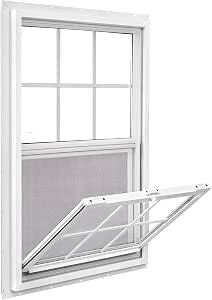 | Best Overall for a Large Replacement Opening | Size: 36 x 60 x 1.6 inches | Window type: Single-hung | Frame: White vinyl | VIEW LATEST PRICE | See Our Full Breakdown |
| NOTASA Vinyl Single-Hung Window, 24 x 36 in, White |  | Best Mid-Size Vinyl Pick | Size: 24 x 36 inches | Window type: Single-hung, vertical sliding | Frame: White vinyl | VIEW LATEST PRICE | See Our Full Breakdown |
| BLCKTIGR Single-Hung Aluminum Window, Double-Pane Tempered Glass, Gray, 23 × 28 in |  | Best for Stated Weather-Resistance Details | Size: 23 × 28 inches | Window type: Single-hung, vertical sliding | Frame: Aluminum | VIEW LATEST PRICE | See Our Full Breakdown |
| NOTASA Vinyl Basement Hopper Window, 32 x 14 in, Black |  | Best for Basement and Utility Openings | Size: 32 x 14 inches | Frame: Black PVC (vinyl) | Glazing: Double-pane insulated tempered glass | VIEW LATEST PRICE | See Our Full Breakdown |
| TANVILL Vinyl Single-Hung Window, 18 × 24 in, White |  | Best Compact Pick for Small Openings | Size: 18 × 24 inches | Model: VW-DTL01-WH-18×24 | Window type: Single-hung | VIEW LATEST PRICE | See Our Full Breakdown |
| energy efficient window | Size | Frame | Glazing | Window type |
|---|---|---|---|---|
| COLORPAPA 36 x 60 in. Vinyl Si | 36 x 60 x 1.6 inches | White vinyl | Double-pane insulated tempered glass | Single-hung |
| NOTASA Vinyl Single-Hung Windo | 24 x 36 inches | White vinyl | Double-pane insulated tempered glass | Single-hung, vertical sliding |
| BLCKTIGR Single-Hung Aluminum | 23 × 28 inches | Aluminum | Double-pane, 5 mm tempered glass | Single-hung, vertical sliding |
| NOTASA Vinyl Basement Hopper W | 32 x 14 inches | Black PVC (vinyl) | Double-pane insulated tempered glass | — |
| TANVILL Vinyl Single-Hung Wind | 18 × 24 inches | White vinyl | Double-pane tempered glass | Single-hung |
More Details on Our Top Picks
COLORPAPA 36 x 60 in. Vinyl Single-Hung Window, White
The COLORPAPA earns the lead position because it pairs double-pane insulated tempered glass with a large, familiar single-hung format and the most clearly described installation features in this group. Its 36 x 60-inch size suits a substantial opening, while the lower sash tilts inward and can be removed for cleaning. That combination makes it more adaptable for a main living area than the compact TANVILL and NOTASA options, which are intended for smaller openings.
The pre-drilled holes and built-in J-channel may help simplify fit and exterior finishing, and the included screen allows ventilation without leaving the opening unprotected from insects. The listing also describes reinforced, UV-resistant vinyl and a rear drainage system. These details make the COLORPAPA a strong all-around candidate among the five, though they do not establish a verified energy rating. I would ask the seller for the window’s U-factor and SHGC before using it as the basis for an efficiency-focused replacement decision.
Its biggest practical drawback is weight: 58.9 pounds. That is substantially heavier than the small TANVILL and NOTASA models, so handling and setting it into an opening may call for a second person. Only the lower sash is specified as tilting inward, which is less flexible than a design where both sashes tilt. I rank it first for its combination of size, insulated glazing, vinyl framing, and installation detail—not because the available data prove it has the best thermal performance.
Pros:- Double-pane insulated tempered glass is specified.
- Lower sash tilts inward and can be removed for cleaning.
- Pre-drilled holes, built-in J-channel, screen, and rear drainage system are described.
- Reinforced, UV-resistant vinyl frame is designed for weather resistance.
Cons:- At 58.9 pounds, it may be awkward to handle without help.
- No U-factor, SHGC, or named energy certification is supplied.
Best for: Buyers replacing a large 36 x 60-inch opening who want double-pane glass, vinyl framing, a screen, and useful installation features.
Not ideal for: Anyone with a smaller rough opening, a solo installer who wants a lighter unit, or a buyer requiring published thermal ratings before purchase.
- Size:36 x 60 x 1.6 inches
- Window type:Single-hung
- Frame:White vinyl
- Glazing:Double-pane insulated tempered glass
- Sash:Lower sash tilts inward and is removable
- Screen:Included
- Installation details:Pre-drilled holes and built-in J-channel
- Weight:58.9 lb
Our verdict“I rank the COLORPAPA first for its broad replacement-window utility and installation details, while recommending that buyers verify its thermal ratings before treating it as a proven efficiency upgrade.”
NOTASA Vinyl Single-Hung Window, 24 x 36 in, White
The NOTASA 24 x 36-inch window is my most balanced choice for a smaller standard-style opening. It offers double-pane insulated tempered glass, a white vinyl frame, a screen, and a tilt-in sash without the large footprint or handling burden of the COLORPAPA. Compared with the 18 x 24-inch TANVILL, it gives buyers a larger window for light and ventilation; compared with the 36 x 60-inch COLORPAPA, it is easier to match to compact rooms and less intimidating to handle at 27.2 pounds.
Its vertical-sliding design is straightforward, and the tilt-in sash makes cleaning accessible from indoors. The listing also describes reinforced vinyl, resistance to UV and harsh weather, and a rear drainage outlet to direct water outward. Those construction details support its role as a practical residential option, but they do not tell me how well it insulates relative to the other double-pane windows. I would look for a published U-factor and SHGC when comparing it with a locally available, certified alternative.
The main constraint is the single-hung format: ventilation is limited to vertical sash movement, rather than a wide-opening design. The 27.2-pound weight is moderate, but careful handling is still sensible during installation. I place this model just behind COLORPAPA because it has fewer stated installation aids; in return, its more manageable size and weight make it a better match for bedrooms, smaller living spaces, or renovation openings where a large unit would be excessive.
Pros:- Double-pane insulated tempered glass is specified.
- Tilt-in sash supports cleaning from inside the home.
- Screen and rear drainage outlet are included in the described design.
- Vinyl frame is described as resistant to UV exposure and harsh weather.
Cons:- Single-hung operation provides vertical sliding ventilation only.
- No U-factor, SHGC, or named certification is listed.
Best for: Homeowners with a 24 x 36-inch opening who want a mid-size vinyl single-hung window with insulated glass and indoor-accessible cleaning.
Not ideal for: Buyers who need a different opening size, wider ventilation, or verified energy ratings in the product specifications.
- Size:24 x 36 inches
- Window type:Single-hung, vertical sliding
- Frame:White vinyl
- Glazing:Double-pane insulated tempered glass
- Sash:Tilt-in
- Screen:Included
- Drainage:Built-in rear drainage outlet
- Weight:27.2 lb
Our verdict“I recommend the NOTASA 24 x 36-inch model as the most balanced mid-size vinyl option, provided its dimensions fit and the seller can supply the thermal data you need.”
BLCKTIGR Single-Hung Aluminum Window, Double-Pane Tempered Glass, Gray, 23 × 28 in
The BLCKTIGR is the clearest pick for buyers who prioritize stated resistance to wind, water, and air movement. Its listing gives level 8 wind pressure resistance, level 5 water tightness, and level 4 air tightness—details none of the vinyl options provides in the supplied specifications. That makes it easier to compare on weather exposure, especially for an opening where rain and wind management are a concern.
It differs from the NOTASA and COLORPAPA most in its aluminum frame. The listing describes the frame as stable and resistant to deformation, and the flush-mount vertical slider avoids taking up extra room as it opens. But strength is not the same as insulation: aluminum can conduct heat, and this product information does not mention a thermal break, U-factor, or SHGC. Its double-pane, 5 mm tempered glass is a useful construction feature, yet the missing thermal data keep me from ranking it above the vinyl options for energy performance.
The 23 x 28-inch size is also more specialized than COLORPAPA’s large format or NOTASA’s 24 x 36-inch option. Its single-hung opening may provide less ventilation area than a fully opening window. I would choose it when the published weather-resistance levels fit the project and a suitable thermal rating can be confirmed; I would skip it if insulation performance is the main deciding factor and the seller cannot provide further specifications.
Pros:- Double-pane construction with 5 mm tempered glass.
- Specific wind, water, and air-tightness levels are supplied.
- Flush-mount vertical sliding design saves opening space.
- Aluminum frame is described as structurally stable and resistant to deformation.
Cons:- No U-factor, SHGC, or thermal-break information is supplied.
- Single-hung movement may provide less opening area than a fully opening window.
Best for: Buyers with a 23 x 28-inch opening who value stated wind, water, and air-resistance levels and prefer a rigid aluminum frame.
Not ideal for: Energy-focused buyers who need documented thermal performance, or anyone who needs a larger opening or a wider ventilation area.
- Size:23 × 28 inches
- Window type:Single-hung, vertical sliding
- Frame:Aluminum
- Glazing:Double-pane, 5 mm tempered glass
- Color:Gray
- Water tightness:Level 5
- Air tightness:Level 4
- Wind pressure resistance:Level 8
Our verdict“The BLCKTIGR stands out for stated weather resistance, but I would not select it as an energy upgrade without additional thermal-performance documentation.”
NOTASA Vinyl Basement Hopper Window, 32 x 14 in, Black
The NOTASA hopper fills a different role from the four single-hung windows: it is a low, wide 32 x 14-inch unit designed for basement, bathroom, or utility-space openings. Its double-pane insulated tempered glass and moisture-resistant vinyl frame give it a sensible starting point for a damp or below-grade setting. Unlike the vertical sliders, it opens inward from a bottom hinge, so it can provide ventilation through a short opening where a conventional sash may not fit well.
The included fiberglass screen and locking mechanism add practical value for a basement room that needs airflow while limiting insects and securing the window. The inward-opening arrangement is also described as helping limit rain intrusion. Compared with the TANVILL 18 x 24-inch single-hung window, the hopper is wider and much shorter, making it a purpose-built choice rather than a general replacement for an everyday room window. Its vinyl frame avoids painting, but the listing does not provide energy ratings that would establish its thermal performance against the other double-pane options.
Before choosing it, measure the opening carefully and check the clearance inside the room. The sash opens inward, so furniture, shelving, or a narrow window well arrangement could interfere with use. Its fixed dimensions also limit flexibility: it cannot substitute for a 24 x 36-inch or 36 x 60-inch unit. I rank it below the general-purpose single-hung picks because its role is narrower, not because the available information proves weaker insulation.
Pros:- Double-pane insulated tempered glass is specified.
- Moisture-resistant vinyl frame does not require painting.
- Fiberglass screen and locking mechanism are included.
- Inward-opening hopper format suits short basement or utility openings.
Cons:- Inward-opening sash needs clear space inside the room.
- The 32 x 14-inch format is limited to openings with matching dimensions.
Best for: Buyers replacing a 32 x 14-inch basement, bathroom, or utility opening who need a moisture-resistant frame and inward-opening ventilation.
Not ideal for: Anyone whose opening does not match its dimensions, who lacks interior clearance for an inward sash, or who needs published thermal ratings.
- Size:32 x 14 inches
- Frame:Black PVC (vinyl)
- Glazing:Double-pane insulated tempered glass
- Opening style:Inward-opening, bottom-hinged hopper
- Screen:Fiberglass
- Lock:Locking mechanism included
- Weight:16.61 lb
- Package dimensions:35.75 x 18.5 x 3.62 inches
Our verdict“For a correctly sized basement or utility opening, this hopper is the most purpose-built moisture-conscious choice, but its inward swing and missing thermal ratings deserve attention.”
TANVILL Vinyl Single-Hung Window, 18 × 24 in, White
The TANVILL is the smallest general-purpose single-hung option in this group, at 18 × 24 inches. That makes it a better match for a compact remodel, shed, mobile home, or other small opening than the 24 x 36-inch NOTASA or the much larger COLORPAPA. It still brings the core construction expected across this roundup: double-pane tempered glass, vinyl framing, a screen, and a rear drainage outlet.
Its tilt-in sash provides access to both sides of the glass for cleaning, a useful feature where exterior access is awkward. The listing describes the vinyl frame as weather-resistant and the drainage outlet as directing rainwater outward. At 15.88 pounds, the unit is lighter than the COLORPAPA and the mid-size NOTASA, although actual installation effort also depends on the opening and the work involved in securing and sealing the frame. The listing says installation is required but does not detail hardware or instructions.
Compared with the NOTASA 24 x 36-inch window, TANVILL trades a larger viewing area for a compact fit and lighter handling. Its smaller glass area may suit a small room, but dimensions should be checked against the actual rough opening rather than chosen by nominal size alone. As with the other options, double-pane glass is not a complete efficiency comparison: no U-factor, SHGC, or certification appears in the supplied details. I rank it fifth because its best use case is narrower and its installation information is sparse, not because its listed glazing is a lesser type.
Pros:- Double-pane tempered glass is specified.
- Tilt-in sash allows access to both sides for cleaning.
- Vinyl frame, screen, and rear drainage outlet are described.
- At 15.88 pounds, it is lighter than the larger COLORPAPA and NOTASA models.
Cons:- The 18 × 24-inch size serves only compact openings.
- Installation hardware and detailed instructions are not specified.
- No U-factor, SHGC, or named energy certification is listed.
Best for: Buyers replacing a small 18 × 24-inch opening in a compact room, mobile home, shed, or remodeling project.
Not ideal for: Anyone seeking a larger view or ventilation area, or a buyer who needs detailed installation guidance and verified thermal ratings.
- Size:18 × 24 inches
- Model:VW-DTL01-WH-18×24
- Window type:Single-hung
- Frame:White vinyl
- Glazing:Double-pane tempered glass
- Sash:Tilt-in
- Weight:15.88 lb
- Included components:Window
Our verdict“I would choose the TANVILL for a matching small opening and easy sash cleaning, while requesting installation details and thermal ratings before purchase.”

How We Picked
I compared these five windows against the needs behind energy-efficient window shopping: insulated glazing, frame material, weather management, fit, and everyday usability. Each product is described as having double-pane glass, so I treated that as a useful baseline rather than proof that the windows perform equally—or that any one meets a particular efficiency standard.
The supplied specifications do not list U-factor, solar heat gain coefficient (SHGC), air-leakage figures, or a named certification. Those are important measures for comparing heat transfer, solar gain, and tested performance. I have not filled those gaps with assumptions. Instead, I favor options whose stated construction and use case are clear, and I call out where a missing rating limits confidence.
I also weighed frame and sash choices in context. Vinyl is described across several picks as weather-resistant or moisture-resistant and requires no painting; that makes it a straightforward fit for many residential openings, though frame material alone cannot establish insulation performance. The BLCKTIGR’s aluminum frame is described as stable, but its listing does not provide thermal-break details or an energy rating. Its wind, water, and air-tightness levels add useful weather-resistance information, not a substitute for thermal data.
Finally, I considered how easy each option may be to install, clean, ventilate, and match to an existing opening. Size is a hard constraint: a window that misses the rough-opening dimensions is not a good efficiency upgrade. Tilt-in sashes, screens, drainage outlets, and installation features can make a window more practical, but I do not treat them as proof of lower energy use. The ordering reflects this balance of documented construction, fit, and limitations; it is not a measured performance ranking.
| energy efficient window | Window type | Frame | Glazing | Sash |
|---|---|---|---|---|
| COLORPAPA 36 x 60 in. Vinyl Si | Single-hung | White vinyl | Double-pane insulated tempered glass | Lower sash tilts inward and is removable |
| NOTASA Vinyl Single-Hung Windo | Single-hung, vertical sliding | White vinyl | Double-pane insulated tempered glass | Tilt-in |
| BLCKTIGR Single-Hung Aluminum | Single-hung, vertical sliding | Aluminum | Double-pane, 5 mm tempered glass | — |
| NOTASA Vinyl Basement Hopper W | — | Black PVC (vinyl) | Double-pane insulated tempered glass | — |
| TANVILL Vinyl Single-Hung Wind | Single-hung | White vinyl | Double-pane tempered glass | Tilt-in |
Factors to Consider When Choosing Best Energy Efficient Windows
I would choose among these windows by separating verified energy performance from convenient construction features. Double-pane glazing appears on all five, so the more useful next questions are whether the window has published thermal ratings, whether it fits the opening, and whether its frame and operating style suit the room.
Ask for thermal ratings, not just glass descriptions
Double-pane glass generally describes two panes separated by a space, but that label alone does not tell me how much heat the complete window transfers. Before buying, ask for the whole-window U-factor and solar heat gain coefficient, or SHGC. U-factor relates to heat transfer; SHGC indicates how much solar heat passes through. The right balance depends on climate, orientation, shading, and whether the room needs to limit summer heat or retain winter warmth.
None of the five supplied product descriptions includes these figures or a named efficiency certification. That means I can compare design and stated features, but not reliably say which one will reduce heating or cooling use the most. If an energy upgrade is the main goal, request documentation for the exact size and configuration being purchased. A rating for a different glass package or frame may not apply.
Match frame material to the project
The four vinyl options—COLORPAPA, both NOTASA windows, and TANVILL—are described as weather-resistant or moisture-resistant, and vinyl does not require painting. That makes them practical for many residential openings, especially where maintenance and moisture exposure matter. Still, vinyl by itself does not guarantee a high-efficiency window; frame design, seals, glass spacing, and installation all contribute.
BLCKTIGR uses aluminum, which the listing describes as stable and resistant to deformation. Its supplied air, water, and wind levels give buyers more weather-resistance information than the other products provide. However, no thermal-break detail or thermal rating is listed. I would ask specifically about the frame’s thermal design before selecting it for a space where reducing heat transfer is the priority.
Measure the opening before choosing a size
These five products range from the 18 × 24-inch TANVILL to the 36 × 60-inch COLORPAPA, with the 32 x 14-inch NOTASA hopper serving a distinct short, wide opening. Do not assume a product’s advertised size equals the rough opening required for installation. Check the manufacturer’s instructions for unit dimensions, rough-opening dimensions, and any clearance needed for shimming and sealing.
Size should come before ranking. A window with appealing glazing is not a useful replacement if it does not fit the opening or requires extensive structural changes. I would also check whether package dimensions differ from the window dimensions, as shown in the NOTASA hopper specifications. When replacing an existing unit, document the opening carefully and confirm the seller’s fit guidance before ordering.
Choose an opening style that works in the room
The COLORPAPA, the 24 x 36-inch NOTASA, BLCKTIGR, and TANVILL are single-hung vertical sliders. Their sash movement does not need the same interior swing clearance as the hopper, although the amount of ventilation is limited by the opening design. Tilt-in sashes on the COLORPAPA, NOTASA, and TANVILL make cleaning easier from indoors; the COLORPAPA description specifies only its lower sash for tilt and removal.
The NOTASA hopper opens inward from a bottom hinge. That shape suits a low basement or utility opening, but it needs clear space inside the room. Check for shelving, furniture, window-well constraints, and how the opening will be reached. Screens support ventilation while helping keep insects out, but they do not replace a secure lock or careful installation.
Treat weather ratings and drainage as separate evidence
BLCKTIGR lists level 8 wind pressure resistance, level 5 water tightness, and level 4 air tightness. Those are helpful stated weather details, but the description does not explain the rating method or provide thermal measurements. Ask for the relevant test standard and complete documentation if those levels are important to a project. The other listings mention weather-resistant frames or drainage outlets, but do not provide comparable numeric weather ratings.
Rear drainage outlets on the COLORPAPA, NOTASA 24 x 36-inch, and TANVILL are described as directing water outward. Drainage can help manage water in the window assembly, but it does not confirm that the unit is airtight or well insulated. Proper flashing, sealing, and installation remain important; a high-performing window can underperform if gaps around its frame allow drafts or water intrusion.
Account for handling, installation, and the full assembly
Weight and installation detail affect whether a window is practical for a project. The COLORPAPA weighs 58.9 pounds, so I would plan for help lifting and positioning it. The 24 x 36-inch NOTASA weighs 27.2 pounds, the hopper 16.61 pounds, and TANVILL 15.88 pounds. Those figures do not replace safe handling guidance, but they indicate why a large unit may take more coordination than a compact one.
COLORPAPA lists pre-drilled holes and a built-in J-channel, while TANVILL does not specify installation hardware or detailed instructions. Before ordering any model, check whether fasteners, flashing guidance, trim requirements, and a complete installation manual are available. Compare the whole installed assembly—not only the glass—because air leakage around the frame can undermine the value of insulated glazing. For uncertain or structural replacement work, a qualified installer can confirm measurements, weatherproofing, and local requirements.
Frequently Asked Questions
Which of these windows is the most energy efficient?
The available information does not establish a definitive winner. All five are described as having double-pane glass, but none supplies a U-factor, SHGC, or named energy certification. I rank COLORPAPA first as an all-around replacement candidate based on its glazing, vinyl frame, and installation details—not on measured thermal results. Ask each seller for ratings for the exact window configuration before comparing expected efficiency.
Is double-pane glass enough to confirm a window will lower energy use?
No. Double-pane construction is a useful feature, but performance also depends on the glass package, the space between panes, frame design, seals, and installation quality. To compare windows for energy use, request the whole-window U-factor and SHGC, then consider your climate and the direction the window faces. The product descriptions here do not provide those measurements.
Which option is best for a basement?
The NOTASA 32 x 14-inch hopper is the most purpose-built basement option in this group. Its moisture-resistant vinyl frame, inward-opening sash, screen, and locking mechanism suit a short utility or basement opening. Measure carefully and confirm there is room for the sash to swing inward. For a larger or differently shaped basement opening, one of the single-hung windows may fit better if its dimensions match.
Should I choose vinyl or aluminum for an energy-conscious replacement?
The supplied listings do not provide enough thermal data to declare one material more efficient in these specific products. Vinyl models are described as weather-resistant or moisture-resistant and require no painting. BLCKTIGR’s aluminum frame is described as stable, but no thermal-break information is given. Compare whole-window ratings and ask about frame construction rather than relying on material alone.
How do I know which size to order?
Measure the existing opening and consult the manufacturer’s instructions for both the unit dimensions and the required rough opening. Do not assume the size in a product title is the exact opening dimension needed for installation. The five options here cover very different openings, from the compact 18 × 24-inch TANVILL to the large 36 x 60-inch COLORPAPA and the low 32 x 14-inch hopper. Confirm fit and installation clearances before ordering.
Conclusion
For a large replacement opening, I would start with the COLORPAPA 36 x 60-inch window, especially if its tilt-in lower sash and built-in J-channel fit the project; plan for help handling its weight and request thermal ratings. For a smaller everyday room, the NOTASA 24 x 36-inch window offers a useful middle ground of vinyl construction, double-pane glass, and indoor cleaning access. Choose the BLCKTIGR when stated wind, water, and air-resistance levels matter most, but verify its thermal design before buying for energy performance.
For a correctly sized basement or utility opening, the NOTASA hopper is the most tailored choice, while the TANVILL makes sense for a compact 18 × 24-inch opening where its tilt-in sash is useful. Across all five, I would make the final decision only after confirming dimensions, installation requirements, and the exact unit’s U-factor and SHGC. The listings establish useful construction differences, but they do not supply enough energy data to promise that one will outperform the others.