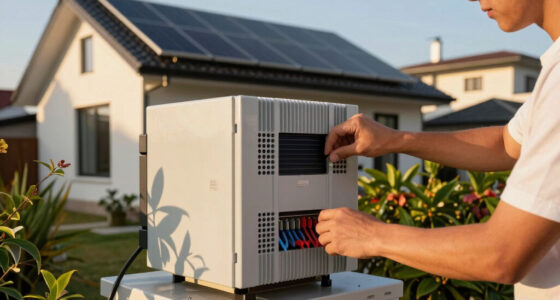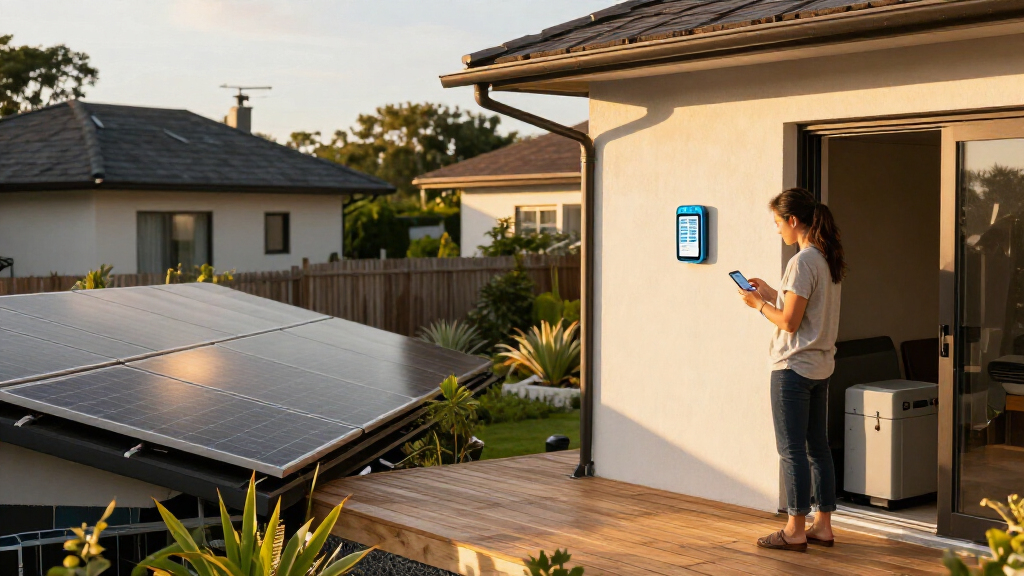
The best home solar energy systems balance panel output, usable battery storage, and inverter capacity for the way you actually use electricity. My best overall pick is the ECO-WORTHY 10 kW Off-Grid Solar Kit with 2,950 W Panels and 16.1 kWh Battery, which pairs substantial storage with a more manageable panel array than the largest kits. The 32.2 kWh ECO-WORTHY system stands out for buyers who need longer backup, while the Jackery Solar Generator 1000 V2 suits portable, simpler power needs. The main tradeoffs are system scale, installation complexity, and whether you prioritize whole-home loads or a few essential devices. Read on for the full breakdown and guidance on choosing a system that fits your home and backup goals.

Get backup power and energy gear delivered free with Prime
- Fast, free delivery on millions of items
- Prime Video, Amazon Music and more included
- Member-only deals all year
Key Takeaways
- The 16.1 kWh ECO-WORTHY kit is the roundup’s balanced pick: it combines substantial battery storage with a 2,950 W panel array, rather than leaning on either a very large array or an exceptionally large battery bank.
- Battery capacity changes backup duration more directly than panel wattage. The 32.2 kWh ECO-WORTHY system suits longer outages, but its larger storage makes less sense if your loads are modest or you cannot recharge it adequately.
- “10 kW” does not describe the same thing across these kits. Buyers need to distinguish inverter output, panel capacity, and daily energy production before comparing system labels.
- Compact and portable systems trade household coverage for simplicity. The Jackery 1000 V2 and smaller 24V kits are better fits for selected loads than a substitute for a professionally designed whole-home system.
- System completeness and installation needs separate the contenders. Panel, battery, inverter, voltage, wiring, and compatibility details matter as much as headline capacity, especially when planning a permanent off-grid setup.
| ECO-WORTHY 10kW Solar Backup System with Six 590W Panels and Two 48V 314Ah LiFePO4 Batteries |  | Best for High-Capacity Home Backup | Solar panels: Six 590W N-type panels; 3,540W total | Panel efficiency: 25% | Battery: Two 48V 314Ah LiFePO4 batteries | VIEW LATEST PRICE | See Our Full Breakdown |
| ECO-WORTHY 1170W Solar Panel Kit with 48V Battery and 3500W Inverter |  | Best Value Complete Off-Grid Starter Kit | Solar panels: Six 195W N-type bifacial panels; 1,170W total | Panel conversion efficiency: 25% | Battery: 48V 50Ah LiFePO4 | VIEW LATEST PRICE | See Our Full Breakdown |
| ECO-WORTHY 10 kW Off-Grid Solar Kit with 2,950 W Panels and 16.1 kWh Battery |  | Best for Expandable Off-Grid Systems | Solar panels: Five 590W bifacial panels; 2,950W total | Panel efficiency: 23.23% | Battery: 48V 314Ah LiFePO4 | VIEW LATEST PRICE | See Our Full Breakdown |
| ECO-WORTHY 5 kW Off-Grid Solar System Kit with 2,340 W Panels |  | Best for Mid-Size DIY Off-Grid Setups | Solar panels: 12 × 195W; 2,340W total | Panel type: N-type monocrystalline | Panel efficiency: 25% | VIEW LATEST PRICE | See Our Full Breakdown |
| Jackery Solar Generator 1000 V2 with 200W Solar Panel, 1024Wh LiFePO4 Battery |  | Best Portable Backup for Essential Devices | Battery capacity: 1,024Wh | Battery type: LiFePO4 | AC output: 1,500W; 3,000W surge | VIEW LATEST PRICE | See Our Full Breakdown |
| ECO-WORTHY 10 kW Off-Grid Solar Panel Kit with Split-Phase Inverter and 32.2 kWh Battery Storage |  | Best for High-Capacity Off-Grid Homes | Solar panel count: 18 | Panel power: 590 W each | Total PV capacity: 10,620 W | VIEW LATEST PRICE | See Our Full Breakdown |
| ECO-WORTHY 10 kW Off-Grid Solar System Kit with 9.36 kWh Daily Output |  | Best for Expandable 120 V/240 V Systems | Solar panel count: 12 | Panel power: 195 W each | Total PV capacity: 2,340 W | VIEW LATEST PRICE | See Our Full Breakdown |
| 3000W 24V Off-Grid Solar Power Kit with 1440W Solar Panels, 5.12kWh Battery and Pure Sine Wave Inverter |  | Best for Cabins and 120 V Backup | Solar panel output: 1,440 W (12 × 120 W) | Battery capacity: 5.12 kWh | Battery configuration: 4 × 12.8 V, 100 Ah LiFePO₄ | VIEW LATEST PRICE | See Our Full Breakdown |
| ECO-WORTHY 1200W 24V Off-Grid Solar System with Lithium Batteries |  | Best Compact Kit for RVs and Small Cabins | Solar panel quantity: 6 | Panel power: 195 W each | Maximum PV power: 1,170 W | VIEW LATEST PRICE | See Our Full Breakdown |
More Details on Our Top Picks
ECO-WORTHY 10kW Solar Backup System with Six 590W Panels and Two 48V 314Ah LiFePO4 Batteries
This is the strongest fit here for buyers who want a substantial solar-and-storage package rather than a portable backup unit. It pairs a 10kW hybrid inverter with 3,540W of panels and 30kWh+ of usable battery energy, giving it far more stored capacity than the Jackery Solar Generator 1000 V2 or the smaller ECO-WORTHY 1170W kit. Its 120V and 240V output also suits a broader range of household circuits. Battery monitoring, multiple communication protocols, and an active-balancing BMS add useful system oversight. The tradeoff is scale: the glass panels and batteries are heavy, and the shipment arrives by pallet, so delivery, site access, and installation need planning. The inverter exterior may also vary with inventory. I’d rank it ahead of the 10 kW ECO-WORTHY kit with one battery for buyers who value more included storage.
Pros:- 30kWh+ of stated usable battery energy provides substantially more storage than the portable Jackery Solar Generator 1000 V2.
- 10kW hybrid inverter supplies both 120V and 240V output.
- Battery supports Bluetooth, WiFi, RS485, CAN, and RS232 communication.
- Active-balancing BMS includes a circuit breaker, fire suppression, and abnormal-condition alarm.
Cons:- Panels and batteries are large and heavy, with delivery on a pallet by truck.
- The inverter exterior version may vary depending on inventory.
- The listed 3,540W of solar panel capacity is modest relative to the large inverter and battery storage.
Best for: Homeowners planning substantial off-grid or outage backup who need 120V and 240V output and can accommodate pallet delivery and professional system installation.
Not ideal for: Renters, apartment dwellers, and buyers who need a portable or simple plug-in backup; the large panels, batteries, and inverter require significant space and installation work.
- Solar panels:Six 590W N-type panels; 3,540W total
- Panel efficiency:25%
- Battery:Two 48V 314Ah LiFePO4 batteries
- Usable energy:30kWh+
- Inverter:10kW hybrid
- Output voltage:120V and 240V
- Battery cycle life:9,000+ cycles at 80% DoD
- Battery communication:RS485, CAN, RS232, Bluetooth, and WiFi
Our verdict“Choose this system if you need extensive battery backup and split-voltage output and have the space and installation support for a pallet-shipped setup.”
ECO-WORTHY 1170W Solar Panel Kit with 48V Battery and 3500W Inverter
This kit earns its place as a comparatively accessible entry into a fixed off-grid setup: it includes panels, a 48V LiFePO4 battery, inverter, cables, and mounting accessories, rather than asking buyers to assemble a system from separate purchases. Its 1,170W of bifacial panels and 2,560Wh of usable battery energy make it a smaller-scale option than the ECO-WORTHY 5 kW kit, while its 3,500W inverter offers more output headroom than the Jackery Solar Generator 1000 V2. WiFi monitoring and 20ms UPS switching are useful additions for a system that may serve everyday loads. The limits are real: the battery is much smaller than those in the larger home kits, charging is specified only at temperatures of 32°F and above, and the multiple-package shipment may arrive in stages. Its 110/120V output also lacks the 240V capability of the larger ECO-WORTHY systems.
Pros:- Includes panels, battery, inverter, cables, and mounting accessories.
- 3,500W inverter output and 7,000W surge capacity exceed the Jackery Solar Generator 1000 V2’s stated AC output.
- Bifacial N-type panels, WiFi monitoring, and an 80A MPPT controller are included.
- 48V 50Ah LiFePO4 battery is rated for more than 4,000 cycles.
Cons:- The 2,560Wh usable battery capacity is limited for extended household backup.
- Battery charging is specified only at temperatures of 32°F and above.
- Components ship in multiple packages, so buyers may need to wait for the full kit.
Best for: First-time off-grid buyers who want a bundled 48V system for modest household, shed, or cabin loads and can keep the battery in a suitable charging environment.
Not ideal for: Households seeking long-duration whole-home backup, 240V appliance support, or reliable battery charging in freezing conditions.
- Solar panels:Six 195W N-type bifacial panels; 1,170W total
- Panel conversion efficiency:25%
- Battery:48V 50Ah LiFePO4
- Usable battery energy:2,560Wh
- Inverter output:3,500W; 7,000W surge
- Output voltage:110/120V AC
- MPPT controller:80A
- UPS switching time:20ms
Our verdict“Pick this as a bundled starting point for modest off-grid loads, not as a substitute for the large storage and 240V output of the 10kW home systems.”
ECO-WORTHY 10 kW Off-Grid Solar Kit with 2,950 W Panels and 16.1 kWh Battery
This kit suits buyers who want a high-output off-grid inverter now and room to expand storage later. The 10kW split-phase inverter can deliver 120V or 120/240V output, with a stated 20,000W peak, while the included 16.076kWh LiFePO4 battery is smaller than the 30kWh+ storage in the ECO-WORTHY 10kW Solar Backup System. That difference makes the latter a better fit for buyers who want more battery capacity from the start; this kit, by contrast, supports parallel connection of up to 15 batteries and up to six inverters. Five 590W bifacial panels provide 2,950W of PV capacity, but bifacial gains depend on the installation surface and layout. I’d treat the expansion options as a planning advantage, not a shortcut: the manufacturer recommends qualified installation, and the system ships by freight on a pallet.
Pros:- 10kW inverter supports 120V and 120/240V split-phase output with 20,000W peak power.
- Battery and inverter can be expanded in parallel, up to 15 batteries and six inverters.
- Includes five 590W bifacial panels, a 16.076kWh battery, inverter, and cables.
- WiFi monitoring and dual MPPT controllers support system monitoring and solar input management.
Cons:- Included battery storage is substantially lower than the 30kWh+ in the ECO-WORTHY 10kW Solar Backup System.
- Qualified electrician or solar installer is recommended for installation.
- Freight pallet delivery and large panels require advance planning for access and handling.
Best for: Off-grid homeowners or property owners who need split-phase output and plan to grow battery storage or inverter capacity over time.
Not ideal for: Buyers who want the largest battery bank included upfront, a lightweight setup, or a simple DIY installation without qualified electrical help.
- Solar panels:Five 590W bifacial panels; 2,950W total
- Panel efficiency:23.23%
- Battery:48V 314Ah LiFePO4
- Battery energy capacity:16.076kWh
- Inverter output:10,000W continuous; 20,000W peak
- Output voltage:120V or 120/240V split-phase
- Maximum battery parallel connection:15 units
- Maximum inverter parallel connection:6 units
Our verdict“Choose this if you value a scalable 10kW off-grid foundation more than having the largest battery capacity included on day one.”
ECO-WORTHY 5 kW Off-Grid Solar System Kit with 2,340 W Panels
For buyers who want a fixed off-grid system but don’t need a 10kW inverter, this package offers a more moderate starting point. Its 5,000W inverter and 51.2V 100Ah LiFePO4 battery are paired with twelve 195W panels, totaling 2,340W. Compared with the ECO-WORTHY 1170W kit, it doubles the panel capacity and includes a larger inverter; unlike the expandable 10kW ECO-WORTHY kit, it is aimed at a smaller system and lists only 120V output. The panels can go on a roof, ground, or shed, while included Z brackets and cables reduce the number of separate parts to source. The tradeoff is installation effort: twelve panels mean meaningful mounting and wiring work, and the listed battery capacity is 5.12kWh, well below the larger systems’ storage. Buyers should also confirm their intended loads fit the stated voltage and capacity.
Pros:- Includes 2,340W of panels, a 5,000W inverter, battery, cables, and Z brackets.
- Panel mounting is described for roof, ground, or shed installations.
- N-type monocrystalline panels have a listed 25% efficiency.
- LiFePO4 storage provides deep-cycle battery capacity.
Cons:- The 5.12kWh battery capacity is much smaller than the storage in the ECO-WORTHY 10kW systems.
- Listed output is 120V, unlike the split-phase 120/240V ECO-WORTHY 10kW kit.
- Mounting and wiring twelve panels require substantial planning and installation work.
Best for: DIY-minded owners of a cabin, workshop, or small off-grid home who need a fixed 120V system with more panel capacity than a starter kit.
Not ideal for: Households that need 240V appliances, substantial multi-day backup, or a compact portable system with minimal installation work.
- Solar panels:12 × 195W; 2,340W total
- Panel type:N-type monocrystalline
- Panel efficiency:25%
- Inverter:48V, 5,000W off-grid
- Battery:51.2V 100Ah Cubix LiFePO4
- Output voltage:120V
- Panel dimensions:58.86 × 26.18 × 1.18 in
- Included components:Inverter, battery, 12 panels, cables, and Z brackets
Our verdict“This is a sensible mid-size fixed system for DIY buyers with 120V loads, but not for households that need split-phase output or extended stored energy.”
Jackery Solar Generator 1000 V2 with 200W Solar Panel, 1024Wh LiFePO4 Battery
This is the easiest option in this group to move, store, and put to work without designing a fixed solar array. The 1,024Wh battery, 1,500W AC output, and included 200W solar panel suit essential devices and smaller loads, while its 23.4lb weight is a sharp contrast with the pallet-shipped ECO-WORTHY home systems. It also offers a 10ms UPS switchover and app-controlled charging modes, making it more convenient for select electronics during brief outages. Those advantages come with a firm capacity ceiling: its stored energy and output are far below the 5kW and 10kW systems, so it is not a whole-home backup solution. Solar replenishment is also limited by the included panel’s 200W rating. The panel and power station ship separately, and the 50-minute emergency charging mode must be enabled in the app.
Pros:- Portable 23.4lb unit is far easier to move and store than the fixed ECO-WORTHY systems.
- 1,500W AC output with 3,000W surge capacity supports a range of smaller devices and appliances.
- 10ms UPS switchover helps keep selected connected electronics powered during an interruption.
- LiFePO4 battery is rated to retain over 70% capacity after 4,000 charge cycles.
Cons:- The 1,024Wh capacity is not suited to extended or whole-home backup.
- The included solar panel is rated at 200W, limiting solar input compared with the fixed-panel kits.
- The solar panel and power station ship separately, and emergency fast charging requires app setup.
Best for: People who need a portable backup for phones, computers, small appliances, or short outages and want an included panel for solar recharging.
Not ideal for: Homeowners seeking to power major household circuits, 240V appliances, or multiple days of high-energy loads without recharging.
- Battery capacity:1,024Wh
- Battery type:LiFePO4
- AC output:1,500W; 3,000W surge
- Included solar panel:200W
- UPS switchover:10ms
- Ports:Two USB-C, one USB-A, two AC, and one DC car port
- Weight:23.4lb
- Battery lifespan:Over 70% capacity after 4,000 charge cycles
Our verdict“Choose the Jackery for portable backup of essential devices, not as a replacement for a fixed home solar system with large battery storage.”
ECO-WORTHY 10 kW Off-Grid Solar Panel Kit with Split-Phase Inverter and 32.2 kWh Battery Storage
For a home that needs substantial off-grid capacity, this kit pairs 10,620 W of solar panels with 32.2 kWh of LiFePO₄ storage and a 10,000 W split-phase inverter. The 120 V/240 V output can serve circuits that smaller 24 V kits, such as the 3000W 24V Off-Grid Solar Power Kit, cannot support at the same scale. Two MPPT controllers and several battery-monitoring options add flexibility when tracking system operation. The tradeoff is the size and complexity: 18 large, nearly 70-pound panels and high-voltage equipment call for careful planning, and professional installation is recommended. Its stated daily generation also depends on favorable sunlight, so I would treat that figure as a best-case estimate rather than a guaranteed household supply.
Pros:- Complete kit includes panels, inverter, batteries, and cables.
- 10,000 W continuous inverter output with 120 V/240 V split-phase power.
- 32.2 kWh of LiFePO₄ storage offers substantial energy reserve.
- Battery monitoring supports display, Bluetooth, Wi-Fi, and PC connectivity.
Cons:- Professional installation is recommended, adding planning and labor requirements.
- The 18 large panels need considerable mounting area and handling effort.
- Daily generation figures depend on optimal sunlight and site conditions.
Best for: Owners of larger off-grid homes who need 120 V and 240 V output, substantial battery reserve, and professional installation.
Not ideal for: RV users, small cabins, or DIY beginners who need a compact system or a simpler installation.
- Solar panel count:18
- Panel power:590 W each
- Total PV capacity:10,620 W
- Battery storage:32.2 kWh
- Battery configuration:2 × 48 V, 314 Ah LiFePO₄
- Inverter continuous output:10,000 W
- Inverter peak output:20,000 W
- AC output:120 V / 240 V split-phase
- Charge controllers:Dual MPPT
Our verdict“Choose this kit for a professionally installed off-grid home that needs high output and deep storage, not for a small or portable setup.”
ECO-WORTHY 10 kW Off-Grid Solar System Kit with 9.36 kWh Daily Output
This kit is a fit for buyers who want a 10,000 W inverter and room to expand inverter capacity, but need less stored energy than the 32.2 kWh ECO-WORTHY kit. Its two batteries provide 10.24 kWh total storage, while the 12 bifacial panels supply 2,340 W of rated solar capacity. That combination makes its large inverter rating less useful for running heavy loads for long periods than the higher-storage system; output capacity and stored energy are not the same thing. App monitoring and support for parallel connections, up to six inverters, suit a system planned in stages. Compared with the smaller ECO-WORTHY 1200W 24V Off-Grid Solar System, it offers 120 V/240 V output and a much higher inverter rating, but its installation demands more system planning and professional help.
Pros:- Provides 120 V and 240 V AC output.
- Inverter supports parallel connections with up to six units.
- Bifacial panels and app-based battery monitoring are included.
- Kit includes panels, batteries, inverter, mounting brackets, and accessories.
Cons:- Its 2,340 W of panel capacity is modest relative to the 10,000 W inverter rating.
- The 10.24 kWh battery bank offers far less storage than the 32.2 kWh ECO-WORTHY kit.
- Professional installation is recommended, and stated daily output depends on sunlight.
Best for: Off-grid property owners planning a 120 V/240 V setup that may grow over time and who can work with a qualified installer.
Not ideal for: Households needing long runtimes from stored energy or buyers expecting the 10,000 W inverter rating to mean abundant solar production.
- Solar panel count:12
- Panel power:195 W each
- Total PV capacity:2,340 W
- Battery storage:10.24 kWh
- Battery configuration:2 × 48 V, 100 Ah
- Inverter continuous output:10,000 W
- AC output:120 V / 240 V
- Inverter parallel support:Up to 6 units
- Battery monitoring:Mobile app via Bluetooth or Wi-Fi
Our verdict“Pick this kit if expandability and split-phase output matter more than large battery reserves or high panel capacity.”
3000W 24V Off-Grid Solar Power Kit with 1440W Solar Panels, 5.12kWh Battery and Pure Sine Wave Inverter
This kit keeps the system focused on 24 V battery storage and 120 V AC output, with a 3,000 W pure sine wave inverter suited to appliances and electronics within that capacity. Its 12 panels add up to 1,440 W, and the 5.12 kWh LiFePO₄ bank offers a middle ground between the compact ECO-WORTHY 1200W system and the much larger 10 kW kits. The 60 A MPPT controller includes app monitoring, an LCD, and electrical protections; the combiner box and cables also reduce the need to source several core pieces separately. Unlike the 10 kW ECO-WORTHY systems, it does not provide 240 V split-phase power, and its storage is limited for sustained whole-home use. I see it as a cabin or backup kit, not a replacement for a high-capacity household system.
Pros:- Pure sine wave inverter supplies 120 V AC power.
- LiFePO₄ battery bank includes a built-in battery management system.
- 60 A MPPT controller has app monitoring, an LCD, and electrical protections.
- Includes panels, inverter, controller, combiner box, and cables.
Cons:- Provides 120 V output only, unlike the split-phase ECO-WORTHY 10 kW kits.
- The 5.12 kWh battery bank limits runtime for sustained or heavy loads.
- Solar production varies with location, weather, and panel exposure.
Best for: Cabin owners and homeowners seeking 120 V backup for selected loads, with a complete 24 V kit and moderate storage.
Not ideal for: Buyers who need 240 V appliances, whole-home coverage, or long backup runtimes for heavy loads.
- Solar panel output:1,440 W (12 × 120 W)
- Battery capacity:5.12 kWh
- Battery configuration:4 × 12.8 V, 100 Ah LiFePO₄
- Inverter continuous output:3,000 W
- Inverter peak output:6,000 W for 1 second
- Inverter input/output:24 V DC to 120 V AC
- Charge controller:60 A MPPT
- PV combiner box:4-to-1 with DC surge protection
Our verdict“Choose this for a cabin or selected-load backup setup that needs 120 V power, but skip it for whole-home or 240 V demand.”
ECO-WORTHY 1200W 24V Off-Grid Solar System with Lithium Batteries
Among these four options, this is the most tailored to RVs, sheds, and small cabins: six bifacial panels, two LiFePO₄ batteries, a 60 A MPPT controller, and a 3,000 W pure sine wave inverter come together in a 24 V system. Its 7.168 kWh battery storage exceeds the 5.12 kWh bank in the 3000W 24V kit, which can help extend use between charging periods. But the panel rating is listed as 1,170 W maximum, despite the 1,200 W title, so I would use 1,170 W for planning. It also supplies 120 V only and lacks the 240 V split-phase output of the larger ECO-WORTHY systems. Bluetooth monitoring and bifacial panels are useful touches, yet the modest array makes this a small-system choice rather than a whole-home solution.
Pros:- Includes bifacial panels, batteries, charge controller, and inverter.
- 7.168 kWh of LiFePO₄ storage with built-in battery management systems.
- 3,000 W pure sine wave inverter supplies 120 V AC.
- Bluetooth monitoring works up to 82 feet.
Cons:- Listed panel maximum power is 1,170 W, below the 1,200 W title figure.
- Provides 120 V output only and does not offer split-phase 240 V.
- The 1,170 W array may not meet higher household energy demands.
Best for: RV owners and small-cabin users who want a complete 24 V system with more battery storage than a 5.12 kWh kit.
Not ideal for: Households with 240 V loads, high daily energy needs, or limited sunlight that requires a larger panel array.
- Solar panel quantity:6
- Panel power:195 W each
- Maximum PV power:1,170 W
- Battery storage:7.168 kWh
- Battery configuration:2 × 12.8 V, 280 Ah LiFePO₄
- Charge controller:60 A MPPT
- Inverter:3,000 W pure sine wave
- System voltage:24 V
- Monitoring:Bluetooth, up to 82 feet
Our verdict“Pick this compact 24 V kit for an RV or small cabin where 120 V power and battery capacity matter more than whole-home output.”
How We Picked
I compared these nine systems by the factors that shape real home use: stated panel capacity, battery storage, inverter output and configuration, intended scale, and how clearly each kit’s role can be understood from its specifications. I gave more weight to combinations that appear suited to a coherent use case—such as essential-load backup or larger off-grid demand—than to a single large headline number. I also considered the practical gap between a portable power station and a fixed solar installation, since those options serve different buyers.
The ranking favors systems that balance generation, storage, and household usefulness without assuming every buyer needs the largest setup. Larger storage earns a place for extended backup, but it does not automatically make a kit a better fit if the panel array or installation plan cannot support the buyer’s needs. Smaller kits rank lower for whole-home coverage but remain relevant for limited loads and simpler setups. Product claims and included components should be checked against the seller’s current specifications, and permanent home installations call for qualified electrical and code review.
Factors to Consider When Choosing Best Home Solar Energy Systems
Before choosing a kit, I would start with the jobs it needs to do, not its advertised system size. The right setup depends on your daily energy use, the loads you want to keep running, local installation conditions, and how you plan to recharge during cloudy weather or a long outage.
Match the System to Essential Loads
Write down which devices must stay on during an outage, then estimate their wattage and the hours they will run. A refrigerator, lights, communications equipment, and a medical device create a different demand profile from electric heating, cooking, or a well pump. Starting with essential loads can prevent buying a large system to cover appliances you can pause. Check both continuous inverter output and brief surge needs, since motors can draw more power at startup. Also decide whether you want selected circuits backed up or expect a system to serve most of the house. A portable station may cover a few devices conveniently, but it is not automatically a whole-home backup solution.
Separate Panel Output, Battery Storage, and Inverter Power
These three specifications answer different questions: panels describe potential generation, battery capacity describes stored energy, and inverter rating describes how much power can be delivered at once. A large battery can run loads for longer but may take a long time to recharge from a small array. A high-output inverter can handle heavier simultaneous loads, yet it cannot provide extended runtime without enough stored energy. Do not compare systems based on labels such as “10 kW” until you confirm what that number refers to. Ask for usable battery capacity, expected output under local conditions, and the inverter’s continuous and surge ratings. This check helps avoid paying for impressive capacity in the wrong part of the system.
Plan for Weather, Seasons, and Recharging
Solar production changes with season, cloud cover, roof direction, shading, and panel placement, so a kit’s stated panel wattage is not a promise of daily energy. Estimate your needs during the least sunny period when backup matters, not only on an ideal summer day. If a battery runs low during a prolonged outage, consider whether the system can accept more panels or another charging source. More storage helps only when there is a credible way to replenish it. Buyers in shaded or snowy locations may need a different panel layout or a backup charging plan. Ask the installer or manufacturer for assumptions behind any daily-output estimate.
Check Voltage, Phase, and Home Compatibility
System voltage and inverter configuration affect which appliances and circuits a kit can serve. A split-phase inverter may be relevant for homes with compatible 120/240V loads, while a smaller configuration may suit a limited set of devices. Confirm that the battery, inverter, charge controller, and panels are designed to work together rather than assuming similar voltage labels mean compatibility. Review transfer equipment, grounding, overcurrent protection, and the process for connecting to a home panel with a qualified electrician. The wrong configuration can limit what you power or require extra equipment that was not part of the original plan. Local electrical rules and utility requirements can also affect whether a setup is appropriate.
Count Installation, Expansion, and Maintenance Costs
A bundled kit can simplify sourcing, but it does not necessarily include every cable, mounting part, disconnect, or labor needed for a safe installation. Compare the bill of materials with your site plan and ask whether the system can expand later without replacing core components. Permanent systems need suitable mounting, ventilation, electrical protection, and access for inspection; portable stations trade much of that work for lower household coverage. Battery chemistry, operating temperature limits, warranty terms, and replacement availability can shape long-term ownership. A lower-capacity starter kit may be a sensible choice if it supports a clear expansion path. Paying for the largest bundle is less compelling if your roof, budget, or load plan cannot make use of it.
Frequently Asked Questions
Can a home solar kit keep my whole house running during an outage?
Not automatically. Whole-home backup depends on inverter capacity, battery energy, panel production, and how much electricity your household uses at once. Heavy loads such as electric ranges, central air conditioning, and water heaters can exceed a smaller system’s output or drain its battery quickly. Many buyers get a more practical result by backing up selected circuits and managing high-demand appliances. Have an electrician check your panel and load requirements before treating a kit as whole-home coverage.
How much battery storage do I need for overnight backup?
Start by adding the energy use of the devices you want to run overnight, then allow for conversion losses and a reserve rather than planning to use every stated battery watt-hour. Runtime depends on the actual load: lights and communications equipment use much less energy than cooking or heating appliances. A larger battery can extend backup, but it must also be compatible with the inverter and charging system. Review usable capacity and manufacturer operating limits, not just the battery’s headline capacity. If outages are frequent, estimate a full day of essential use as well as overnight needs.
Is a portable solar generator enough for home emergency backup?
A portable station can make sense for phones, networking gear, lights, and a few other low-demand devices, especially when easy setup matters more than broad coverage. It is a poor substitute for a fixed system if you need to power multiple household circuits or large appliances for extended periods. Check the unit’s output, battery capacity, solar input limits, and whether its panel can realistically recharge it in your conditions. You may need to ration loads or add charging options during a long outage. Treat portability as a different use case, not a smaller version of whole-home backup.
Should I choose a larger battery or more solar panels?
Choose based on the problem you need to solve: more battery provides extra stored energy, while more panels can replenish energy faster when sunlight is available. If overnight runtime is the main gap and daytime charging is adequate, storage may help more. If the battery is not recovering between uses, additional panel capacity or improved panel placement may matter more. Long cloudy periods can limit the benefit of extra panels, while a large battery can remain undercharged if generation is insufficient. Compare your daily energy use with both the system’s usable storage and realistic seasonal production before deciding.
Do I need a professional to install an off-grid solar kit?
For a permanent system connected to household wiring, I would plan on qualified electrical help and a review of local codes and permit requirements. Safe installation involves more than joining panels and batteries: grounding, overcurrent protection, cable sizing, mounting, and transfer equipment all matter. A portable power station used with standalone devices is simpler, but it still needs to be operated within the manufacturer’s instructions. Before purchase, ask what components are included and what work the kit expects the buyer to provide. A professional site review can also catch roof, shading, and electrical-panel constraints early.
Conclusion
For the broadest balance in this roundup, I recommend the ECO-WORTHY 10 kW kit with 2,950 W of panels and a 16.1 kWh battery as best overall, provided its configuration matches your loads and installation plan. Buyers seeking best value should compare the smaller ECO-WORTHY 5 kW kit and the 3,000 W 24V kit against a written list of essential loads rather than paying for unused capacity. For best premium and longer backup, the 32.2 kWh ECO-WORTHY system is the standout, though its scale is only worthwhile when you can use and recharge that storage. Beginners who want a simpler, portable option should look at the Jackery Solar Generator 1000 V2, while accepting that it is for selected devices, not whole-home coverage. For a compact fixed setup, compare the 1,170 W ECO-WORTHY and 1,200 W 24V systems; for larger off-grid demand, weigh the other 10 kW kits by battery size, inverter arrangement, and verified daily output. My final choice would follow a load calculation and an installation review, not the biggest number on the product label.