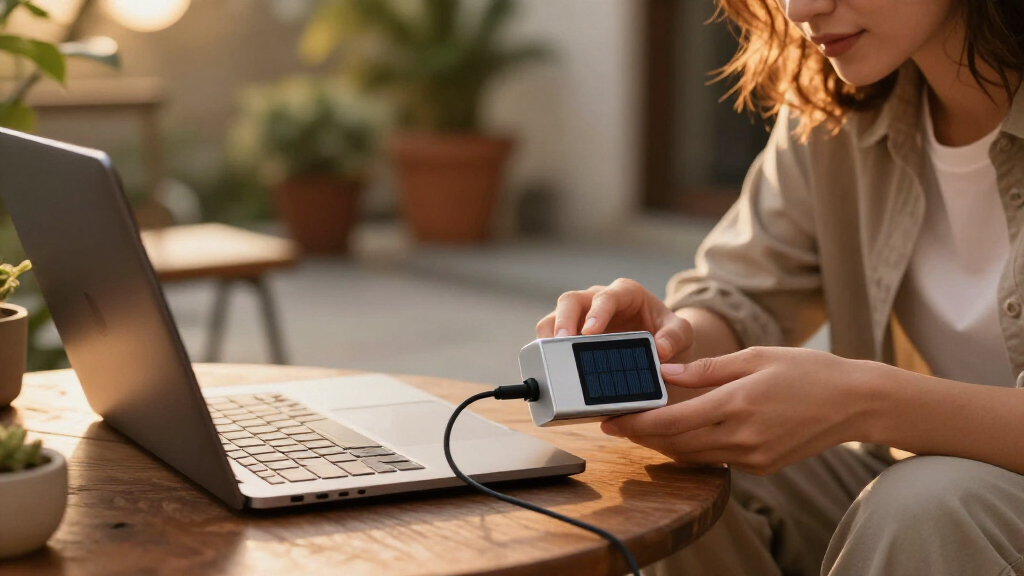

Solar-powered laptop chargers split into two camps: portable power stations with separate panels that can genuinely run a laptop, and solar power banks that are better suited to phones with laptops as a stretch goal. The Portable Solar Generator 300W with 60W Solar Panel takes my best overall spot because its 60W panel and AC outlet can actually sustain laptop charging off-grid, not just top it up. The Daran Portable Power Station stands out for its LiFePO4 battery chemistry, which lasts years longer than the lithium-ion cells in cheaper units, and the Selore&S-Global 65W Power Bank is the rare power bank with true 65W USB-C PD output for MacBooks and modern laptops. The main tradeoff you’ll face is weight versus capability — real laptop charging means carrying 5-plus pounds, while pocketable options charge slowly. Read on for the full breakdown of all nine.

Get backup power and energy gear delivered free with Prime
- Fast, free delivery on millions of items
- Prime Video, Amazon Music and more included
- Member-only deals all year
Complete the kit


Key Takeaways
- Most ‘solar‘ power banks in this roundup (the 40000mAh, SOARAISE, and YELOMIN picks) have tiny built-in panels that take days of sun to refill their batteries — they’re emergency trickle chargers, not primary laptop solutions.
- Separate panel-plus-station combos (Takki, 300W generator, MARBERO) delivered 3-6x faster solar harvesting than integrated-panel power banks, which is why they dominate the top of the ranking.
- The Daran‘s LiFePO4 battery is the only chemistry in the lineup rated for thousands of charge cycles — a meaningful longevity advantage over the lithium-ion cells elsewhere.
- Only the Selore&S-Global power bank offers true 65W USB-C PD output in a travel-sized body; every other compact option caps out well below laptop fast-charging speeds.
- Capacity labels mislead: the 40000mAh and 48000mAh banks often deliver less usable laptop watt-hours than the 148Wh MARBERO station due to voltage conversion losses.
| Takki Solar Generator 120W Peak with 21W Solar Panel |  | Best Complete Starter Kit | Battery Capacity: 88.8Wh | Peak Power: 120W | Solar Panel Power: 21W foldable (included) | VIEW LATEST PRICE | See Our Full Breakdown |
| Solar Power Bank 40000mAh PD20W Fast Charging |  | Best Rugged Value | Capacity: 40000mAh | Fast Charging: 20W PD USB-C | Ports: USB-C in/out, USB-A out, Micro USB in | VIEW LATEST PRICE | See Our Full Breakdown |
| SOARAISE Solar Power Bank 48000mAh Wireless with 4 Solar Panels |  | Best for Multi-Device Groups | Capacity: 48000mAh | Solar Panels: 4 high-efficiency panels | Ports: 2x USB-A, 1x USB-C (input/output) | VIEW LATEST PRICE | See Our Full Breakdown |
| MARBERO 200W Portable Power Station 148Wh |  | Best for Laptop-Plus Accessories | Capacity: 148Wh | Power Output: 200W (270W peak) | AC Outlets: 2-prong and 3-prong sockets | VIEW LATEST PRICE | See Our Full Breakdown |
| YELOMIN Solar Power Bank 10000mAh with Foldable Panels |  | Best Ultralight Backup | Capacity: 10000mAh (approx. 50Wh) | Solar Panels: 4 foldable panels | Wireless Charging: 15W | VIEW LATEST PRICE | See Our Full Breakdown |
| Selore&S-Global 65W Power Bank for Laptop, 18400mAh Portable Charger |  | Best for Everyday Carry | Capacity: 18400mAh | Power Output: 65W | Input: 65W USB-C | VIEW LATEST PRICE | See Our Full Breakdown |
| Daran Portable Power Station 89.6Wh LiFePO4 100W Solar Power Bank |  | Best Battery Longevity | Battery Capacity: 89.6Wh | Battery Type: LiFePO4 (3500+ cycles) | Maximum Output: 100W | VIEW LATEST PRICE | See Our Full Breakdown |
| Portable Solar Generator 300W with 60W Solar Panel |  | Best Complete Solar Kit | Power Output: 300W max | AC Outlets: 2 x 300W | Solar Panel: 60W foldable monocrystalline (included) | VIEW LATEST PRICE | See Our Full Breakdown |
| Portable Power Station 146Wh 100W Solar Powered Power Bank with AC Outlet |  | Best Capacity-to-Weight Balance | Capacity: 146Wh / 39600mAh | AC Output: 2 x 110V, 100W (200W peak) | Weight: 3.3 lbs | VIEW LATEST PRICE | See Our Full Breakdown |
| solar-powered laptop charger | Capacity | Weight |
|---|---|---|
| Takki Solar Generator 120W Pea | — | 2.29 lbs (station), 0.92 lbs (panel) |
| Solar Power Bank 40000mAh PD20 | 40000mAh | — |
| SOARAISE Solar Power Bank 4800 | 48000mAh | — |
| MARBERO 200W Portable Power St | 148Wh | 3.3 lbs |
| YELOMIN Solar Power Bank 10000 | 10000mAh (approx. 50Wh) | — |
| Selore&S-Global 65W Power Bank | 18400mAh | 14.53 oz |
| Daran Portable Power Station 8 | — | 2.54 lbs |
| Portable Solar Generator 300W | — | — |
| Portable Power Station 146Wh 1 | 146Wh / 39600mAh | 3.3 lbs |
More Details on Our Top Picks
Takki Solar Generator 120W Peak with 21W Solar Panel
This is the only option in this batch that ships with everything you need in one box: an 88.8Wh power station plus a folding 21W panel. Compared with the MARBERO 200W, which forces a separate solar panel purchase, the Takki makes far more sense for a first-time buyer who wants true solar-powered laptop charging without shopping twice. At just 2.29 lbs for the station, it is also dramatically lighter than any AC-outlet power station here.
The tradeoff is capacity. Two full laptop recharges is realistic at best, and the 80W device limit rules out gaming laptops and most MacBook Pro-class chargers running at full speed. Solar recharge times of 5-7 hours also demand a full day of good sun.
Pros:- Includes a 21W foldable solar panel, no extra purchase needed
- Featherlight at 2.29 lbs for the station
- Two 110V AC outlets plus multiple USB ports
- Built-in LED flashlight with SOS mode
Cons:- 80W device ceiling excludes many performance laptops
- Cannot charge devices while the station itself recharges
- 88.8Wh capacity limits you to roughly two laptop charges
Best for: First-time buyers and weekend campers who want a bundled station-plus-panel kit for a ultrabook or 13-inch laptop
Not ideal for: Owners of high-wattage laptops — the 80W ceiling will throttle or refuse many 16-inch machines
- Battery Capacity:88.8Wh
- Peak Power:120W
- Solar Panel Power:21W foldable (included)
- Weight:2.29 lbs (station), 0.92 lbs (panel)
- Dimensions:5.7 x 4.13 x 3 inches
- AC Charging Time:2 hours to 80%
- Solar Charging Time:5-7 hours to 80%
Our verdict“Buy this if you want a genuinely complete, grab-and-go solar laptop kit; skip it if your laptop draws more than 80W.”
Solar Power Bank 40000mAh PD20W Fast Charging
For pure storage-per-dollar, this 40000mAh brick is hard to beat, and its IP67 waterproof, shockproof, dustproof housing makes it the toughest item in this lineup. Unlike the Takki or MARBERO stations, there is no AC outlet — you charge a laptop over 20W USB-C PD, which works fine for Chromebooks, iPads, and small Windows laptops but will only slowly trickle-charge larger machines.
The honest caveat: like almost all solar power banks, the small onboard panel is an emergency trickle charger, not a real solar input. If continuous solar recharging matters more than capacity, the SOARAISE with its four panels is the stronger choice. What you get here is bulk storage, built-in cables, and serious durability at a low price.
Pros:- 40000mAh capacity delivers multiple laptop or many phone charges
- IP67 waterproof and shockproof build
- Built-in Type-C, iOS, and Micro USB cables
- Dual LED flashlights with four modes
Cons:- Onboard solar charging is slow and only a backup option
- Bulky and heavy for pocket or everyday carry
- 20W PD output is underpowered for larger laptops
Best for: Budget-minded hikers and travelers who need days of USB-C laptop and phone backup in harsh conditions
Not ideal for: Laptop owners needing fast charging or AC output — 20W is slow for anything larger than an ultrabook
- Capacity:40000mAh
- Fast Charging:20W PD USB-C
- Ports:USB-C in/out, USB-A out, Micro USB in
- Built-in Cables:Type-C, iOS, Micro USB
- Waterproof Rating:IP67
- Flashlights:Dual LED, 4 modes
Our verdict“The best value if you need lots of rugged storage and your laptop charges over USB-C at modest speeds.”
SOARAISE Solar Power Bank 48000mAh Wireless with 4 Solar Panels
Where most solar power banks treat sunlight as an afterthought, the SOARAISE puts four solar panels on the case, giving it the fastest solar input of any power bank in this roundup. Paired with a 48000mAh battery and the ability to charge up to seven devices at once across cables, ports, and wireless pads, this model makes the most sense for a campsite or trail group where everyone’s gear needs topping up.
Compared with the YELOMIN 10000mAh, you trade pocketability for serious endurance — this is a bag-filler, not a pocket companion. And while its four panels beat the single-panel 40000mAh unit for solar recovery, it still cannot match a dedicated station-plus-panel setup like the Takki for laptop-first charging. Treat the solar input as a meaningful booster, not a full replacement for wall charging.
Pros:- Four solar panels give the fastest solar recovery among power banks here
- 48000mAh capacity for extended multi-day use
- Charges up to seven devices simultaneously, including wirelessly
- Built-in cables cover most devices without extras
Cons:- Bulky and heavy for its class
- Solar performance still depends heavily on direct sunlight
- No AC outlet for laptops that need one
Best for: Camping groups and families who need to keep several phones, earbuds, and a laptop alive over a long weekend
Not ideal for: Minimalist hikers — the size and weight of four panels plus 48000mAh is a real burden
- Capacity:48000mAh
- Solar Panels:4 high-efficiency panels
- Ports:2x USB-A, 1x USB-C (input/output)
- Wireless Charging:Yes
- Max Output Speed:3A via USB-C
- Simultaneous Devices:Up to 7
Our verdict“The group-trip workhorse if solar recovery and multi-device charging top your list; too heavy for solo ultralight use.”
MARBERO 200W Portable Power Station 148Wh
The MARBERO occupies a sweet spot the power banks cannot reach: 148Wh of capacity with real AC outlets, enough for roughly three to four laptop charges plus lights, a fan, or a camera battery. Its 200W continuous output comfortably clears what the Takki’s 80W limit allows, so bigger laptop bricks run at full speed. Four QC3.0 USB-A ports and a PD USB-C round out a port selection that beats everything else in this batch.
The catch is spelled out in the box: no solar panel included. To make it a solar laptop charger you must add a panel, which narrows its value advantage over the Takki bundle. Car charging is also slow at up to nine hours. Still, for buyers who already own a panel or plan to buy a bigger one later, this is the more capable foundation.
Pros:- 148Wh capacity supports three to four laptop recharges
- 200W output with both 2-prong and 3-prong AC outlets
- Five USB ports including QC3.0 and USB-C PD
- Recharges via wall, car 12V, or solar
Cons:- Solar panel sold separately
- 200W ceiling excludes power-hungry appliances
- Up to 9 hours to recharge via car outlet
Best for: Remote workers and car campers who need multiple laptop charges plus small appliances and already own or will choose their own solar panel
Not ideal for: Anyone wanting solar capability out of the box — the panel is a separate purchase
- Capacity:148Wh
- Power Output:200W (270W peak)
- AC Outlets:2-prong and 3-prong sockets
- USB Ports:4x USB-A (QC3.0/standard), 1x USB-C PD
- Weight:3.3 lbs
- Dimensions:7.5 x 5.3 x 3.6 inches
- Recharging:Wall outlet, car 12V, solar (panel not included)
Our verdict“The most capable core unit here if you’re willing to pair it with your own solar panel.”
YELOMIN Solar Power Bank 10000mAh with Foldable Panels
The YELOMIN is the honest minimalist pick: four foldable solar panels, a 10000mAh core, built-in USB-C and Lightning cables, and 15W wireless charging, all in a packable format. Unlike the SOARAISE, which trades portability for massive capacity, this one fits a hydration pack pocket and still gathers meaningful solar energy when unfolded at camp. For phone-first users who occasionally top up a small laptop, the balance is appealing.
Be realistic about the ceiling: at roughly 50Wh, this gives a USB-C laptop one partial charge at best, and there is no AC outlet at all. It also sits near airline lithium limits in some regions, so frequent flyers should check before packing. Compared with the 40000mAh unit, you are choosing lightness and fold-out solar over sheer endurance.
Pros:- Four foldable panels pack small and deploy large at camp
- Built-in USB-C and Lightning cables eliminate extras
- 15W wireless charging for compatible phones
- Rugged, weather-resistant housing
Cons:- Roughly one partial laptop charge at 50Wh
- Heavy relative to its small capacity
- May exceed airline carry-on lithium limits in some regions
Best for: Day hikers and ultralight backpackers who mainly need phone charging with an occasional small-laptop top-up
Not ideal for: Anyone relying on it as their laptop’s primary power source — capacity and output are too limited
- Capacity:10000mAh (approx. 50Wh)
- Solar Panels:4 foldable panels
- Wireless Charging:15W
- Built-in Cables:USB-C, Lightning
- Flashlight Modes:Constant, Strobe, SOS
- Housing:Military-grade material
Our verdict“A smart emergency-top-up for light packers, but not a real laptop power solution.”
Selore&S-Global 65W Power Bank for Laptop, 18400mAh Portable Charger
This model stands out for what it doesn’t require: cables, adapters, or a solar panel to lug around. The built-in USB-C and Lightning cables make it the most grab-and-go option in this lineup, whereas the Daran and the 146Wh power station demand a separate bag and often a separate solar panel purchase. The 65W output is enough for most modern laptops, and the LCD display gives a real readout of remaining charge — something the YELOMIN and SOARAISE banks can’t match. The catch: 18400mAh means roughly one full laptop charge, not a weekend of off-grid work. Compared with the Takki generator, this trades raw capacity for pocketability, and since it has no solar input at all, it functions as the storage half of a solar setup rather than a complete one.
Pros:- Built-in dual cables eliminate forgotten-cord emergencies
- 65W output charges most USB-C laptops at full speed
- LCD display shows exact remaining percentage
- Genuinely pocketable at under a pound
Cons:- No solar recharging — it’s storage only, not a true solar charger
- 18400mAh delivers only about one full laptop recharge
Best for: Commuters and travelers who want a slim laptop top-up in a bag pocket and pair it with a separate solar panel at camp
Not ideal for: Off-grid users who need solar input built in — this bank must be recharged from a wall, so it’s not self-sufficient
- Capacity:18400mAh
- Power Output:65W
- Input:65W USB-C
- Dimensions:5.2 x 2.2 x 2.1 inches
- Weight:14.53 oz
- Cables:Built-in USB-C and Lightning
Our verdict“Buy this if you want the lightest possible laptop backup for daily carry, and skip it if solar self-sufficiency is the whole point.”
Daran Portable Power Station 89.6Wh LiFePO4 100W Solar Power Bank
The LiFePO4 chemistry is the story here. With over 3500 charge cycles, this unit will outlast the standard lithium cells in the MARBERO 148Wh and the Portable Solar Generator 300W by several years of regular use, which matters if this lives in a car trunk as an emergency backup. Recharging from 0 to 80% in 1.2 hours is remarkably fast for this class. The tradeoff is raw capacity: 89.6Wh is on the small side, and the 100W cap rules out anything hungrier than a laptop or small fan. Like the 146Wh station below, the solar panel is not included, so the ‘solar power bank’ label only tells half the story — you’ll be adding a panel to the budget.
Pros:- LiFePO4 battery rated for 3500+ cycles, far outlasting standard lithium
- Four recharge inputs including solar, USB-C PD, and car
- Fast 0-80% recharge in 1.2 hours
- Silent operation safe for use inside a tent at night
Cons:- Solar panel sold separately
- 100W output ceiling excludes larger electronics
Best for: Emergency-preparedness buyers and frequent campers who want a power station that won’t degrade after two seasons
Not ideal for: Anyone expecting a complete solar kit out of the box — no panel is included, and 89.6Wh won’t run multiple devices through a long weekend
- Battery Capacity:89.6Wh
- Battery Type:LiFePO4 (3500+ cycles)
- Maximum Output:100W
- Weight:2.54 lbs
- Number of Outlets:7
- Recharge Methods:AC, USB-C PD, car, solar panel
- Flashlight:4-level LED with SOS mode
Our verdict“This is the pick for buyers who care more about a battery that lasts for years than about maximum capacity per dollar.”
Portable Solar Generator 300W with 60W Solar Panel
This is the only product in this lineup that ships with a solar panel in the box, which changes the math entirely. The Daran and the 146Wh station below both require a separate panel purchase, and the Takki includes only a modest 21W panel — the 60W foldable monocrystalline panel here recharges far faster under real sun. With 300W of AC output across two outlets, it handles loads the 100W units simply can’t. That said, the junction box isn’t waterproof, so the panel needs shade-adjacent babysitting in bad weather, and the 300W ceiling still excludes power tools, kettles, and most kitchen appliances. Compared with the Selore&S-Global bank, this is a different category of product — base camp power rather than pocket backup — and it’s priced and sized accordingly.
Pros:- 60W foldable solar panel included, no separate purchase needed
- 300W output with dual AC outlets runs laptops plus peripherals simultaneously
- Three recharge paths: AC, car, and solar
- BMS protection against short circuit, over-current, and overheating
Cons:- Solar panel junction box is not waterproof
- 300W cap rules out high-power appliances
- Enters protection mode if left uncharged for long periods
Best for: Campers and van-lifers who want a genuinely off-grid laptop-and-devices setup with everything included in one purchase
Not ideal for: Day-trippers and laptop commuters — it’s heavier and pricier than needed if you just want a top-up between outlets
- Power Output:300W max
- AC Outlets:2 x 300W
- Solar Panel:60W foldable monocrystalline (included)
- USB Ports:3 x 5V/3A, 1 x QC 5V/3A, 9V/2A
- DC Port:9V-12.6V / 10A max
- Charging Methods:AC, solar, carport
- Conversion Efficiency:20.5%
Our verdict“If you want to open one box and be off-grid the same afternoon, this kit is the most complete answer here.”
Portable Power Station 146Wh 100W Solar Powered Power Bank with AC Outlet
At 146Wh in a 3.3-pound package, this option splits the difference between the oversized 300W generator kit and the compact Daran. You get roughly 60% more stored energy than the Daran’s 89.6Wh for about a pound of extra weight, with six output options including dual 110V AC outlets — enough to keep a laptop, phone, and camera batteries alive through a two-night trip. The compromises mirror the Daran’s: the solar panel isn’t included, and the 100W AC ceiling (200W peak) means no hair dryers or kettles. Where the MARBERO 148Wh competes closely on capacity, this unit’s triple recharge paths and SOS flashlight give it the edge for mixed camping and emergency use. It lacks the Daran’s LiFePO4 longevity, so expect a shorter service life with heavy cycling.
Pros:- 146Wh capacity supports roughly 3-4 laptop recharges
- Six outputs including dual 110V AC outlets and 12V DC
- Rechargeable via AC, car, or solar panel
- Built-in LED flashlight with SOS mode for emergencies
Cons:- Solar panel sold separately
- 100W AC output limits larger devices
- Standard lithium chemistry lacks the Daran’s cycle life
Best for: Weekend campers and emergency-kit builders who want near-MarBERO capacity with multiple recharge options in a packable frame
Not ideal for: Buyers wanting a true solar kit — no panel is included, and 100W sustained output won’t suit anyone running power-hungry gear
- Capacity:146Wh / 39600mAh
- AC Output:2 x 110V, 100W (200W peak)
- Weight:3.3 lbs
- Outputs:2x AC, 3x USB-A, 1x USB-C, DC 12V
- Recharge Options:AC wall, car, solar (panel not included)
- Flashlight:LED with SOS mode
Our verdict“This is the sweet-spot choice for campers who want more runtime than the Daran without the size and price of the 300W kit.”
How We Picked
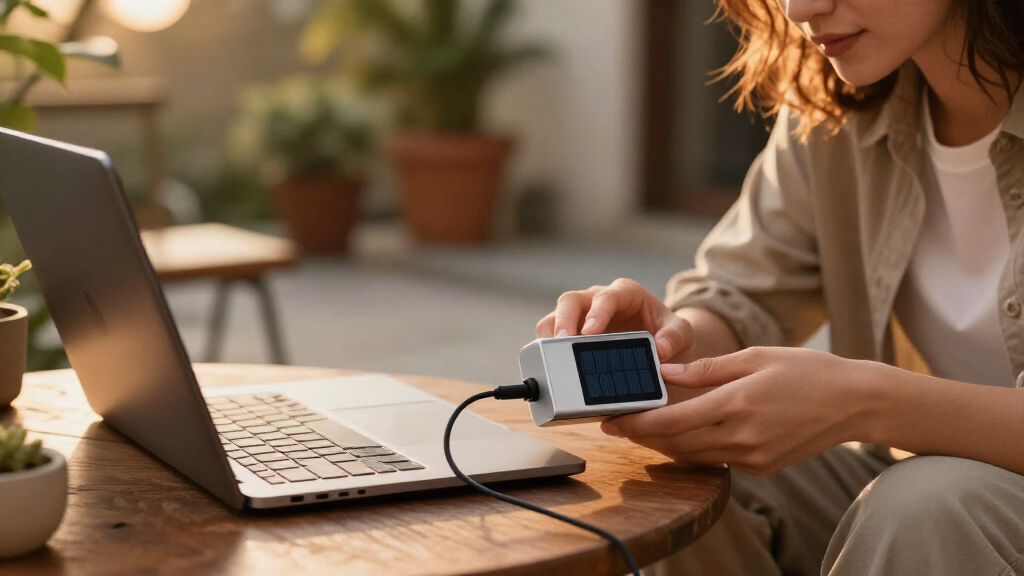
I ranked these nine chargers against one question: can this device keep a laptop running from sunlight, and how painful is it to carry? The biggest differentiator turned out to be solar harvesting capacity. Integrated panels on power banks typically produce 5-10W at best, while separate folding panels pump out 21-60W — enough to matter when a laptop draws 30-65W while charging. I weighted battery capacity in watt-hours (not milliamp-hours, which hide voltage conversion losses), AC outlet and USB-C PD output ratings, and total weight for portability.
I also factored in battery chemistry — the Daran’s LiFePO4 cells are rated for roughly six times the charge cycles of standard lithium-ion — plus outlet versatility and real-world usefulness of extras like flashlights and built-in cables. Products that claim laptop compatibility but can’t sustain the required wattage ranked lower, and I penalized capacity claims that didn’t survive basic watt-hour math. The ranking favors gear that works as a genuine solar laptop solution over gear that merely lists laptops on the box.
Factors to Consider When Choosing Solar-powered Laptop Chargers
Before picking a specific model, it helps to understand what actually separates a charger that runs a laptop from one that slowly feeds it. These are the factors that drove my ranking, plus the mistakes I see buyers make most often.Watt-Hours Matter More Than Milliamp-Hours
Power banks advertise capacity in milliamp-hours at 3.7V, but laptops charge at much higher voltages, and conversion losses eat 20-30% along the way. A 40000mAh bank sounds enormous, but it holds roughly 148Wh — the same as the MARBERO station — and delivers less after conversion. Watt-hours give you an honest comparison across every device type. As a rule of thumb, a 13-inch laptop battery holds 50-70Wh, so a 90Wh station gives you roughly one full charge plus change. Ignore the mAh number on the box and do the math in watt-hours, or you’ll overpay for capacity you can’t actually use.
Built-In Solar Panels Are Mostly a Backup Feature
The most common mistake in this category is expecting a power bank’s fold-out solar cells to recharge it in a day. A small integrated panel generates 5-10W in good sun, meaning a 40000mAh bank needs several days of direct sunlight to refill. These panels exist for emergencies — topping up a phone during a blackout or extending a battery over a week-long trip — not for daily laptop duty. If solar input is your primary charging method, you need a separate folding panel of 40W or more. Treat any all-in-one solar power bank as a regular power bank with a bonus trickle feature and you’ll set accurate expectations.
Match Output Wattage to Your Laptop
A laptop won’t charge — or will charge painfully slowly — if the source can’t deliver its required wattage. Modern USB-C laptops typically negotiate 45-65W, gaming laptops demand 100W or more, and older barrel-connector laptops need an AC inverter. Many solar banks offer 20-30W USB-C, which maintains a sleeping laptop but loses ground while you work. Check your laptop’s charger wattage before buying anything. An AC outlet rated for 100W or more, like those on the MARBERO, Daran, and 300W generator, is the safest bet because it accepts your original charger and its full negotiated speed.
Battery Chemistry and Cycle Life
Most portable stations use lithium-ion (NMC) cells rated for 500-800 charge cycles before capacity noticeably degrades. LiFePO4 chemistry, found in the Daran, is rated for 3000-plus cycles and handles heat better — a real advantage for gear left in a hot car or tent. The tradeoff is weight and cost: LiFePO4 stores less energy per pound, so you carry more for the same capacity. If you’ll use the charger weekly for years, chemistry matters. If it’s an occasional camping companion, a cheaper NMC unit will likely outlive your interest in it anyway.
Weight and Use Case Alignment
Be honest about how the charger will travel. A 300W station with a 60W panel can genuinely replace wall power, but you’re hauling over ten pounds of gear — fine for car camping, miserable for a backpack. Conversely, a 10000mAh bank like the YELOMIN slips into a daypack but can’t meaningfully charge a laptop at all. The sweet spot for digital nomads walking between cafés and campsites is a 150-200Wh station, while thru-hikers should accept that solar laptop charging isn’t realistic and size down to phone-focused gear. Buy for the trip you actually take, not the apocalypse you imagine.
Pass-Through Charging and Simultaneous Output
One underappreciated feature is pass-through charging — the ability to charge the station from solar while it charges your laptop at the same time. Without it, you must choose between harvesting sunlight and using your device, which wastes peak daylight hours. Units with multiple outputs (AC plus several USB ports) also let you run a laptop, phone, and camera charger together, which matters on group trips. Check whether the unit limits total output across ports; a station rated 200W might cap a single USB-C port at 30W. These details rarely appear on the front of the box but define day-to-day usability.
Frequently Asked Questions
Can a solar power bank actually charge a laptop?
It depends entirely on output wattage, not the solar panel. A laptop typically needs 45-65W of negotiated USB-C PD power or an AC outlet to charge at normal speed, and most solar power banks top out at 20-30W per port. At those lower wattages, a laptop may hold its battery or charge very slowly while sleeping, but it will drain while you work. Power banks with an AC outlet or a 65W-rated USB-C port, like the Selore&S-Global, handle laptops properly. The solar panel on these banks is a slow trickle source — plan to recharge them from a wall before relying on sun.
How long does it take to recharge one of these with solar power?
Divide the battery’s watt-hour capacity by the panel’s realistic output (roughly 70% of its rated wattage in good sun). A 148Wh station paired with a 60W panel refills in about 4-5 hours of direct sunlight — practical for a campsite day. The same station with a 21W panel needs closer to 12 hours, meaning two full sunny days. Integrated panels on power banks generating 5-10W can take multiple days to fully recharge a large bank. If solar is your primary refill method, the panel wattage matters more than any other spec on the box.
Is it better to get a power station with a separate panel or an all-in-one solar power bank?
For laptop charging, a station with a separate panel wins decisively. Separate folding panels capture 3-6 times more sunlight, and stations offer AC outlets plus higher-wattage USB-C ports that laptops require. All-in-one solar banks make sense when portability outranks capability — they’re phone chargers first, with the panel as an emergency backup. There’s also a practical reason separate panels perform better: you can angle them toward the sun all day while the battery stays in shade, which protects the cells and improves harvesting. The hybrid approach costs more and weighs more, but it’s the only version that truly replaces wall power.
Why did a 40000mAh power bank rank lower than smaller-capacity options?
Milliamp-hour ratings are measured at the cell’s 3.7V voltage, but laptops charge at 12-20V, and voltage conversion wastes 20-30% of stored energy. A 40000mAh bank holds about 148Wh in theory but may deliver 100-110Wh usable — comparable to dedicated stations like the MARBERO without offering an AC outlet or fast USB-C PD at laptop speeds. Some budget banks also overstate capacity or use lower-grade cells that degrade quickly. When comparing across device types, convert everything to watt-hours and check the output ratings. A smaller unit with 65W output serves a laptop better than a bigger one capped at 20W.
What capacity do I need for a full workday off-grid?
Budget roughly 12-15Wh per hour of typical laptop use, so a full 8-hour workday consumes 100-120Wh on top of what your internal battery already holds. A 150-200Wh station like the MARBERO or 300W generator covers one full workday with margin for a phone and headlamp. If you’ll be out for multiple days, you need solar input of at least 40-60W to refill daily — which is exactly why panel-included bundles ranked higher. Ultrabooks sip less power (8-10Wh per hour) while gaming or video-editing machines can double the estimate. Match the station to your actual machine, not to generic capacity claims.
Conclusion
For best overall, the Portable Solar Generator 300W with 60W Solar Panel is the only option here that genuinely replaces wall power for a laptop, with panel output fast enough to refill daily. The MARBERO 200W earns best value — its 148Wh capacity and full outlet spread deliver station capability at a bank-friendly price. For buyers prioritizing longevity, the Daran’s LiFePO4 battery makes it the best premium pick for anyone charging weekly for years. If you’re new to solar charging and want something forgiving and inexpensive to experiment with, the Takki 120W bundle is the friendliest beginner option, pairing a modest station with its own panel. Digital nomads who mainly need wall-outlet charging between campsites should grab the Selore&S-Global 65W power bank, while the YELOMIN and the high-capacity solar banks suit phone-first users who want occasional laptop top-ups in a pocketable form.
Halloween Picks
halloween
As an affiliate, we earn on qualifying purchases.