
Using conduit for your cables is allowed and often necessary, especially for outdoor installations where protection from weather, moisture, and physical damage is vital. You can run cables in conduit to meet safety standards and guarantee reliable performance. Regulations may vary by location, so it’s important to check local electrical codes. If you want to know specific permitted situations and best practices, keep exploring the guidelines to make your setup safe and efficient.
Key Takeaways
- Using conduit for cables is generally permitted and recommended for outdoor and exposed installations.
- Local electrical codes and regulations should be checked to confirm conduit use in specific applications.
- Suitable conduit materials like PVC or metal are required for outdoor environments to prevent water intrusion and corrosion.
- Conduit is allowed when it protects cables from physical damage, moisture, environmental hazards, and ensures safety.
- Underground or specialized installations may require specific conduit types or additional protective measures, depending on regulations.
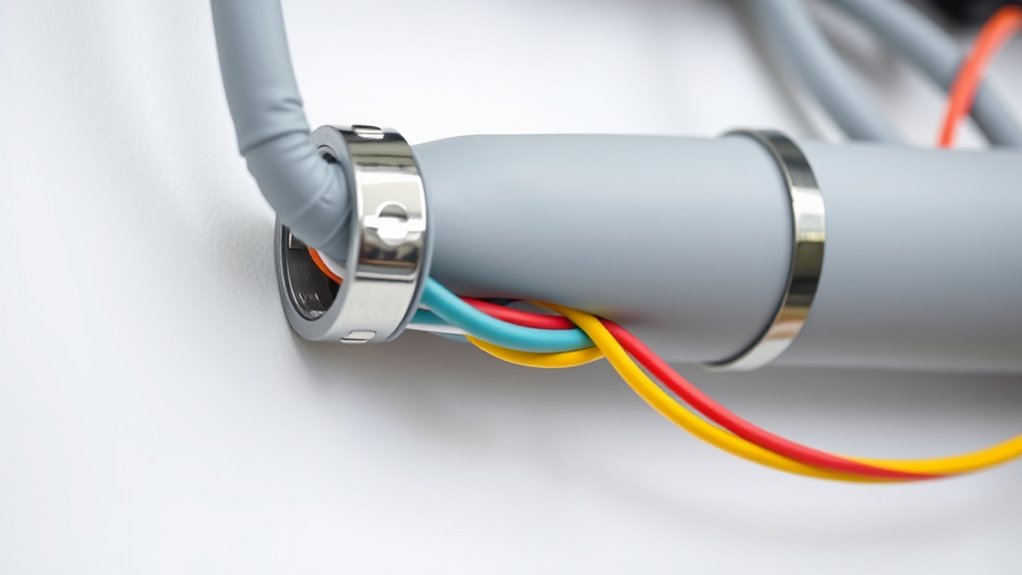
Have you ever wondered why running cables through conduit is such a common practice in electrical installations? It’s because conduit provides a protective pathway, shielding cables from physical damage, moisture, and environmental hazards. This is especially important in outdoor installations where cables face exposure to weather, UV rays, and pests. When dealing with fiber optics and outdoor setups, conduit becomes essential to guarantee the integrity and longevity of your wiring. Fiber optics are delicate and require careful handling, making conduit protection even more vital outside. Running fiber optic cables through conduit not only safeguards them from physical impacts but also prevents dirt, debris, and moisture from damaging the fibers, which could impair signal quality.
Running fiber optic cables through conduit protects delicate fibers from damage and environmental hazards outdoors.
In outdoor environments, conduit acts as a barrier against harsh weather conditions, helping maintain consistent performance for your fiber network. It also simplifies future maintenance or upgrades since you can pull new cables through existing conduits without disturbing the entire installation. When considering whether running cables in conduit is allowed, it’s important to check local electrical codes and regulations. In most cases, using conduit for outdoor installations is permitted and encouraged, especially for fiber optics and other sensitive cables. Regulations typically specify the type of conduit suitable for outdoor use, such as PVC or metal, and the proper installation methods to prevent water intrusion and corrosion.
You should also be aware that conduit installation helps meet safety standards by preventing accidental contact with live wires and reducing fire hazards. For fiber optics specifically, conduit installation guarantees that the delicate cables remain protected from crushing or bending beyond their specified limits, which could cause signal loss. Using conduit in outdoor settings also provides a neat, organized appearance and makes troubleshooting easier if issues arise later. It’s worth noting that while conduit is widely accepted for outdoor installations, certain circumstances—like underground runs or specific environmental conditions—may require specialized conduit types or additional protective measures.
Ultimately, running cables through conduit, especially for outdoor installations and fiber optics, is a smart choice backed by safety, durability, and regulatory compliance. It offers peace of mind knowing your cables are shielded from damage and the elements. As long as you follow local codes and select the appropriate conduit material, you’ll be well on your way to a reliable, long-lasting installation. This practice not only protects your investment but also ensures that your network performs at its best, regardless of the environment it faces.
Frequently Asked Questions
Are There Specific Conduit Types Suitable for All Cable Types?
You should choose conduit types based on conduit material and cable compatibility. Rigid metal conduit works well for heavy-duty applications, offering durability and protection. Flexible conduit suits installations requiring bends or tight spaces. Always verify the conduit material matches the cable’s insulation and jacket type to prevent damage. Using the right conduit type guarantees safety, code compliance, and longevity for your wiring system, making your installation both reliable and efficient.
What Are the Environmental Restrictions for Conduit Installation?
You must follow environmental compliance and installation regulations when installing conduit. Avoid using conduit in areas prone to flooding, extreme temperatures, or high corrosion risks without proper protective measures. Guarantee proper sealing and grounding to prevent environmental damage. Check local codes for restrictions on burial depths and materials to prevent contamination or harm to the environment. Adhering to these rules ensures safe, compliant, and durable conduit installations.
Can Existing Electrical Wiring Be Upgraded With Conduit?
Yes, you can upgrade existing electrical wiring with conduit to improve conduit aesthetics and cable flexibility. Installing conduit around existing wiring offers a neat, protective solution that enhances the look of your setup. It also makes future upgrades or repairs easier, as cables are more accessible and protected. Just make certain you follow local codes and possibly consult a professional to guarantee a safe, compliant installation that maximizes the benefits of conduit.
How Does Conduit Installation Affect Cable Insulation?
Conduit installation impacts cable insulation by requiring compatibility with the conduit’s size and material. You need to make certain the cable insulation is rated for conduit use, preventing damage during installation. Proper conduit impact safeguards the insulation from physical harm, ensuring safety, durability, and compliance. You should always verify that your cable insulation matches the conduit’s specifications, avoiding future issues and maintaining the integrity of your wiring system.
Are There Any Building Codes That Restrict Conduit Use?
You should check building codes before installing conduit, as burial regulations and fire safety standards can restrict its use in certain situations. Many codes require conduit to be rated for underground installation and ensure proper fire resistance, especially in concealed or hazardous areas. Always consult local regulations and manufacturer instructions to guarantee compliance, safety, and durability. If in doubt, contact your local building authority for guidance.
Conclusion
So, you might wonder if running cables in conduit is always necessary. While it’s not always required, using conduit provides extra protection and peace of mind, especially in areas prone to damage. Don’t let the extra effort deter you—installing conduit now can save you headaches later. Remember, following local codes and standards ensures safety and legality. When in doubt, consulting a professional guarantees you’re making the right choice for your wiring needs.