
To avoid crushing your cables, space staples every 12 to 18 inches along straight runs, using gentle tension so they don’t squeeze the wires. Don’t tighten staples too much—make sure you can slide a finger behind them for proper support. Plan your cable routes to avoid sharp bends or stress points, and use conduit when needed. Proper spacing and support prevent damage, ensuring your cables stay organized and last longer—keep going to find out more tips.
Key Takeaways
- Space staples every 12 to 18 inches to support cables without causing damage.
- Use gentle tension when stapling, ensuring a finger can fit behind for proper support.
- Avoid placing staples at bend points or where cables are pulled tight to prevent crushing.
- Support cables before and after stress points, and utilize conduit for sharp bends.
- Regularly inspect and adjust staples to prevent shifting or excessive tightness that can damage cables.

Proper staple spacing and support are vital for guaranteeing the strength and durability of your project. When it comes to cable management, how you position and secure your cables can make all the difference in preventing damage and maintaining a clean, organized setup. The key lies in understanding the importance of staple placement—placing staples at regular intervals and with the right amount of tension so that cables stay firmly in place without being crushed or pinched. If you space staples too far apart, your cables may sag or shift, leading to potential wear and tear over time. Conversely, if you place staples too close or tighten them excessively, you risk damaging the cable’s insulation or internal wires, which can cause performance issues or complete failure.
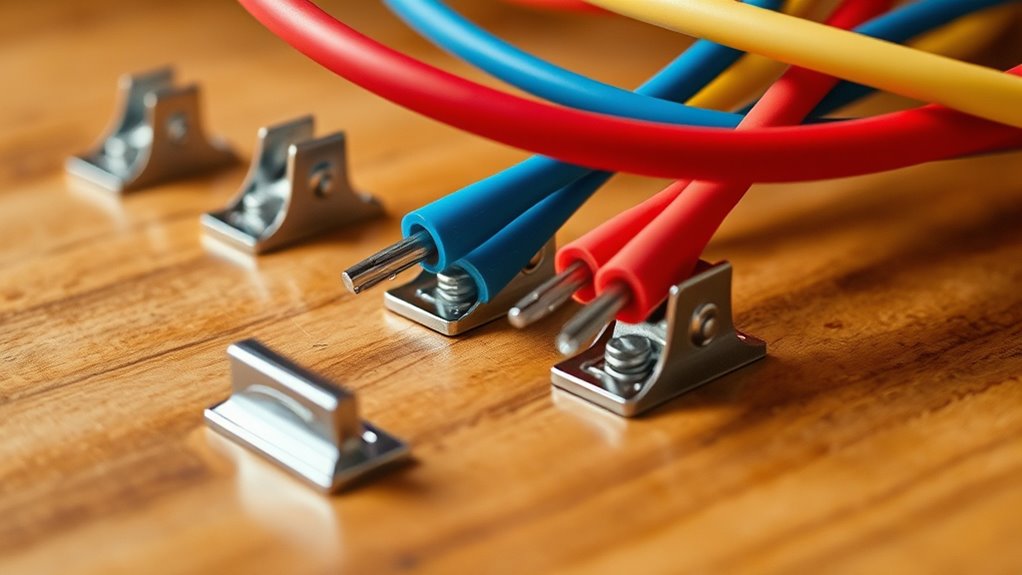
To get it right, start by planning your cable route carefully. Identify a straight, unobstructed path that minimizes sharp bends or tight turns, which can strain the cables. When securing cables, place staples every 12 to 18 inches along the run. This spacing strikes a balance, ensuring that the cable is supported without unnecessary compression. Remember, cable management isn’t just about aesthetics; it’s about protecting your investment and preventing future problems. Proper staple placement involves not only spacing but also the method of fastening. Use a staple gun designed for electrical work, and avoid forcing staples too tightly. You should be able to slide a finger behind the staple, confirming that the cable isn’t crushed. This gentle tension helps maintain cable integrity while keeping it securely in place. Additionally, understanding the importance of support and support points can help prevent unnecessary stress on your cables, ensuring long-term durability.
Another vital aspect of staple support is avoiding staples at bend points or where cables are pulled tight. Instead, position staples just before and after these areas to relieve tension and prevent stress on the cables. If you need to run cables through tight spaces or around corners, consider using a cable conduit or protective tubing. This provides extra support and reduces the risk of damage from sharp edges or pinching. Regularly inspect your staples and cable routes, especially after any movement or adjustments, to guarantee staples haven’t shifted or become overly tight over time.
Frequently Asked Questions
What Tools Are Best for Staple Spacing and Support?
You should use a staple gun paired with a spacing gauge to guarantee proper staple spacing and support. The staple gun makes quick work of securing cables, while the spacing gauge helps you maintain consistent gaps, preventing crush damage. This combo ensures your cables stay supported without excessive pressure. Always choose a staple gun with adjustable settings, and double-check the gauge to keep your cables safe and well-supported during installation.
How Do Temperature Changes Affect Staple Support?
Did you know that temperature swings can cause cables to shift by up to 1/4 inch? When temperatures rise or fall, thermal expansion and contraction effects can loosen or crush staples, jeopardizing cable support. This means you should allow for some flexibility in staple spacing to accommodate these changes, preventing damage. Properly accounting for temperature fluctuations guarantees your cables stay secure and protected, avoiding costly repairs later.
Can Improper Stapling Cause Electrical Hazards?
Improper stapling can definitely cause electrical hazards. When you don’t secure cables correctly, you risk damaging the insulation, which can lead to exposed wires and short circuits. This damage compromises fire safety considerations, increasing the chance of sparks or fires. Always verify staples are placed with proper spacing and support, avoiding crushing or pinching cables to prevent insulation damage and maintain safe electrical operation.
What Are Signs of Insufficient Cable Support?
You might notice cable sag, where wires hang loosely or droop, signaling support failure. This can happen if cables aren’t properly supported or if staples are spaced too far apart, causing insufficient support. Keep an eye out for signs like uneven wiring or strain on connectors. These issues suggest your cables lack proper support, risking damage or hazards. Regularly checking and maintaining proper staple spacing helps make sure your cables stay secure and functional.
Are There Specific Staples for Different Cable Types?
Yes, there are specific staples for different cable types. You should select staple materials that won’t damage cable insulation, such as non-metallic or insulated staples for sensitive cables. For heavier or more robust cables, steel staples with proper spacing work well to provide secure support without crushing the cable. Always match the staple type to your cable’s insulation and weight to prevent damage and ensure safe, reliable installation.
Conclusion
Remember, proper staple spacing and support aren’t just guidelines—they’re essential for cable longevity. Some believe that tight staples can crush cables and cause damage over time, but research shows that maintaining the right spacing actually prevents stress points and reduces wear. So, trust the theory that well-supported cables last longer and perform better. By following best practices, you’ll avoid future headaches and guarantee your cables stay safe and functional for years to come.