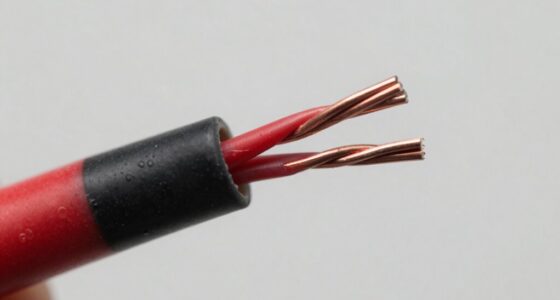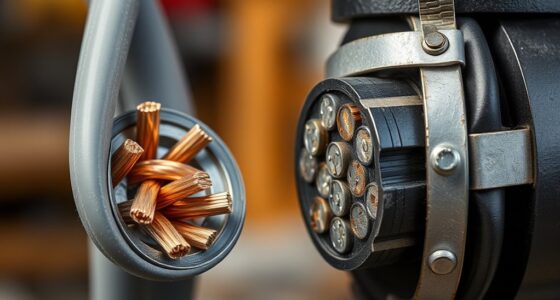
When cables are bundled or run through insulation, they generate heat that can cause damage and reduce lifespan. To prevent this, you need to apply derating factors that lower the maximum current capacity based on how tightly they are packed or their environment. Proper spacing, ventilation, and choosing cables rated for your conditions help manage heat effectively. If you want to know more about optimizing thermal management and installation practices, keep exploring these essential strategies.

Get backup power and energy gear delivered free — and shop member deals
- Fast, free delivery on millions of items
- Access to Prime Big Deal Days deals on October 6–7
- Prime Video, Amazon Music and more included
Key Takeaways
- Bundling cables traps heat, reducing their ability to dissipate heat and necessitating derating of current capacity.
- Proper spacing and ventilation between cables improve airflow, minimizing temperature rise and avoiding excessive derating.
- Environmental factors, such as high ambient temperatures, increase the need for derating to prevent insulation degradation.
- Selecting cables with appropriate insulation ratings helps maintain safe operating temperatures in bundled or high-temperature conditions.
- Installing cables according to standards and best practices reduces heat buildup, ensuring reliable performance and optimal derating.
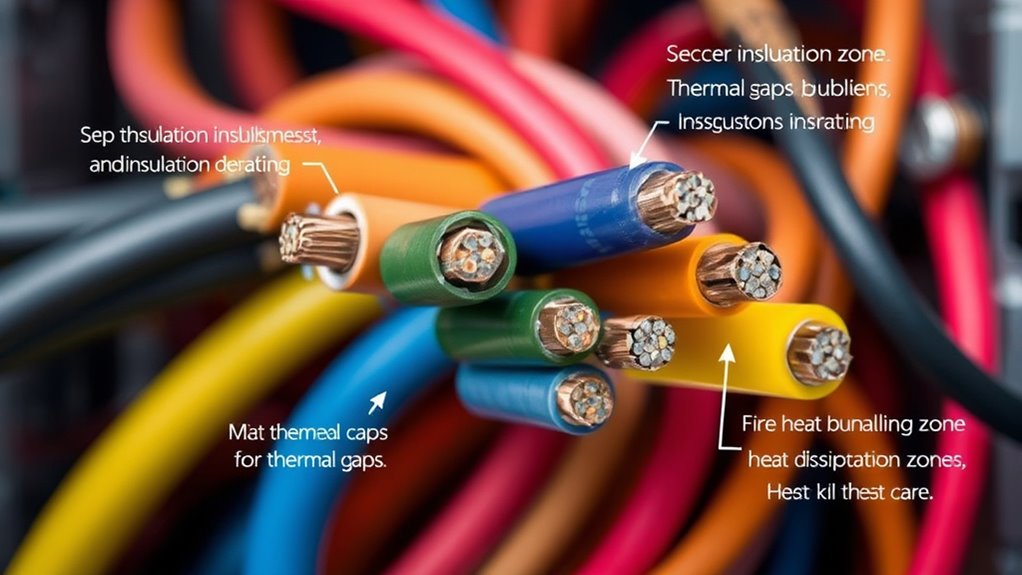
Have you ever wondered why electrical cables sometimes need to be rated lower than their maximum capacity? It all comes down to thermal management and the way cables are installed. When cables carry current, they generate heat. If this heat isn’t properly managed, it can cause the insulation to degrade, reduce the lifespan of the cable, or even lead to safety hazards. That’s why derating is essential, especially when cables are bundled together or have insulation that isn’t rated for continuous high loads. By understanding how installation practices influence heat dissipation, you can guarantee your wiring remains safe and efficient.
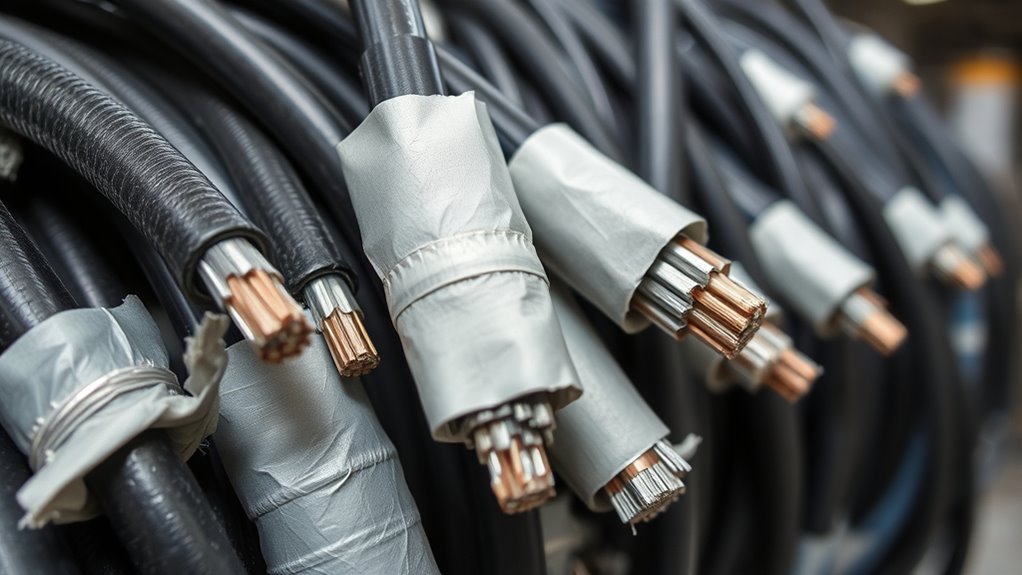
In bundles or crowded conduit runs, cables tend to trap heat more effectively because heat dissipation is limited. When multiple cables are grouped closely, the heat they produce accumulates, raising the temperature around the conductors. This heat buildup can push the cables beyond their safe operating limits if you don’t adjust their current capacity accordingly. Proper thermal management becomes vital here. You might need to reduce the current load or increase spacing between cables to allow better airflow and heat dissipation. This prevents overheating, which could otherwise lead to insulation failure or even fire hazards.
Bundled cables trap heat, requiring spacing or load reduction to prevent overheating and maintain safety.
Installation practices play a significant role in how well a cable manages heat. For instance, pulling cables tightly together without considering spacing can hinder heat flow away from the conductors. Using proper cable trays, maintaining recommended spacing, and avoiding overly long continuous runs are all strategies to improve thermal management. Additionally, selecting cables with insulation rated for the environment and load conditions helps mitigate temperature rise. When installation standards are ignored or overlooked, the risk of thermal issues increases, forcing you to derate the cables more than necessary, which can impact system performance.
Proper derating also considers ambient temperature and other environmental factors. In hot environments or areas with poor ventilation, cables are more prone to heat accumulation. In such cases, you might need to select cables with higher insulation ratings or reduce their current capacity to prevent overheating. Following established installation practices ensures that you balance the electrical load with thermal safety margins. This proactive approach minimizes the risk of premature cable failure and maintains system reliability.
Being aware of thermal management principles is crucial for effective derating and avoiding potential hazards. Ultimately, understanding the importance of thermal management and adhering to proper installation practices helps you determine the appropriate derating for your cables. It’s a vital step in designing safe, efficient electrical systems that perform well over time. By carefully planning cable layout and considering environmental conditions, you can avoid unnecessary limitations and guarantee your wiring remains within safe temperature limits, protecting both your equipment and personnel.
As an affiliate, we earn on qualifying purchases.
Frequently Asked Questions
How Does Ambient Temperature Affect Cable Derating?
Higher ambient temperatures cause you to derate your cables because they increase the risk of thermal expansion and insulation degradation. As the environment gets hotter, cables can overheat, reducing their current-carrying capacity. This means you need to adjust your cable ratings downward to prevent damage. Always consider ambient temperature when planning your installation, ensuring your cables operate safely and efficiently without compromising insulation integrity or performance.
What Materials Are Most Resistant to Derating Effects?
You’ll find that materials like cross-linked polyethylene (XLPE) and ethylene propylene rubber (EPR) are most resistant to derating effects. Their durability and strong insulation properties enable them to withstand higher temperatures without losing performance. These materials maintain their integrity under thermal stress, making them ideal choices for demanding environments. Using cables with such durable insulation guarantees you mitigate derating issues and achieve reliable electrical performance over time.
How Can Cable Bundling Impact Fire Safety?
Imagine a tight bundle of kindling that easily ignites—a perfect metaphor for how cable bundling impacts fire safety. When cables are bundled tightly, bundling effects trap heat and gases, increasing the fire hazard. This concentrated heat can ignite insulation or surrounding materials faster. To minimize risks, guarantee proper spacing and ventilation, reducing the chances of overheating and preventing potential fire hazards caused by dense cable bundles.
Are There Standards for Cable Derating in Specific Industries?
Yes, industry standards and testing protocols guide cable derating in specific industries. You should refer to standards like UL, IEC, or NFPA, which specify derating factors based on application, environment, and installation conditions. These standards help guarantee safety and performance, so you can confidently select and install cables that meet the required derating criteria, reducing risks related to overheating, fire, and equipment failure.
How Does Cable Age Influence Derating Calculations?
Like a trusted steed, your cable’s age plays a critical role in derating calculations. As it ages, age-related factors like insulation degradation reduce its current-carrying capacity. You must consider these changes because older cables may overheat or fail prematurely. Regular inspections and testing help you account for these factors, ensuring safe operation. Don’t forget, proactive maintenance keeps your system running smoothly, even as your cables grow older.
cable spacing and ventilation kits
As an affiliate, we earn on qualifying purchases.
As an affiliate, we earn on qualifying purchases.
Conclusion
Just as a wise captain adjusts sails to the changing winds, you must account for derating factors in insulation and bundles to guarantee your cables perform safely and efficiently. Ignoring these considerations is like sailing into a storm unprepared—risking damage and failure. By understanding and applying derating principles, you safeguard your system’s integrity, much like a seasoned sailor navigates treacherous waters with confidence. Always remember, prudent planning keeps your electrical journey smooth and secure.
high temperature rated electrical cables
As an affiliate, we earn on qualifying purchases.
As an affiliate, we earn on qualifying purchases.
cable management and thermal insulation
As an affiliate, we earn on qualifying purchases.
As an affiliate, we earn on qualifying purchases.
Fall Picks
fall essentials
As an affiliate, we earn on qualifying purchases.