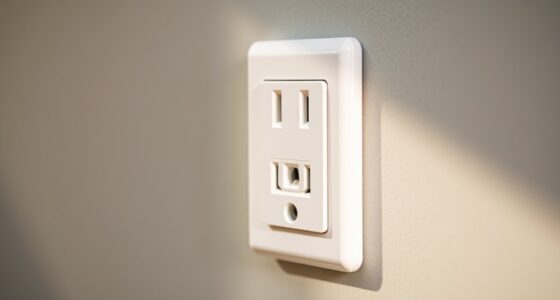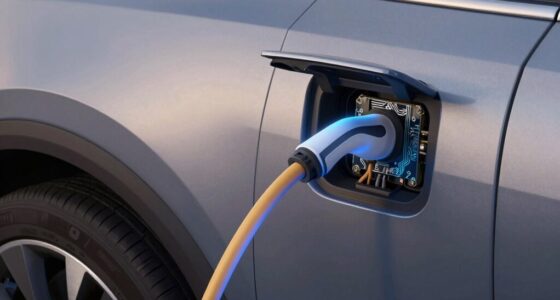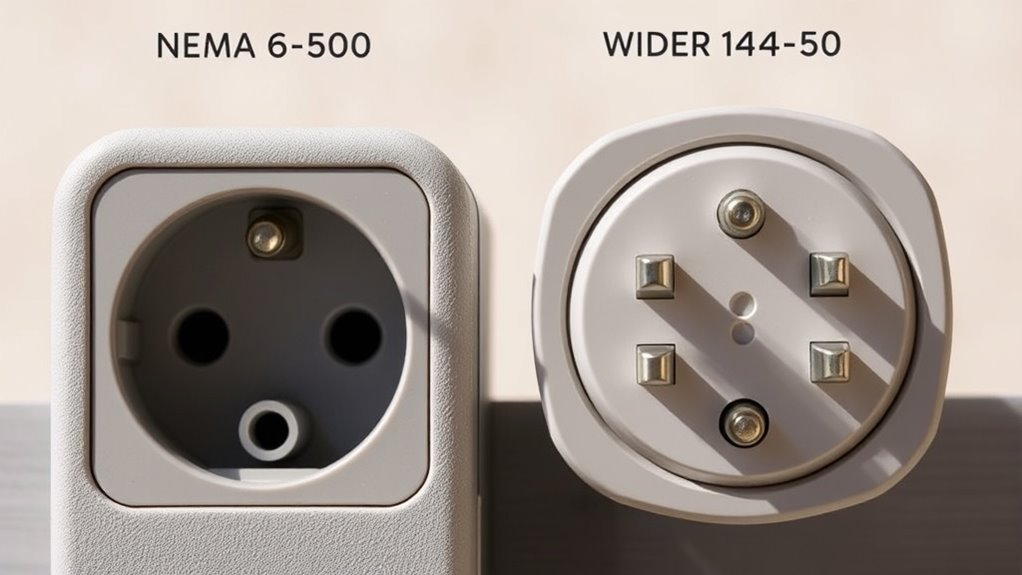
If you’re choosing between NEMA 6-50 and 14-50 outlets for your EV, the 14-50 is better because it offers faster charging and broader compatibility. While both support 50 amps, the 14-50 is designed for high-current applications like EVs, making it more versatile and efficient. The 6-50 is mainly used for specialized equipment, which can limit your options. To understand which suits your needs best, you’ll find the details helpful.
Key Takeaways
- NEMA 14-50 supports higher amperage, enabling faster EV charging compared to NEMA 6-50.
- 14-50 is more versatile and widely used for EVs, while 6-50 is mainly for specialized equipment like welders.
- Installing a 14-50 may cost slightly more initially but offers quicker charging and better future-proofing.
- Both outlets support 50 amps, but 14-50’s design allows for more efficient and faster charging sessions.
- 14-50’s broader compatibility makes it a better choice for home EV charging setups.
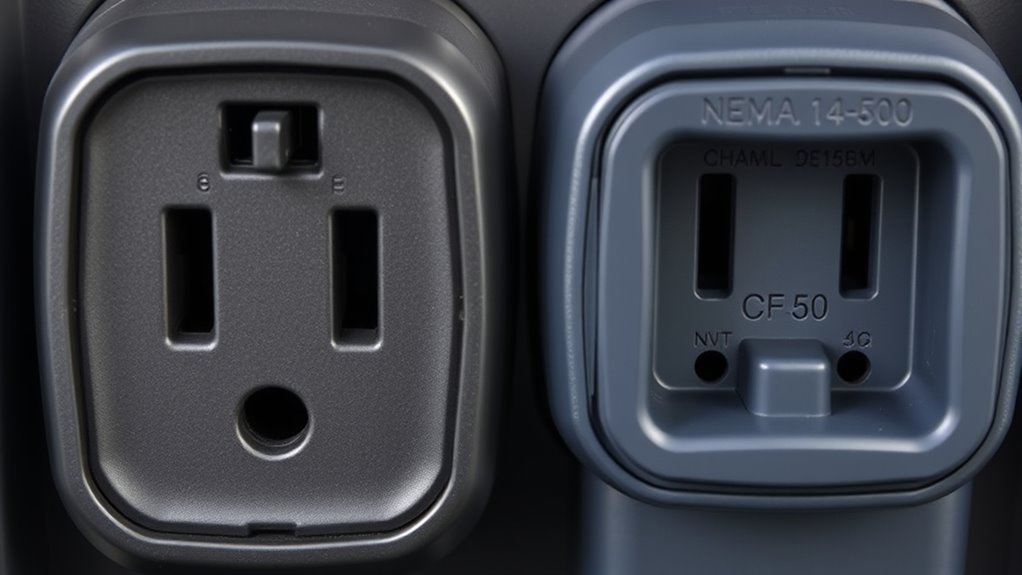
When choosing the right outlet for your electric vehicle, understanding the differences between NEMA 6-50 and NEMA 14-50 outlets is essential. These outlets serve as the connection points for your home charging setup, and knowing how they compare can help you optimize your charging experience. One key factor to evaluate is charging speed. The NEMA 14-50 outlet typically provides a slightly faster charging rate because it supports higher amperage—up to 50 amps—compared to the 6-50’s 50 amps, but with some differences in wiring and application. In practical terms, both outlets can deliver a significant boost to your EV’s battery, but the 14-50’s design allows for quicker charging sessions, making it more convenient if you need to top off your battery faster. Additionally, the broader compatibility of the 14-50 makes it a more versatile choice for various electric devices and future upgrades.
The NEMA 14-50 is often regarded as the go-to choice for EV owners because of its versatility and ability to handle higher power loads. If you’re aiming for quicker charging times, especially if you have a larger battery or plan to charge frequently, the 14-50 can save you time. On the other hand, the NEMA 6-50, while still capable of fast charging, is generally used for specialized applications like welders or other high-current equipment, which might not match the ease of use or availability of the 14-50 in typical home installations.
Cost comparison is another important aspect. The NEMA 14-50 outlet tends to be slightly more expensive initially, mainly because it’s more widely used for EV charging and has broader compatibility. The installation costs for both outlets are fairly comparable, but the 14-50’s greater popularity means it’s usually easier to find compatible chargers and accessories. If you already have an existing setup with a 6-50 outlet, upgrading to a 14-50 may involve additional wiring or breaker changes, which could add to your upfront costs. However, over time, the efficiency and faster charging speeds of the 14-50 can offset these initial expenses by saving you time and improving charging convenience. Proper understanding of electric outlet types can help you make better-informed decisions for your EV charging needs.
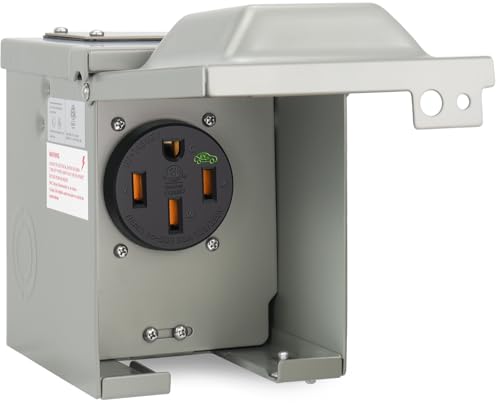
50 Amp 125/250 Volt EV Power Outlet Box, NEMA 14-50R Outlet EV Charging Box
- ETL Listed for Safety: NEMA 14-50R, 125/250V, 50A, rainproof enclosure
- Weatherproof & Anti-Theft: Heavy-duty metal, lockable doors for security
- Industrial Grade Construction: Durable brass terminals, copper contacts, impact-resistant nylon
As an affiliate, we earn on qualifying purchases.
As an affiliate, we earn on qualifying purchases.
Frequently Asked Questions
Can I Upgrade From a 6-50 to a 14-50 Outlet Easily?
Yes, you can upgrade from a 6-50 to a 14-50 outlet, but it depends on your outlet compatibility and existing wiring. You’ll need to verify your electrical panel can handle the different amperage and wiring requirements. Installation ease varies; if you’re comfortable with electrical work, you might do it yourself, but hiring a licensed electrician ensures safety and proper setup. Always check local codes before making changes.
Are Both Outlets Compatible With All EV Charging Stations?
Did you know over 80% of EV charging stations support both NEMA 6-50 and 14-50 outlets? Both outlets are compatible with most charging stations, but it’s crucial to check the specific station’s standards. While many stations accommodate both types, some may only support one. Always verify outlet compatibility and charging station standards before installation to guarantee safe, efficient charging for your EV.
What Safety Features Are Included With Each Outlet Type?
You should know that both outlets include grounding standards to guarantee safety, reducing the risk of electrical shock. While neither typically comes with built-in surge protection, you can add surge protectors for extra safety. Always verify that your outlet complies with local electrical codes and standards. Proper grounding and surge protection help prevent damage to your EV and ensure safe charging, giving you peace of mind during use.
How Do Weather Conditions Affect Outdoor Use of These Outlets?
Weather conditions can profoundly impact outdoor use of NEMA 6-50 and 14-50 outlets. You should prioritize weather resilience and outdoor durability by choosing outlets with proper weatherproof covers and sealed enclosures. Exposure to rain, snow, or humidity can cause corrosion or electrical shorts if the outlets aren’t designed for outdoor use. Regularly inspect and maintain them to ensure safety and reliable operation in all weather conditions.
Are There Any Cost Differences in Installing 6-50 vs. 14-50?
Installing a NEMA 6-50 can feel like launching a spaceship compared to the simpler 14-50, mainly because of installation costs and wiring requirements. The 6-50 often demands thicker, more expensive wiring and sometimes more complex wiring setups, escalating costs. In contrast, the 14-50 is more straightforward and affordable to install. So, if you’re watching your budget, expect the 6-50 to make your wallet feel the difference!

STARELO 50Amp Power Outlet Box,NEMA 6-50R Receptacle,250Volt Heavy-Duty Outdoor dustproof and Weatherproof for Electric Vehicles, generators, Welding Machines, etc.ETL Listed.(NEMA 6-50R Box)
- Receptacle Type: NEMA 6-50R receptacle with protective box
- Electrical Specifications: 250V, 50A, ETL Listed
- Protection Rating: IP66 dustproof and weatherproof
As an affiliate, we earn on qualifying purchases.
As an affiliate, we earn on qualifying purchases.
Conclusion
Choosing between NEMA 6-50 and 14-50 really boils down to your charging needs. While 14-50 offers faster charging and is more common for EVs, 6-50 can be a solid alternative if you already have the setup. Don’t put all your eggs in one basket—consider your current setup, future needs, and compatibility. Making the right choice now will save you headaches later; after all, a stitch in time saves nine.

AIXINE Level 1&2 Tesla Charger,Tesla mobile charger,12/16 Amp Portable EV Charger with 25FT Cable,120V-240V NEMA 6-20 Plug/5-15 Adapter,NACS for Tesla Models Y/3/X/S,Electric Vehicle Charging Stations
- Adjustable Charging Current: Sets current from 8A to 16A
- High Power Output: Up to 3.68KW at 240V/16A
- Delayed Charging Feature: Schedule 2-8H off-peak charging
As an affiliate, we earn on qualifying purchases.
As an affiliate, we earn on qualifying purchases.

Leviton 50 Amp EV Charging Receptacle/Outlet, Heavy Duty, 1450R, Black
- Designed for EV charging: Specifically for plug-in EV chargers
- Durable for frequent use: Withstands extended charge times and insertions
- Homeowner-friendly design: Ideal for plug-in EV charging units
As an affiliate, we earn on qualifying purchases.
As an affiliate, we earn on qualifying purchases.