
To accurately calculate your home EV charging load, you need to assess your existing electrical system, including your main breaker size and current load, then factor in the charger’s power requirements. Consider how other household appliances and solar energy influence your overall capacity. Proper planning avoids overloads and costly upgrades. If you’re curious about how to do these calculations safely and efficiently, there’s more to uncover that can help you make informed decisions.

Get backup power and energy gear delivered free with Prime
- Fast, free delivery on millions of items
- Prime Video, Amazon Music and more included
- Member-only deals all year
Key Takeaways
- Accurate load calculations prevent electrical overloads and ensure safe, reliable EV charging at home.
- Evaluating existing electrical capacity and potential upgrades is essential for proper load planning.
- Solar integration can reduce grid load but complicates load management and requires careful system evaluation.
- Future household energy needs should be considered to avoid underestimating load requirements.
- Professional consultation ensures precise calculations, safety compliance, and optimal system integration.
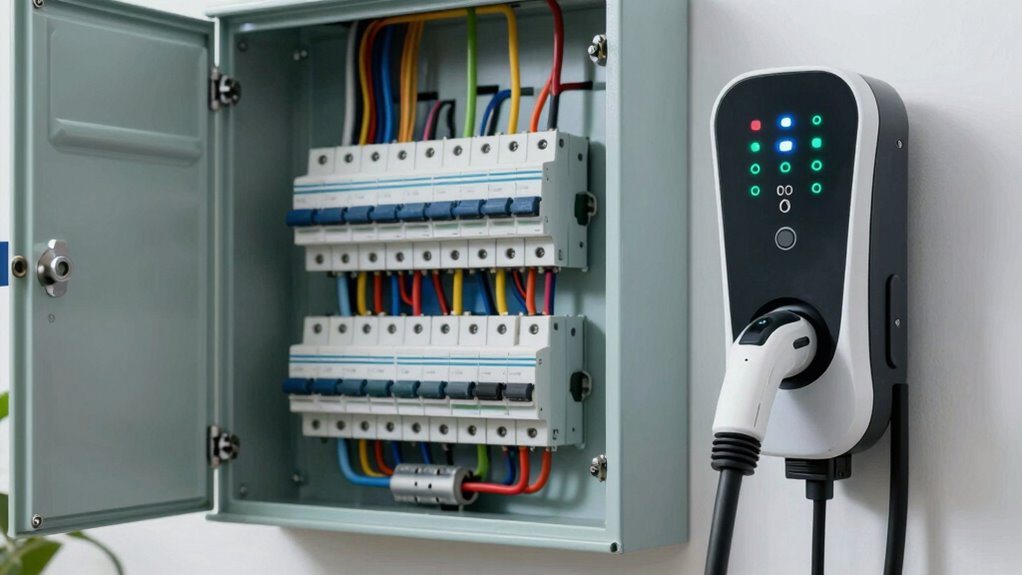
When installing a home electric vehicle (EV) charger, understanding how much load it will add to your electrical system is essential. This knowledge helps you avoid overloading circuits, ensures safety, and guides you in making smart upgrades. Your home’s electrical load isn’t just about the charger itself; it also depends on other appliances, your overall system capacity, and future plans like solar integration. If you’re considering adding solar panels, you’ll want to evaluate how they’ll interact with your EV charging needs. Solar integration can offset some of the additional load from charging your EV, reducing strain on your grid capacity and lowering energy costs. However, it also introduces complexity, requiring you to consider how your solar system’s output aligns with your charging schedule and overall energy consumption.
Understanding EV charger load, solar integration, and overall system capacity is key to safe, efficient home charging.
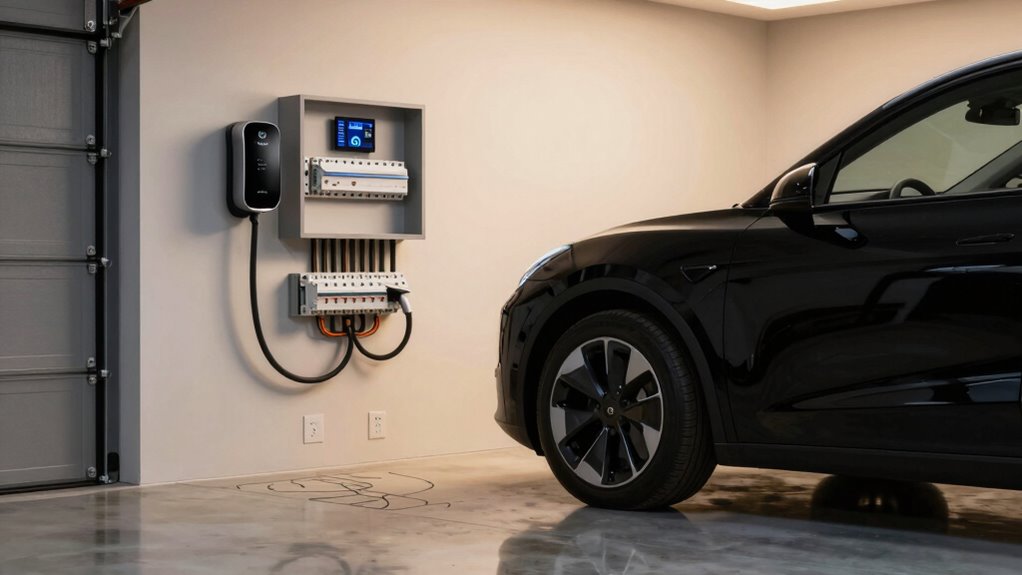
Knowing your grid capacity is crucial, especially if your household already has high energy demands. Your electrical service panel has a maximum capacity, and exceeding it can cause breakers to trip or damage to wiring. To accurately assess this, you need to review your main breaker size and existing load calculations. If your current system is near its limit, you might need to upgrade your electrical panel before installing a charger. This is particularly important if you plan to integrate solar power, as the total load includes both the EV charger and your solar system’s contribution. Proper planning ensures that your system can handle the combined load without risking overloads or costly repairs. Additionally, understanding load calculations enables you to better coordinate with your utility provider and ensure compliance with local regulations. Considering your home’s electrical capacity can help prevent unexpected issues during setup. It’s also helpful to stay informed about evolving electrical standards that may impact future upgrades.
In addition to basic load calculations, it’s wise to consider future needs. As EVs become more common and your household’s energy consumption grows, your initial setup might need adjustments. Analyzing your current electrical load with a professional can reveal potential issues before they happen. They can recommend whether a dedicated circuit for your EV charger is necessary or if a more significant upgrade is needed to accommodate solar integration and other appliances. Also, being aware of the impact of high energy demands can help you plan your energy management more effectively. Regularly reviewing your energy usage and potential load growth ensures your system remains efficient and reliable over time. Remember, a well-calculated load assessment not only protects your home’s electrical system but also optimizes your energy efficiency and cost savings.
Ultimately, understanding the load your EV charger adds—especially in the context of solar integration and grid capacity—empowers you to make informed decisions. It ensures safety, prevents costly fixes, and helps you leverage renewable energy effectively. Proper planning and consultation with a licensed electrician can help you strike the right balance, giving you confidence that your home’s electrical system is prepared for current and future demands.
As an affiliate, we earn on qualifying purchases.
Frequently Asked Questions
How Often Should I Have My Home Electrical System Inspected for EV Charging?
You should have your home electrical system inspected annually or whenever you notice issues like slow charging speed or inconsistent power. Regular inspections guarantee your system supports ideal charging, protecting your battery longevity and maintaining safe operation. If you plan to upgrade your charger or see signs of wear, schedule an inspection sooner. Keeping up with inspections helps prevent electrical problems, ensuring your EV charges efficiently and safely over time.
Can I Upgrade My Existing Electrical Panel for Higher EV Charging Capacity?
Yes, you can upgrade your existing electrical panel to increase load capacity for higher EV charging. You’ll need a qualified electrician to assess your current electrical panel’s load capacity and determine if it can handle the additional demand. Upgrading might involve installing a new panel or adding a subpanel. This guarantees your home’s electrical system safely supports faster EV charging without overloading or risking electrical issues.
What Are the Safety Considerations When Installing a Home EV Charger?
When installing a home EV charger, safety is key. You should guarantee proper charger placement to avoid hazards, like avoiding wet or high-traffic areas. Check that your electrical wiring is up to code and capable of handling the load; this might mean upgrading your panel. Always turn off power before working on electrical components, and consider hiring a licensed electrician to ensure safe, compliant installation, reducing risk of electrical fires or shocks.
How Does Climate Affect My Home EV Charging Load Requirements?
Climate impact considerably influences your home EV charging load requirements. Cold weather can reduce your vehicle’s charging efficiency, meaning you might need a higher load capacity to compensate for slower charging speeds. Conversely, hot climates can increase energy demand due to battery cooling needs. Understanding your local climate helps you determine the right charger size, ensuring safe, efficient charging without overloading your system.
Are There Any Government Incentives for Upgrading Home Electrical Systems for EVS?
You might think upgrading your home electrical system is costly, but government grants and tax credits can considerably ease the burden. These incentives often cover part of the expenses for installing higher capacity circuits or panels needed for EV charging. Investigating current programs reveals many regions offer financial support, so you should explore local and federal options. These incentives aim to make EV adoption more accessible, helping you save money while upgrading your system.
electrical panel upgrade for EV charging
As an affiliate, we earn on qualifying purchases.
As an affiliate, we earn on qualifying purchases.
Conclusion
Understanding how to accurately calculate your home EV charging load isn’t just about numbers—it’s about ensuring safety, avoiding surprises, and confidently powering your future. When you know what to expect, you can make smarter decisions and prevent potential issues down the road. So, aren’t you ready to take control of your home’s electrical needs and embrace this clean energy journey with confidence? Your EV—and your home—deserve that peace of mind.
As an affiliate, we earn on qualifying purchases.
home electrical system load meter
As an affiliate, we earn on qualifying purchases.
As an affiliate, we earn on qualifying purchases.
Halloween Picks
halloween
As an affiliate, we earn on qualifying purchases.