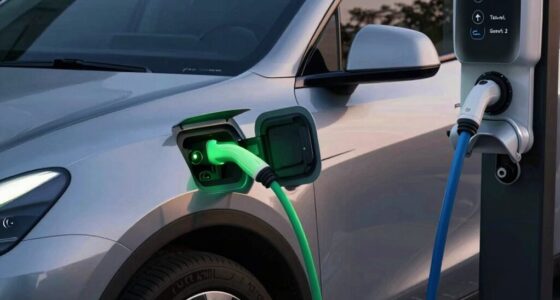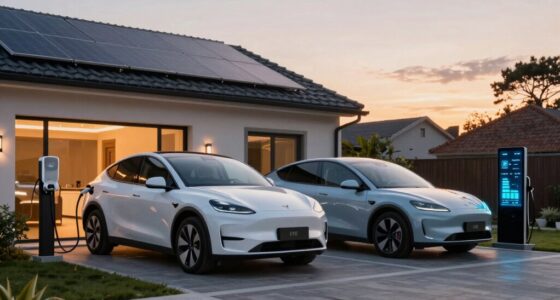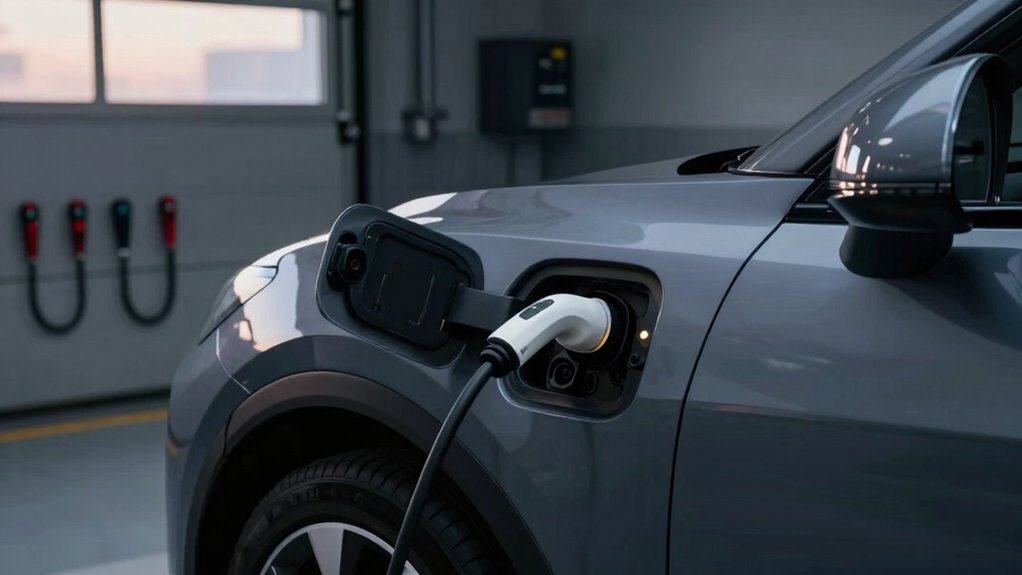

Overnight charging is safer and better for your battery than you might think. Modern chargers provide a slow, steady charge that helps protect your battery from stress and degradation over time. Advanced management systems monitor temperature and voltage to prevent overcharging, ensuring your battery stays healthy. It’s a convenient routine that keeps your EV ready for daily use while maximizing its lifespan. If you stay tuned, you’ll discover even more about why this approach actually enhances your driving experience.

Get backup power and energy gear delivered free with Prime
- Fast, free delivery on millions of items
- Prime Video, Amazon Music and more included
- Member-only deals all year
Key Takeaways
- Slow, steady charging during the night minimizes battery stress and degradation, preserving battery health over time.
- Modern chargers and management systems ensure safe, controlled, and efficient overnight charging.
- Built-in protections prevent overcharging, safeguarding battery longevity and performance.
- Overnight charging aligns with current infrastructure, making it convenient and hassle-free for daily use.
- Consistent, maintenance-free overnight charging supports long-term battery capacity and vehicle reliability.
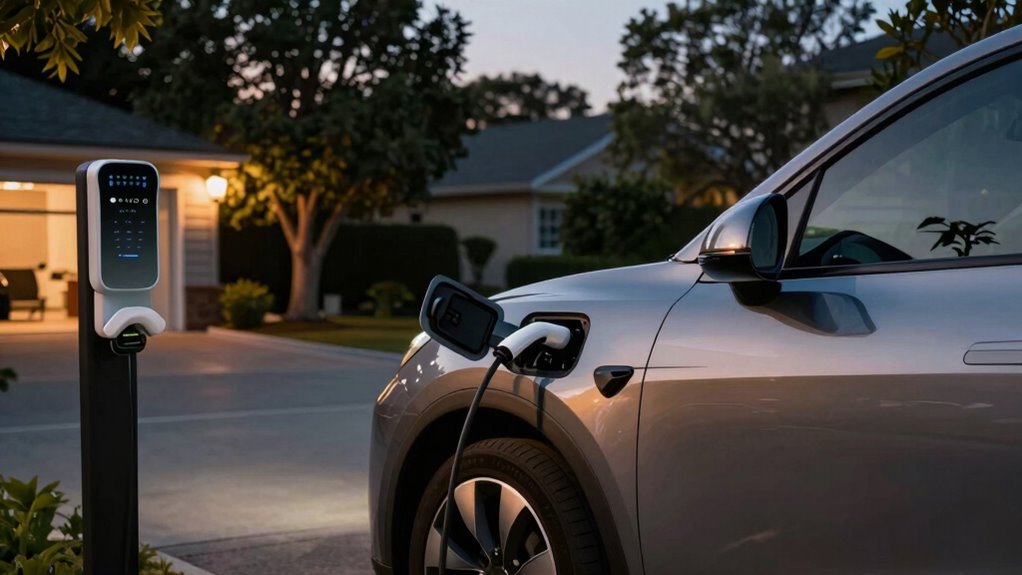
Many drivers assume that overnight charging isn’t necessary or that it might harm their electric vehicle’s battery, but in reality, it’s one of the most effective and safest ways to keep your EV ready for daily use. When you plug in your vehicle at night, you’re allowing the battery to charge gradually, which is better for its longevity. Unlike quick charging sessions that deliver large bursts of energy in a short time, overnight charging typically involves a slow, steady flow of electricity. This slow charge helps prevent unnecessary stress on the battery cells, reducing the risk of long-term degradation. As a result, your EV’s battery remains healthier over time, maintaining its capacity and overall performance longer.
Another advantage is the robustness of the charging infrastructure supporting overnight charging. Most homes are equipped with Level 1 or Level 2 chargers, which are designed to provide safe, reliable, and efficient charging overnight. These chargers are built to regulate the power they deliver, ensuring that your battery receives a consistent, controlled charge. This consistency minimizes the risk of overheating and other issues that can arise from improper charging practices. Additionally, the widespread availability of reliable charging infrastructure makes overnight charging a convenient option for most drivers, especially since you can simply leave your vehicle plugged in while you sleep. Many charging stations and home chargers also include smart features that monitor and optimize the charging process, further safeguarding your battery’s health. Modern EV batteries are also designed with advanced management systems, which help maintain their performance and longevity during overnight charging. These systems are programmed to adapt to different charging conditions and battery health, further enhancing safety and efficiency. Moreover, these systems adapt to different charging conditions, enhancing the safety and efficiency of overnight charging routines. Incorporating proper charging practices can also significantly contribute to the overall well-being of your EV’s battery over its lifespan.
Many people worry that frequent overnight charging could negatively impact their battery, but modern EV batteries are engineered with advanced management systems. These systems monitor battery temperature, voltage, and overall health, making sure the charging process stays within safe limits. They also include protective features to prevent overcharging, which is a common concern. As a result, overnight charging becomes a safe, maintenance-free routine that supports your vehicle’s battery longevity. This means you can start each day with a full charge without stressing about damaging your battery.
In fact, by adopting overnight charging, you’re leveraging a well-established, safe, and efficient method that aligns with the capabilities of current charging infrastructure. It’s a practical way to keep your EV ready for daily demands while ensuring the long-term health of your battery. With the right setup and a little understanding, overnight charging can become a seamless part of your routine—one that maximizes battery longevity and keeps your vehicle dependable for years to come.
As an affiliate, we earn on qualifying purchases.
Frequently Asked Questions
How Does Temperature Affect Overnight Charging Efficiency?
Temperature directly influences your battery temperature, which in turn affects charging speed. Cooler temperatures can slow down the charging process because the battery’s chemistry becomes less active, reducing efficiency. Conversely, warmer temperatures boost battery temperature, allowing for faster charging. During overnight charging, your battery often reaches a perfect temperature, maximizing charging speed. Proper temperature management guarantees your battery charges efficiently and safely, making overnight charging more effective than you might expect.
Can Overnight Charging Damage My Vehicle’s Battery?
Overnight charging generally doesn’t damage your vehicle’s battery if you follow proper charging practices. Modern batteries are designed to handle multiple charging cycles without significant harm, which helps maintain battery longevity. Charging overnight usually stops once the battery reaches full capacity, preventing overcharging. This controlled process guarantees your battery stays healthy over time, allowing you to enjoy reliable performance without risking damage or reduced lifespan.
Is It Better to Unplug Immediately After Charging?
Ever wondered if unplugging immediately after charging affects your car’s battery? Keeping it plugged in doesn’t harm battery longevity, especially with modern vehicles designed for overnight charging. Unplugging isn’t necessary for safety or battery health, and it might even reduce charging convenience. Most electric cars regulate their charge once full, so leaving it plugged in doesn’t overcharge. For ideal battery longevity and ease, you can leave your vehicle plugged in overnight without worries.
How Do Different Charging Stations Impact Overnight Charging?
Different charging station types impact your overnight charging experience by providing varying levels of power supply stability. Level 2 stations typically offer a consistent, reliable power supply, making overnight charging more efficient. Fast chargers, however, may have fluctuating power levels that can affect charging times. Choosing a station with stable power guarantees your vehicle charges safely and fully overnight, so you wake up with a ready-to-go battery every morning.
What Safety Measures Are in Place for Overnight Charging?
You’re protected during overnight charging thanks to strict safety measures at charging stations, which include automatic shutoff features, temperature monitoring, and robust electrical safeguards. These measures prevent overheating and protect your battery’s longevity, ensuring safe, consistent power delivery. Charging stations are regularly inspected and maintained, giving you peace of mind. By prioritizing safety, these protocols help extend your vehicle’s battery life while making overnight charging both efficient and safe.
As an affiliate, we earn on qualifying purchases.
Conclusion
By charging overnight, you’re giving your battery ample time to fully recharge, which can extend its lifespan and improve performance. Surprisingly, studies show that EV batteries lose less than 2% of their capacity after 10 years of regular overnight charging. So, you don’t need to worry about damaging your battery—overnight charging actually supports its health. Embrace this routine, and you’ll enjoy reliable, efficient driving every day with minimal hassle.
As an affiliate, we earn on qualifying purchases.
As an affiliate, we earn on qualifying purchases.
Columbus Day / Indigenous Peoples' Day Picks
long weekend sales
As an affiliate, we earn on qualifying purchases.