![Pixel 11 Pro XL Shows Up In Hands-on Leak Days Ahead Of Launch [Gallery]](https://highervoltage.net/wp-content/uploads/2026/08/pixel-11-pro-xl-shows-up-in-hands-on-leak-days-ahead-of-launch-gallery-featured-200x110.jpg)
You’ll notice Level 1 and Level 2 charging feel very different because of how fast they replenish your EV’s battery. Level 1 charges slowly, delivering just a few miles of range per hour, so it’s great for short daily drives but not ideal for longer trips. Level 2 charges much faster, letting you recharge overnight or during work hours, which makes your daily routine more flexible. If you want to discover why these differences matter so much, keep exploring.

Get backup power and energy gear delivered free — and shop member deals
- Fast, free delivery on millions of items
- Access to Prime Big Deal Days deals on October 6–7
- Prime Video, Amazon Music and more included
Key Takeaways
- Level 1 provides slow, gradual charging, making it feel less immediate and less suited for quick energy replenishment.
- Level 2 delivers faster charging, resulting in a more efficient, powerful experience that reduces wait times.
- The significant difference in charging speed affects daily routines, convenience, and trip planning.
- Installation costs and setup complexity influence how quickly and reliably each level can be used.
- Technological advancements enhance safety and affordability of Level 2, making it feel more modern and responsive.
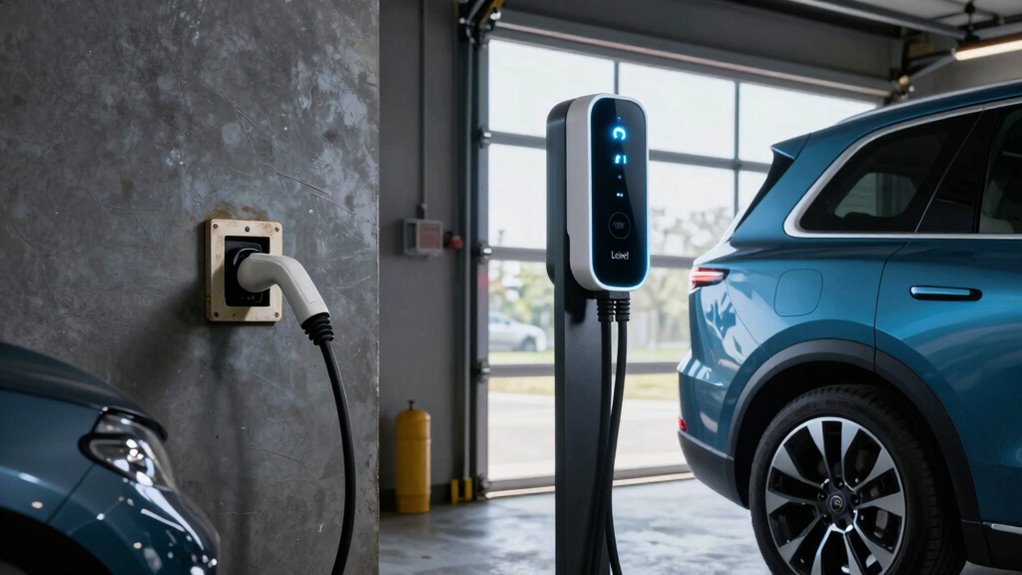
Understanding the differences between Level 1 and Level 2 charging is essential if you’re considering electric vehicle (EV) ownership or switching to cleaner transportation. These two charging methods might seem similar at first glance, but in real life, they feel markedly different, especially when it comes to charging speed and installation cost. You’ll quickly notice that Level 1 charging is slow and straightforward, often just plugging into a standard household outlet. It delivers about 4 to 5 miles of range per hour, which means if you’re only driving short distances daily, it might suffice. However, if you rely on your EV for longer commutes or frequent use, this slow charging can feel limiting and frustrating, especially when you need to top up quickly.
On the other hand, Level 2 charging feels much more efficient and powerful. It operates at higher voltage—typically 240 volts—allowing you to charge your EV considerably faster. Expect to gain about 20 to 30 miles of range per hour of charging, which can fully replenish your battery overnight or during a few hours at work. This difference in charging speed is what makes Level 2 stations stand out in real life; it’s a game-changer for daily drivers who want quicker turnaround times and more convenience. You won’t have to plan your trips around long charging sessions, giving you more flexibility and peace of mind.
When it comes to installation cost, the contrast becomes even clearer. Level 1 charging doesn’t usually require any special setup. You can use your existing household outlet, making it a no-cost or minimal-cost option—perfect if you’re just testing the waters of EV ownership. But Level 2 charging involves installing a dedicated charging station, which can range from a few hundred to over a thousand dollars depending on your home’s electrical system and the charger you choose. The installation cost includes wiring, potential electrical upgrades, and professional labor, making it a higher initial investment. Additionally, emerging trends in the industry are making Level 2 chargers more accessible and affordable as technology advances. Many EV owners find that the faster charging speed and increased convenience justify the extra expense over time.
Furthermore, understanding power standards and safety considerations is crucial to ensure a reliable and safe charging experience, especially with higher-voltage Level 2 setups. In real life, these differences create a noticeable gap in how each charging type feels and functions. Level 1 feels like a slow, simple trickle—reliable but not very practical if you’re in a hurry. Level 2, however, offers a quick, efficient boost that aligns better with your busy schedule, though it involves a bigger upfront cost. Both options have their place, but understanding how they differ in charging speed and installation cost helps you choose what works best for your lifestyle and budget. Additionally, the technological advancements in charging infrastructure continue to improve the affordability and safety of Level 2 stations, making them an increasingly popular choice among EV owners.
As an affiliate, we earn on qualifying purchases.
Frequently Asked Questions
Can Level 1 and Level 2 Chargers Be Used Interchangeably?
You can’t generally use Level 1 and Level 2 chargers interchangeably because they connect to different charging infrastructure and provide varying power levels. Level 2 chargers deliver faster charging, making them more energy-efficient for quicker top-ups, while Level 1 chargers are slower but widely compatible. Using the right charger guarantees maximum energy efficiency and safety, so always match your vehicle’s requirements with the appropriate charging infrastructure.
How Long Does It Typically Take to Charge With Each Level?
Think of charging like a marathon, not a sprint. With Level 1 chargers, you’ll usually wait 8-20 hours, ideal for overnight charging and preserving battery longevity. Level 2 chargers are faster, typically taking 4-8 hours, perfect for regular use. Your charging infrastructure influences these times, and choosing the right level helps maintain your battery’s health while keeping your EV ready when you need it.
Are Level 2 Chargers More Expensive to Install Than Level 1?
Yes, Level 2 chargers are generally more expensive to install than Level 1, mainly due to higher installation requirements. You’ll need to guarantee charger compatibility with your electrical system and possibly upgrade your home’s wiring or breaker panel. These additional installation requirements increase costs, but they also allow for faster charging. While the upfront expense is higher, many find the quicker charging time worth the investment.
Do Charging Speeds Vary Between Different EV Models?
You’ll notice charging speeds differ between EV models, like how some cars gulp down power quickly while others take their time, affecting battery longevity. A faster-charging model might feel like a sprint, while a slower one’s more of a stroll. Your experience depends on the vehicle’s battery design and the charging infrastructure you use, ensuring you get the right balance between speed and preserving your EV’s long-term health.
Is There a Significant Difference in Electricity Costs?
Yes, there’s a noticeable difference in electricity costs between Level 1 and Level 2 charging. Level 2 chargers typically offer better energy efficiency, meaning you get more miles per kilowatt-hour, reducing overall costs. Plus, Level 2 charging is more convenient, often faster, so you spend less time plugged in. This combination of efficiency and convenience makes Level 2 a more cost-effective choice for regular charging needs.
As an affiliate, we earn on qualifying purchases.
Conclusion
Think of Level 1 and Level 2 charging as two different paths on your journey. Level 1 is the gentle stream, slow and steady, offering comfort and familiarity. Level 2 is the rushing river, powerful and swift, fueling your adventure with urgency. Both guide you forward, but the experience varies—one whispers patience, the other commands action. Embrace these differences as symbols of your evolving journey, each charging style a reminder of your pace and purpose on the road ahead.
As an affiliate, we earn on qualifying purchases.
As an affiliate, we earn on qualifying purchases.
Evergreen bestsellers Picks
bestsellers
As an affiliate, we earn on qualifying purchases.