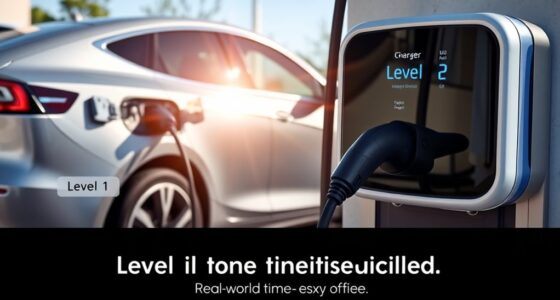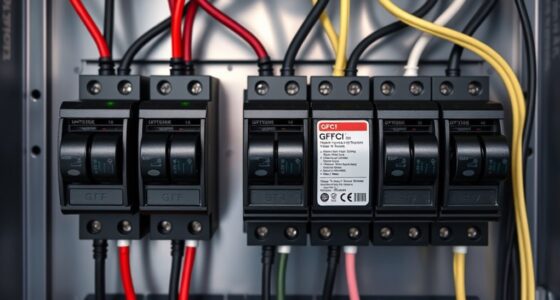
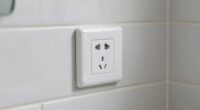
To smartly place your outdoor EV charger, choose a location near your driveway or garage for easy access and safety. Pick a level, stable spot with plenty of sunlight for best solar integration, and avoid shaded or uneven areas. Make certain the site is visible, secure, and compliant with local codes, while considering weather protection and ease of maintenance. Focusing on these factors helps maximize safety, efficiency, and durability—discover more strategies to perfect your setup as you go along.
Key Takeaways
- Prioritize placement near driveways or garages for easy, safe, and convenient access.
- Select sunny, shaded-free locations aligned with solar panels to maximize energy efficiency.
- Ensure visibility and security with lighting, cameras, or lockable enclosures to prevent theft and vandalism.
- Follow local codes, maintain proper clearances, and protect equipment from weather and environmental hazards.
- Opt for a stable, level surface that facilitates maintenance, long-term durability, and reliable charging performance.

Choosing the right spot for an outdoor EV charger is essential to guarantee safe, convenient, and dependable charging. Your goal is to pick a location that maximizes accessibility while minimizing potential hazards. Start by considering the natural flow of your daily routine—placing the charger near your driveway or garage makes it easier to plug in without extra effort. Think about the distance from your power source; a shorter run of wiring reduces installation costs and potential energy loss. It’s wise to select a spot that’s level and solid, avoiding uneven or soft ground that might cause instability or damage over time.
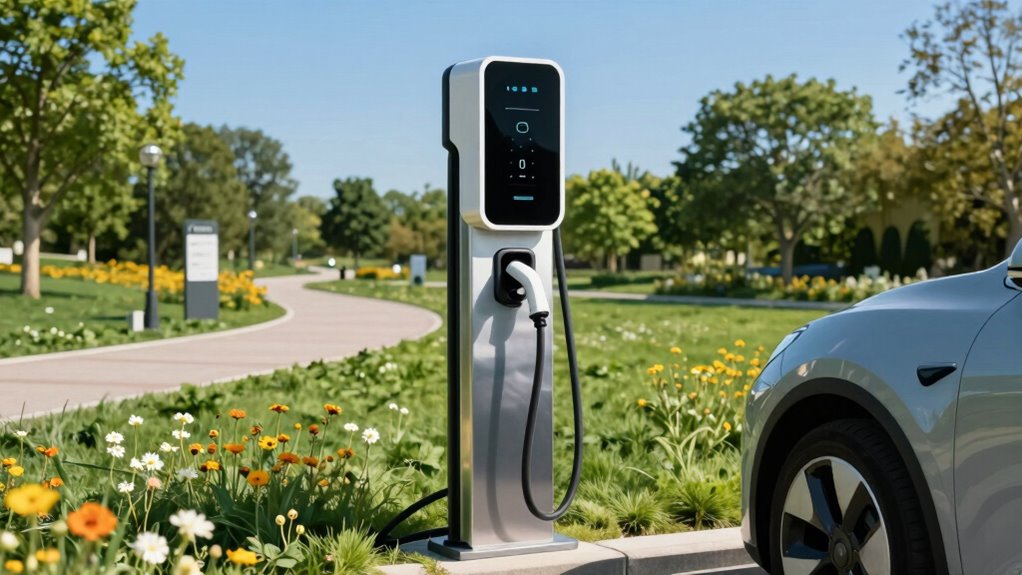
Choose a level, stable spot near your driveway for easy, safe EV charging access.
Solar integration is a crucial factor in an eco-friendly setup. If you’re considering solar panels, position the charger where it can benefit from optimal sunlight exposure. This might mean placing it away from shaded areas like tall trees or neighboring structures that could block sunlight during peak hours. By aligning your charger with existing or planned solar infrastructure, you not only reduce your reliance on the grid but also save on energy costs. Remember, solar integration isn’t just about efficiency—it’s also about future-proofing your setup, making your charging station more sustainable and cost-effective in the long run. Additionally, ensuring your setup adheres to electrical safety standards helps prevent hazards and ensures reliable operation.
Security considerations are equally important when choosing your outdoor EV charger location. You want to minimize the risk of theft or vandalism by selecting a visible yet secure spot. Installing your charger in a well-lit area enhances safety at night and deters unwanted attention. Additionally, consider installing security cameras or motion sensors nearby to monitor activity around your charging station. Enclosed or lockable units can add an extra layer of protection, especially if your charger is in a less trafficked area. Think about your neighborhood’s safety reputation and whether your chosen spot might be vulnerable to weather or tampering. Positioning your charger against a wall or under a shelter can shield it from the elements and reduce potential damage. Proper placement also plays a role in mitigating risks related to environmental factors and vandalism, ensuring your investment remains secure and functional. Incorporating weatherproofing strategies can further safeguard your equipment from harsh outdoor conditions.
Finally, ensure that your placement complies with local codes and manufacturer guidelines. Proper clearance for ventilation, easy access for maintenance, and adherence to electrical safety standards are non-negotiable. Taking all these factors into account—solar integration, security considerations, and practical ease—helps you create a smart, efficient, and secure outdoor EV charging station. When you plan thoughtfully, you’ll enjoy reliable charging, increased safety, and a setup that aligns with your sustainability goals. Being aware of watt-hours and capacity can help you choose the most suitable charger size for your needs, ensuring optimal performance and longevity.
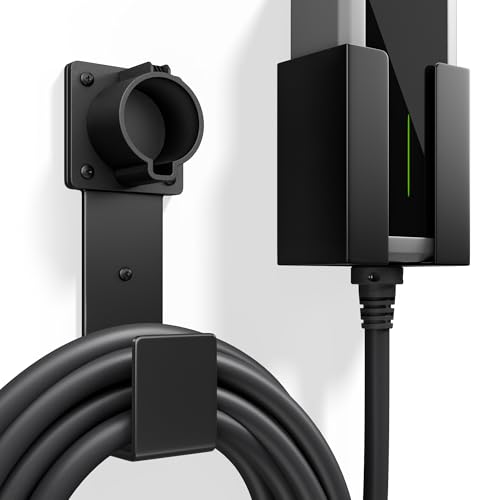
EV Charger Holder Wall Mount – J1772 Cable Organizer & Nozzle Holster with Storage Box for Electric Vehicle Charging
Fit J1772 Connector: Designed to securely hold standard J1772 charging connectors, keeping them stable, properly positioned, and protected…
As an affiliate, we earn on qualifying purchases.
As an affiliate, we earn on qualifying purchases.
Frequently Asked Questions
How Do Weather Conditions Affect Outdoor EV Charger Durability?
Weather conditions greatly influence outdoor EV charger durability. You should consider weather resilience when selecting chargers, as extreme temperatures, rain, snow, and humidity can cause wear and corrosion. Durability factors like waterproofing, robust materials, and protective enclosures help guarantee your charger withstands harsh conditions. Regular maintenance is also essential to prevent weather-related damage, so you can depend on your charger regardless of seasonal changes or severe weather events.
What Security Measures Protect Outdoor EV Chargers From Theft or Vandalism?
Did you know that outdoor EV chargers are increasingly targeted by vandals and thieves, with theft incidents rising by 20% annually? To protect your investment, you should install robust locking mechanisms that deter unauthorized access. Complement this with surveillance cameras to monitor activity and provide evidence if needed. These security measures work together to safeguard your charger, ensuring reliable operation and peace of mind.
Are There Specific Permits Required for Outdoor EV Charger Installation?
You’ll likely need to go through a permitting process to install outdoor EV chargers, which includes obtaining the necessary permits from your local authorities. Be prepared to address zoning restrictions that may govern where chargers can be installed. Check with your city or county office to understand specific requirements, as regulations vary by location. Securing these permits guarantees your installation complies with local safety and zoning standards.
How Does Landscaping Impact the Placement of Outdoor EV Chargers?
Think of your outdoor EV charger like a essential piece of your garden’s landscape. Landscaping aesthetics matter because you want it to blend seamlessly, not stand out awkwardly. Consider plant growth, ensuring roots won’t interfere or cause damage over time. Proper placement respects both beauty and function, keeping your charging station accessible while maintaining the natural flow of your outdoor space. Good planning makes your charger both practical and visually harmonious.
What Maintenance Is Needed for Outdoor EV Chargers in Harsh Climates?
In harsh climates, you need to regularly inspect and clean your outdoor EV charger to prevent dirt, ice, and corrosion from affecting performance. Make sure the charging station maintains good aesthetics by keeping it free of debris, and check that user accessibility considerations are met, such as clear pathways and functional weatherproof enclosures. Protecting your station with appropriate coverings and routine maintenance helps ensure reliable operation and a positive user experience.
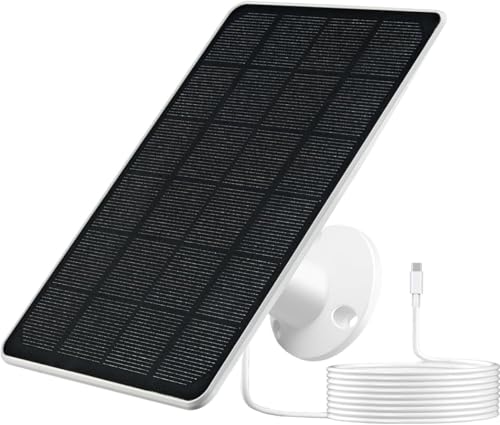
Solar Panel Charger Compatible with Arlo Essential 2K Outdoor(2nd Gen)/Essential XL Camera/Essential Spotlight Camera, USB C & Micro USB Plug, 9.8ft Waterproof Cable, 360°Adjustable Mount
Compatible with Micro USB & Type-C Port Camera. For Arlo Essential Spotlight/XL Spotlight /Essential 2K (2nd Generation)Camera or…
As an affiliate, we earn on qualifying purchases.
As an affiliate, we earn on qualifying purchases.
Conclusion
Think of outdoor EV charger placement as both an art and a science—you want convenience, but also safety. While a perfectly positioned charger offers effortless access, a poorly placed one can become an obstacle or hazard. Striking the right balance means considering user needs and environmental factors. After all, a charger that’s easy to reach but exposed to the elements is like a story left unfinished—both need careful planning to truly shine.
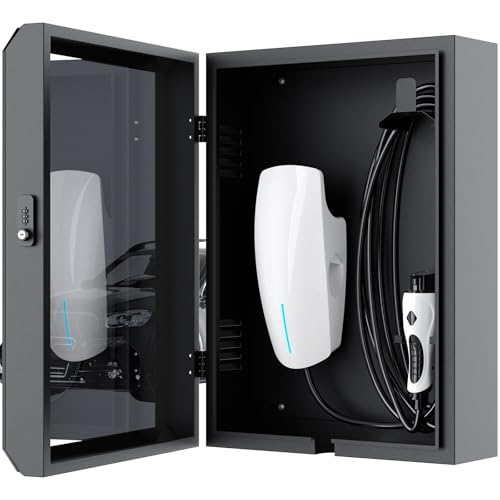
NOTASA Wall EV Charger Cover, Outdoor EV Charger Enclosure Black
Universal Compatibility: This EV charger cover is not only compatible with Tesla, it is also compatible with most…
As an affiliate, we earn on qualifying purchases.
As an affiliate, we earn on qualifying purchases.

Deco Home Level 2 EV Charging Station, 9.6 KW, 40 AMP, 240V with SAE J1772 Plug and NEMA 14-50 Plug, IP54, 4.3'' LCD Screen, Tesla Compatible Adapter Included
POWER UP FOR THE ROAD AHEAD – The Deco Home EV Charging Station is the ultimate solution for…
As an affiliate, we earn on qualifying purchases.
As an affiliate, we earn on qualifying purchases.