
Time of Use rates can lower your EV charging costs by encouraging you to charge during cheaper, off-peak hours when electricity demand is lower. Charging at these times can also support cleaner energy use and help the grid stay stable. Utilities often offer incentives for charging during these periods, which can reduce your overall expenses. If you want to discover how to maximize savings and support a sustainable energy system, you’ll find useful details ahead.

Get backup power and energy gear delivered free — and shop member deals
- Fast, free delivery on millions of items
- Access to Prime Big Deal Days deals on October 6–7
- Prime Video, Amazon Music and more included
Key Takeaways
- Charging during off-peak hours typically lowers costs due to reduced electricity rates.
- Peak hours have higher rates, increasing the cost of charging during those times.
- Smart charging systems can optimize timing to minimize expenses.
- Demand response programs incentivize charging when electricity is cheaper and cleaner.
- Using TOU rates encourages more efficient, cost-effective EV charging habits.
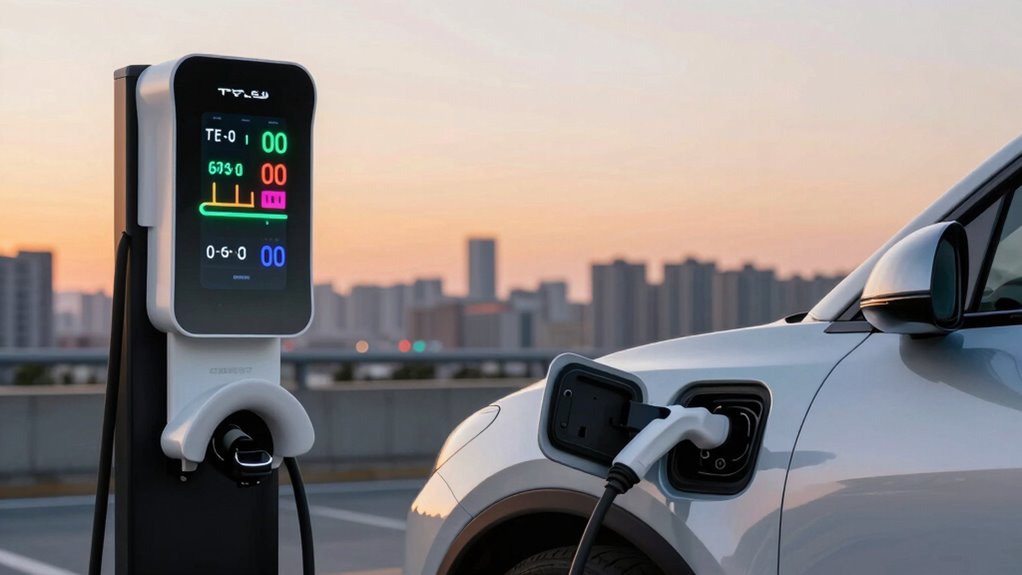
If you’re charging an electric vehicle (EV), understanding how Time of Use (TOU) rates influence your costs can save you money. TOU rates are designed to encourage charging during specific times, often when electricity demand is lower. By shifting your charging schedule to these off-peak periods, you can substantially reduce your overall expenses. Not only does this benefit your wallet, but it also supports broader energy goals like renewable integration and grid stability. When you charge during off-peak hours, you’re helping to balance the grid, which often relies more heavily on renewable sources like wind and solar when demand is lower. This guarantees a cleaner energy mix and promotes sustainable power generation.
Grid stability is a key reason utilities implement TOU rates. During peak hours, the grid experiences stress, risking outages or the need for costly backup power. When you delay charging to times of lower demand, you’re easing that stress and helping utilities maintain a stable grid. This stability is vital for integrating renewable energy sources efficiently. Renewables are intermittent by nature, meaning they produce power when the sun shines or the wind blows. By charging your EV during off-peak times, you align your energy consumption with periods of higher renewable output, promoting cleaner energy use and reducing reliance on fossil fuels. Understanding renewable energy and its role in the grid can help you make more informed decisions about when to charge your EV. Additionally, adopting smart charging technology can optimize your energy use further and maximize savings.
Furthermore, by charging during off-peak periods, you’re contributing to a more sustainable energy system. This approach encourages utilities to invest more in renewable infrastructure, knowing there’s a steady demand for power at various times. Your participation in this system also helps reduce the need for utilities to rely on fossil-fuel peaker plants, which are often more polluting and expensive to operate. Recognizing the importance of grid management can help you better understand how your charging habits impact the overall energy landscape. Understanding the role of renewable energy in the grid can help you make more informed decisions about when to charge your EV. Incorporating demand response programs can further enhance your ability to save money and support grid stability. Overall, understanding and utilizing TOU rates not only saves you money but also supports a more renewable, stable, and efficient power grid.
As an affiliate, we earn on qualifying purchases.
Frequently Asked Questions
How Do TOU Rates Vary by Region or Utility Provider?
You’ll find that regional variations and utility policies considerably influence TOU rates across different areas. Some regions have higher peak rates to manage demand, while others offer more affordable off-peak charging. Utility providers set these rates based on local energy costs and policies aimed at balancing grid load. So, your EV charging costs can vary depending on where you live and your utility’s specific rate plans, making it essential to check local rates.
Can EV Charging Costs Be Predicted Accurately With TOU Rates?
You can predict EV charging costs with TOU rates, but factors like battery degradation and renewable integration can affect accuracy. As your battery ages, it might require more energy to charge, raising costs unpredictably. Renewable energy sources, depending on their availability, can also fluctuate, impacting rates. While TOU rates provide a helpful framework, consider these variables for a more precise cost estimate.
Are There Any Incentives for Charging During Off-Peak Hours?
Yes, there are incentives for charging during off-peak hours. Many utility companies offer incentive programs that encourage you to charge your EV during these times, helping you save money. These programs often provide lower rates or rebates to offset peak pricing, making it more affordable to charge when demand is lower. By taking advantage of these incentives, you can reduce your overall charging costs and support a more balanced energy grid.
How Do TOU Rates Influence Long-Term EV Ownership Costs?
Time of Use (TOU) rates substantially influence your long-term EV ownership costs by encouraging smart grid usage and demand management. When you charge during off-peak hours, you pay less, reducing overall expenses. This system motivates you to adapt charging habits, which helps balance grid demand and lowers electricity rates over time. Embracing TOU rates can lead to substantial savings and a more sustainable approach to owning and charging your EV.
What Are the Best Strategies to Minimize Charging Expenses?
To minimize charging expenses, you should charge your EV during off-peak hours, when rates are lower, saving money and protecting your battery longevity. Use smart charging features, if available, to optimize charging times. Also, consider expanding your charging infrastructure at home for convenience. Properly maintaining your battery and avoiding frequent fast-charging can extend its life, ultimately reducing long-term costs and ensuring your EV remains efficient and cost-effective.
As an affiliate, we earn on qualifying purchases.
Conclusion
By understanding Time of Use rates, you can steer your EV charging journey like a skilled captain steering through shifting tides. Charging during off-peak hours turns your drive into a smooth sail, saving you money and avoiding stormy surges in electricity costs. So, chart your course wisely—when the clock strikes the right hour, you’ll harness the power of the night and keep your wallet from sinking in the waves of high rates.
As an affiliate, we earn on qualifying purchases.
smart EV charger with scheduling
As an affiliate, we earn on qualifying purchases.
As an affiliate, we earn on qualifying purchases.
Fall Picks
fall essentials
As an affiliate, we earn on qualifying purchases.