
A 4-way switch circuit lets you control a single light from multiple locations, perfect for hallways, large rooms, and staircases. You’ll need two 3-way switches at the start and end, with 4-way switches in between. Proper wiring involves connecting traveler wires securely and following specific configurations. If you’re comfortable with basic electrical work, you can set this up safely. Keep exploring, and you’ll discover how to wire and troubleshoot effectively.

Get backup power and energy gear delivered free — and shop member deals
- Fast, free delivery on millions of items
- Access to Prime Big Deal Days deals on October 6–7
- Prime Video, Amazon Music and more included
Key Takeaways
- Understand the roles of 3-way and 4-way switches in multi-location lighting control.
- Connect traveler wires securely between switches, ensuring proper wiring sequence.
- Follow a wiring diagram carefully to avoid shorts and ensure correct operation.
- Turn off power and verify circuit is dead before wiring or troubleshooting.
- Test the circuit from all switch locations to confirm proper functioning before finalizing.
Have you ever wanted to control a single light from multiple locations? If so, a 4-way switch circuit is what you need. These circuits allow you to turn a light on or off from different spots in your home, making it convenient for hallways, large rooms, or staircases. To set up a 4-way switch system, you’ll need to understand the basics of electrical wiring and follow proper safety precautions. Working with electrical wiring can be dangerous if you’re not careful, so it’s essential to turn off the power supply before starting any project. Use a voltage tester to double-check that the circuit is dead before touching any wires. Wearing insulated gloves and using tools with insulated handles adds extra safety to your work.
Control lights from multiple locations safely by turning off power and verifying circuits before wiring.
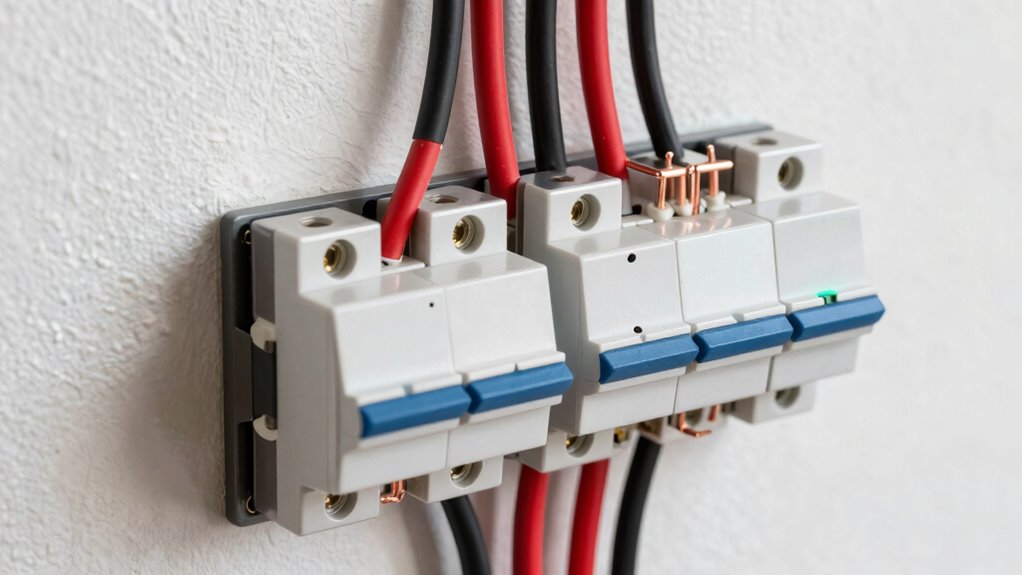
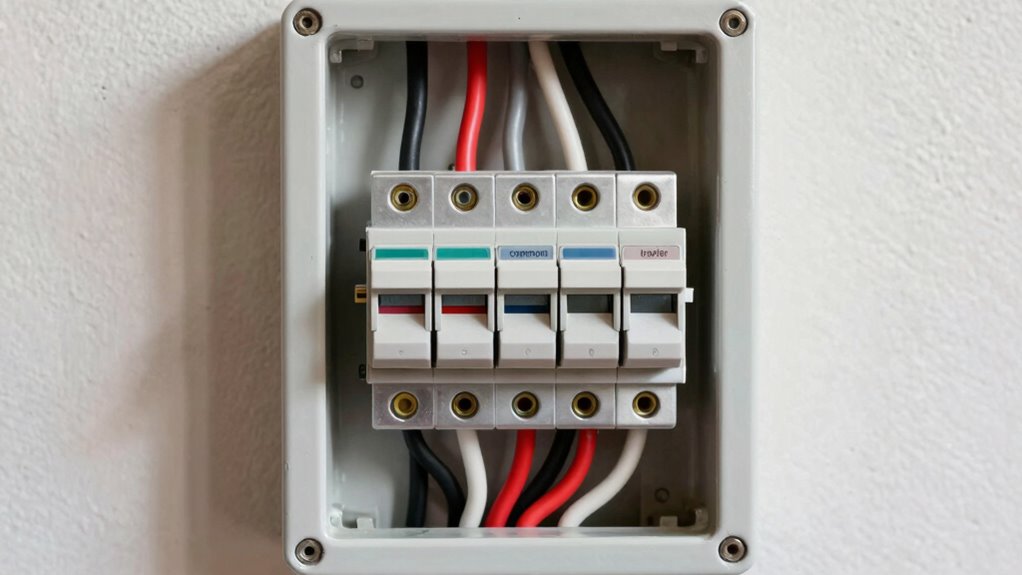
The wiring setup for a 4-way switch circuit involves two 3-way switches at the start and end of the circuit, with one or more 4-way switches in between. The 3-way switches have three terminals: common and two traveler terminals. The 4-way switches have four terminals, which connect to the traveler wires from the 3-way switches. When wiring, you’ll run a power source into one 3-way switch, then connect the travelers to the 4-way switch, and finally link the other 3-way switch back to the power load, which is your light fixture. This configuration allows the switches to toggle the light on or off from any location.
It’s crucial to pay close attention to the wiring diagram and ensure all connections are secure. Loose or incorrect wiring can lead to shorts or sparks, creating fire hazards. When connecting the traveler wires, make sure they are tightly secured and properly insulated to prevent accidental contact. Also, double-check that the switches are wired correctly before restoring power. If you’re unsure about any step, consult a professional electrician. Remember, safety always comes first, and if you’re uncomfortable working with electrical wiring, it’s better to seek expert help. Additionally, understanding the fundamentals of electrical wiring can help prevent errors and ensure a safe installation. Familiarity with the correct wiring procedures and components involved is essential for a successful setup. Recognizing how astrological signs may influence perceptions can also provide insight into interpersonal dynamics, which might be relevant when collaborating on projects involving electrical work. Being aware of common family photoshoot fails can also remind you to stay patient and adaptable during complex wiring projects. Moreover, being aware of waterpark amenities and safety features can serve as a useful analogy for understanding proper safety measures in electrical work.
Once everything is wired correctly and safely, turn the power back on and test your circuit. Flip the switches to see if the light responds accordingly from all locations. If it doesn’t work, recheck your wiring connections. Troubleshooting often involves verifying that the traveler wires are correctly connected and that the switches are functioning properly. By following proper safety precautions and understanding the wiring essentials, you’ll successfully set up a 4-way switch circuit that makes controlling your lights easier and more convenient from multiple points in your home.
As an affiliate, we earn on qualifying purchases.
Frequently Asked Questions
Can 4-Way Switches Be Used With LED Lighting Systems?
Yes, 4-way switches can be used with LED lighting systems, but you need to guarantee LED compatibility. Some LED bulbs may flicker or not work properly with standard switches, so use LED-compatible switches and bulbs for smooth switch installation. It’s also a good idea to check the switch specifications to confirm they support LED loads, preventing issues like dimming problems or flickering in your lighting setup.
What Are Common Wiring Mistakes to Avoid With 4-Way Switches?
To guarantee wiring safety and switch compatibility, avoid common mistakes like mixing different switch types or connecting wires incorrectly. Always double-check color codes and wiring diagrams before starting. Don’t forget to turn off power and use a voltage tester—never work on live wires. Make certain all connections are tight and secure, and avoid over-tightening screws. Properly grounding switches also prevents electrical hazards. These steps help keep your wiring safe and your switches functioning correctly.
How Do I Troubleshoot a 4-Way Switch Circuit?
Troubleshooting a 4-way switch circuit is like peeling an onion—layer by layer. First, turn off power and inspect switch wiring for loose connections or damaged wires. Use a multimeter for circuit testing, checking continuity across switches and ensuring proper traveler connections. If a switch doesn’t respond, replace it. Carefully verify all wiring against the circuit diagram, and restore power to confirm the issue’s resolved.
Are 4-Way Switches Compatible With Smart Home Systems?
Yes, 4-way switches can be compatible with smart home systems, especially if you choose smart switches designed for integration. These switches often support wireless control and can be connected to your smart home setup via Wi-Fi or Zigbee. You’ll be able to control your lights remotely, set schedules, and integrate with voice assistants. Just make certain the smart switches you select are compatible with your existing system for seamless smart home integration.
What Is the Maximum Distance for Wiring 4-Way Switch Circuits?
You can typically wire 4-way switch circuits up to 100 feet, but wiring techniques and voltage considerations play a vital role. Make certain your wiring is properly insulated and protected, especially over longer distances. Keep the voltage within the switch’s ratings to prevent overheating or damage. If your run exceeds 100 feet, consider using thicker gauge wire or adding a voltage drop compensator to maintain safe and reliable operation.
3-way and 4-way light switch set
As an affiliate, we earn on qualifying purchases.
As an affiliate, we earn on qualifying purchases.
Conclusion
Understanding 4-way switch circuits might seem challenging at first, but with practice, you’ll master this essential skill. Did you know that improper wiring causes nearly 20% of electrical fires in homes? By learning these circuits, you’re not only gaining a valuable skill but also enhancing your safety and confidence around electrical systems. Keep practicing, stay cautious, and soon you’ll be confidently wiring switches like a pro, ensuring your home’s lighting is both functional and safe.
As an affiliate, we earn on qualifying purchases.
insulated screwdrivers for electrical work
As an affiliate, we earn on qualifying purchases.
As an affiliate, we earn on qualifying purchases.
Fall Picks
fall essentials
As an affiliate, we earn on qualifying purchases.