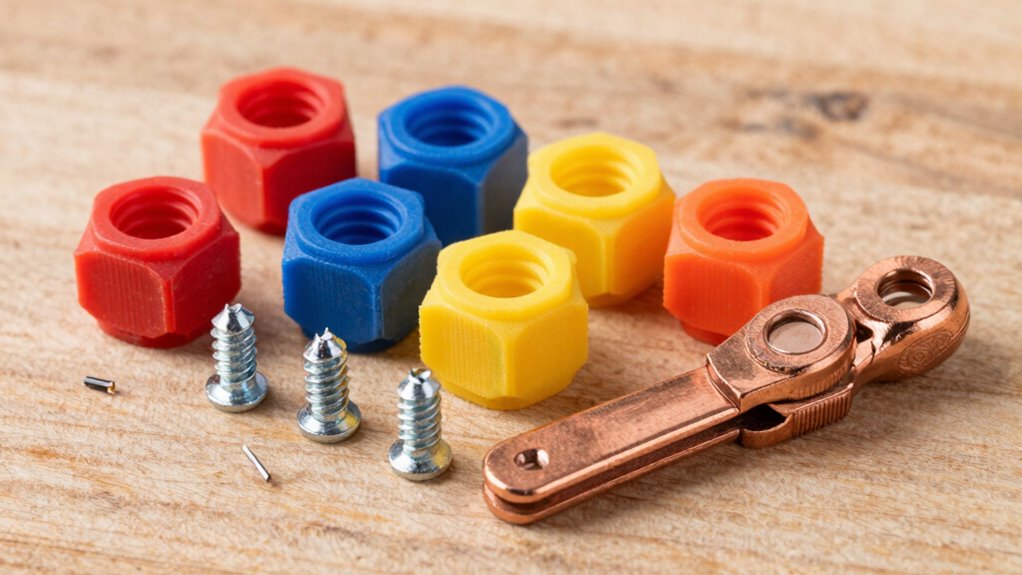

You’ll find that wire nuts are best for quick, simple repairs in residential wiring, as they’re cost-effective and easy to use for low-complexity projects. Lever connectors, however, excel in more demanding environments like commercial or industrial settings, offering secure, reusable connections that are quick to install and easy to adjust later. Each fits different jobs based on complexity, safety, and future maintenance needs—explore further to discover which suits your project best.
Listen free for 30 days with Audible
Thousands of audiobooks and originals — cancel anytime.
As an affiliate, we earn on qualifying purchases.
Key Takeaways
- Wire nuts are ideal for quick, simple repairs in residential settings, while lever connectors suit complex, industrial applications requiring secure, reusable connections.
- Proper installation is crucial: twisting with wire nuts for tight contact versus pressing a lever for consistent, fast connection.
- Wire nuts provide cost-effective, single-use solutions, whereas lever connectors allow easy future adjustments and maintenance.
- Lever connectors offer enhanced safety and reliability in environments with frequent maintenance needs.
- Selection depends on project complexity, safety standards, and whether quick repair or long-term, secure connections are prioritized.
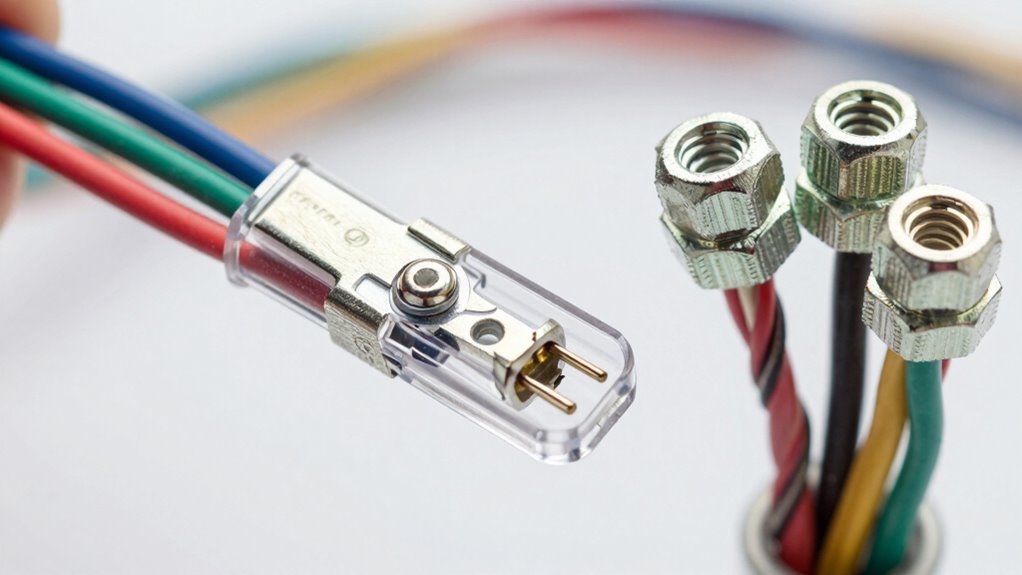
When it comes to wiring projects, choosing the right connectors is essential for safety and reliability. Whether you’re working on a simple repair or a complex electrical system, understanding how lever connectors and wire nuts fit different jobs helps ensure your work is secure and compliant with electrical safety standards. Both connectors serve critical roles, but they excel in different scenarios based on installation techniques and the type of connection needed.
Wire nuts are the most common and versatile connectors for residential wiring. They’re simple to use and cost-effective, making them ideal for quick repairs and small-scale projects. When installing wire nuts, you twist them onto tightly twisted wire ends, creating a secure connection that prevents accidental disconnections and reduces the risk of short circuits. Proper installation techniques involve stripping the wire insulation to the correct length, ensuring a solid twist, and confirming that the nut covers all exposed conductors. This straightforward method promotes electrical safety and minimizes the chance of loose connections that could cause overheating or electrical faults. Additionally, understanding the test procedures for connection integrity can help verify a safe and reliable setup. Choosing the right connection type is crucial for ensuring the connection remains secure over time and meets safety standards.
Wire nuts are simple, cost-effective connectors ideal for quick, secure residential wiring repairs and small projects.
Lever connectors, on the other hand, are designed for more advanced applications that demand quick, reusable, and secure connections. They feature a lever mechanism that, when pressed, clamps down on the wire, providing a firm grip without the need for twisting. This makes installation faster and more consistent, especially when working with multiple wires or in tight spaces. Lever connectors are particularly useful in commercial or industrial settings, or in situations where future maintenance or adjustments are anticipated. Their installation techniques involve inserting stripped wire into the connector and pressing the lever to lock it in place. This method improves electrical safety by reducing the risk of loose connections and ensuring a reliable contact over time. Understanding connection types and their respective applications can help you select the most appropriate connector for your project.
wire nuts for residential wiring
As an affiliate, we earn on qualifying purchases.
As an affiliate, we earn on qualifying purchases.
Frequently Asked Questions
Are Lever Connectors Suitable for Outdoor Electrical Projects?
Yes, lever connectors are suitable for outdoor electrical projects when they’re weather resistant. Look for lever connectors with outdoor ratings, which guarantee they withstand moisture and temperature changes. Indoor versus outdoor ratings are vital—make certain you select weather-resistant connectors specifically designed for outdoor use. These connectors provide secure, easy connections in harsh conditions, making them ideal for outdoor lighting, garden wiring, or any exposed electrical setup.
Can Wire Nuts Be Reused After Installation?
Wire nuts generally aren’t meant to be reused after installation because their lifespan and safety can be compromised. When you reuse a wire nut, it may not grip the wires securely, increasing the risk of loose connections or shorts. Always follow reuse safety guidelines, which recommend installing new wire nuts for each connection to guarantee safety and reliable electrical contact. It’s better to err on the side of caution for electrical safety.
What Is the Maximum Wire Gauge Compatible With Each Connector Type?
Worried about wire gauge compatibility? With lever connectors, you typically handle larger wires, often up to 12 or 14 gauge, thanks to their robust design. Wire nuts, however, usually accommodate smaller wires, up to 10 or 12 gauge. Always check the connector size limitations to guarantee you’re matching the right connector to the appropriate wire gauge, preventing poor connections and ensuring safety. Proper pairing prevents problematic, poor connections.
How Do Temperature Variations Affect Connector Performance?
Temperature variations can impact connector performance by causing thermal expansion, which may loosen connections or increase resistance. As temperatures rise, connectors can expand, potentially compromising durability and safety. Conversely, cold temperatures can make materials brittle, risking cracks or breaks. To guarantee reliable performance, you should choose connectors designed to withstand specific temperature ranges, maintaining their durability despite thermal stresses. Proper selection prevents connection failures due to temperature fluctuations.
Are There Specific Color Codes for Different Wire Nut Sizes?
Think of wire nuts like a box of crayons—each color has its own purpose. Yes, there are specific color codes for different wire nut sizes, aligned with wiring standards. For example, yellow often signifies medium-sized nuts for 14-2 or 12-2 wires, while red indicates larger sizes. These color codes help you quickly select the right connector, ensuring safety and efficiency in your electrical work.
lever wire connectors industrial
As an affiliate, we earn on qualifying purchases.
As an affiliate, we earn on qualifying purchases.
Conclusion
In the grand symphony of electrical work, choosing between lever connectors and wire nuts is like selecting the perfect baton or baton twirl. Each tool commands its own universe of precision and power, transforming your wiring tasks from mundane to masterpiece. When you wield the right connector, you don’t just make a connection—you orchestrate a flawless symphony of safety and reliability that echoes through every corner of your project. Truly, your choices define the very heartbeat of your electrical artistry.
As an affiliate, we earn on qualifying purchases.
As an affiliate, we earn on qualifying purchases.
Fall Picks
fall essentials
As an affiliate, we earn on qualifying purchases.