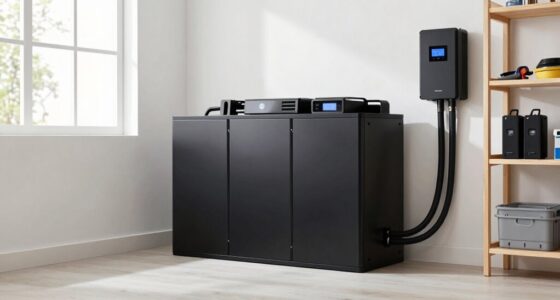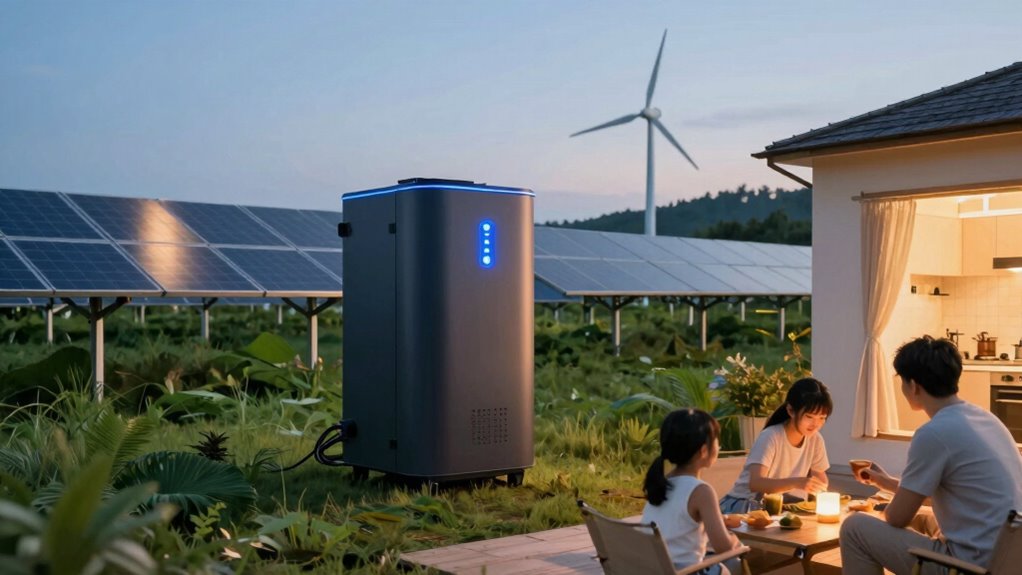
Energy storage is useful beyond blackouts because it stabilizes your power grid and makes it more efficient. It helps absorb surplus renewable energy, reducing reliance on pollution-causing plants. Storage also balances supply and demand, saving money for utilities and consumers. Plus, it enables quicker responses to sudden fluctuations, improving grid resilience. As technology advances, storage’s role expands in creating a cleaner, smarter energy system — discover more ways it can benefit you with the next insights.
Key Takeaways
- Facilitates renewable energy integration by storing surplus power for later use, reducing reliance on fossil fuels.
- Stabilizes grid voltage and frequency fluctuations, ensuring consistent power quality during normal operation.
- Enables cost savings by balancing supply and demand, reducing need for expensive peak power sources.
- Enhances grid resilience against disturbances, extreme weather, and supply disruptions beyond blackout prevention.
- Supports the development of smarter, adaptive energy systems and future infrastructure with versatile storage technologies.
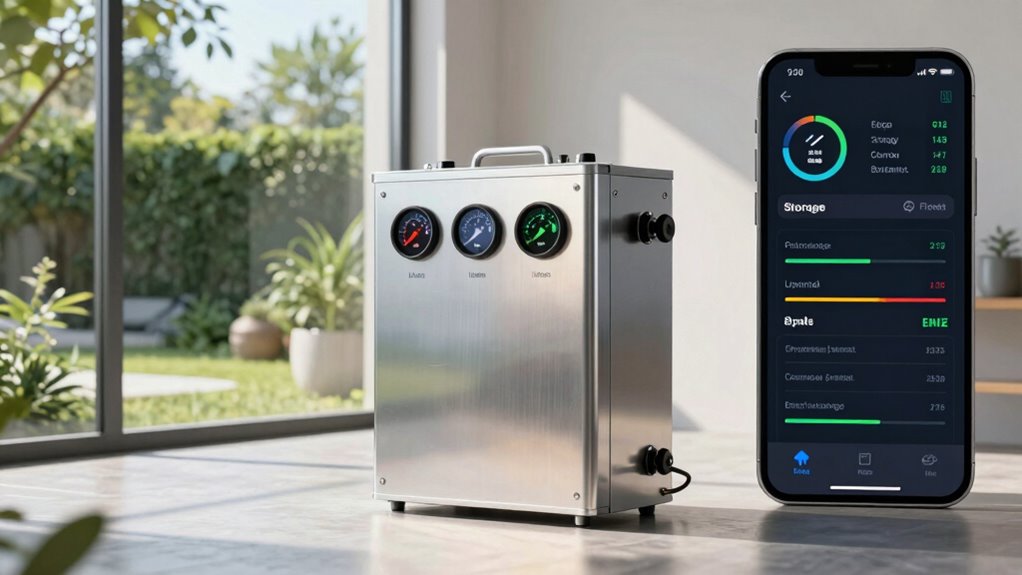
Energy storage plays an essential role in modern power systems by balancing supply and demand, especially as renewable energy sources like solar and wind become more prevalent. When you think about renewable integration, it’s clear that energy storage acts as a bridge, smoothing out the fluctuations in energy generation. Solar panels produce power during the day, but demand peaks in the evening. Without storage, that excess daytime energy would go unused, or you’d need backup power sources. Storage systems absorb this surplus, then release it when the sun isn’t shining, making renewables more reliable and efficient. This capability helps utilities integrate more renewable energy into the grid, reducing reliance on fossil fuels and lowering emissions. Additionally, energy storage can help optimize energy use within local communities, promoting microbiome health by reducing air pollution from power generation.
Beyond renewable integration, energy storage is essential for grid stabilization. Power grids are dynamic, with sudden changes in demand or supply that can cause voltage fluctuations or frequency deviations. When you have storage systems in place, they act like shock absorbers, instantly responding to grid disturbances. If there’s a sudden spike in demand, stored energy can be dispatched quickly, preventing blackouts or equipment damage. Conversely, during unexpected surges in generation, storage can absorb excess power, maintaining a steady grid frequency. This rapid response helps keep the power supply stable, even under unpredictable conditions. Incorporating advanced energy management systems can further enhance the effectiveness of storage solutions and optimize their operation. As the energy landscape evolves, the importance of reliable storage becomes even more evident.
A cost-effective approach to energy storage can also lead to significant savings for both utilities and consumers by reducing reliance on expensive peak power sources.
You might also notice that energy storage can reduce the need for peaking power plants, which are often expensive and polluting. Instead of activating costly generators to meet temporary demand spikes, stored energy can be released during those moments, saving money and cutting emissions. This flexibility makes your power system more resilient and cost-effective. Additionally, energy storage supports the development of smarter grids by enabling real-time balancing and demand response strategies. It allows for more precise control over energy flows, which is essential as grids become more complex with decentralized renewable sources.
In essence, energy storage extends far beyond just preventing blackouts. It enhances the integration of renewable energy, stabilizes the grid during fluctuations, and improves overall efficiency. You benefit from a more reliable, cleaner, and cost-effective power system. As technology advances and costs decrease, this versatility makes energy storage a cornerstone of future energy infrastructure. It’s not just about backup power anymore — it’s about creating a smarter, more sustainable energy landscape that adapts to your needs and reduces our collective environmental footprint.

ECO-WORTHY Powermega 48V 314Ah LiFePO4 Energy Storage System with 10kW Hybrid Inverter, Active Balancing BMS, Built-in Bluetooth&WiFi, Communication Support for Home Backup, Emergency Power, Off-Grid
- High-Capacity Energy Storage: 48V 314Ah LiFePO4, 16.1kWh usable energy
- Hybrid Inverter Included: 10kW inverter for versatile power needs
- Smart Connectivity: WiFi, Bluetooth, RS485, CAN, RS232 support
As an affiliate, we earn on qualifying purchases.
As an affiliate, we earn on qualifying purchases.
Frequently Asked Questions
How Does Energy Storage Impact Electricity Grid Stability?
Energy storage boosts your electricity grid stability by enhancing grid resilience and providing essential frequency regulation. When supply fluctuates, stored energy helps balance the grid, preventing blackouts and equipment damage. By quickly releasing or absorbing energy, storage systems maintain steady frequency levels, ensuring reliable power supply. This dynamic response keeps the grid stable during peak demand or unexpected outages, making your energy system more reliable, efficient, and resilient overall.
Can Energy Storage Reduce Overall Energy Costs Long-Term?
They say “a penny saved is a penny earned,” and energy storage can definitely help you save long-term. By optimizing storage efficiency, you can reduce overall energy costs through better management of supply and demand. This means storing excess energy when prices are low and using it during peak times, leading to significant cost reduction over time. So, investing in efficient storage systems truly pays off in the long run.
What Are the Environmental Benefits of Energy Storage Systems?
Energy storage systems offer notable environmental benefits by reducing your reliance on fossil fuels, which lowers greenhouse gas emissions. They improve grid efficiency, enabling the integration of renewable energy sources like wind and solar. This enhances sustainability benefits and minimizes your carbon footprint. Additionally, energy storage can decrease energy waste, promoting a cleaner environment. Overall, adopting these systems helps you contribute to a healthier planet while supporting a sustainable energy future.
How Does Energy Storage Support Renewable Energy Integration?
You can see how energy storage supports renewable energy integration by addressing renewable intermittency, which causes fluctuations in power generation. Storage capacity allows you to store excess energy generated during peak times, then release it when renewable sources are less active. This way, you guarantee a steady, reliable energy supply, balancing supply and demand, and making renewable energy a more practical, consistent option for your energy needs.
Are There Safety Concerns With Large-Scale Energy Storage?
Yes, there are safety concerns with large-scale energy storage, but you can address them through safety protocols and risk mitigation strategies. You implement proper design standards, regular inspections, and emergency procedures to prevent issues. By staying vigilant and proactive, you reduce risks like fires or leaks. You also educate staff and monitor systems continuously, ensuring safety remains a top priority while maximizing the benefits of large-scale energy storage.

Portable Solar Generator 300W Portable Power Station with 60W Solar Panel
- Powerful 300W Portable Generator: Charges smartphones, tablets, laptops, and small devices
- Includes 60W Foldable Solar Panel: Recharges via solar, AC, or carport
- Multiple Charging Outlets: AC, DC, USB, and quick charge ports
As an affiliate, we earn on qualifying purchases.
As an affiliate, we earn on qualifying purchases.
Conclusion
Energy storage isn’t just a safety net for blackouts; it’s the quiet backbone of a brighter, more resilient future. Think of it as the battery-powered heartbeat that keeps your world humming smoothly, even when the storm clouds gather. As you harness this power, you’re not just safeguarding your day—you’re fueling innovation, reducing emissions, and painting a vivid picture of a cleaner, smarter world. Embrace energy storage, and watch your energy landscape bloom like a well-tended garden.

50 Watt 12 Volt Monocrystalline Solar Panel with Dual USB Charger for Vehicle Battery and Mobile Phone Charging Off Grid Outdoor Use
- High Efficiency Design: 50W monocrystalline solar panel for high energy conversion
- Dual USB Ports: Charge vehicle batteries and devices simultaneously
- Voltage Stabilization: Built-in regulator maintains stable voltage output
As an affiliate, we earn on qualifying purchases.
As an affiliate, we earn on qualifying purchases.

Decentralized Energy Systems: A Global Climate Solutions Technology Explainer on How Renewable Energy, Microgrids, and Energy Storage Enable Climate Resilience and Energy Access
As an affiliate, we earn on qualifying purchases.
As an affiliate, we earn on qualifying purchases.